Home
Department Of Physics text logo
  • Research
    • Our research
    • Our research groups
    • Our research in action
    • Research funding support
    • Summer internships for undergraduates
  • Study
    • Undergraduates
    • Postgraduates
  • Engage
    • For alumni
    • For business
    • For schools
    • For the public
  • Support
Menu
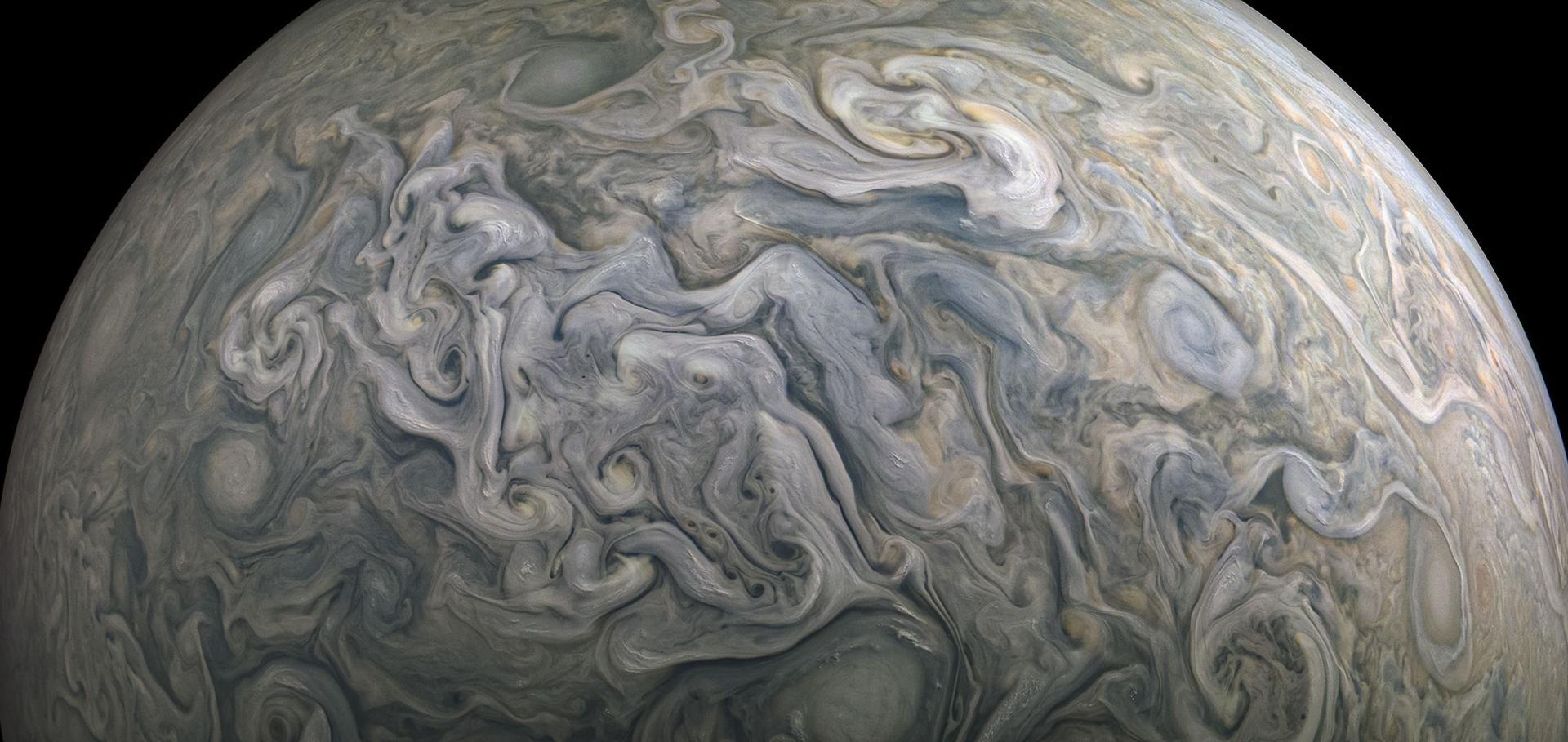
Juno Jupiter image

Dr Antonin Knizek

Postdoctoral Research Assistant

Research theme

  • Climate physics

Sub department

  • Atmospheric, Oceanic and Planetary Physics

Research groups

  • Earth Observation Data Group
antonin.knizek@physics.ox.ac.uk
Robert Hooke Building, room S46
  • About
  • Publications

Decomposition of HCN during Experimental Impacts in Dry and Wet Planetary Atmospheres.

ACS earth & space chemistry 8:6 (2024) 1246-1258

Authors:

Antonín Knížek, Lukáš Petera, Vojtěch Laitl, Martin Ferus

Abstract:

Hydrogen cyanide (HCN), a key molecule of significant importance in contemporary perspectives on prebiotic chemistry, originates in planetary atmospheres from various processes, such as photochemistry, thermochemistry, and impact chemistry, as well as from delivery by impacts. The resilience of HCN during periods of heavy bombardment, a phenomenon caused by an influx of material on unstable trajectories after accretion, remains relatively understudied. This study extensively investigates the stability of HCN under impact conditions simulated using a laboratory Nd:YAG laser in the ELISE experimental setup. High-resolution infrared spectroscopy was employed to monitor the gas phase composition during these simulations. Impact chemistry was simulated in bulk nitrogen atmospheres with varying mixing ratios of HCN and water vapor. The probed range of compositions spans from ∼0 to 1.8% of HCN and 0 to 2.7% of H2O in a ∼1 bar nitrogen atmosphere. The primary decomposition products of HCN are CO and CO2 in the presence of water and unidentified solid phase products in dry conditions. Our experiments revealed a range of initial HCN decomposition rates between 2.43 × 10¹⁵ and 5.17 × 10¹⁷ molec J-1 of input energy depending on the initial composition. Notably, it is shown that the decomposition process induced by the laser spark simulating the impact plasma is nonlinear, with the duration of the irradiation markedly affecting the decomposition rate. These findings underscore the necessity for careful consideration and allowance for margins when applying these rates to chemical models of molecular synthesis and decomposition in planetary atmospheres.
More details from the publisher
More details

A Novel Abiotic Pathway for Phosphine Synthesis over Acidic Dust in Venus' Atmosphere.

Astrobiology 24:4 (2024) 407-422

Authors:

Klaudia Mráziková, Antonín Knížek, Homa Saeidfirozeh, Lukáš Petera, Svatopluk Civiš, Franz Saija, Giuseppe Cassone, Paul B Rimmer, Martin Ferus

Abstract:

Recent ground-based observations of Venus have detected a single spectral feature consistent with phosphine (PH3) in the middle atmosphere, a gas which has been suggested as a biosignature on rocky planets. The presence of PH3 in the oxidized atmosphere of Venus has not yet been explained by any abiotic process. However, state-of-the-art experimental and theoretical research published in previous works demonstrated a photochemical origin of another potential biosignature-the hydride methane-from carbon dioxide over acidic mineral surfaces on Mars. The production of methane includes formation of the HC · O radical. Our density functional theory (DFT) calculations predict an energetically plausible reaction network leading to PH3, involving either HC · O or H· radicals. We suggest that, similarly to the photochemical formation of methane over acidic minerals already discussed for Mars, the origin of PH3 in Venus' atmosphere could be explained by radical chemistry starting with the reaction of ·PO with HC·O, the latter being produced by reduction of CO2 over acidic dust in upper atmospheric layers of Venus by ultraviolet radiation. HPO, H2P·O, and H3P·OH have been identified as key intermediate species in our model pathway for phosphine synthesis.
More details from the publisher
More details

A Pulsed Hollow Cathode Discharge Operated in an Ar/N$$_2$$/O$$_2$$ Gas Mixture and the Formation of Nitric Oxide

Plasma Chemistry and Plasma Processing Springer Science and Business Media LLC 44:2 (2024) 1053-1068

Authors:

Rainer Hippler, Martin Cada, Antonin Knizek, Martin Ferus, Zdenek Hubicka

Abstract:

Abstract A hollow cathode discharge with a CuNi (Cu50Ni50) cathode was operated in an Ar/N$$_2$$ 2 /O$$_2$$ 2 gas mixture. The energy distribution of plasma ions is investigated with the help of energy-resolved mass spectrometry. Formation of singly ionised Ar$$^+$$ + and of Cu$$^+$$ + and Ni$$^+$$ + ions is observed in pure argon. With the addition of N$$_2$$ 2 or O$$_2$$ 2 gas the additional formation of molecular N$$_2^ +$$ 2 + or O$$_2^+$$ 2 + ions is observed. The intensity of these ions is reduced in the Ar+N$$_2$$ 2 +O$$_2$$ 2 gas mixture and molecular NO$$^+$$ + ions become the most abundant ionic species. The formation of neutral NO molecules is confirmed by optical emission spectroscopy. Gas samples collected at the exhaust of the vacuum chamber confirm the formation of NO and, additionally, of NO$$_2$$ 2 molecules. Graphic Abstract Sample taken from the exhaust of the plasma chamber with a liquid-nitrogen-cooled glass container showing solid nitrogen oxide (blue).
More details from the publisher

Simulating asteroid impacts and meteor events by high-power lasers: from the laboratory to spaceborne missions

Frontiers in Astronomy and Space Sciences Frontiers Media SA 10 (2023) 1186172

Authors:

Martin Ferus, Antonín Knížek, Giuseppe Cassone, Paul B Rimmer, Hitesh Changela, Elias Chatzitheodoridis, Inna Uwarova, Ján Žabka, Petr Kabáth, Franz Saija, Homa Saeidfirozeh, Libor Lenža, Miroslav Krůs, Lukáš Petera, Lukáš Nejdl, Petr Kubelík, Anna Křivková, David Černý, Martin Divoký, Michael Pisařík, Tomáš Kohout, Lakshika Palamakumbure, Barbora Drtinová, Klára Hlouchová, Nikola Schmidt, Zita Martins, Jorge Yáñez, Svatopoluk Civiš, Pavel Pořízka, Tomáš Mocek, Jona Petri, Sabine Klinkner

Abstract:

Meteor plasmas and impact events are complex, dynamic natural phenomena. Simulating these processes in the laboratory is, however, a challenge. The technique of laser induced dielectric breakdown was first used for this purpose almost 50 years ago. Since then, laser-based experiments have helped to simulate high energy processes in the Tunguska and Chicxulub impact events, heavy bombardment on the early Earth, prebiotic chemical evolution, space weathering of celestial bodies and meteor plasma. This review summarizes the current level of knowledge and outlines possible paths of future development.
More details from the publisher

Decomposition of Benzene during Impacts in N2-dominated Atmospheres

The Astrophysical Journal American Astronomical Society 945:2 (2023) 149-149

Authors:

Lukáš Petera, Antonín Knížek, Vojtěch Laitl, Martin Ferus

Abstract:

Abstract Benzene is a simple neutral aromatic compound found in molecular clouds, comets, and planetary atmospheres. It has been confirmed on Jupiter, Saturn, Titan, and is expected on exoplanets. In this paper, the decomposition of benzene in a simulated asteroid or comet impact into an N2-dominated atmosphere was investigated. The impact plasma was simulated with laser-induced dielectric breakdown and the gas phase decomposition products were observed using high-resolution Fourier transform infrared spectroscopy. The gas phase decomposition products involve mainly HCN, C2H2, and smaller amounts of CH4 with yields of 3.1%–24.0%, 0–11.7%, and 0.5%–3.3%, respectively. Furthermore, in presence of water, benzene also produces CO and CO2 with yields of 2.4%–35.1% and 0.01%–4.8%, respectively. The oxidation state of the product mixture is proportional to the water content. Apart from that, a black-brownish solid phase is formed during the experiments, which makes up about 60% of the original carbon content. Our results therefore show that in anoxic N2-dominated planetary atmospheres, impacts might lead to the depletion of benzene and the formation of HCN, C2H2, and CH4 and, in the presence of water, to the formation of CO and CO2.
More details from the publisher

Pagination

  • First page First
  • Previous page Prev
  • Page 1
  • Current page 2
  • Page 3
  • Page 4
  • Page 5
  • Page 6
  • Page 7
  • Page 8
  • Page 9
  • …
  • Next page Next
  • Last page Last

Footer Menu

  • Contact us
  • Giving to the Dept of Physics
  • Work with us
  • Media

User account menu

  • Log in

Follow us

FIND US

Clarendon Laboratory,

Parks Road,

Oxford,

OX1 3PU

CONTACT US

Tel: +44(0)1865272200

University of Oxfrod logo Department Of Physics text logo
IOP Juno Champion logo Athena Swan Silver Award logo

© University of Oxford - Department of Physics

Cookies | Privacy policy | Accessibility statement

Built by: Versantus

  • Home
  • Research
  • Study
  • Engage
  • Our people
  • News & Comment
  • Events
  • Our facilities & services
  • About us
  • Giving to Physics
  • Current students
  • Staff intranet