Home
Department Of Physics text logo
  • Research
    • Our research
    • Our research groups
    • Our research in action
    • Research funding support
    • Summer internships for undergraduates
  • Study
    • Undergraduates
    • Postgraduates
  • Engage
    • For alumni
    • For business
    • For schools
    • For the public
  • Support
Menu
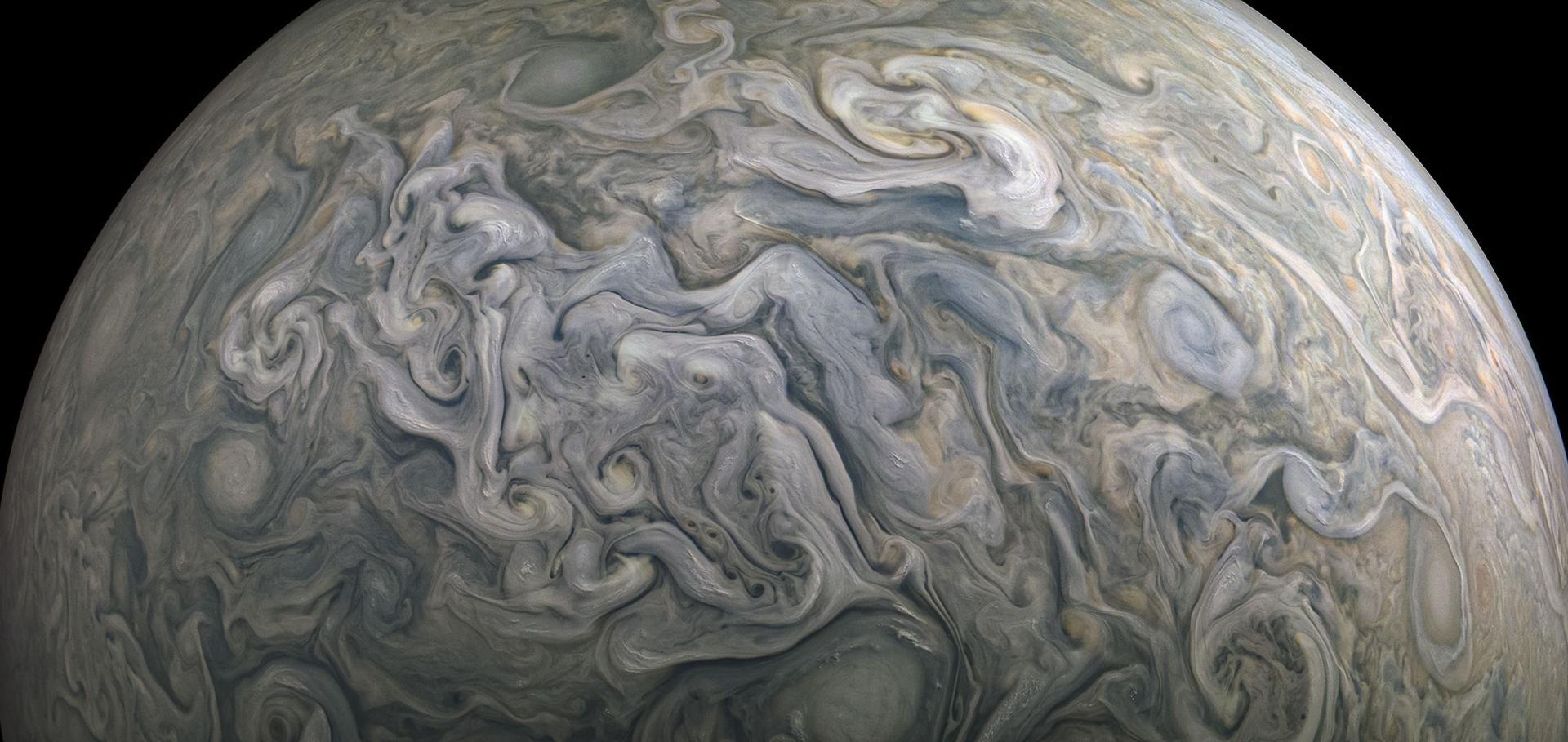
Juno Jupiter image

Dr Antonin Knizek

Postdoctoral Research Assistant

Research theme

  • Climate physics

Sub department

  • Atmospheric, Oceanic and Planetary Physics

Research groups

  • Earth Observation Data Group
antonin.knizek@physics.ox.ac.uk
Robert Hooke Building, room S46
  • About
  • Publications

Morphology of Meteorite Surfaces Ablated by High-Power Lasers: Review and Applications

Applied Sciences MDPI AG 12:10 (2022) 4869-4869

Authors:

Anna Křivková, Vojtěch Laitl, Elias Chatzitheodoridis, Lukáš Petera, Petr Kubelík, Antonín Knížek, Homa Saeidfirozeh, Barbora Drtinová, Václav Čuba, Dan Páclík, Tomáš Mocek, Jan Brajer, Jan Kaufman, Martin Divoký, Jakub Koukal, Roman Dudžák, Nikola Schmidt, Petr Boháček, Svatopluk Civiš, Libor Lenža, Miroslav Krůs, Martin Ferus

Abstract:

Under controlled laboratory conditions, lasers represent a source of energy with well-defined parameters suitable for mimicking phenomena such as ablation, disintegration, and plasma formation processes that take place during the hypervelocity atmospheric entry of meteoroids. Furthermore, lasers have also been proposed for employment in future space exploration and planetary defense in a wide range of potential applications. This highlights the importance of an experimental investigation of lasers’ interaction with real samples of interplanetary matter: meteorite specimens. We summarize the results of numerous meteorite laser ablation experiments performed by several laser sources—a femtosecond Ti:Sapphire laser, the multislab ceramic Yb:YAG Bivoj laser, and the iodine laser known as PALS (Prague Asterix Laser System). The differences in the ablation spots’ morphology and their dependence on the laser parameters are examined via optical microscopy, scanning electron microscopy, and profilometry in the context of the meteorite properties and the physical characteristics of laser-induced plasma.
More details from the publisher

Ariel – a window to the origin of life on early earth?

Experimental Astronomy Springer Science and Business Media LLC 53:2 (2022) 679-728

Authors:

Martin Ferus, Vojtěch Adam, Giuseppe Cassone, Svatopluk Civiš, Václav Čuba, Elias Chatzitheodoridis, Barbora Drtinová, Bertrand LeFloch, Alan Heays, Sohan Jheeta, Ákos Kereszturi, Antonín Knížek, Miroslav Krůs, Petr Kubelík, Helmut Lammer, Libor Lenža, Lukáš Nejdl, Adam Pastorek, Lukáš Petera, Paul Rimmer, Raffaele Saladino, Franz Saija, Laurenz Sproß, Jiří Šponer, Judit Šponer, Zoe Todd, Markéta Vaculovičová, Kristýna Zemánková, Vladislav Chernov
More details from the publisher

Nitrogen Oxide Production in Laser‐Induced Breakdown Simulating Impacts on the Hadean Atmosphere

Journal of Geophysical Research: Planets American Geophysical Union (AGU) 127:3 (2022) e2021JE006842

Authors:

Alan N Heays, Tereza Kaiserová, Paul B Rimmer, Antonín Knížek, Lukáš Petera, Svatopluk Civiš, Libor Juha, Roman Dudžák, Miroslav Krůs, Manuel Scherf, Helmut Lammer, Robert Pascal, Martin Ferus

Abstract:

AbstractThe high‐energy‐density synthesis of NxOy species is simulated in gas mixtures representing an O2‐free early‐Earth atmosphere by terawatt‐kilojoule‐class laser‐induced dielectric breakdown (LIDB). These experiments differ from previous LIDB experiments due to the 100 times greater energy delivered per pulse and sensitive analysis of products by high‐resolution infrared spectroscopy. The measured yields of NO, N2O, and NO2 are 0.08–8 × 1015, 5 × 1012, and 0.03–7 × 1014 molec J −1. The high N2O yield is above the upper‐limit constraint of previous tabletop LIDB experiments and the expected yield of a thermochemical freeze‐out at any temperature between 2000 and 5000 K, while the NO and NO2 yields are in broad agreement with freeze‐out models. Using a one dimensional chemical model of the Hadean atmosphere and a simple model of late bombardment, we compute the source flux of N2O assuming the same high production yield as measured experimentally and find the steady‐state partial pressure of N2O is insufficient to warm the climate.
More details from the publisher

The spectrum of ammonia near 0.793 μm

Journal of Quantitative Spectroscopy and Radiative Transfer Elsevier BV 273 (2021) 107838

Authors:

NF Zobov, T Bertin, J Vander Auwera, S Civiš, A Knížek, M Ferus, Roman I Ovsyannikov, Vladimir Yu Makhnev, Jonathan Tennyson, Oleg L Polyansky
More details from the publisher

High resolution emission FT spectra of sodium in a microwave discharge: Intensity variation of the D1/D2 lines in exoplanetary atmospheres

Journal of Quantitative Spectroscopy and Radiative Transfer Elsevier BV 270 (2021) 107689

Authors:

Svatopluk Civiš, Alan N Heays, Antonín Knížek, Martin Ferus
More details from the publisher

Pagination

  • First page First
  • Previous page Prev
  • Page 1
  • Page 2
  • Page 3
  • Current page 4
  • Page 5
  • Page 6
  • Page 7
  • Page 8
  • Page 9
  • …
  • Next page Next
  • Last page Last

Footer Menu

  • Contact us
  • Giving to the Dept of Physics
  • Work with us
  • Media

User account menu

  • Log in

Follow us

FIND US

Clarendon Laboratory,

Parks Road,

Oxford,

OX1 3PU

CONTACT US

Tel: +44(0)1865272200

University of Oxfrod logo Department Of Physics text logo
IOP Juno Champion logo Athena Swan Silver Award logo

© University of Oxford - Department of Physics

Cookies | Privacy policy | Accessibility statement

Built by: Versantus

  • Home
  • Research
  • Study
  • Engage
  • Our people
  • News & Comment
  • Events
  • Our facilities & services
  • About us
  • Giving to Physics
  • Current students
  • Staff intranet