Home
Department Of Physics text logo
  • Research
    • Our research
    • Our research groups
    • Our research in action
    • Research funding support
    • Summer internships for undergraduates
  • Study
    • Undergraduates
    • Postgraduates
  • Engage
    • For alumni
    • For business
    • For schools
    • For the public
  • Support
Menu
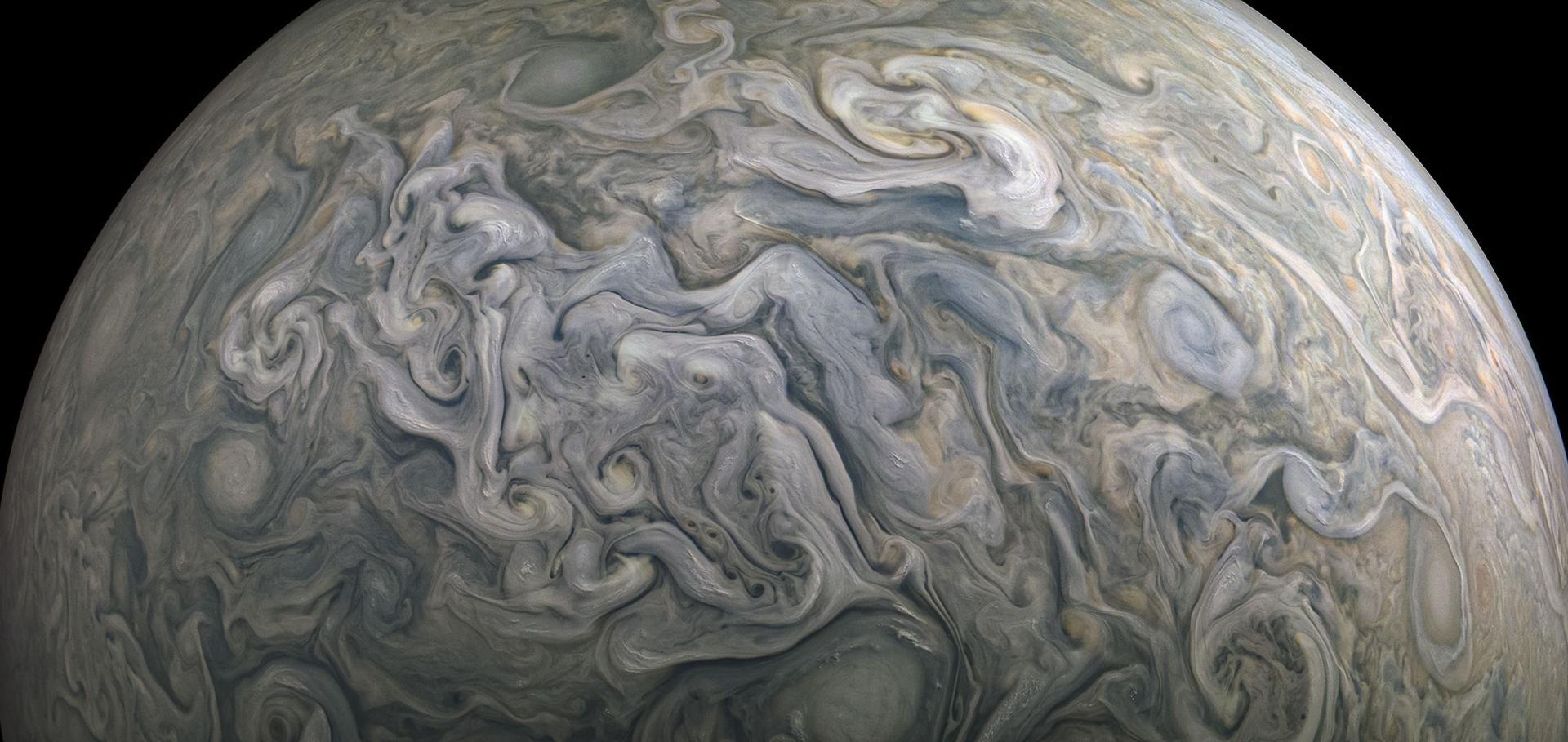
Juno Jupiter image

Dr Antonin Knizek

Postdoctoral Research Assistant

Research theme

  • Climate physics

Sub department

  • Atmospheric, Oceanic and Planetary Physics

Research groups

  • Earth Observation Data Group
antonin.knizek@physics.ox.ac.uk
Robert Hooke Building, room S46
  • About
  • Publications

Electron-impact vibrational excitation of isocyanic acid HNCO

Physical Review A American Physical Society (APS) 102:6 (2020) 062822

Authors:

Ragesh Kumar T. P., P Nag, M Ranković, R Čurík, A Knížek, S Civiš, M Ferus, J Trnka, K Houfek, M Čížek, J Fedor
More details from the publisher

One-Pot Hydrogen Cyanide-Based Prebiotic Synthesis of Canonical Nucleobases and Glycine Initiated by High-Velocity Impacts on Early Earth.

Astrobiology 20:12 (2020) 1476-1488

Authors:

Martin Ferus, Paul Rimmer, Giuseppe Cassone, Antonín Knížek, Svatopluk Civiš, Judit E Šponer, Ondřej Ivanek, Jiří Šponer, Homa Saeidfirozeh, Petr Kubelík, Roman Dudžák, Lukáš Petera, Libor Juha, Adam Pastorek, Anna Křivková, Miroslav Krůs

Abstract:

Chemical environments of young planets are assumed to be significantly influenced by impacts of bodies lingering after the dissolution of the protoplanetary disk. We explore the chemical consequences of impacts of these bodies under reducing planetary atmospheres dominated by carbon monoxide, methane, and molecular nitrogen. Impacts were simulated by using a terawatt high-power laser system. Our experimental results show that one-pot impact-plasma-initiated synthesis of all the RNA canonical nucleobases and the simplest amino acid glycine is possible in this type of atmosphere in the presence of montmorillonite. This one-pot synthesis begins with de novo formation of hydrogen cyanide (HCN) and proceeds through intermediates such as cyanoacetylene and urea.
More details from the publisher
More details

Formic Acid, a Ubiquitous but Overlooked Component of the Early Earth Atmosphere.

Chemistry (Weinheim an der Bergstrasse, Germany) 26:52 (2020) 12075-12080

Authors:

Elmira Mohammadi, Lukáš Petera, Homa Saeidfirozeh, Antonín Knížek, Petr Kubelík, Roman Dudžák, Miroslav Krůs, Libor Juha, Svatopluk Civiš, Rémi Coulon, Ondřej Malina, Juri Ugolotti, Václav Ranc, Michal Otyepka, Jiří Šponer, Martin Ferus, Judit E Šponer

Abstract:

Terrestrial volcanism has been one of the dominant geological forces shaping our planet since its earliest existence. Its associated phenomena, like atmospheric lightning and hydrothermal activity, provide a rich energy reservoir for chemical syntheses. Based on our laboratory simulations, we propose that on the early Earth volcanic activity inevitably led to a remarkable production of formic acid through various independent reaction channels. Large-scale availability of atmospheric formic acid supports the idea of the high-temperature accumulation of formamide in this primordial environment.
More details from the publisher
More details

Acidic Hydrogen Enhanced Photocatalytic Reduction of CO2 on Planetary Surfaces

ACS Earth and Space Chemistry American Chemical Society (ACS) 4:7 (2020) 1001-1009

Authors:

Antonín Knížek, Petr Kubelík, Milan Bouša, Martin Ferus, Svatopluk Civiš
More details from the publisher

Elemental composition, mineralogy and orbital parameters of the Porangaba meteorite

Icarus Elsevier 341 (2020) 113670

Authors:

Martin Ferus, Lukáš Petera, Jakub Koukal, Libor Lenža, Barbora Drtinová, Jakub Haloda, Dalibor Matýsek, Adam Pastorek, Vojtěch Laitl, Renato Cassio Poltronieri, Marcelo Wagner Domingues, Gabriel Gonçalves, Rodrigo del Olmo Sato, Antonín Knížek, Petr Kubelík, Anna Křivková, Jiří Srba, Carlos Augusto di Pietro, Milan Bouša, Tomáš Vaculovič, Svatopluk Civiš
More details from the publisher
More details

Pagination

  • First page First
  • Previous page Prev
  • …
  • Page 2
  • Page 3
  • Page 4
  • Page 5
  • Current page 6
  • Page 7
  • Page 8
  • Page 9
  • Page 10
  • …
  • Next page Next
  • Last page Last

Footer Menu

  • Contact us
  • Giving to the Dept of Physics
  • Work with us
  • Media

User account menu

  • Log in

Follow us

FIND US

Clarendon Laboratory,

Parks Road,

Oxford,

OX1 3PU

CONTACT US

Tel: +44(0)1865272200

University of Oxfrod logo Department Of Physics text logo
IOP Juno Champion logo Athena Swan Silver Award logo

© University of Oxford - Department of Physics

Cookies | Privacy policy | Accessibility statement

Built by: Versantus

  • Home
  • Research
  • Study
  • Engage
  • Our people
  • News & Comment
  • Events
  • Our facilities & services
  • About us
  • Giving to Physics
  • Current students
  • Staff intranet