Home
Department Of Physics text logo
  • Research
    • Our research
    • Our research groups
    • Our research in action
    • Research funding support
    • Summer internships for undergraduates
  • Study
    • Undergraduates
    • Postgraduates
  • Engage
    • For alumni
    • For business
    • For schools
    • For the public
  • Support
Menu
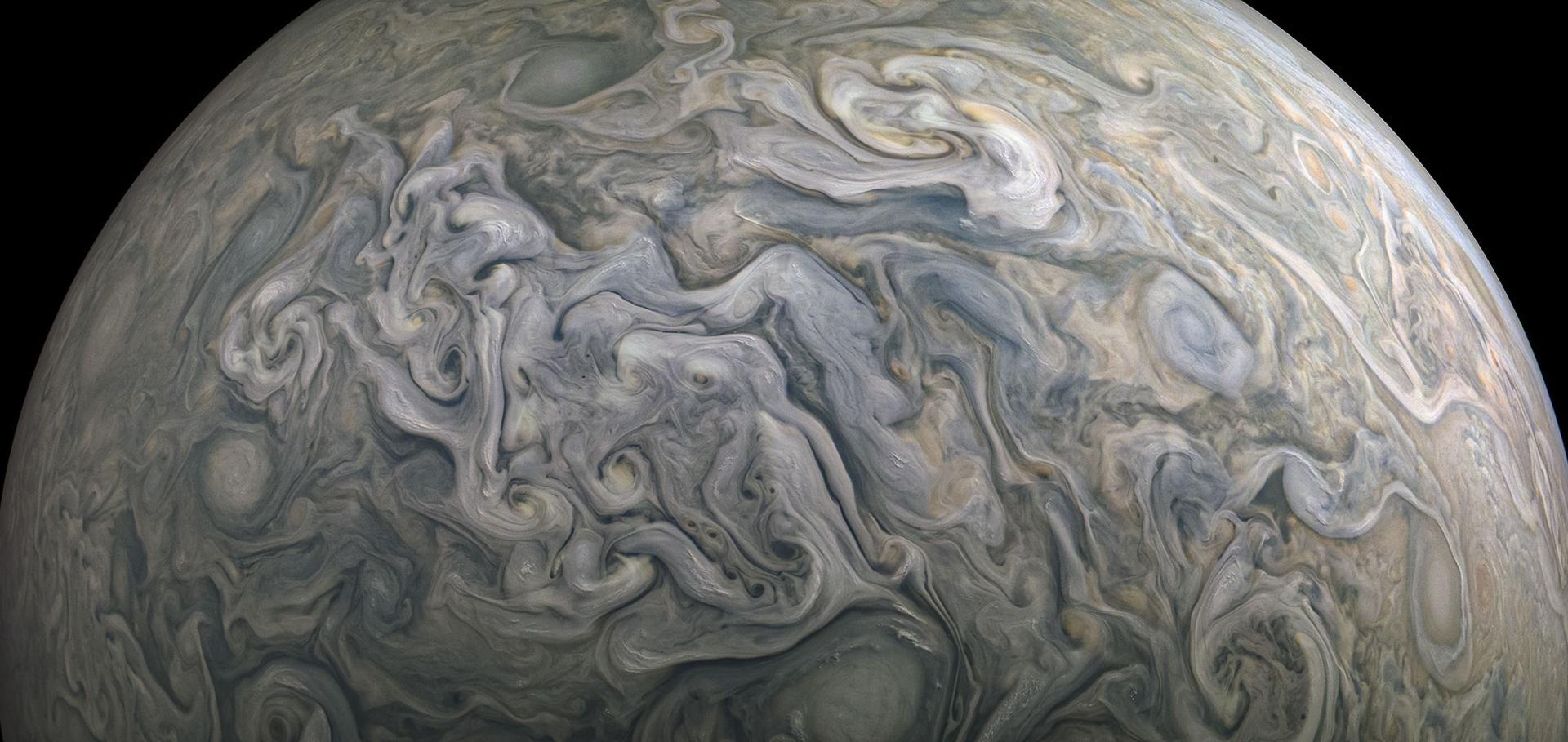
Juno Jupiter image

Dr Antonin Knizek

Postdoctoral Research Assistant

Research theme

  • Climate physics

Sub department

  • Atmospheric, Oceanic and Planetary Physics

Research groups

  • Earth Observation Data Group
antonin.knizek@physics.ox.ac.uk
Robert Hooke Building, room S46
  • About
  • Publications

Origin of Methane and Biomolecules from a CO2 Cycle on Terrestrial Planets

Springer International Publishing (2023) 329-335

Authors:

Svatopluk Civiš, Antonín Knížek, Martin Ferus
More details from the publisher

 Impact-induced transformation of simple aromatic compounds in planetary atmospheres

(2022)

Authors:

Lukáš Petera, Antonín Knížek

Abstract:

<div>Asteroids and comets are often rich in polyaromatic hydrocarbons (PAHs), which represent in general about 30 % of total carbon in space. The fate of these molecules in extraterrestrial delivery was investigated by experimentally simulating asteroid impacts – using laser induced breakdown (LIBD) – into rocky planetary atmospheres and surfaces. Experiments were performed with benzene, naphtalene and anthracene as simple members of PAHs. The effect of LIBD on chemistry of these compounds in various chemical environments, such as atmospheric composition and solid phase matrices, were also studied. The main gas phase products are acetylene and HCN, followed by CO and CO2, whose yields mainly depend on the content of water vapour in the atmosphere. A brownish solid product was also observed. Therefore, simple aromatic compounds, and likely also PAHs, can be a viable source of HCN – molecule with significant prebiotic importance– in planetary environments.</div> <div> </div>
More details from the publisher

Abiotic chemical routes towards the phosphine synthesis in the atmosphere of Venus

(2022)

Authors:

Martin Ferus, Giuseppe Cassone, Paul Rimmer, Franz Saija, Klaudia Mráziková, Antonín Knížek, Svatopluk Civiš

Abstract:

<p>Several of the Venera, Vega and Pioneer probe data as well as ground based observation support the presence of so-called Redox Disequilibrium Pairs (RDPs) in atmosphere of so hostile world as Venus (Greaves 2021). State of the art chemical networks cannot explain origin of an important RDP, phosphine, in oxidized atmosphere of Venus by a conventional processes (Bains 2021). We used the hybrid Density Functional Theory (DFT) for investigation of a series of chemical reaction pathways leading to the reduction of phosphate monoxide to phosphine. Our calculations indicated that a reaction network similar to photochemical synthesis of methane from carbon monoxide over acidic surfaces suggested for Mars (Civiš 2019) can also occur in clouds of Venus. As a seminal step, we have explored – via state-of-the-art quantum-based calculations – the a priori energetic feasibility of the following reaction:</p><p>HCO(radical) + PO = CO2 + PH (biradical).</p><p>Our calculations have shown that chemical conversion is constituted of three steps. Two of them are energetically favoured, however, the final conversion to phosphine is hardened by a significant activation barrier. This barrier can be overcome by a reaction of OPH radical with hydrogen radical. For assessing the potential of the newly introduced reaction mechanisms, models of the Venus and early Earth atmospheres in ARGO code and modified STAND chemical network were created and verified. Comparison of reaction yields suggests that this pathway is potentially effective enough and could be the source of phosphine recently discovered on Venus. </p><p>We acknowledge the support provided by the Czech Science Foundation within the project reg. no. 21-11366S and by ERDF/ESF "Centre of Advanced Applied Sciences" (No. CZ.02.1.01/0.0/0.0/16_019/0000778). We acknowledge support of the Czech Academy of Sciences, Strategy AV21, project VP16. The Czech team is part of the VenSpec-H Consortium onboard the ESA EnVision mission.</p><p>References:</p><p>Civiš S. et al.: Formation of Methane and (Per)Chlorates on Mars. ACS Earth Space Chem. 2019, 3, 2, 221–232.</p><p>Bains W. et al.: Phosphine on Venus Cannot Be Explained by Conventional Processes. Astrobiology 2021, 10 (21), 1277-1304.</p><p>Greaves J. S. et al.:  Phosphine gas in the cloud decks of Venus. Nature Astronomy 2021, 5, 655–664.</p>
More details from the publisher

The stability of benzene in planetary atmospheres

(2022)

Authors:

Antonín Knížek, Lukáš Petera

Abstract:

<p>Benzene is the simplest organic compound with a 6-carbon aromatic ring. As such, it was used as a first order representative of aromatic compounds in planetary atmospheres. These compounds can be brought by asteroid impacts into rocky planetary atmospheres, where they can serve as precursors for further synthesis. Our experiments show that benzene vapours in nitrogen-dominated atmospheres subjected to asteroid impacts (modelled by laboratory laser shots) lead to the formation of acetylene and hydrogen cyanide. Both these products appear in many proposed mechanisms of prebiotic chemistry.</p>
More details from the publisher

Formamide-Based Post-impact Thermal Prebiotic Synthesis in Simulated Craters: Intermediates, Products and Mechanism

Frontiers in Astronomy and Space Sciences Frontiers Media SA 9 (2022) 882145

Authors:

Martin Ferus, Antonín Knížek, Lukáš Petera, Adam Pastorek, Jana Hrnčířová, Luboš Jankovič, Ondřej Ivanek, Jiří Šponer, Anna Křivková, Homa Saeidfirozeh, Svatopluk Civiš, Elias Chatzitheodoridis, Klaudia Mráziková, Lukáš Nejdl, Franz Saija, Judit E Šponer, Giuseppe Cassone

Abstract:

Influx of matter from impacting meteoroids and hydrothermal crater weathering are important factors modifying the rock and mineral inventory of young planets undergoing heavy bombardment. These processes may have influenced not only the geochemical environment of, e.g., early Mars and other planets, but also the peculiar prebiotic chemistry on early Earth. Here, we present a synergistic experimental and computational investigation of the intermediates of chemical reactions of the formamide-based synthesis of canonical and non-canonical nucleobases by thermochemistry in hot hydrothermal crater environments. We put our findings into context with previously investigated plasma-initiated synthesis occuring directly during impact. Both processes result into the formation of all canonical nucleobases, hypoxanthine, purine, and into the onset of the simplest amino acid glycine. Furthermore, it turns out that radical species such as CN and H play a key role in the plasma-assisted impact chemistry. However, post-impact thermochemistry is essential for the origin of formamidine and 2-aminoacetonitrile, intermediate species detected in this study by means of FTIR spectroscopy.
More details from the publisher

Pagination

  • First page First
  • Previous page Prev
  • Page 1
  • Page 2
  • Current page 3
  • Page 4
  • Page 5
  • Page 6
  • Page 7
  • Page 8
  • Page 9
  • …
  • Next page Next
  • Last page Last

Footer Menu

  • Contact us
  • Giving to the Dept of Physics
  • Work with us
  • Media

User account menu

  • Log in

Follow us

FIND US

Clarendon Laboratory,

Parks Road,

Oxford,

OX1 3PU

CONTACT US

Tel: +44(0)1865272200

University of Oxfrod logo Department Of Physics text logo
IOP Juno Champion logo Athena Swan Silver Award logo

© University of Oxford - Department of Physics

Cookies | Privacy policy | Accessibility statement

Built by: Versantus

  • Home
  • Research
  • Study
  • Engage
  • Our people
  • News & Comment
  • Events
  • Our facilities & services
  • About us
  • Giving to Physics
  • Current students
  • Staff intranet