

Atlantic multidecadal variability modulates extratropical summer heatwaves
Environmental Research Letters IOP Publishing 21:11 (2026) 114001
Abstract:
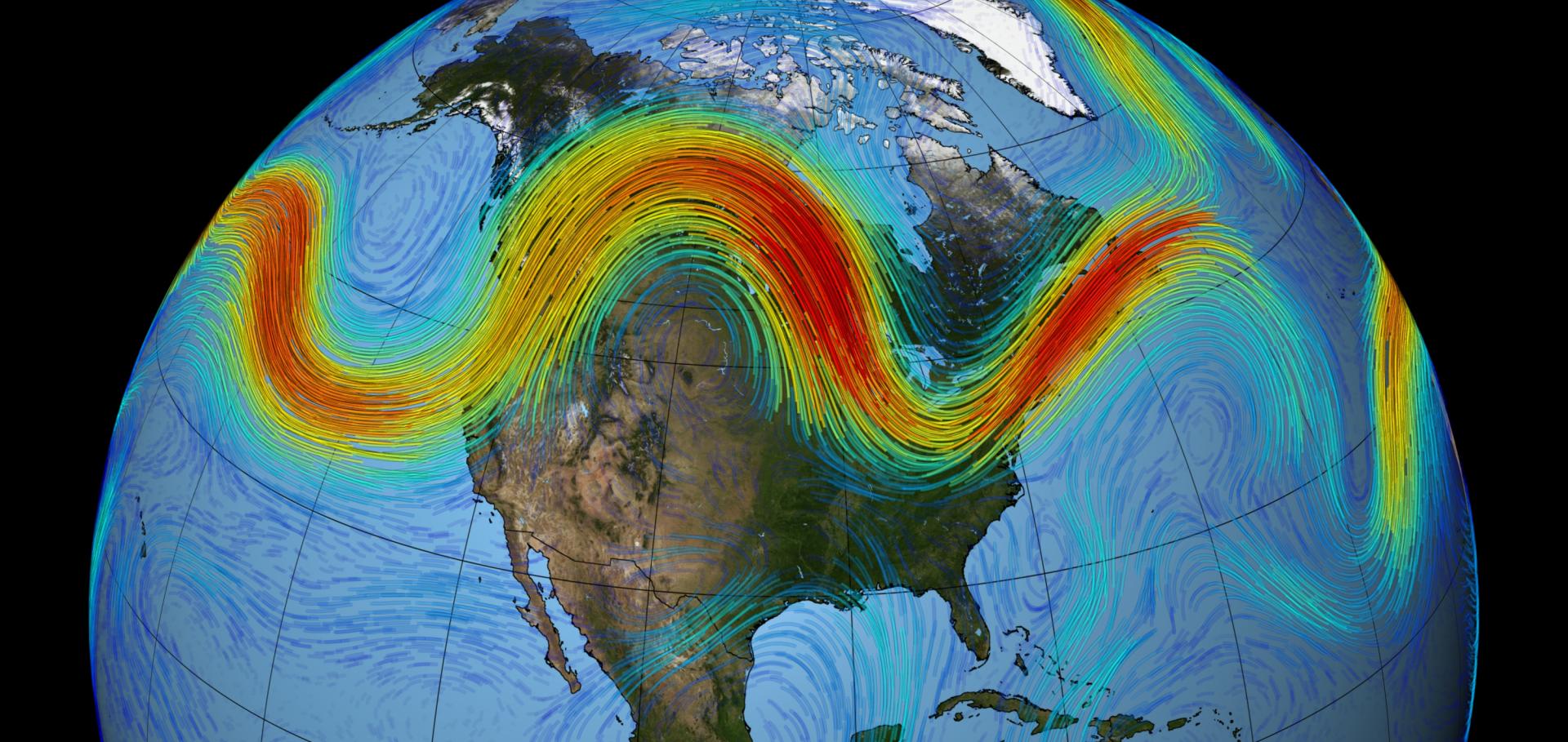
Atlantic multidecadal variability (AMV) is a well-known mode of climate variability with well-understood impacts on several aspects of Northern Hemisphere climate. However, its impact on heatwaves, a type of heat extremes that is increasingly affecting human societies, remains less well understood. The influence of AMV on extratropical summer heatwaves in the Northern Hemisphere is analyzed with a suite of coupled climate model experiments from the Decadal Climate Prediction Project. Our analysis suggests that AMV exerts substantial influence on the heatwave frequency (HWF) and heatwave number (HWN) of heatwaves over subtropics and midlatitudes in the Northern Hemisphere. Compared to the widespread seasonal mean warming response, these heatwave hotspots are less expansive geographically. The warm AMV phase (AMV+) as opposed to the cold phase (AMV−) drives a global stationary wave anomaly that links hotspots of HWF and HWN increases over North America, North Africa, central/western Asia, and parts of East Asia. Such dynamic impacts of AMV on heatwaves are more significant than the thermodynamic impacts of a warmer ocean surface. Hence, mean surface warming alone due to the warming effects of AMV+ versus AMV− does not necessarily equate to more frequent heatwaves. Furthermore, precipitation and surface heat fluxe responses further amplify the HWF increases. By further comparing the tropical and extratropical portions of AMV imposed in model simulations, we emphasize that linear and nonlinear interactions of these features strongly shape the impacts of AMV. We further discuss the mechanisms for and causes of model-observation discrepancies and inter-model uncertainties in the influence of AMV on atmospheric circulation and summer heatwaves, in terms of atmospheric circulation response in North Atlantic-Europe and jet waveguide effects. This highlights some challenges in pinpointing the influence of AMV on heatwaves, and improved understanding of it is necessary for more accurate predictions and projections of heatwaves.How and why do Greenland blocking patterns vary significantly between different summer months?
Environmental Research Climate IOP Publishing (2026)
Abstract:
Abstract Greenland atmospheric blocking, a persistent anticyclonic pattern, strongly influences local and regional weather and climate. It is known to significantly exacerbate Greenland ice sheet melt and mass loss in summer as well as influence atmospheric conditions over the North Atlantic. Greenland blocking has been observed to increase in intensity since the summer of 2000s, but this trend has partly reversed after 2012. This decadal variability is highly correlated with the negative phase of the North Atlantic Oscillation (NAO), the dominant pattern of climate variability in the North Atlantic. However, summer NAO shows different temporal variation in June in comparison with later summer months, i.e., July and August. In this study, we analyse the individual summer months in turn to evaluate differences between their respective spatial patterns of Greenland blocking events. We use different approaches including a Self-Organising Map (SOM) to evaluate individual blocking days, and an event-based analysis to assess the development of blocking events over the course of 7 days. The results show that spatial patterns of Greenland blocking are similar between July and August but are distinctly different in June. In particular, Greenland blocking in June is strongly related to cyclonic wave breaking over the eastern Atlantic. Our analysis using wave activity flux of the zonally varying mean flow reveals a distinct pattern of wave energy and pseudo-momentum associated with cyclonic wave breaking prior to Greenland blocking high anomalies in June, in contrast to the other two summer months. This might partially explain the difference in the spatial patterns and evolution of blocking in June compared with July and August.Moisture Budgets and Circulation Analogs: Diagnosing Dynamic and Thermodynamic Precipitation Change
(2026)
Diagnosing the 11‐year solar cycle's influence on the East Atlantic pattern
Quarterly Journal of the Royal Meteorological Society Wiley (2026) e70187
Abstract:
The North Atlantic sector has been identified as a region where the 11‐year solar cycle has small but potentially non‐negligible impacts on winter climate, but a debate persists about the robustness of such impacts. This work explores the signatures of the 11‐year solar cycle over the North Atlantic in the ERA5 and 20th Century Reanalysis datasets. The results confirm previous studies with a robust positive boreal winter response in mean‐sea‐level pressure (mslp) in the region of the Azores at lags of three years after solar maximum. The spatial evolution of the response is examined in detail by first decomposing the mslp time series into the dominant modes of North Atlantic winter mslp variability, including the North Atlantic Oscillation (NAO), the East Atlantic (EA) and the Scandinavian patterns, before performing a multilinear regression analysis. We find that the maximum 11‐year solar response in the December–January–February (DJF) average does not project directly onto the NAO. However, when the early/late‐winter responses are examined separately, a statistically significant NAO response is seen in late winter (January–February) at lag 0–1 years and a statistically significant NAO response is also seen at lag +3 years in early winter (November–December). These results are consistent with predicted responses from previously proposed top‐down influences from the stratosphere in late winter followed by the re‐emergence of a signal from underlying sea surface temperatures in early winter. However, the NAO response is not the primary contributor to the total DJF response at lag +3 years. A previously unidentified solar‐cycle response in the EA pattern is found in late winter at lag +3 years with larger amplitude than the NAO response. The evolution of the DJF mslp response over the Azores region can thus be understood as a summation of the NAO and EA patterns at lag +3 years.Toward improved understanding and attribution of large-scale circulation changes and associated extremes: challenges and opportunities
Bulletin of the American Meteorological Society American Meteorological Society 107:4 (2026) E778-E787