

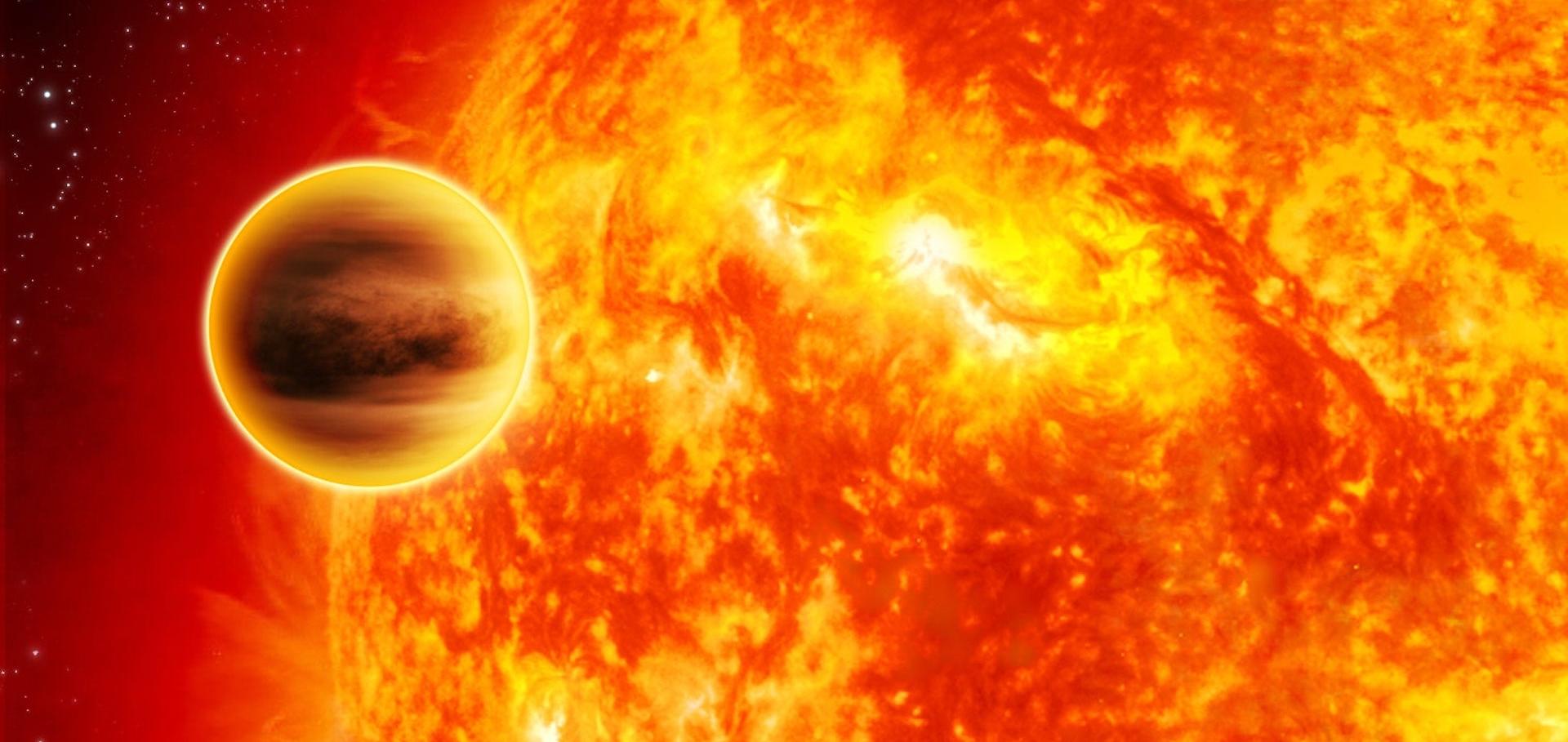
The TOI-763 system: sub-Neptunes orbiting a Sun-like star
Monthly Notices of the Royal Astronomical Society Oxford University Press (OUP) 498:3 (2020) 4503-4517
How Does Thermal Scattering Shape the Infrared Spectra of Cloudy Exoplanets? A Theoretical Framework and Consequences for Atmospheric Retrievals in the JWST era
(2020)
Simulating gas kinematic studies of high-redshift galaxies with the HARMONI integral field spectrograph
Monthly Notices of the Royal Astronomical Society Oxford University Press (OUP) 498:2 (2020) 1891-1904
Erratum: The first planet detected in the WTS: an inflated hot-Jupiter in a 3.35 day orbit around a late F-star
Monthly Notices of the Royal Astronomical Society Oxford University Press (OUP) 497:1 (2020) 916-916
The Multiplanet System TOI-421: A Warm Neptune and a Super Puffy Mini-Neptune Transiting a G9 V Star in a Visual Binary* * Based on observations made with ESO Telescopes at the La Silla Observatory under programs ID 1102.C-0923, 0103.C-0874, 0103.C-0759, 0103.C-0442, and 60.A-970. Based on observations obtained with the Nordic Optical Telescope (NOT), operated on the island of La Palma jointly by Denmark, Finland, Iceland, Norway, and Sweden, in the Spanish Observatorio del Roque de los Muchachos (ORM) of the Instituto de Astrofísica de Canarias (IAC). This paper includes data gathered with the 6.5 m Magellan Telescopes located at Las Campanas Observatory, Chile. This work makes use of observations from the LCOGT network.
The Astronomical Journal American Astronomical Society 160:3 (2020) 114