

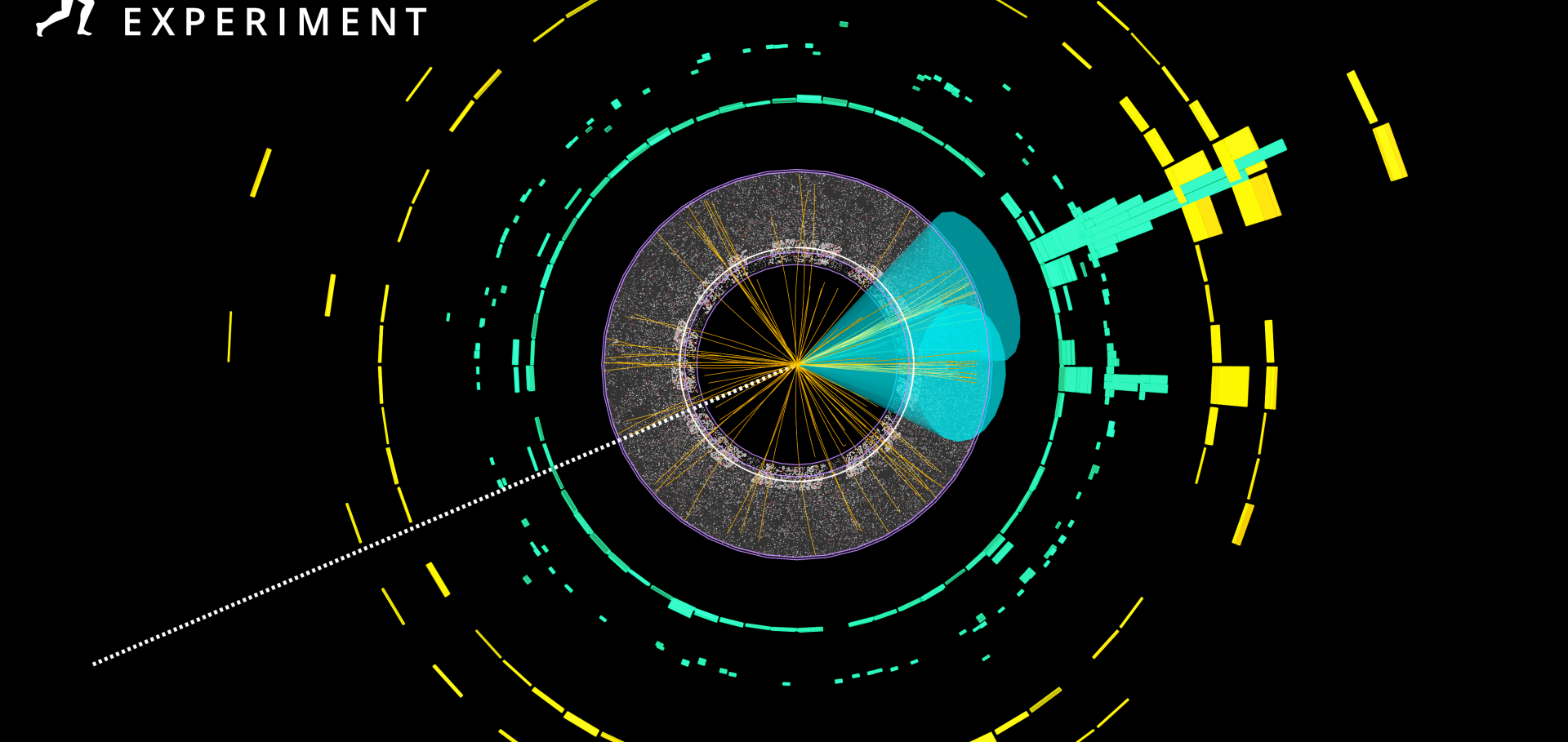
Performance and efficiency of a transformer-based quark/gluon jet tagger in the ATLAS experiment
ArXiv 2512.03949 (2025)
Characterization of the Effects of Radiation Damage on Low Gain Avalanche Diodes for Low-LET Microdosimetry
IEEE Transactions on Nuclear Science Institute of Electrical and Electronics Engineers (IEEE) 72:12 (2025) 3749-3756
Abstract:
Low gain avalanche diodes (LGADs) have possible applications in microdosimetry to improve the signal-to-noise ratio of low-linear energy transfer (LET) radiation. The effects of radiation damage on a $1\times 1$ mm2 LGAD were characterized using an ion beam induced current (IBIC) technique on a scanning ion beam microprobe with proton energies of 1.8, 3.2, and 5 MeV. There were difficulties in the implementation of the LGADs with radiation damage due to the high leakage current along with spurious noise. Due to the additional temporal and spatial information provided by the IBIC technique, the signal-to-noise ratio was improved by applying background subtraction along with spatial and temporal masking. It was found that the gain of the devices decreased with increasing radiation damage and LET. However, the resolution improved with increasing radiation damage and LET. As a result of the strong dependence of the gain on particle type, energy, and radiation damage, more investigation or the development of alternative technologies is required to improve the applicability of LGADs to radiation microdosimetry.Search for single production of vector-like quarks decaying into W ( ℓν ) b in pp collisions at s = 13 TeV with the ATLAS detector
Journal of High Energy Physics Springer 2025:12 (2025) 12
Abstract:
A search for single production of a vector-like quark Q, which could be either a singlet T, with charge 23, or a Y from a (T, B, Y) triplet, with charge −43, is performed using data from proton-proton collisions at a centre-of-mass energy of 13 TeV. The data correspond to the full integrated luminosity of 140 fb−1 recorded with the ATLAS detector during Run 2 of the Large Hadron Collider. The analysis targets Q → Wb decays where the W boson decays leptonically. The data are found to be consistent with the expected Standard Model background, so upper limits are set on the cross-section times branching ratio, and on the coupling of the Q to the Standard Model sector for these two benchmark models. Effects of interference with the Standard Model background are taken into account. For the singlet T, the 95% confidence level limit on the coupling strength κ ranges between 0.22 and 0.52 for masses from 1150 to 2300 GeV. For the (T, B, Y) triplet, the limits on κ vary from 0.14 to 0.46 for masses from 1150 to 2600 GeV.Measurement of the top-quark mass using decays with a $J/ψ$ meson at $\sqrt{s}=$13 TeV with the ATLAS detector
ArXiv 2511.23091 (2025)
Search for $H\rightarrow c\bar{c}$ and measurement of $H\rightarrow b\bar{b}$ in vector-boson fusion production with the ATLAS Detector
ArXiv 2511.21911 (2025)