

The BTSbot-nearby discovery of SN 2024jlf: rapid, autonomous follow-up probes interaction in an 18.5 Mpc Type IIP supernova
ArXiv 2501.18686 (2025)
Design of the ECCE detector for the Electron Ion Collider
Nuclear Instruments and Methods in Physics Research Section A: Accelerators, Spectrometers, Detectors and Associated Equipment Elsevier 1073 (2025) 170240
Abstract:
The EIC Comprehensive Chromodynamics Experiment (ECCE) detector has been designed to address the full scope of the proposed Electron Ion Collider (EIC) physics program as presented by the National Academy of Science and provide a deeper understanding of the quark–gluon structure of matter. To accomplish this, the ECCE detector offers nearly acceptance and energy coverage along with excellent tracking and particle identification. The ECCE detector was designed to be built within the budget envelope set out by the EIC project while simultaneously managing cost and schedule risks. This detector concept has been selected to be the basis for the EIC project detector.Total Cost of Ownership and Evaluation of Google Cloud Resources for the ATLAS Experiment at the LHC
Computing and Software for Big Science Springer 9:1 (2025) 2
Abstract:
The ATLAS Google Project was established as part of an ongoing evaluation of the use of commercial clouds by the ATLAS Collaboration, in anticipation of the potential future adoption of such resources by WLCG grid sites to fulfil or complement their computing pledges. Seamless integration of Google cloud resources into the worldwide ATLAS distributed computing infrastructure was achieved at large scale and for an extended period of time, and hence cloud resources are shown to be an effective mechanism to provide additional, flexible computing capacity to ATLAS. For the first time a total cost of ownership analysis has been performed, to identify the dominant cost drivers and explore effective mechanisms for cost control. Network usage significantly impacts the costs of certain ATLAS workflows, underscoring the importance of implementing such mechanisms. Resource bursting has been successfully demonstrated, whilst exposing the true cost of this type of activity. A follow-up to the project is underway to investigate methods for improving the integration of cloud resources in data-intensive distributed computing environments and reducing costs related to network connectivity, which represents the primary expense when extensively utilising cloud resources.Charge calibration of MALTA2, a radiation hard depleted monolithic active pixel sensor
ArXiv 2501.13562 (2025)
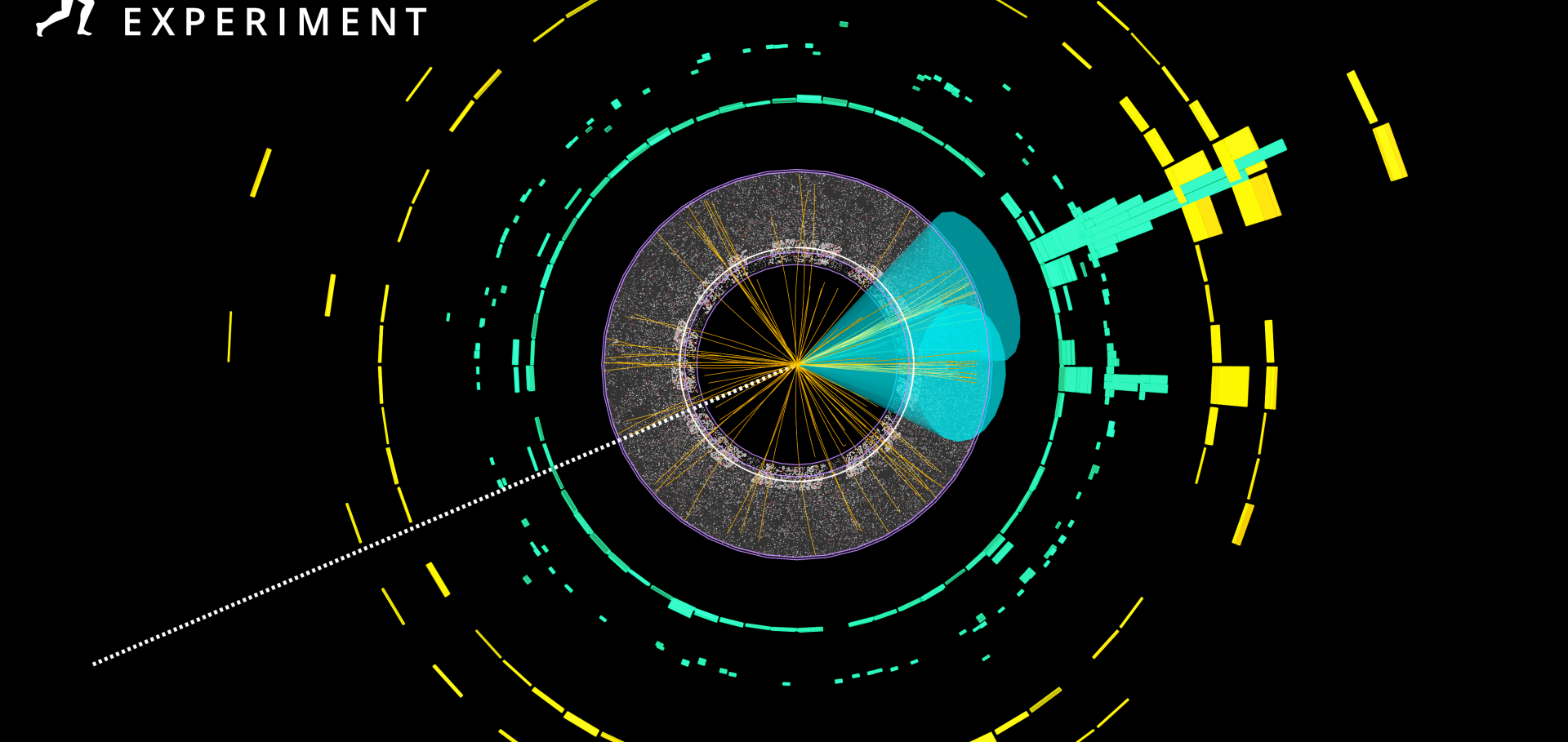
Search for boosted low-mass resonances decaying into hadrons produced in association with a photon in pp collisions at s = 13 TeV with the ATLAS detector
Journal of High Energy Physics Springer 2025:1 (2025) 99