

Opto-mechanical design of the KMOS spectrograph module - art. no. 62694G
P SOC PHOTO-OPT INS 6269 (2006) G2694-G2694
Abstract:
We present the optical and mechanical design of the KMOS spectrograph module together with a detailed analysis of its performance. KMOS is a cryogenic near-infrared multi-object spectrograph being developed as a second-generation instrument for the VLT by a consortium of UK and German institutes. Three identical spectrograph modules provide Nyquist sampled spectra in the wavelength range covering the atmospheric bands z, J, H, and K with a resolving power exceeding 3200. The spectrographs are fully achromatic over the bands and the single mirror collimator and six-element camera, together with six high efficiency gratings provide high throughput. The optical performance analysis includes amongst others the spectral resolving power and variation of the PSF as a function of the pupil illumination.SWIFT Image Slicer: large format, compact, low-scatter image slicing - art. no. 62732L
P SOC PHOTO-OPT INS 6273 (2006) L2732-L2732
Abstract:
We present the SWIFT image slicer and its novel de-magnifying design. It is based on the MPE-3D and SPIFFI image slicers, uses plane mirrors to slice the input field, but achieves a considerable de-magnification through the use of a mosaic of spherical lenses. As only plane and spherical surfaces are used in the design, classical polishing techniques can be applied to achieve very high surface accuracy and quality. This reduces aberrations and scattered light, mandatory for an image slicer working at optical wavelengths and behind an adaptive optics system. Except for the lens mosaic, the SWIFT slicer is built entirely from Zerodur and is assembled using optical contacting. We present a detailed description of the design as well as results of the early stages of its fabrication.SWIFT: An adaptive optics assisted I/z band integral field spectrograph
New Astronomy Reviews 49 (2006) 647-654
The life of stars and their planets
European Space Agency Special Publication ESA SP (2005) 99-104
Abstract:
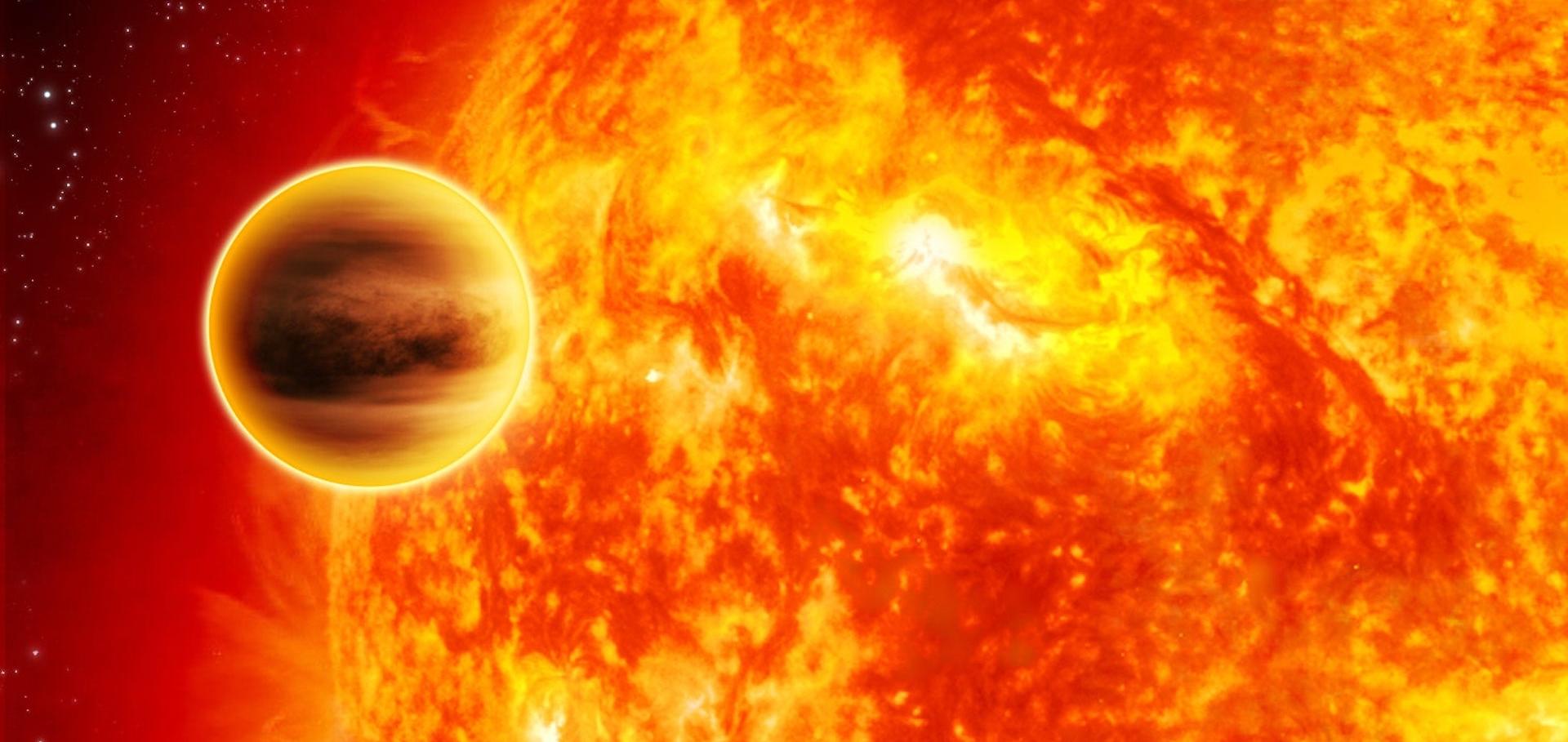
We lack a reliable scenario for the formation and evolution of stars and their planetary systems, involving key factors such as magnetic fields and turbulence. We present the case for a mission concept that will clarify these problems and give us a global view of the evolution of combined star and planetary systems. This will be achieved by simultaneously addressing the search for planetary transits in front of a large number of stars, including many nearby stars, the study of their internal structure and evolution via asteroseismology, and that of their magnetic activity, via UV monitoring.Nuclear Dynamics and Star Formation of AGN
(2005)