

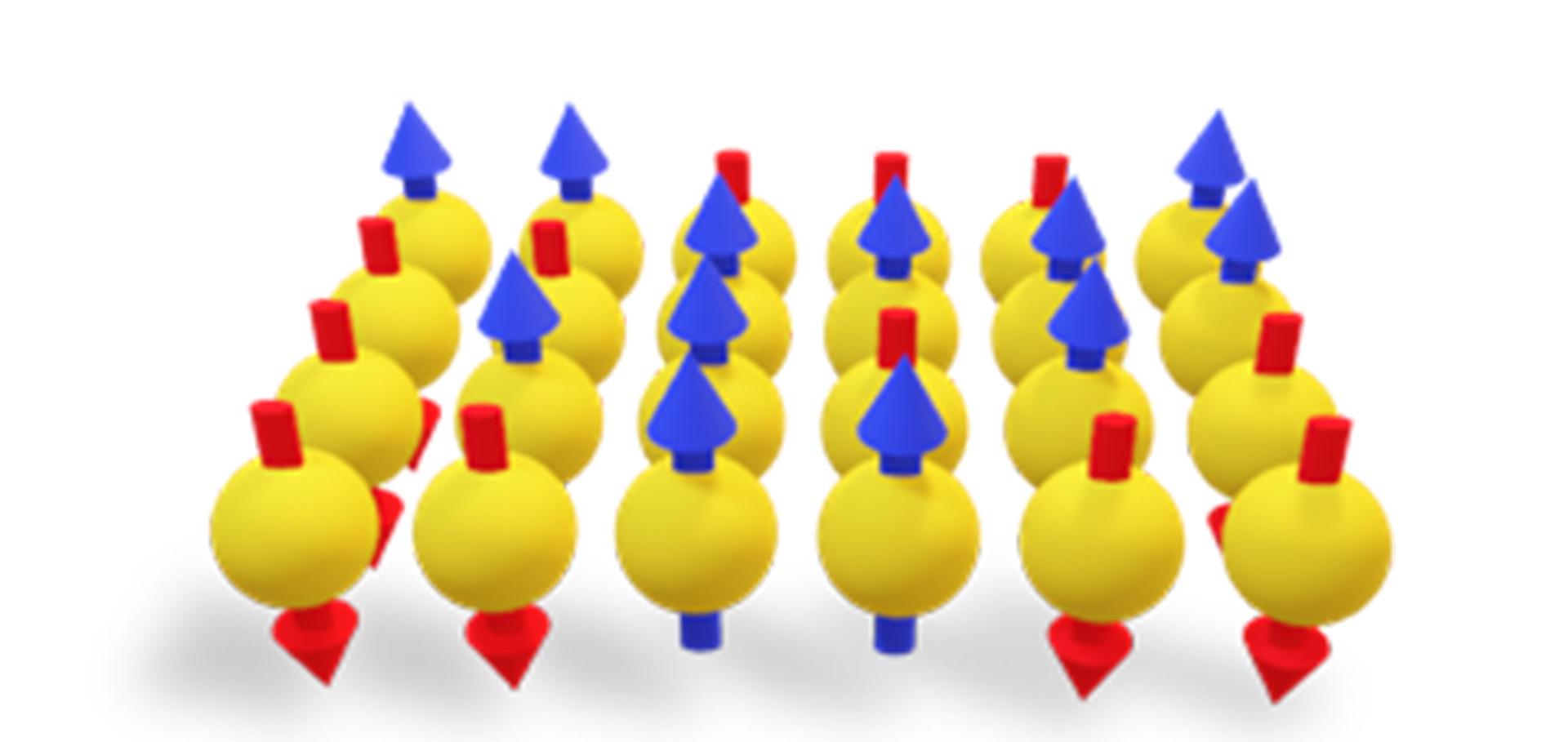
Dynamical l-bits and persistent oscillations in Stark many-body localization
Physical Review B American Physical Society 106:16 (2022) L161111
Abstract:
Stark many-body localized (SMBL) systems have been shown both numerically and experimentally to have Bloch many-body oscillations, quantum many-body scars, and fragmentation in the large field tilt limit, but these observations have not been fundamentally understood. We explain and analytically prove all these observations by rigorously perturbatively showing the existence of novel algebraic structures that are exponentially stable in time, which we call dynamical l-bits. In particular, we show that many-body Bloch oscillations persist even at infinite temperature for exponentially long-times using a new type of dynamical algebra and provide a bound on the tilt strength for this non-ergodic transition. We numerically confirm our results by studying the prototypical Stark MBL model of a tilted XXZ spin chain. Our work explains why thermalization was observed in a recent 2D tilted experiment. As dynamical l-bits represent stable, localized, and quantum coherent excitations, our work opens new possibilities for quantum information processing in Stark MBL systems even at high temperature.Recompilation-enhanced simulation of electron–phonon dynamics on IBM quantum computers
New Journal of Physics IOP Publishing 24:9 (2022) 093017-093017
Abstract:
Identifying the types of algorithms and applications that can be solved on today's quantum computers is one of the fundamental goals of modern quantum algorithms research. Underpinning this effort is the potential leap in human technology should it be shown that quantum computers can perform useful classically-intractable calculations in the absence of quantum error correction. In this thesis we study the new paradigm of variational quantum algorithms (VQAs), designed specifically to solve optimisation problems on near-term hardware. We develop several novel algorithms spanning a range of application areas and provide estimates of the physical resources required to match classical methods. Thereafter, we attempt to run these algorithms on current quantum computers, probing their capabilities in the process. In this endeavour, we also develop our own algorithmic solution to device noise in the form of a new approach to approximate quantum circuit recompilation. We begin with studying the feasibility of simulating the time evolution of quantum systems on current quantum computers, an important problem due to its classical hardness. We build an algorithm specifically focused on the electron-phonon Hamiltonian and subsequently realise the first demonstration of obtaining its dynamics on real quantum hardware. Subsequently, we test whether a similar result is possible for time-evolution based VQAs. For this we construct a near-term quantum computing approach to dynamical mean-field theory and find that whilst not possible currently, such an algorithm could be realistically evaluated on the next generation of quantum computers in the immediate future. We then show how quantum circuits can be used as machine learning models and apply them to self-supervised learning, one of the most demanding tasks in deep learning. Through our experiments we observe a numerical advantage for the learning of visual representations using small-scale quantum neural networks over equivalently structured classical networks, a first step on the ladder towards general quantum advantage. Through this, we also highlight the potential of near-term quantum computing in problems with only empirically established classical complexityTime periodicity from randomness in quantum systems
Physical Review A 106:2 (2022)
Abstract:
Many complex systems can spontaneously oscillate under nonperiodic forcing. Such self-oscillators are commonplace in biological and technological assemblies where temporal periodicity is needed, such as the beating of a human heart or the vibration of a cello string. While self-oscillation is well understood in classical nonlinear systems and their quantized counterparts, the spontaneous emergence of periodicity in quantum systems is more elusive. Here, we show that this behavior can emerge within the repeated-interaction description of open quantum systems. Specifically, we consider a many-body quantum system that undergoes dissipation due to sequential coupling with auxiliary systems at random times. We develop dynamical symmetry conditions that guarantee an oscillatory long-time state in this setting. Our rigorous results are illustrated with specific spin models, which could be implemented in trapped-ion quantum simulators.Crystallization via cavity-assisted infinite-range interactions
PHYSICAL REVIEW A 106:1 (2022) ARTN L011701
Coarse-grained intermolecular interactions on quantum processors
Physical Review A American Physical Society 105:6 (2022) 62409