


Note that other projects targeting exoplanet science are offered by the Atmospheric, Oceanic and Planetary Physics sub-department, and listed on their website.
Towards Earth twins with PLATO
Supervisor: Suzanne Aigrain
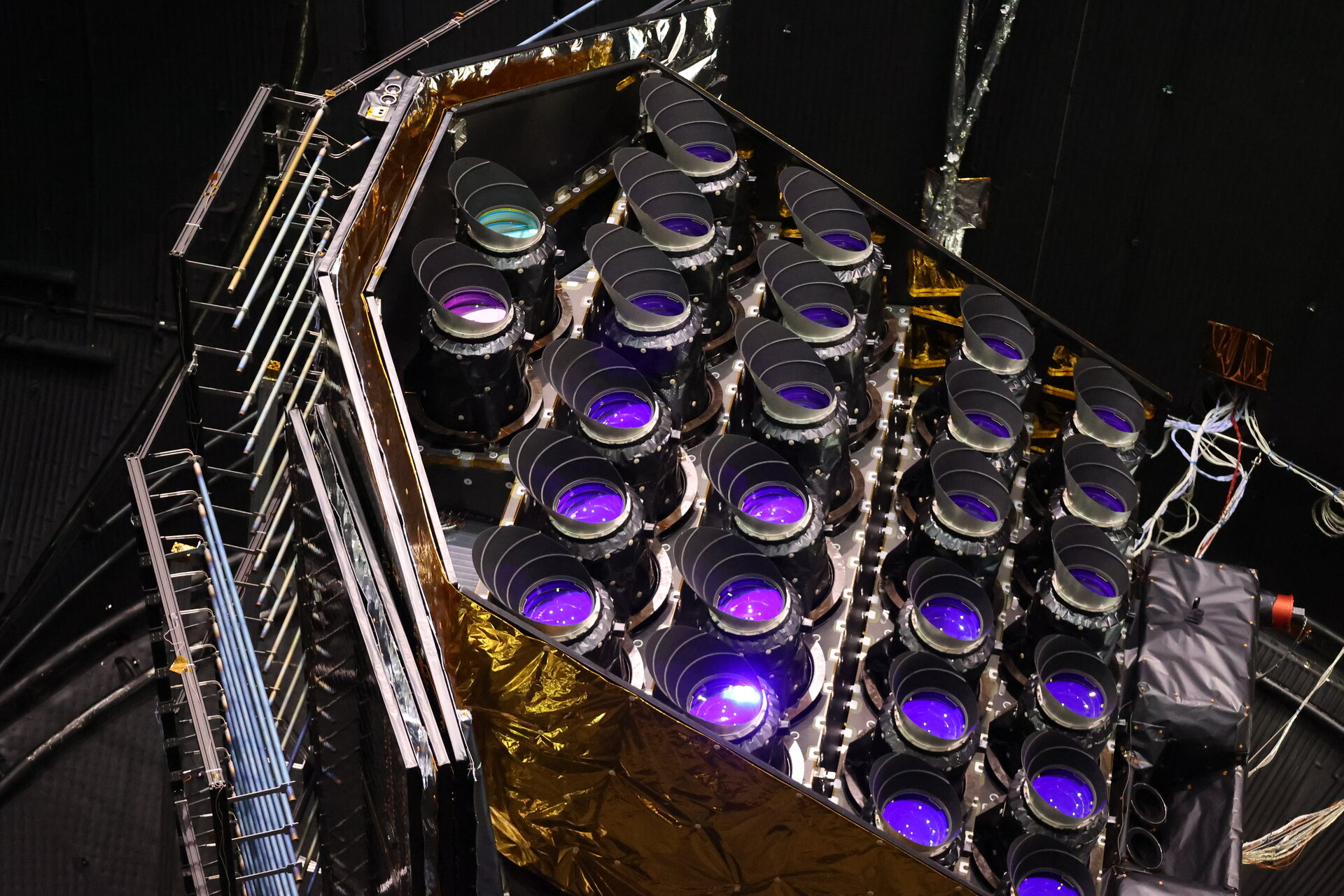
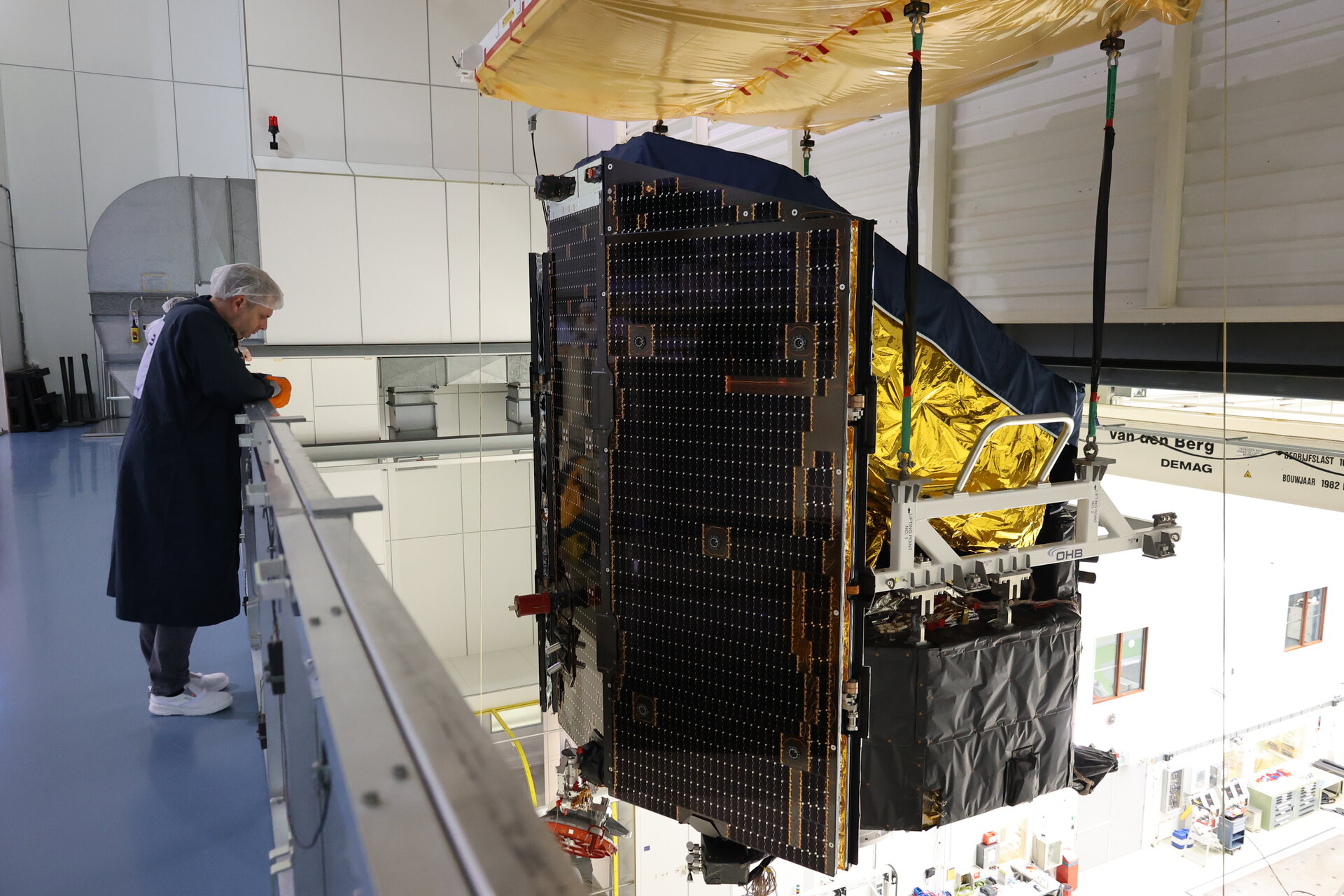
The PLATO space mission, due for launch in March 2027, is the European Space Agency’s next M-class mission. It will search for planetary transits, including those caused by planets with similar sizes and orbits to the Earth, and simultaneously characterise the host stars using asteroseismology. Measuring the masses of the planets using follow-up radial velocity observations from the ground is also a core part of the mission. Starting 6 months into the mission, just as the first science data are beginning to flow, the PhD student get involved in the verification and validation activities for the Exoplanet Analysis System, the pipeline which searches for transits in the light curves and models them. They will also contribute to early science projects designed to demonstrate the capabilities of PLATO before its data and pipelines have been fully validated (for example characterisation of previously know planetary systems that PLATO will observe). As the mission matures, they will have the opportunity to get involved in the discovery and characterisation of new planetary systems.
Science From the Moon
Supervisors: David DeBoer, Kris Zarbadami, Neil Bowles
Note: students interested in this project should apply to the Atmospheric Oceanic and Planetary Physics programme (not the Astrophysics one). Their website, which also lists other projects in planetary physics can be found here.
We uniquely rely on radio telescopes to understand the bulk of baryonic matter in the early Universe and the evolution of the Universe across early Cosmic times. There are two unavoidable limitations to our exploration of the Cosmos with terrestrial-based radio telescopes:
- the prevalence of interfering radio transmissions from human activity, and
- the Earth’s ionosphere and atmosphere, which are opaque or disruptive to many important radio frequency ranges.
These limitations are overcome by reaching above the atmosphere and beyond Earth, a capability that, to date, has generally been the exclusive purview of expensive, government-funded space-based “Great Observatories”.
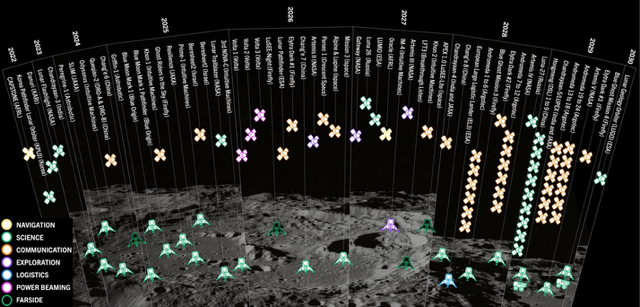
However, we are now on the cusp of a new era, with cost-effective and opportunity-laden access to space (including the lunar surface) becoming a reality. Such unfettered access will enable disparate groups to send instruments there, bringing about a transition from Earth-based observatories to space-based and cislunar telescopes (Fig. 1). Although this shift provides exciting opportunities for new science, it will also introduce sources of radio frequency interference (RFI) to the quietest remaining location to which we have access: the lunar Farside. Measurements from a generally RFI-free environment must be taken before the lunar skies have a multitude of orbiters.
One mission in the planning stage is the Lunar Farside Technosignature and Transients Telescope (LFT3). Being led out of Oxford, this mission would seek to arrive on the lunar farside surface before 2030, to take unique-in-history measurements from <1 - 2700 MHz.. The science case is wide and spans technosignatures, transients, cosmology and lunar studies. This project would explore instrumentation for scientific outcomes for LFT3 and any potential “ride-along” instruments. This could include all mission aspects as well as foundational and preparatory science and instrumentation. The overall goal is science from the Moon, which also includes regolith studies and operations from the Moon. Specifically, this project would work with the LFT3 instrument design and strive to maximize the scientific impact of the data to be collected from the Moon at this unique time.