The Extreme End of Galaxy Evolution: Supermassive Black Holes and Dark Matter with JWST and MUSE
Supervisor: Michele Cappellari
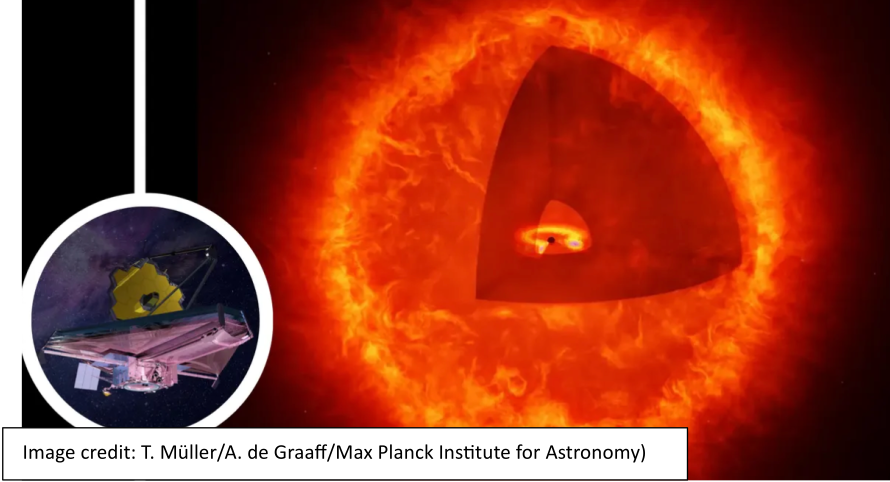
Ultra-massive early-type galaxies (with stellar masses greater than 2 x 10^12 solar masses) represent the final and most extreme stage of hierarchical galaxy assembly. Because of their extreme rarity, their internal properties, supermassive black hole masses, dark matter halos, and stellar initial mass function, remain poorly understood, yet they provide fundamental benchmarks for cosmological models.
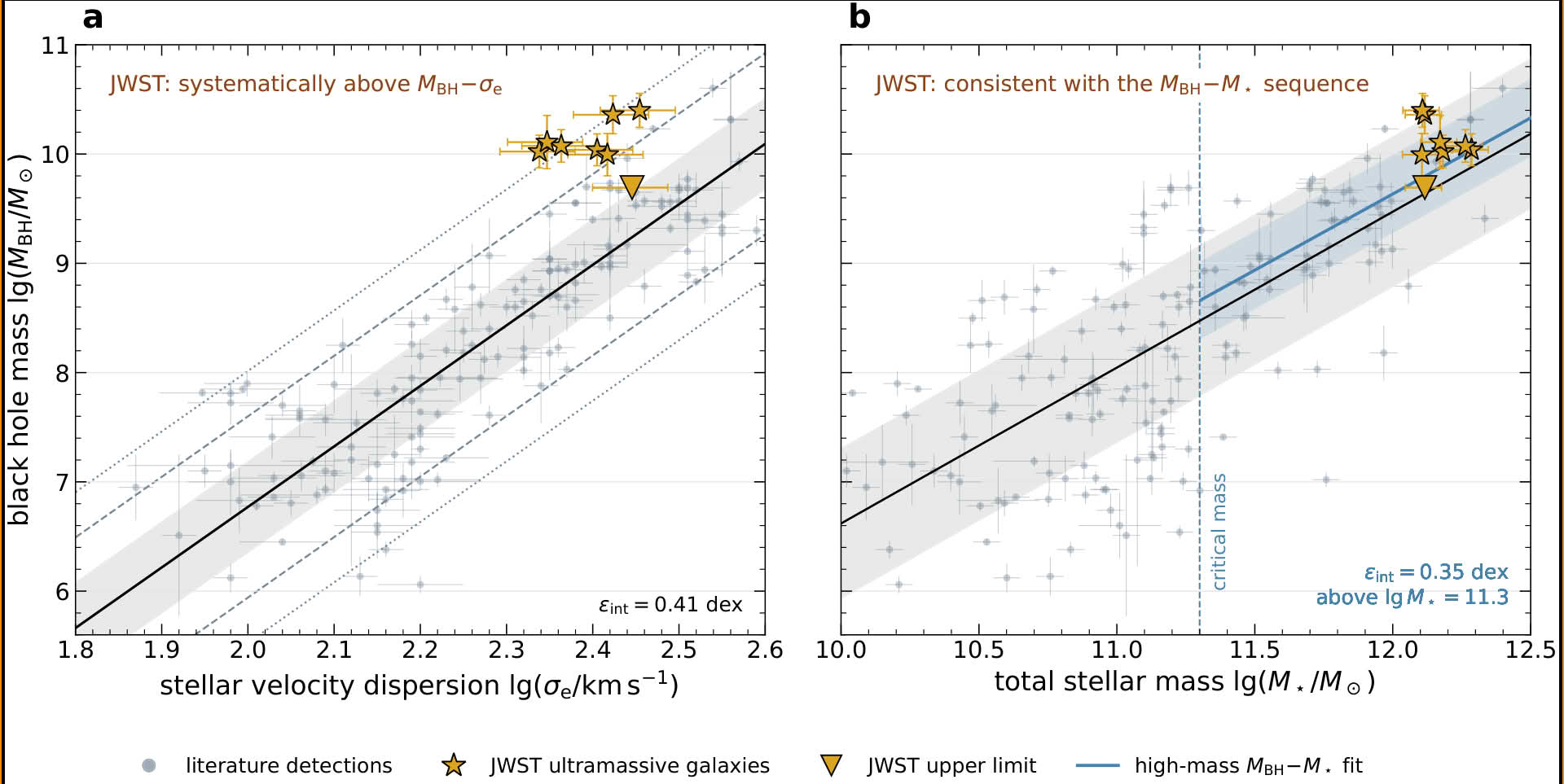
Recently, spectacular high-resolution JWST observations have uncovered a striking and unexpected discovery: a stochastic breakdown of the canonical black hole mass vs stellar velocity dispersion (MBH - sigma_e) scaling relation at the extreme mass end. In these ultra-massive galaxies, supermassive black holes appear to deviate upward from the standard relation by up to 3-sigma. Confirming the profound cosmological implications of this result requires the ultimate combination of high-resolution nuclear data and wide-field kinematics.
The Project: This DPhil project will utilize an unparalleled, cutting-edge dataset combining nuclear JWST NIRSpec IFS and NIRCam observations with wide-field VLT/MUSE integral-field spectroscopy for a benchmark sample of the most massive galaxies in the Universe.
The successful student will extract and analyse the stellar kinematics and stellar populations of these galaxies. By combining the wide-field MUSE data with the high-resolution JWST data, you will build state-of-the-art triaxial Schwarzschild orbit-superposition models using the DYNAMITE code.
The primary goals of the project are to:
- Provide a decisive, independent dynamical cross-check of the gargantuan black hole masses discovered by JWST.
- Unveil the three-dimensional intrinsic shapes and outer dark matter halo profiles of these extreme systems out to large radii.
- Measure radial gradients in stellar populations and account for their impact on dark matter measurements.
The student will gain extensive expertise in integral-field spectroscopy (using pPXF and power-binning), advanced dynamical modelling, and galaxy evolution physics, working at the forefront of both JWST and VLT science.
Recommended Reading:
- The recent JWST discovery motivating the project: Cappellari M., Nguyen D. D., &
Kassin S. A., 2026, "Breakdown of the MBH-sigma_e relation in Ultra-Massive
ETGs" Link: https://arxiv.org/abs/2609.21981 - Background on the ultra-massive galaxy sample: Nguyen D. D., Cappellari M., &
Pereira-Santaella M., 2023, "The properties of ultra-massive early-type
galaxies", MNRAS, 526, 3548. Link:
https://ui.adsabs.harvard.edu/abs/2023MNRAS.526.3548N/abstract - The dynamical modelling code (DYNAMITE) you will use: Thater S., et al., 2022,
"DYNAMITE: a new Schwarzschild modelling code for galaxies", MNRAS, 509, 5416.
Link: https://ui.adsabs.harvard.edu/abs/2022MNRAS.509.5416T/abstract - The kinematic extraction techniques (pPXF): Cappellari M., 2023,
"Full spectrum fitting with pPXF", MNRAS, 526, 3273. Link:
https://ui.adsabs.harvard.edu/abs/2023MNRAS.526.3273C/abstract
Exploring the Milky Way with WEAVE
Supervisor: Gavin Dalton
WEAVE, for which Dalton is the PI, is now commencing its 5-year programme of wide-field spectroscopic surveys in the Northern Hemisphere. A major component of these surveys (grouped together as Galactic Archaeology) is the detailed study of the dymnamics, evolution and formation history of the Milky Way, as a natural complement to the exquisite data that has been obtained by the Gaia satellite mission. Within the ~5 million stellar spectra that will be obtained by WEAVE under this programme there are multiple avenues of exploration that can be developed. In parallel, there are opportunities to develop follow-up WEAVE observations for emergent discoveries.
At this stage the scope of this project is intended to be broad, rather than strongly targeted, to allow the student to formulate and develop their own path through this exciting discovery space.
Black hole feedback across cosmic time: Exploring Outflows with JWST and ALMA
Supervisors: Niranjan Thatte, Dimitra Rigopoulou
Supermassive black holes (SMBH) reside at the centres of most massive galaxies, and their growth is intimately linked to the evolution of their hosts. When actively accreting matter, these black holes power active galactic nuclei (AGN), releasing enormous amounts of energy that can drive powerful outflows and influence star formation. Understanding how AGN feedback affects the interstellar medium (ISM) and regulates galaxy growth remains one of the key outstanding questions in galaxy evolution.
The James Webb Space Telescope (JWST) provides unprecedented opportunities to investigate these processes. Its sensitivity and spatial resolution at infrared wavelengths allow us to probe the dust-obscured regions of galaxies and trace the physical conditions and kinematics of the gas surrounding actively growing black holes. This DPhil project will exploit unique NIRSpec and MIRI-MRS integral-field spectroscopy (IFS), complemented by ALMA observations, to investigate how AGN-driven outflows interact with the surrounding ISM and
affect star formation. The project offers two complementary research directions, which may be pursued individually or combined.
Resolving black hole feedback in nearby galaxies
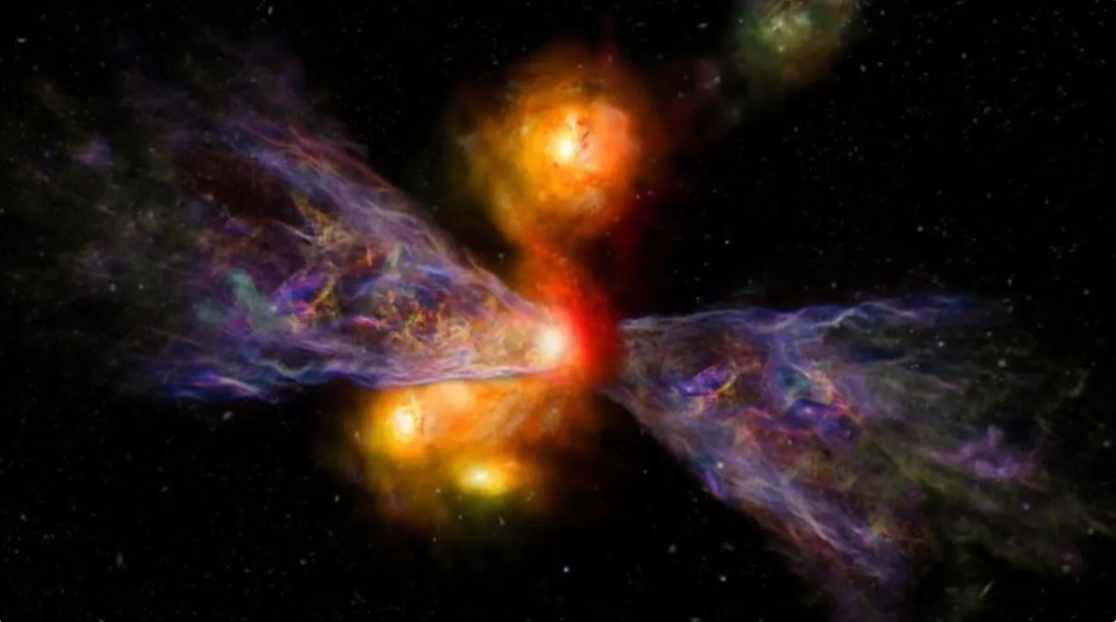
Nearby AGN provide unique laboratories for investigating the interaction between SMBH and their host galaxies in remarkable detail. But fundamental questions remain: How are nuclear outflows launched and how do they interact with the surrounding gas? Does the strength and nature of feedback depend on black hole mass and luminosity? Under what conditions does AGN activity suppress or enhance star formation?
In this project, we will use MIRI-MRS and NIRSpec integral-field spectroscopy, complemented by ALMA observations, to investigate the warm molecular and ionised gas, dust and star formation in the central regions of nearby active galaxies. A comprehensive suite of infrared emission and absorption diagnostics will be used to determine the physical conditions and excitation of the gas and to map its kinematics. By combining these measurements with spatially resolved diagnostics of star formation, we will investigate how AGN-driven outflows propagate through the nuclear regions and affect the surrounding ISM. A key goal will be to identify observational signatures that distinguish between positive and negative AGN feedback. This project is part of the GATOS collaboration and offers opportunities to work within a large international team studying the interplay between black hole activity, the ISM and star formation in nearby galaxies.
Black hole feedback at Cosmic Noon and beyond
Cosmic Noon marks the peak of star formation and SMBH growth in the Universe, making it a crucial epoch for understanding galaxy evolution. Here we will exploit proprietary JWST observations of powerful high-redshift AGN to investigate the physical and chemical conditions of the gas and the impact of large-scale outflows on their host galaxies. A major component of the project will involve advanced three-dimensional kinematic modelling to reconstruct the intrinsic geometry and dynamics of biconical outflows, enabling measurements of their mass-outflow rates and kinetic powers. Combining these results with infrared diagnostics of the ISM and star formation will provide new constraints on the role of AGN feedback during this critical epoch.
Training and Research Opportunities
The successful candidate will work with cutting-edge observational datasets and develop expertise in JWST integral-field spectroscopy, infrared spectroscopic diagnostics and spatially resolved gas kinematics. Depending on the chosen research direction, the student will also gain experience in ALMA observations, multi-wavelength analysis and advanced three-dimensional kinematic modelling.
The complementary nature of the two strands offers opportunities to connect the evolution of the AGN feedback and its impact on the host galaxy as a function of cosmic epoch. Using the detailed analysis of nearby AGN, we will formulate a parameterised models that can be fit to more distant objects, where detailed analysis is prohibited by signal to noise constraints. The evolution of parameters with cosmic time will lead to a deeper understanding of the interplay between AGN and their host galaxies. The precise balance between the two research directions can be tailored to the candidate's interests and the scientific questions they wish to address.
Further Reading: Rigopoulou et al. (2024), MNRAS, 532, 1598; García-Bernete et al. (2024),
A&A, 691, 162; Donnan et al. (2026), MNRAS, 550, 1181; Veenema, Thatte & Rigopoulou
(2026), arXiv:2609.30232.
The Dust Budget Crisis: Linking Active Galactic Nuclei and Little Red Dots
Supervisors: Prof. Dimitra Rigopoulou, Dr. Houda Haidar
One of the most exciting discoveries made by the James Webb Space Telescope (JWST) is the population of compact, red sources known as Little Red Dots (LRDs). Particularly abundant in the early Universe, many LRDs appear to host rapidly growing supermassive black holes (SMBH), potentially providing a new window onto the earliest phases of black-hole growth. Yet their properties are strikingly different from those of familiar Active Galactic Nuclei (AGN).
A big puzzle in understanding the nature of LRDs concerns dust. In nearby AGN, the dense gas surrounding an accreting SMBH is normally accompanied by large quantities of dust. Many LRDs, however, appear to contain extremely dense gas but surprisingly little dust —an apparent “dust budget crisis.” This raises the fundamental question: Are Little Red Dots governed by the same physical processes as AGN in the nearby Universe, or do they represent a fundamentally different phase of black-hole growth?
This DPhil project will use JWST observations to compare the gas and dust properties in LRDs with those in nearby AGN. It will investigate whether differences between the two populations can be understood as part of an evolutionary sequence, or whether new physical conditions are required to explain the growth of black holes in the early Universe. A particular focus will be to understand what happens to the dust around rapidly growing black holes. Is dust removed by powerful outflows, as observations of nearby AGN might suggest, or do LRDs grow in environments that were relatively dust-poor from the outset? These two possibilities have very different implications for the formation of the first massive black holes and the early chemical evolution of galaxies.
The student will develop expertise in JWST spectroscopy, AGN and early galaxy evolution, and the physics of gas, dust and black-hole feedback, while working on one of the most rapidly developing areas of extragalactic astrophysics.
Further Reading: Naidu et al. 2026, Nature, 656, 329; Donnan, Garcia-Bernete, Rigopoulou (2026), MNRAS 550, stag1181, Donnan, Rigopoulou & Garcia-Bernete 2024, MNRAS, 532, L75; Rigopoulou et al. 2024, MNRAS, 532, 1598.
Type Ia supernova cosmology with the Rubin Observatory’s Legacy Survey of Space and Time, the ATLAS SN Ia sample and the 4MOST spectrograph
Supervisors: Maria Vincenzi, Stephen Smartt, Matt Jarvis
It’s an exciting time for cosmology. Over the past two years, numerous independent cosmological studies have been published using very different techniques (Type Ia supernovae, baryon acoustic oscillations and the cosmic microwave background). Remarkably, taken together, these findings seem to point to the same conclusion: the properties of dark energy are more complex than previously understood.
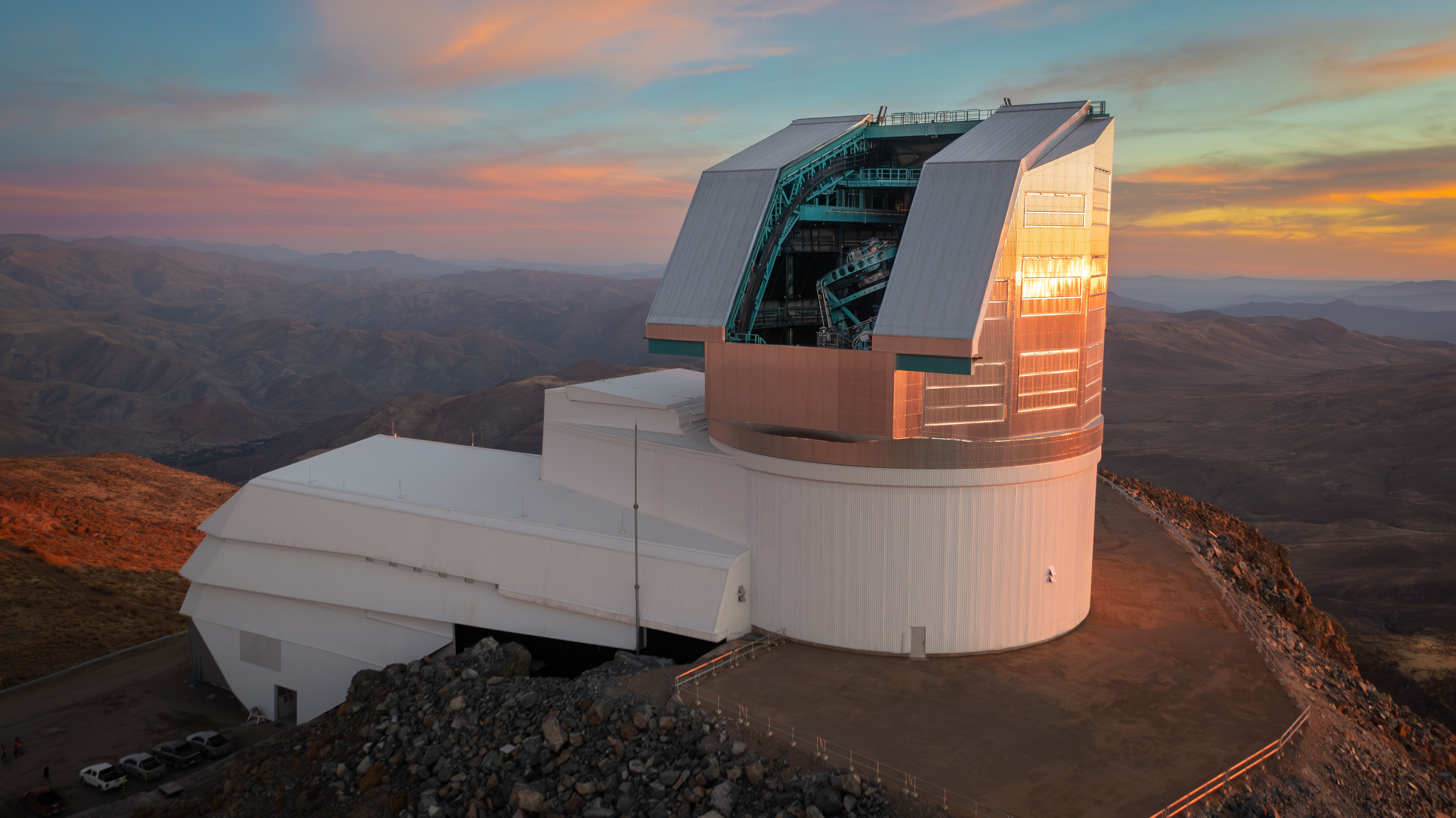
Type Ia supernovae (SNe Ia) are among the most well-established tools in modern cosmology, with dozens of successful cosmological experiments conducted over the past three decades. After 15 years of design and construction, the Vera C. Rubin Observatory’s Legacy Survey of Space and Time (LSST) began in summer 2026. LSST is expected to transform the field: in its first year of operations alone, it will discover more SNe Ia than have been observed since the field began.
Our team is heavily involved in the analysis of the first LSST transient data. We work on a wide range of projects, both observation-oriented and simulation-oriented. They revolve around developing and testing transient discovery and classification pipelines, optimising LSST spectroscopic follow-up programmes, studying the host galaxies where these SNe explode, and designing new approaches to SN cosmology to minimise sources of systematic biases.
With other UK scientists, we are also involved in the TiDES spectroscopic follow-up programme. It will use the 4MOST spectrograph to follow up tens of thousands of LSST transients and their host galaxies, providing crucial insights into their properties and redshifts.
Besides LSST, which will mainly discover high-redshift (z > 0.1) SNe Ia, we are leading the cosmological analysis of the ATLAS SN Ia sample, the largest low-redshift (z < 0.1) SN Ia sample ever compiled for cosmology.
The DPhil project will focus on preparing for future SN Ia cosmological measurements using LSST, TiDES and ATLAS data, with an emphasis on addressing the key sources of uncertainty that affect these measurements.
Forming the First Star Clusters and Intermediate-Mass Black Holes in the Universe: the Role of Protostellar Feedback and Cosmic Rays
Supervisors: Julien Devriendt, Adrianne Slyz
Stars in the Universe form predominantly in clusters within giant galactic molecular clouds. This clustered mode of star formation has profound implications for the formation and evolution of galaxies, as it concentrates stellar feedback in both space and time. Ionising radiation bubbles and supernova explosions emanating from massive stars within clusters overlap, changing how stellar feedback energy couples to the interstellar medium and driving powerful, mass-loaded gas outflows.
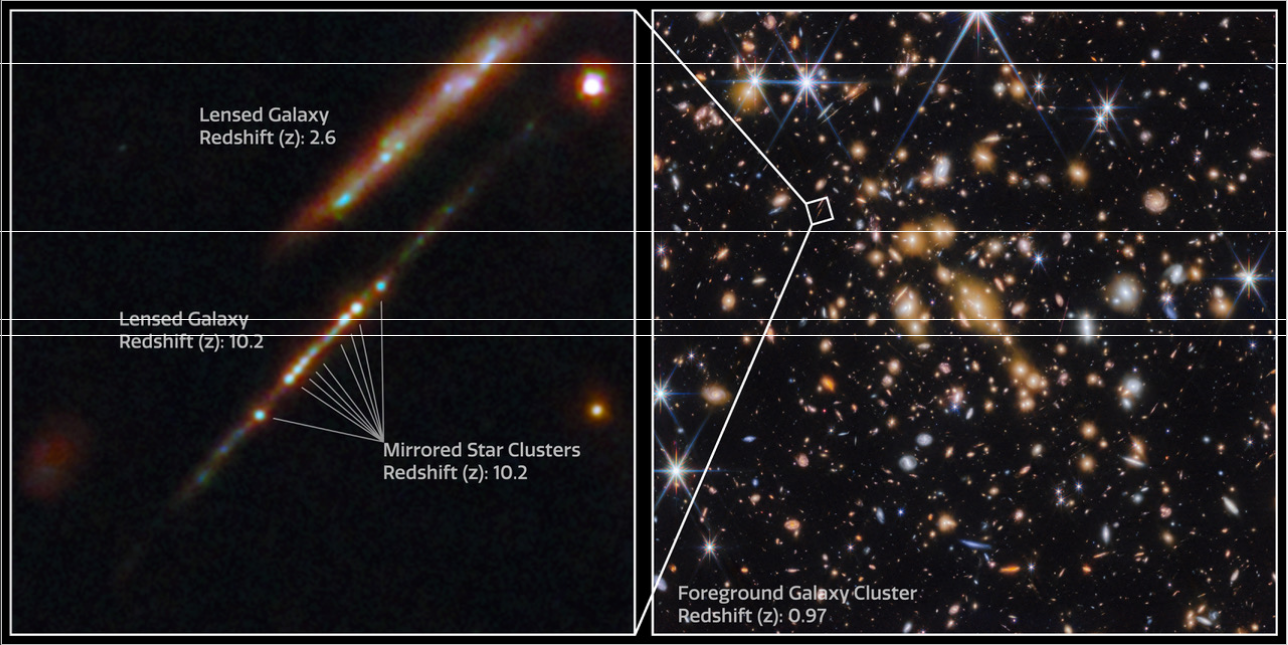
Whilst observations of star clusters have traditionally been the preserve of the local Universe, JWST, combined with gravitational lensing, now allows us to probe their formation at cosmic dawn. Magnifications of tens to hundreds resolve individual star clusters in galaxies from z=6 to beyond z=10. In the Cosmic Gems arc at z=10.2 for example, Adamo et al (2024) find five clusters younger than 50 Myr with masses around 106 M8 (see Fig 1.). These objects appear unusually bright for their host galaxies. Why the first clusters should be so luminous is an open question. They are also so dense that the stars at their very centre are believed to collide with one another, eventually fusing together to form intermediate mass black holes.
For this project, the DPhil student will perform numerical studies of the initial cluster mass function (ICMF) within the explicit framework of a cold dark matter dominated Universe, using the adaptive mesh refinement radiative hydrodynamics code RAMSES-RT (Rosdahl et al 2013). At first, they will be tasked
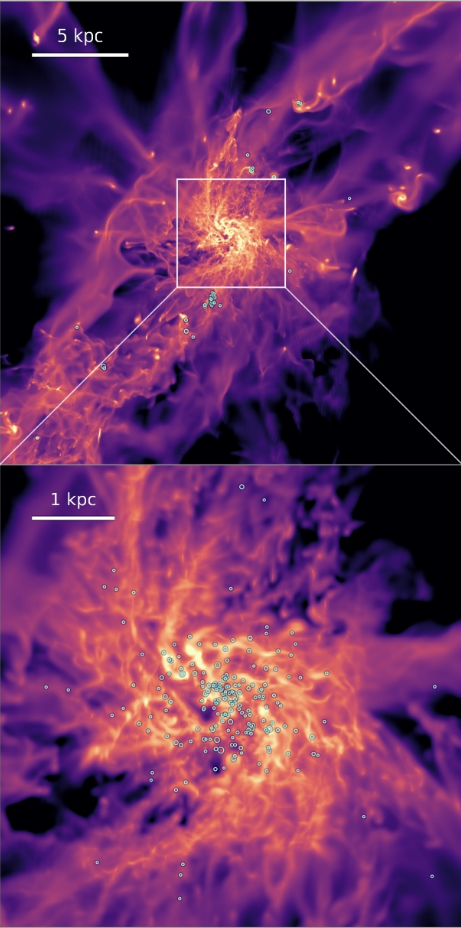
with developing a stellar wind feedback module, building on the previous star cluster modelling work carried out within the group (Thompson et al 2026; see Fig. 2).
They will then move on to designing and running their own high-resolution simulations of galaxy formation, building on the newly developed module and radiative hydrodynamics, to incorporate both magnetic fields (Fromang et al 2006, Martin-Alvarez et al 2018) and cosmic rays (Dubois & Commercon 2015; Rodriguez-Montero et al. 2024). Scientific goals include assessing which feedback processes most strongly influence the ICMF, and in which way; investigating how these processes shape molecular clouds at both local and galactic scales particularly through their impact on the cloud mass function; assessing whether simulated ICMFs produce clusters bright enough to account for the JWST observations; and exploring how these ICMFs impact the initial black hole mass function predicted by stellar collisions within these clusters, as well as the resulting gravitational wave signals and rates of tidal disruption events.
The DPhil student will be part of an international collaboration (US, France, South Korea, UK) developing and exploiting state-of-the-art, high-resolution, and physics rich cosmological simulations.
Galaxy Evolution and Cosmology with Strong Gravitational Lenses
Supervisor: Aprajita Verma
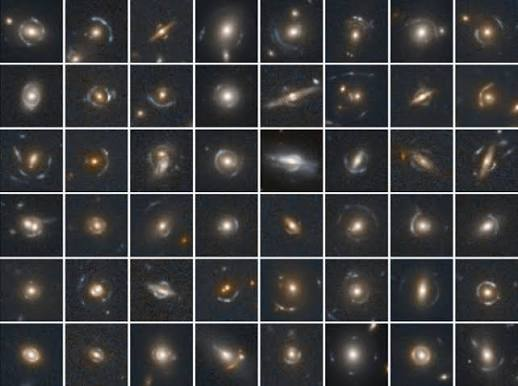
Strong gravitational lenses are versatile probes of many open questions in cosmology and extragalactic astrophysics. While their rarity has limited their use to date, using exquisite high-spatial resolution wide field data from ESA’s Euclid space telescope we have increased the number of known strong lenses already by a factor of 15 with the promise of hundreds of thousands of systems to come with further Euclid data and the surveys carried out by Vera C. Rubin Observatory’s Legacy Survey of Space and Time and the Nancy G. Roman Telescope. The Euclid DR1 sample is an unparalleled treasury which we are collecting ancillary and follow-up data on. With this sample in the DPhil project, we can perform detailed studies of structural evolution of the deflector lenses and investigate how processes such as baryonic feedback and merger history have shaped galaxies. The near-infrared imaging provided by Euclid and Roman will produce large samples of lensed background galaxies that are at high redshift and/or obscured by dust. The magnification and amplification due to lensing allows us to understand the nature and structure of such galaxies at fainter intrinsic luminosities than would be possible with wide field surveys. These samples include strongly lensed quasars and compound lenses that provide a complementary probe to constrain cosmological models. The project will be tailored to the interests of the student. The student will have the opportunity to contribute to lens searches in new datasets (including citizen science), join and collaborate with large international consortia and apply for follow-up observations on interesting systems.
Cosmology, galaxy formation, and feedback from small and large scales
Supervisors: David Alonso, Matt Jarvis
The spatial distribution of galaxies and other tracers of the large-scale structure (LSS) are crucial observables in our quest to understand the origin and evolution of our Universe, as well as the complex physics that governs the formation of galaxies within the cosmic web of dark matter. Key open questions are:
- The nature of dark matter and dark energy, and their impact in the evolution of cosmic structure.
- The physics of feedback from supermassive black holes and supernovae, and their impact on the formation and evolution of stars and galaxies.
- How these processes and galaxy properties are related to their dark matter halo environments
In this project, we will combine state-of-the-art LSS datasets with novel theoretical and statistical approaches to address these questions. On the observational side, we will leverage Oxford's access to deep-field galaxy survey data, providing pristine measurements of clustering on small scales, with wide-field probes of the large-scale structure across multiple wavelengths. These will include the first galaxy and weak lensing data from the Vera C. Rubin Observatory and Euclid, and the first maps of the microwave sky from the Simons Observatory. On the theory side, we will combine analytical approaches describing the physics of the small-scale clustering of matter, gas, and galaxies, with simulation-based techniques providing an accurate connection with the large-scale cosmic web.
The project itself can evolve in various directions depending on the interests of the student, with the overarching aim to bring together a deeper understanding of galaxy formation and evolution to gain a more precise understanding of structure formation at all scales and is ideally suited for students with an interest in combining both theory and observations. It will provide experience in multiple areas of data analysis, from images and maps to science-ready observables, and it will introduce the student to the latest theoretical tools to model the formation of cosmic structures and the physics of galaxies and the inter-galactic medium.
Phenomenological tests of dark matter interactions with galaxy populations
Supervisors: Pedro Ferreira, Tariq Yasin, Harry Desmond
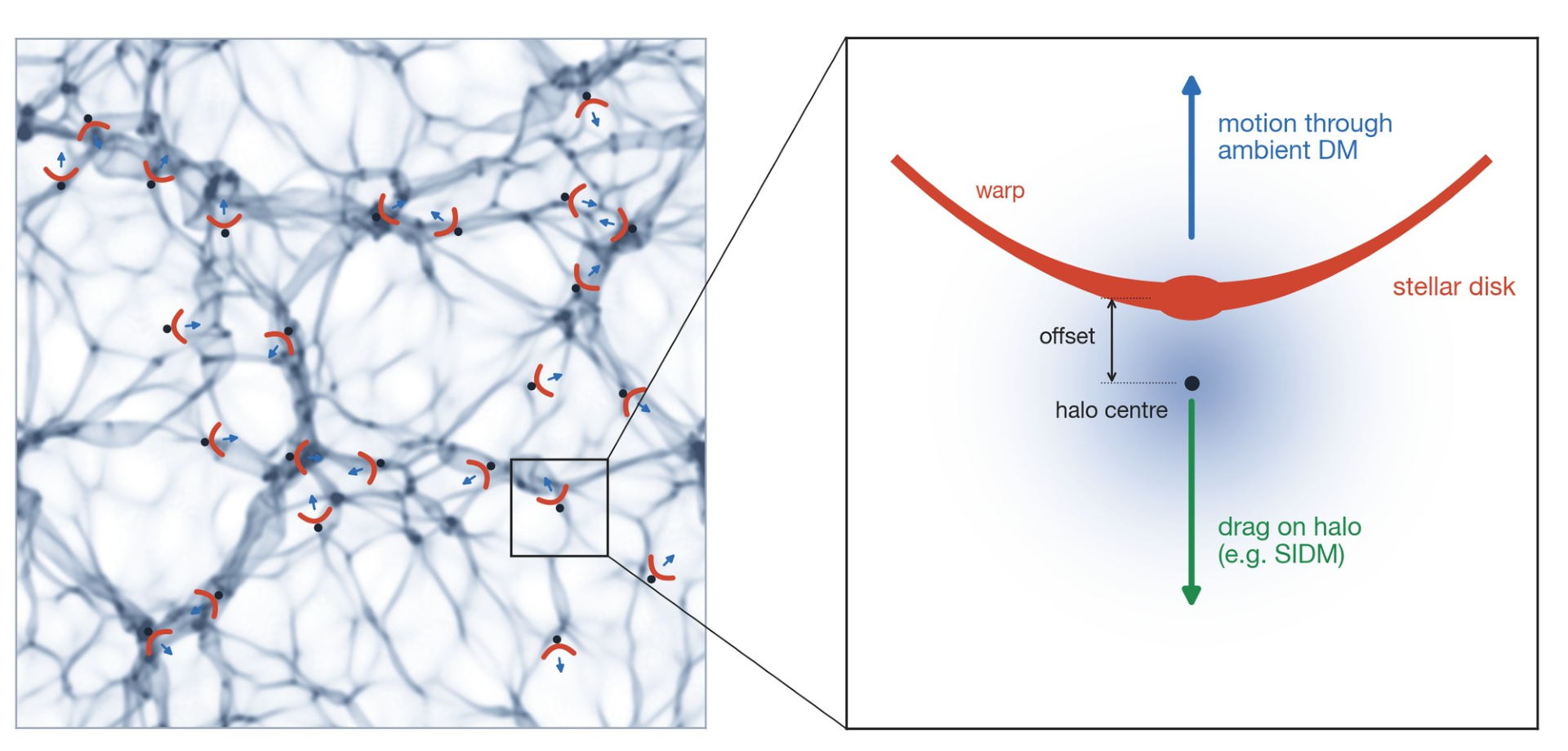
One of the open questions in physics is whether General Relativity and collisionless dark matter are really the whole story. Dark matter detectors have steadily closed off much of the parameter space for the most popular particle candidates without finding anything, and the cosmic expansion history on its own cannot distinguish between the many theories proposed to explain cosmic acceleration. Both fields have been looking under the same few lampposts for a while now, and it is time to look under new ones. Galaxies are an extremely promising hunting ground. Each occupies a different gravitational environment, ambient dark matter density and velocity field, providing a population of natural experiments in regimes inaccessible in the laboratory. For dark matter in particular, the phenomenology is rich. In the standard picture, a galaxy's stars, gas, dark matter and central black hole all fall together, but if dark matter interacts with itself, it can pull them apart. A halo dragged back as its galaxy moves through the surrounding dark matter can shift the stars off-centre, bend the disk into a warp, thicken it, or leave it lopsided. Each of these distortions points in a direction set by the galaxy's environment. The catch is that galaxies are messy systems, and ordinary astrophysics can affect the same observables. The project will tackle this with what we call "Messy Bayesian Forward Modelling": reconstructing each galaxy's latent environment and properties, predicting the effect of the dark matter interaction object by object, and marginalising over baryonic physics, halo structure, selection and measurement uncertainty. Rather than committing to a specific theory, we will develop general, phenomenological prescriptions for the effect of novel dark-sector physics, allowing us to cast our net as widely as possible in the search for the particle nature of dark matter.
Related works:
- SIDM constraints from galaxy warps: - https://arxiv.org/abs/1911.04497
- Messy Bayesian Forward Modelling - https://arxiv.org/abs/2009.08743v2
- Effective description of dark matter microphysics for structure formation: https://arxiv.org/abs/1512.05344
- Review of astrophysical tests of SIDM - https://arxiv.org/abs/2207.10638