Latest news and comment Audience - Any Audience -AlumniIndustrySchools, prospective students and communityResearchUndergraduatesGraduatesInternational Year of QuantumDepartment of Physics (requires login) Research theme - Any Research theme -Accelerator physicsAstronomy and astrophysicsBiological physicsClimate physicsExoplanets and planetary physicsFields, strings, and quantum dynamicsFundamental particles and interactionsInstrumentationLasers and high energy density scienceParticle astrophysics & cosmologyPhotovoltaics and nanosciencePlasma physicsQuantum information and computationQuantum materialsQuantum optics & ultra-cold matter Sub-department - Any Sub-department -AstrophysicsAtmospheric, Oceanic and Planetary PhysicsAtomic and Laser PhysicsCondensed Matter PhysicsParticle PhysicsProfessional and support servicesRudolf Peierls Centre for Theoretical Physics Discovery of possible pulsar in Milky Way centre Researchers from Columbia University and Breakthrough Listen have published new results from one of the most sensitive radio searches ever conducted for pulsars in the dynamically complex central region of the Milky Way Galaxy 12 February 2026 New method could reveal hidden supermassive black hole binaries Researchers at Oxford University and the Max Planck Institute for Gravitational Physics are proposing a new way to observe tightly bound supermassive black hole binaries. 12 February 2026 JWST reveals exceptional richness of organic molecules A recent study has uncovered an unprecedented richness of small organic molecules in the deeply obscured nucleus of a nearby galaxy using modelling techniques developed at the University of Oxford. 6 February 2026 Commentary: Professor Lintott on the effects of funding cuts Professor Chris Lintott comments in light of research funding for astronomy and physics research being cut by almost a third. 2 February 2026 Commentary: Dr Stevance on the role of AI in science Dr Heloise Stevance discusses the ethics of delegating scientific decision making to our computers. 30 January 2026 Could stuff be living on Saturn’s moon? The Oxford Sparks podcast chats with Dr Carly Howett, Associate Professor of Space Instrumentation, on why she thinks one of Saturn’s moons, Enceladus, could be a prime candidate for life. 19 January 2026 Mysterious iron ‘bar’ revealed inside iconic Ring Nebula Using the new WEAVE instrument developed by Oxford physicists, an international team has discovered bar-shaped cloud of ionised iron at the heart of the Ring Nebula. 16 January 2026 Professor Bunker awarded Herschel Medal Professor Andrew Bunker has been awarded the Herschel Medal by the Royal Astronomical Society. The medal is awarded for investigations of outstanding merit in observational astrophysics. 9 January 2026 Professor Aigrain awarded RAS lectureship Professor Suzanne Aigrain has been awarded the George Darwin Lectureship by the Royal Astronomical Society. 9 January 2026 Dr Bartlett recognised by RAS Dr Deaglan Bartlett has been awarded the Early Career Award (A) by the Royal Astronomical Society recognising early achievement in astronomy. 9 January 2026 ‘First light’ achieved from new SOXS spectrograph Researchers at the University of Oxford have joined forces with an international consortium in the delivery of a powerful new astronomical instrument, SOXS (Son of X-Shooter), which has now achieved “first light” at the La Silla Observatory in Chile. 5 January 2026 Astronomers spot one of the largest spinning structures ever found in the Universe An international team led by the University of Oxford has identified one of the largest rotating structures ever reported: a ‘razor-thin’ string of galaxies embedded in a giant spinning cosmic filament 140 million light years away. 4 December 2025 Load More
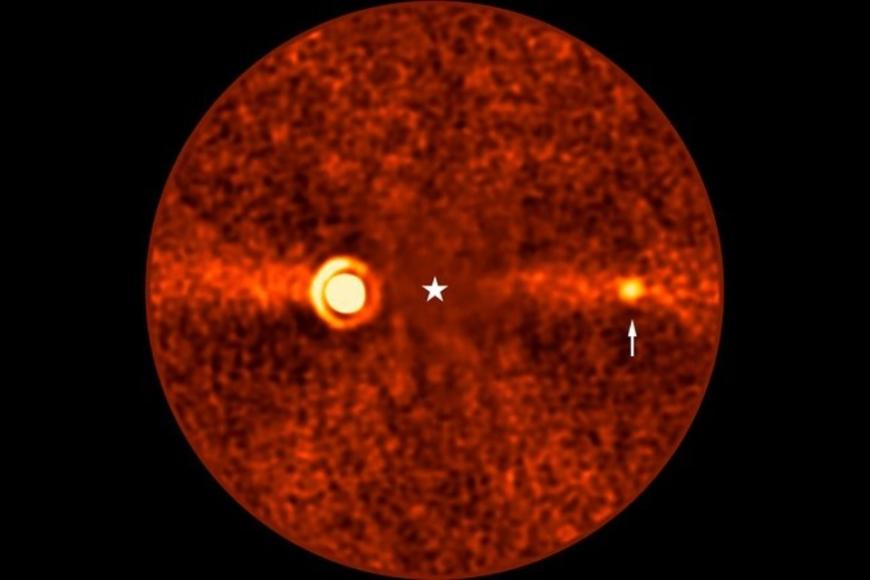
Discovery of possible pulsar in Milky Way centre Researchers from Columbia University and Breakthrough Listen have published new results from one of the most sensitive radio searches ever conducted for pulsars in the dynamically complex central region of the Milky Way Galaxy 12 February 2026
New method could reveal hidden supermassive black hole binaries Researchers at Oxford University and the Max Planck Institute for Gravitational Physics are proposing a new way to observe tightly bound supermassive black hole binaries. 12 February 2026
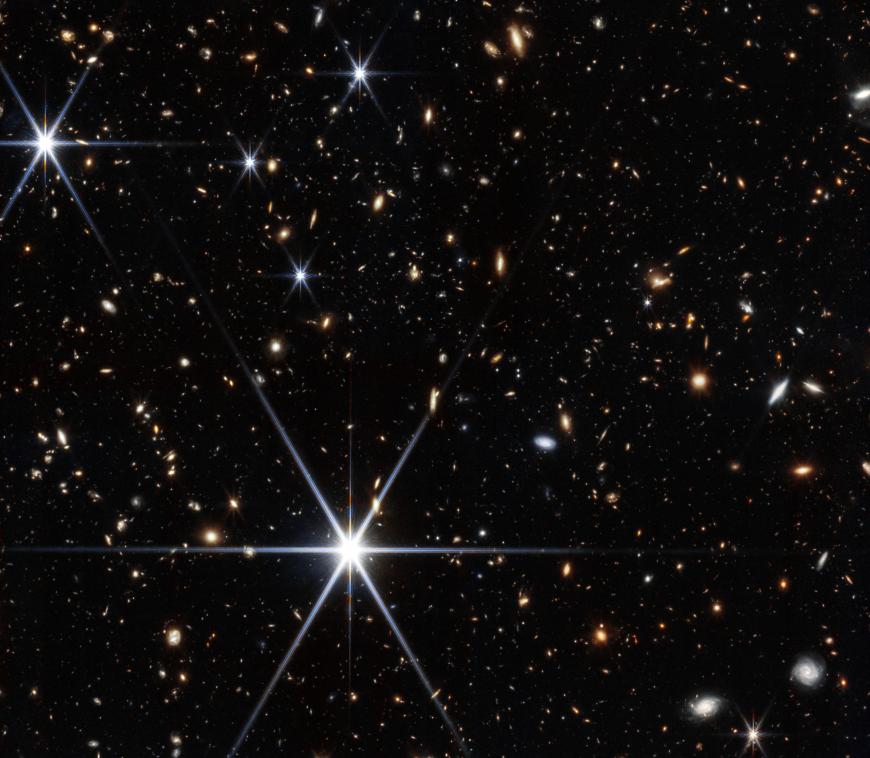
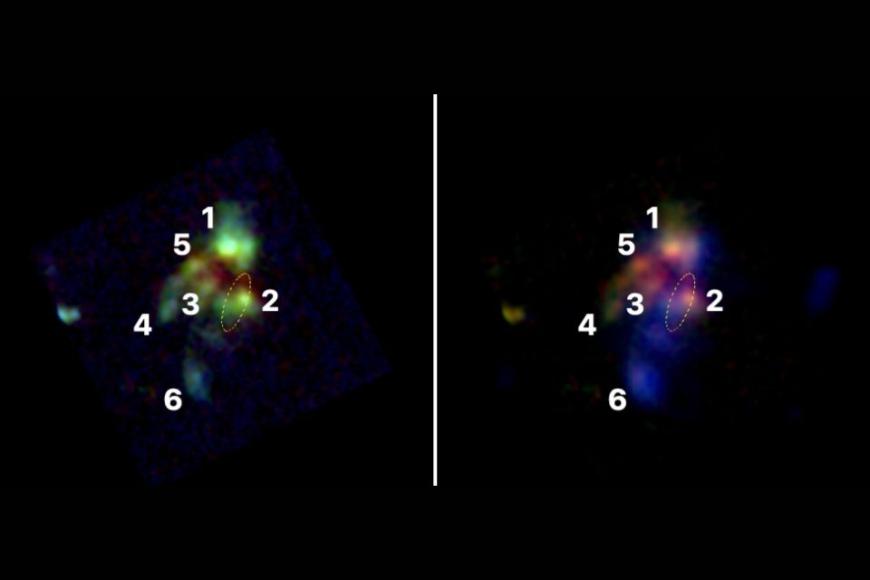
JWST reveals exceptional richness of organic molecules A recent study has uncovered an unprecedented richness of small organic molecules in the deeply obscured nucleus of a nearby galaxy using modelling techniques developed at the University of Oxford. 6 February 2026
Commentary: Professor Lintott on the effects of funding cuts Professor Chris Lintott comments in light of research funding for astronomy and physics research being cut by almost a third. 2 February 2026
Commentary: Dr Stevance on the role of AI in science Dr Heloise Stevance discusses the ethics of delegating scientific decision making to our computers. 30 January 2026
Could stuff be living on Saturn’s moon? The Oxford Sparks podcast chats with Dr Carly Howett, Associate Professor of Space Instrumentation, on why she thinks one of Saturn’s moons, Enceladus, could be a prime candidate for life. 19 January 2026
Mysterious iron ‘bar’ revealed inside iconic Ring Nebula Using the new WEAVE instrument developed by Oxford physicists, an international team has discovered bar-shaped cloud of ionised iron at the heart of the Ring Nebula. 16 January 2026
Professor Bunker awarded Herschel Medal Professor Andrew Bunker has been awarded the Herschel Medal by the Royal Astronomical Society. The medal is awarded for investigations of outstanding merit in observational astrophysics. 9 January 2026
Professor Aigrain awarded RAS lectureship Professor Suzanne Aigrain has been awarded the George Darwin Lectureship by the Royal Astronomical Society. 9 January 2026
Dr Bartlett recognised by RAS Dr Deaglan Bartlett has been awarded the Early Career Award (A) by the Royal Astronomical Society recognising early achievement in astronomy. 9 January 2026
‘First light’ achieved from new SOXS spectrograph Researchers at the University of Oxford have joined forces with an international consortium in the delivery of a powerful new astronomical instrument, SOXS (Son of X-Shooter), which has now achieved “first light” at the La Silla Observatory in Chile. 5 January 2026
Astronomers spot one of the largest spinning structures ever found in the Universe An international team led by the University of Oxford has identified one of the largest rotating structures ever reported: a ‘razor-thin’ string of galaxies embedded in a giant spinning cosmic filament 140 million light years away. 4 December 2025