Home
Department Of Physics text logo
  • Research
    • Our research
    • Our research groups
    • Our research in action
    • Research funding support
    • Summer internships for undergraduates
  • Study
    • Undergraduates
    • Postgraduates
  • Engage
    • For alumni
    • For business
    • For schools
    • For the public
  • Support
Menu
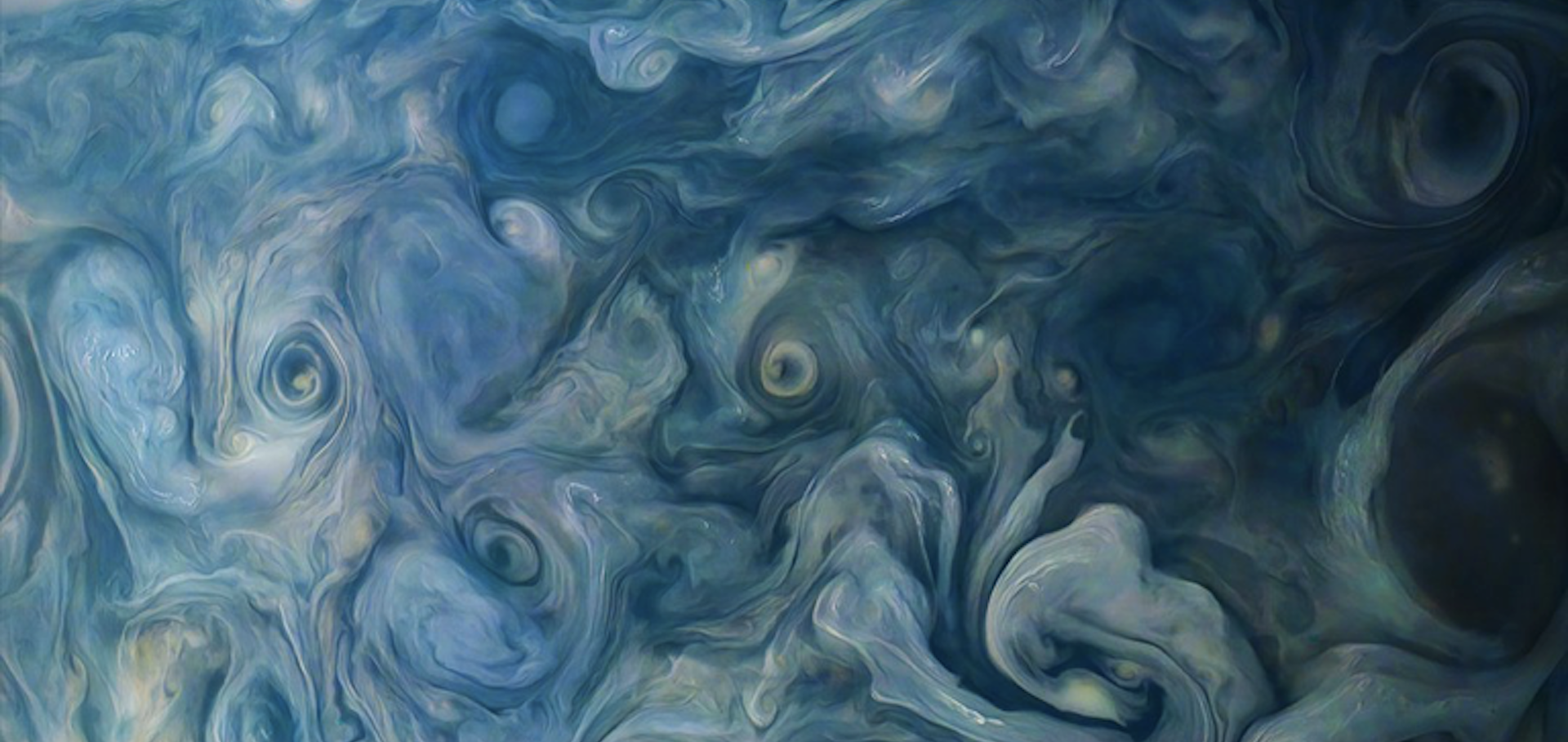
Jupiter's atmosphere

The incredible and intricate details of Jupiter's atmosphere, showing storms and clouds, that we one day hope to image on other worlds beyond our Solar System. Image: Seán Doran Flickr https://www.flickr.com/photos/seandoran

Credit: NASA / SwRI / MSSS / Gerald Eichstädt / Seán Doran

Prof Jayne Birkby

Professor of Astrophysics

Research theme

  • Astronomy and astrophysics
  • Instrumentation
  • Exoplanets and planetary physics

Sub department

  • Astrophysics

Research groups

  • Astronomical instrumentation
  • Exoplanet atmospheres
  • Exoplanets and Stellar Physics
  • Planet formation and dynamics
  • Planetary surfaces
  • Extremely Large Telescope
jayne.birkby@physics.ox.ac.uk
Denys Wilkinson Building, room 761
Personal research page
  • About
  • Books
  • Publications

Assessing robustness and bias in 1D retrievals of 3D Global Circulation Models at high spectral resolution: a WASP-76 b simulation case study in emission

(2025)

Authors:

Lennart van Sluijs, Hayley Beltz, Isaac Malsky, Genevieve H Pereira, L Cinque, Emily Rauscher, Jayne Birkby
More details from the publisher

Ground-breaking exoplanet science with the ANDES spectrograph at the ELT

Experimental Astronomy Springer 59:3 (2025) 29

Authors:

Enric Palle, Katia Biazzo, Emeline Bolmont, Paul Mollière, Katja Poppenhaeger, Jayne Birkby, Matteo Brogi, Gael Chauvin, Andrea Chiavassa, Jens Hoeijmakers, Emmanuel Lellouch, Christophe Lovis, Roberto Maiolino, Lisa Nortmann, Hannu Parviainen, Lorenzo Pino, Martin Turbet, Jesse Weder, Simon Albrecht, Simone Antoniucci, Susana C Barros, Andre Beaudoin, Bjorn Benneke, Isabelle Boisse

Abstract:

In the past decade the study of exoplanet atmospheres at high-spectral resolution, via transmission/emission spectroscopy and cross-correlation techniques for atomic/molecular mapping, has become a powerful and consolidated methodology. The current limitation is the signal-to-noise ratio that one can obtain during a planetary transit, which is in turn ultimately limited by telescope size. This limitation will be overcome by ANDES, an optical and near-infrared high-resolution spectrograph for the Extremely Large Telescope, which is currently in Phase B development. ANDES will be a powerful transformational instrument for exoplanet science. It will enable the study of giant planet atmospheres, allowing not only an exquisite determination of atmospheric composition, but also the study of isotopic compositions, dynamics and weather patterns, mapping the planetary atmospheres and probing atmospheric formation and evolution models. The unprecedented angular resolution of ANDES, will also allow us to explore the initial conditions in which planets form in proto-planetary disks. The main science case of ANDES, however, is the study of small, rocky exoplanet atmospheres, including the potential for biomarker detections, and the ability to reach this science case is driving its instrumental design. Here we discuss our simulations and the observing strategies to achieve this specific science goal. Since ANDES will be operational at the same time as NASA’s JWST and ESA’s ARIEL missions, it will provide enormous synergies in the characterization of planetary atmospheres at high and low spectral resolution. Moreover, ANDES will be able to probe for the first time the atmospheres of several giant and small planets in reflected light. In particular, we show how ANDES will be able to unlock the reflected light atmospheric signal of a golden sample of nearby non-transiting habitable zone earth-sized planets within a few tenths of nights, a scientific objective that no other currently approved astronomical facility will be able to reach.
More details from the publisher
Details from ORA

Limits on the atmospheric metallicity and aerosols of the sub-Neptune GJ 3090 b from high-resolution CRIRES+ spectroscopy

Monthly Notices of the Royal Astronomical Society Oxford University Press (OUP) (2025) staf469

Authors:

Luke T Parker, João M Mendonça, Hannah Diamond-Lowe, Jayne L Birkby, Annabella Meech, Sophia R Vaughan, Matteo Brogi, Chloe Fisher, Lars A Buchhave, Aaron Bello-Arufe, Laura Kreidberg, Jason Dittmann
More details from the publisher
More details

Limits on the atmospheric metallicity and aerosols of the sub-Neptune GJ 3090 b from high-resolution CRIRES+ spectroscopy

(2025)

Authors:

Luke T Parker, João M Mendonça, Hannah Diamond-Lowe, Jayne L Birkby, Annabella Meech, Sophia R Vaughan, Matteo Brogi, Chloe Fisher, Lars A Buchhave, Aaron Bello-Arufe, Laura Kreidberg, Jason Dittmann
More details from the publisher

JWST/NIRISS and HST: exploring the improved ability to characterise exoplanet atmospheres in the JWST era

Monthly Notices of the Royal Astronomical Society Oxford University Press 535:1 (2024) 27-46

Authors:

Chloe Fisher, Jake Taylor, Vivien Parmentier, Daniel Kitzmann, Jayne Birkby, Michael Radica, Joanna Barstow, Jingxuan Yang, Giuseppe Morello

Abstract:

The Hubble Space Telescope has been a pioneering instrument for studying the atmospheres of exoplanets, specifically its WFC3 and STIS instruments. With the launch of JWST, we are able to observe larger spectral ranges at higher precision. NIRISS/SOSS covers the range 0.6–2.8 microns, and thus, it can serve as a direct comparison to WFC3 (0.8–1.7 microns). We perform atmospheric retrievals of WFC3 and NIRISS transmission spectra of WASP-39 b in order to compare their constraining power. We find that NIRISS is able to retrieve precise H2O abundances that do not suffer a degeneracy with the continuum level due to the coverage of multiple spectral features. We also combine these data sets with spectra from STIS and find that challenges associated with fitting the steep optical slope can bias the retrieval results. In an effort to diagnose the differences between the WFC3 and NIRISS retrievals, we perform the analysis again on the NIRISS data cut to the same wavelength range as WFC3. We find that the water abundance is in strong disagreement with both the WFC3 and full NIRISS retrievals, highlighting the importance of wide wavelength coverage. Finally, we carry out mock retrievals on the different instruments, which shows further evidence of the challenges in constraining water abundance from the WFC3 data alone. Our study demonstrates the vast information gain of JWST’s NIRISS instrument over WFC3, highlighting the insights to be obtained from our new era of space-based instruments.
More details from the publisher
Details from ORA
More details

Pagination

  • First page First
  • Previous page Prev
  • Page 1
  • Page 2
  • Current page 3
  • Page 4
  • Page 5
  • Page 6
  • Page 7
  • Page 8
  • Page 9
  • …
  • Next page Next
  • Last page Last

Footer Menu

  • Contact us
  • Giving to the Dept of Physics
  • Work with us
  • Media

User account menu

  • Log in

Follow us

FIND US

Clarendon Laboratory,

Parks Road,

Oxford,

OX1 3PU

CONTACT US

Tel: +44(0)1865272200

University of Oxfrod logo Department Of Physics text logo
IOP Juno Champion logo Athena Swan Silver Award logo

© University of Oxford - Department of Physics

Cookies | Privacy policy | Accessibility statement

Built by: Versantus

  • Home
  • Research
  • Study
  • Engage
  • Our people
  • News & Comment
  • Events
  • Our facilities & services
  • About us
  • Giving to Physics
  • Current students
  • Staff intranet