Home
Department Of Physics text logo
  • Research
    • Our research
    • Our research groups
    • Our research in action
    • Research funding support
    • Summer internships for undergraduates
  • Study
    • Undergraduates
    • Postgraduates
  • Engage
    • For young people
    • For teachers
    • For the public
    • For alumni
    • For business
  • Support
Menu
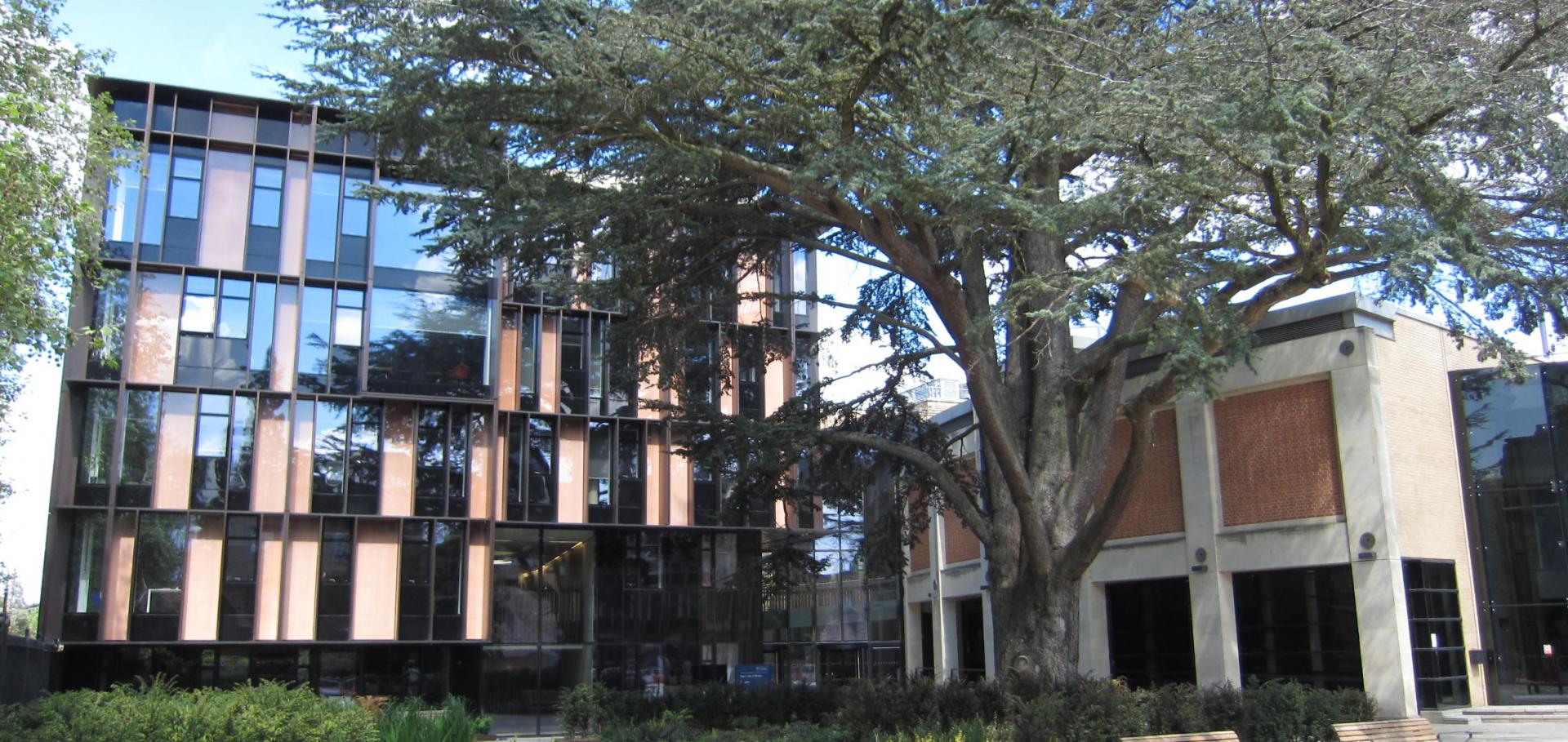
Clarendon Laboratory and Beecroft Building

Andrew Boothroyd

Head of Department

Research theme

  • Quantum materials

Sub department

  • Condensed Matter Physics

Research groups

  • X-ray and neutron scattering
Andrew.Boothroyd@physics.ox.ac.uk
Telephone: 01865 (2)72376
Clarendon Laboratory, room 375,374B,374A,371A,371,177,175,172 (office)
ORCID ID 0000-0002-3575-7471
ResearcherID AAA-7883-2021
  • About
  • News
  • Research
  • Teaching
  • Prizes, awards and recognition
  • Software
  • Vacancies
  • Publications

Textbook

Principles of Neutron Scattering from Condensed Matter

Published by Oxford University Press in July 2020

Buy now

Photoinduced melting of antiferromagnetic order in La(0.5)Sr(1.5)MnO4 measured using ultrafast resonant soft x-ray diffraction.

Phys Rev Lett 106:21 (2011) 217401

Authors:

H Ehrke, RI Tobey, S Wall, SA Cavill, M Först, V Khanna, Th Garl, N Stojanovic, D Prabhakaran, AT Boothroyd, M Gensch, A Mirone, P Reutler, A Revcolevschi, SS Dhesi, A Cavalleri

Abstract:

We used ultrafast resonant soft x-ray diffraction to probe the picosecond dynamics of spin and orbital order in La(0.5)Sr(1.5)MnO(4) after photoexcitation with a femtosecond pulse of 1.5 eV radiation. Complete melting of antiferromagnetic spin order is evidenced by the disappearance of a (1/4,1/4,1/2) diffraction peak. On the other hand, the (1/4,1/4,0) diffraction peak, reflecting orbital order, is only partially reduced. We interpret the results as evidence of destabilization in the short-range exchange pattern with no significant relaxation of the long-range Jahn-Teller distortions. Cluster calculations are used to analyze different possible magnetically ordered states in the long-lived metastable phase. Nonthermal coupling between light and magnetism emerges as a primary aspect of photoinduced phase transitions in manganites.
More details from the publisher
More details

Observation of orbital currents in CuO.

Science 332:6030 (2011) 696-698

Authors:

V Scagnoli, U Staub, Y Bodenthin, RA de Souza, M García-Fernández, M Garganourakis, AT Boothroyd, D Prabhakaran, SW Lovesey

Abstract:

Orbital currents are proposed to be the order parameter of the pseudo-gap phase of cuprate high-temperature superconductors. We used resonant x-ray diffraction to observe orbital currents in a copper-oxygen plaquette, the basic building block of cuprate superconductors. The confirmation of the existence of orbital currents is an important step toward the understanding of the cuprates as well as materials lacking inversion symmetry, such as magnetically induced multiferroics. Although observed in the antiferromagnetic state of cupric oxide, we show that orbital currents can occur even in the absence of long-range magnetic moment ordering.
More details from the publisher
More details

Spin fluctuations in LiFeAs observed by neutron scattering

(2011)

Authors:

AE Taylor, MJ Pitcher, RA Ewings, TG Perring, SJ Clarke, AT Boothroyd
More details from the publisher

Bilayer manganites: polarons in the midst of a metallic breakdown

(2011)

Authors:

F Massee, S de Jong Y Huang, WK Siu, I Santoso, A Mans, AT Boothroyd, D Prabhakaran, R Follath, A Varykhalov, L Patthey, M Shi, JB Goedkoop, MS Golden
More details from the publisher

An hour-glass magnetic spectrum in an insulating, hole-doped antiferromagnet.

Nature 471:7338 (2011) 341-344

Authors:

AT Boothroyd, P Babkevich, D Prabhakaran, PG Freeman

Abstract:

Superconductivity in layered copper oxide compounds emerges when charge carriers are added to antiferromagnetically ordered CuO(2) layers. The carriers destroy the antiferromagnetic order, but strong spin fluctuations persist throughout the superconducting phase and are intimately linked to superconductivity. Neutron scattering measurements of spin fluctuations in hole-doped copper oxides have revealed an unusual 'hour-glass' feature in the momentum-resolved magnetic spectrum that is present in a wide range of superconducting and non-superconducting materials. There is no widely accepted explanation for this feature. One possibility is that it derives from a pattern of alternating spin and charge stripes, and this idea is supported by measurements on stripe-ordered La(1.875)Ba(0.125)CuO(4) (ref. 15). Many copper oxides without stripe order, however, also exhibit an hour-glass spectrum. Here we report the observation of an hour-glass magnetic spectrum in a hole-doped antiferromagnet from outside the family of superconducting copper oxides. Our system has stripe correlations and is an insulator, which means that its magnetic dynamics can conclusively be ascribed to stripes. The results provide compelling evidence that the hour-glass spectrum in the copper oxide superconductors arises from fluctuating stripes.
More details from the publisher
More details
Details from ArXiV

Pagination

  • First page First
  • Previous page Prev
  • …
  • Page 39
  • Page 40
  • Page 41
  • Page 42
  • Current page 43
  • Page 44
  • Page 45
  • Page 46
  • Page 47
  • …
  • Next page Next
  • Last page Last

Footer Menu

  • Contact us
  • Giving to the Dept of Physics
  • Work with us
  • Media

User account menu

  • Log in

Follow us

FIND US

Clarendon Laboratory,

Parks Road,

Oxford,

OX1 3PU

CONTACT US

Tel: +44(0)1865272200

University of Oxfrod logo Department Of Physics text logo
IOP Juno Champion logo Athena Swan Silver Award logo

© University of Oxford - Department of Physics

Cookies | Privacy policy | Accessibility statement

Built by: Versantus

  • Home
  • Research
  • Study
  • Engage
  • Our people
  • News & Comment
  • Events
  • Our facilities & services
  • About us
  • Giving to Physics
  • Current students
  • Staff intranet