Home
Department Of Physics text logo
  • Research
    • Our research
    • Our research groups
    • Our research in action
    • Research funding support
    • Summer internships for undergraduates
  • Study
    • Undergraduates
    • Postgraduates
  • Engage
    • For young people
    • For teachers
    • For the public
    • For alumni
    • For business
  • Support
Menu
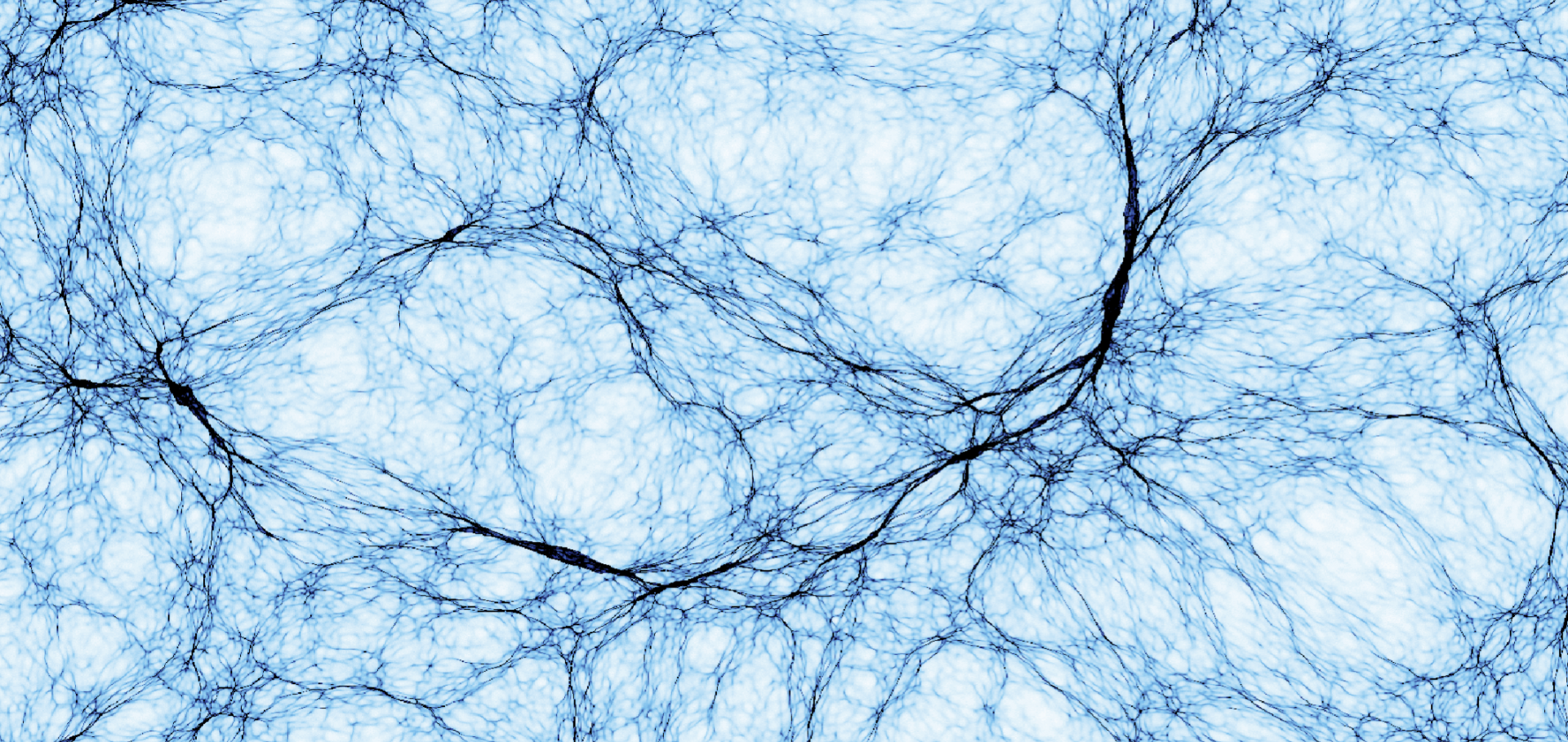
Simulated proton image of magnetic fields in a turbulent laser-plasma
Credit: Adapted from Bott et al., "Proton imaging of stochastic magnetic fields". J. Plasma Phys. 83 (2017)

Dr Archie Bott

UKRI Future Leaders Fellow

Research theme

  • Lasers and high energy density science
  • Plasma physics

Sub department

  • Atomic and Laser Physics

Research groups

  • Oxford Centre for High Energy Density Science (OxCHEDS)
  • Theoretical astrophysics and plasma physics at RPC
archie.bott@physics.ox.ac.uk
  • About
  • Publications

Proton imaging of stochastic magnetic fields

Journal of Plasma Physics Cambridge University Press 83:6 (2017) 905830614

Authors:

Archie FA Bott, C Graziani, Petros Tzeferacos, P White, DQ Lamb, Gianluca Gregori, Alexander Schekochihin

Abstract:

Recent laser-plasma experiments [1, 2, 3, 4] report the existence of dynamically significant magnetic fields, whose statistical characterisation is essential for a complete understanding of the physical processes these experiments are attempting to investigate. In this paper, we show how a proton imaging diagnostic can be used to determine a range of relevant magnetic field statistics, including the magnetic-energy spectrum. To achieve this goal, we explore the properties of an analytic relation between a stochastic magnetic field and the image-flux distribution created upon imaging that field. This ‘Kugland image-flux relation’ was previously derived [5] under simplifying assumptions typically valid in actual proton-imaging set-ups. We conclude that, as in the case of regular electromagnetic fields, features of the beam’s final image-flux distribution often display a universal character determined by a single, field-scale dependent parameter – the contrast parameter µ ≡ ds/MlB – which quantifies the relative size of the correlation length lB of the stochastic field, proton displacements ds due to magnetic deflections, and the image magnification M. For stochastic magnetic fields, we establish the existence of four contrast regimes – linear, nonlinear injective, caustic and diffusive – under which proton-flux images relate to their parent fields in a qualitatively distinct manner. As a consequence, it is demonstrated that in the linear or nonlinear injective regimes, the path-integrated magnetic field experienced by the beam can be extracted uniquely, as can the magnetic-energy spectrum under a further statistical assumption of isotropy. This is no longer the case in the caustic or diffusive regimes. We also discuss complications to the contrast-regime characterisation arising for inhomogeneous, multi-scale stochastic fields, which can encompass many contrast regimes, as well as limitations currently placed by experimental capabilities on one’s ability to extract magnetic field statistics. The results presented in this paper are of consequence in providing a comprehensive description of proton images of stochastic magnetic fields, with applications for improved analysis of individual proton-flux images, or for optimising implementation of proton-imaging diagnostics on future laser-plasma experiments.
More details from the publisher
Details from ORA
More details
Details from ArXiV

Proton imaging of stochastic magnetic fields

(2017)

Authors:

AFA Bott, C Graziani, P Tzeferacos, TG White, DQ Lamb, G Gregori, AA Schekochihin
More details from the publisher

Numerical modeling of laser-driven experiments aiming to demonstrate magnetic field amplification via turbulent dynamo

PHYSICS OF PLASMAS 24:4 (2017) ARTN 041404

Authors:

P Tzeferacos, A Rigby, A Bott, AR Bell, R Bingham, A Casner, F Cattaneo, EM Churazov, J Emig, N Flocke, F Fiuza, CB Forest, J Foster, C Graziani, J Katz, M Koenig, C-K Li, J Meinecke, R Petrasso, H-S Park, BA Remington, JS Ross, D Ryu, D Ryutov, K Weide, TG White, B Reville, F Miniati, AA Schekochihin, DH Froula, G Gregori, DQ Lamb
More details from the publisher
Details from ORA
More details
Details from ArXiV
More details

Laboratory evidence of dynamo amplification of magnetic fields in a turbulent plasma

(2017)

Authors:

P Tzeferacos, A Rigby, A Bott, AR Bell, R Bingham, A Casner, F Cattaneo, EM Churazov, J Emig, F Fiuza, CB Forest, J Foster, C Graziani, J Katz, M Koenig, C-K Li, J Meinecke, R Petrasso, H-S Park, BA Remington, JS Ross, D Ryu, D Ryutov, TG White, B Reville, F Miniati, AA Schekochihin, DQ Lamb, DH Froula, G Gregori
More details from the publisher

Numerical modeling of laser-driven experiments aiming to demonstrate magnetic field amplification via turbulent dynamo

(2017)

Authors:

P Tzeferacos, A Rigby, A Bott, AR Bell, R Bingham, A Casner, F Cattaneo, EM Churazov, J Emig, N Flocke, F Fiuza, CB Forest, J Foster, C Graziani, J Katz, M Koenig, C-K Li, J Meinecke, R Petrasso, H-S Park, BA Remington, JS Ross, D Ryu, D Ryutov, K Weide, TG White, B Reville, F Miniati, AA Schekochihin, DH Froula, G Gregori, DQ Lamb
More details from the publisher

Pagination

  • First page First
  • Previous page Prev
  • …
  • Page 7
  • Page 8
  • Page 9
  • Page 10
  • Page 11
  • Page 12
  • Page 13
  • Current page 14
  • Page 15
  • Next page Next
  • Last page Last

Footer Menu

  • Contact us
  • Giving to the Dept of Physics
  • Work with us
  • Media

User account menu

  • Log in

Follow us

FIND US

Clarendon Laboratory,

Parks Road,

Oxford,

OX1 3PU

CONTACT US

Tel: +44(0)1865272200

University of Oxfrod logo Department Of Physics text logo
IOP Juno Champion logo Athena Swan Silver Award logo

© University of Oxford - Department of Physics

Cookies | Privacy policy | Accessibility statement

Built by: Versantus

  • Home
  • Research
  • Study
  • Engage
  • Our people
  • News & Comment
  • Events
  • Our facilities & services
  • About us
  • Giving to Physics
  • Current students
  • Staff intranet