


ORTIS - ORbiter terahertz infrared sounder
21st International Symposium on Space Terahertz Technology 2010, ISSTT 2010 (2010) 208
Abstract:
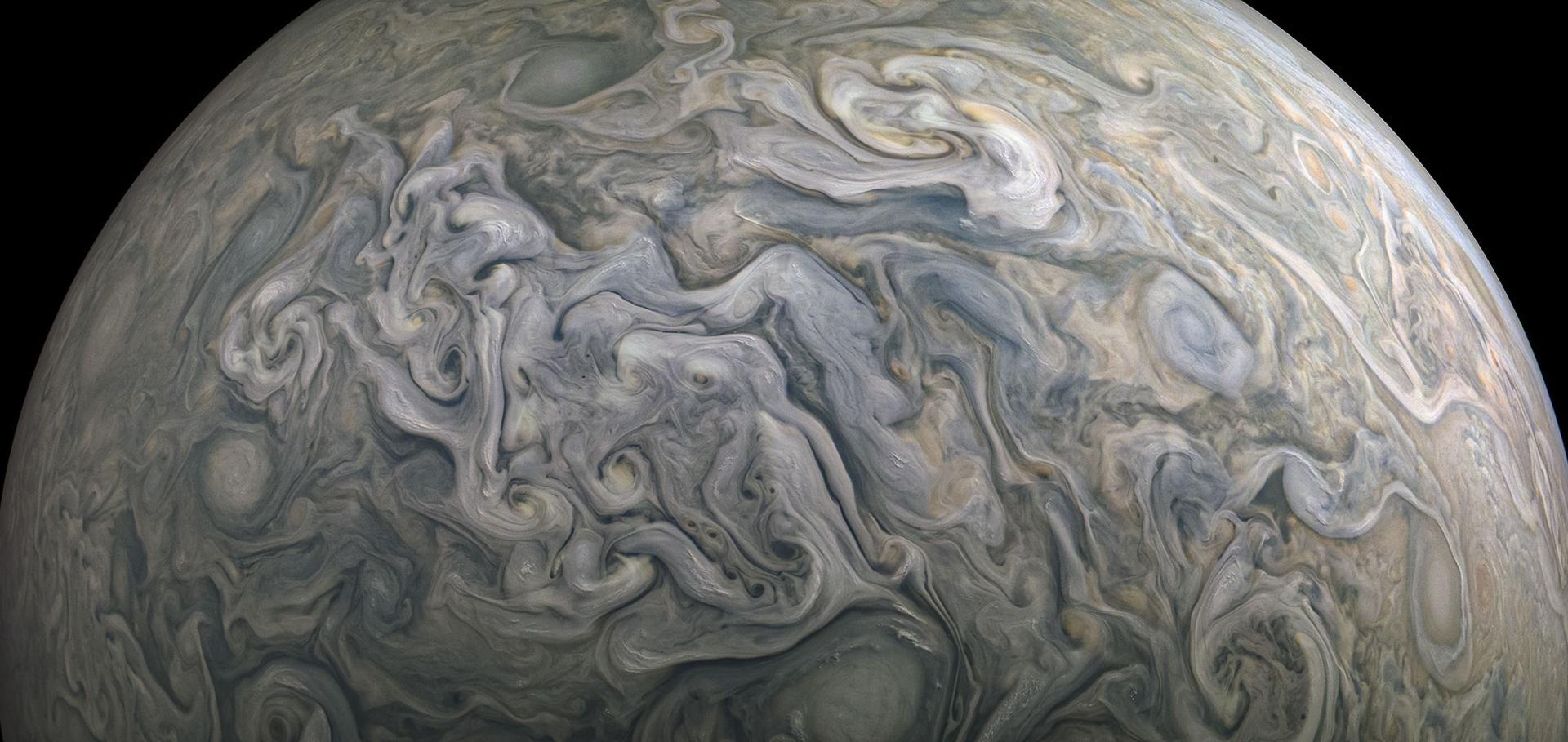
Accurate measurement of the temperature, composition and dynamics of Jupiter's atmosphere is one of the main scientific goals of ESA's and NASA's Outer Planet Mission proposals. Infrared remote sounding provides a powerful tool for achieving these objectives and was used by Voyager/IRIS and Cassini/CIRS, but is insensitive to some altitudes and gases. The sub-millimetre wavelength (terahertz) region of the electromagnetic spectrum, which has not been significantly exploited to date in the discipline of planetary science, provides unique spectral information over a range of atmospheric pressures and, when combined with infrared data, is a powerful in situ planetary atmospheric sounder. We will describe a novel low mass and low power consumption combined terahertz/IR instrument proposed for inclusion on the Jupiter Ganymede Orbiter that will greatly improve our understanding of the atmosphere of Jupiter. Through the combination of high spectral resolution 2.2THz spectroscopy (R=106) and lowspectral resolution IR radiometry, the entire temperature profile of the Jovian atmosphere from 0.6 to 10-3 bar can be evaluated (filling in the currently unmeasured levels between 0.1 and 0.01 bar). In addition, the tropospheric and stratospheric composition can be determined (especially water vapour) and observations of the Doppler shifting of sub-millimetre lines can also be used to measure horizontal wind speeds.Diviner lunar radiometer observations of cold traps in the moon's south polar region
Science 330:6003 (2010) 479-482
Abstract:
Diviner Lunar Radiometer Experiment surface-temperature maps reveal the existence of widespread surface and near-surface cryogenic regions that extend beyond the boundaries of persistent shadow. The Lunar Crater Observation and Sensing Satellite (LCROSS) struck one of the coldest of these regions, where subsurface temperatures are estimated to be 38 kelvin. Large areas of the lunar polar regions are currently cold enough to cold-trap water ice as well as a range of both more volatile and less volatile species. The diverse mixture of water and high-volatility compounds detected in the LCROSS ejecta plume is strong evidence for the impact delivery and cold-trapping of volatiles derived from primitive outer solar system bodies.Global silicate mineralogy of the moon from the diviner lunar radiometer
Science 329:5998 (2010) 1507-1509
Abstract:
We obtained direct global measurements of the lunar surface using multispectral thermal emission mapping with the Lunar Reconnaissance Orbiter Diviner Lunar Radiometer Experiment. Most lunar terrains have spectral signatures that are consistent with known lunar anorthosite and basalt compositions. However, the data have also revealed the presence of highly evolved, silica-rich lunar soils in kilometer-scale and larger exposures, expanded the compositional range of the anorthosites that dominate the lunar crust, and shown that pristine lunar mantle is not exposed at the lunar surface at the kilometer scale. Together, these observations provide compelling evidence that the Moon is a complex body that has experienced a diverse set of igneous processes.Highly silicic compositions on the moon
Science 329:5998 (2010) 1510-1513
Abstract:
Using data from the Diviner Lunar Radiometer Experiment, we show that four regions of the Moon previously described as "red spots" exhibit mid-infrared spectra best explained by quartz, silica-rich glass, or alkali feldspar. These lithologies are consistent with evolved rocks similar to lunar granites in the Apollo samples. The spectral character of these spots is distinct from surrounding mare and highlands material and from regions composed of pure plagioclase feldspar. The variety of landforms associated with the silicic spectral character suggests that both extrusive and intrusive silicic magmatism occurred on the Moon. Basaltic underplating is the preferred mechanism for silicic magma generation, leading to the formation of extrusive landforms. This mechanism or silicate liquid immiscibility could lead to the formation of intrusive bodies.HARMONI: a single-field wide-band integral-field spectrograph for the European ELT
Proceedings of SPIE--the International Society for Optical Engineering SPIE, the international society for optics and photonics 7735 (2010) 77352i-77352i-11