Home
Department Of Physics text logo
  • Research
    • Our research
    • Our research groups
    • Our research in action
    • Research funding support
    • Summer internships for undergraduates
  • Study
    • Undergraduates
    • Postgraduates
  • Engage
    • For alumni
    • For business
    • For schools
    • For the public
Menu
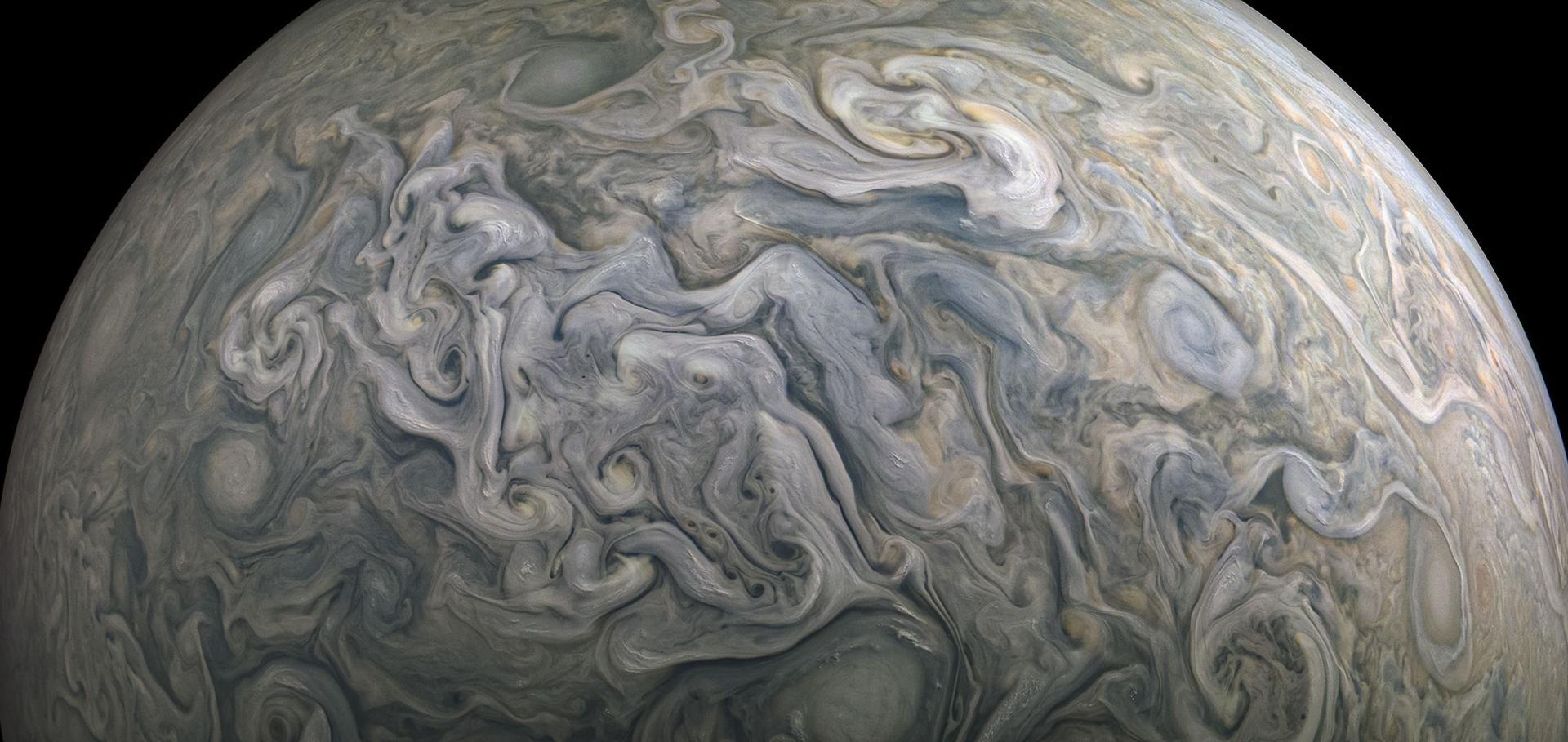
Juno Jupiter image

Neil Bowles

Professor of Planetary Science

Sub department

  • Atmospheric, Oceanic and Planetary Physics

Research groups

  • Planetary atmosphere observation analysis
  • Planetary surfaces
  • Solar system
  • Space instrumentation
Neil.Bowles@physics.ox.ac.uk
Telephone: 01865 (2)72097
Atmospheric Physics Clarendon Laboratory, room 307
  • About
  • Publications

Global and temporal variations in hydrocarbons and nitriles in Titan's stratosphere for northern winter observed by Cassini/CIRS

Icarus 193:2 (2008) 595-611

Authors:

NA Teanby, PGJ Irwin, R de Kok, CA Nixon, A Coustenis, E Royer, SB Calcutt, NE Bowles, L Fletcher, C Howett, FW Taylor

Abstract:

Mid-infrared spectra measured by Cassini's Composite InfraRed Spectrometer (CIRS) between July 2004 and January 2007 (Ls = 293 ° - 328 °) have been used to determine stratospheric temperature and abundances of C2H2, C3H4, C4H2, HCN, and HC3N. Over 65,000 nadir spectra with spectral resolutions of 0.5 and 2.5 cm-1 were used to probe spatial and temporal composition variations in Titan's stratosphere. Cassini's 180° orbital transfer in mid-2006 allowed low emission angle observations of the north polar region for the first time in the mission and allowed us to probe the full latitude range. We present the first measurements of composition variations within the polar vortex, which display increasing abundances right up to 90° N. The lack of a homogeneous abundance-latitude variation within the vortex indicates limited horizontal mixing and suggests that subsidence is greatest at the vortex core. Contrary to numerical model predictions and tropospheric cloud observations, we do not see any evidence for a secondary circulation cell near the south pole, which suggests a single Hadley-type circulation in the stratosphere at this epoch. This difference can be reconciled if the secondary cell is restricted to altitudes below 100 km, where there is no sensitivity in our data. Temporal variations in composition were observed in the south, with volatile species becoming less abundant as the season progressed. The observed variations are compared to numerical model predictions and observations from Voyager. © 2007 Elsevier Inc. All rights reserved.
More details from the publisher
More details

Temperature and composition of Saturn's polar hot spots and hexagon.

Science 319:5859 (2008) 79-81

Authors:

LN Fletcher, PGJ Irwin, GS Orton, NA Teanby, RK Achterberg, GL Bjoraker, PL Read, AA Simon-Miller, C Howett, R de Kok, N Bowles, SB Calcutt, B Hesman, FM Flasar

Abstract:

Saturn's poles exhibit an unexpected symmetry in hot, cyclonic polar vortices, despite huge seasonal differences in solar flux. The cores of both vortices are depleted in phosphine gas, probably resulting from subsidence of air into the troposphere. The warm cores are present throughout the upper troposphere and stratosphere at both poles. The thermal structure associated with the marked hexagonal polar jet at 77 degrees N has been observed for the first time. Both the warm cyclonic belt at 79 degrees N and the cold anticyclonic zone at 75 degrees N exhibit the hexagonal structure.
More details from the publisher
More details
More details

Characteristics of Titan's stratospheric aerosols and condensate clouds from Cassini CIRS far-infrared spectra

Icarus 191 (2007) 223-235

Authors:

NE Bowles, N A Teanby, P G J Irwin, R de Kok
More details from the publisher
More details

Characterising Saturn's vertical temperature structure from Cassini/CIRS

Icarus 189:2 (2007) 457-478

Authors:

LN Fletcher, PGJ Irwin, NA Teanby, GS Orton, PD Parrish, R de Kok, C Howett, SB Calcutt, N Bowles, FW Taylor

Abstract:

Thermal infrared spectra of Saturn from 10-1400 cm-1 at 15 cm-1 spectral resolution and a spatial resolution of 1°-2° latitude have been obtained by the Cassini Composite Infrared Spectrometer [Flasar, F.M., and 44 colleagues, 2004. Space Sci. Rev. 115, 169-297]. Many thousands of spectra, acquired over eighteen-months of observations, are analysed using an optimal estimation retrieval code [Irwin, P.G.J., Parrish, P., Fouchet, T., Calcutt, S.B., Taylor, F.W., Simon-Miller, A.A., Nixon, C.A., 2004. Icarus 172, 37-49] to retrieve the temperature structure and para-hydrogen distribution over Saturn's northern (winter) and southern (summer) hemispheres. The vertical temperature structure is analysed in detail to study seasonal asymmetries in the tropopause height (65-90 mbar), the location of the radiative-convective boundary (350-500 mbar), and the variation with latitude of a temperature knee (between 150 and 300 mbar) which was first observed in inversions of Voyager/IRIS spectra [Hanel, R., and 15 colleagues, 1981. Science 212, 192-200; Hanel, R., Conrath, B., Flasar, F.M., Kunde, V., Maguire, W., Pearl, J.C., Pirraglia, J., Samuelson, R., Cruikshank, D.P., Gautier, D., Gierasch, P.J., Horn, L., Ponnamperuma, C., 1982. Science 215, 544-548]. Uncertainties due to both the modelling of spectral absorptions (collision-induced absorption coefficients, tropospheric hazes, helium abundance) and the nature of our retrieval algorithm are quantified. Temperatures in the stratosphere near 1 mbar show a 25-30 K temperature difference between the north pole and south pole. This asymmetry becomes less pronounced with depth as the radiative time constant for the atmospheric response increases at deeper pressure levels. Hemispherically-symmetric small-scale temperature structures associated with zonal winds are superimposed onto the temperature asymmetry for pressures greater than 100 mbar. The para-hydrogen fraction in the 100-400 mbar range is greater than equilibrium predictions for the southern hemisphere and parts of the northern hemisphere, and less than equilibrium predictions polewards of 40° N. The temperature knee between 150-300 mbar is larger in the summer hemisphere than in the winter, smaller and higher at the equator, deeper and larger in the equatorial belts and small at the poles. Solar heating on tropospheric haze is proposed as a possible mechanism for this effect; the increased efficiency of ortho- to para-hydrogen conversion in the southern hemisphere is consistent with the presence of larger aerosols in the summer hemisphere, which we demonstrate to be qualitatively consistent with previous studies of Saturn's tropospheric aerosol distribution. © 2007 Elsevier Inc. All rights reserved.
More details from the publisher
More details

Characterising Saturn's vertical temperature structure from Cassini/CIRS

Icarus 189 (2007) 457-478

Authors:

NE Bowles, L N Fletcher, N A Teanby, P G J Irwin
More details from the publisher

Pagination

  • First page First
  • Previous page Prev
  • …
  • Page 17
  • Page 18
  • Page 19
  • Page 20
  • Page 21
  • Current page 22
  • Page 23
  • Page 24
  • Page 25
  • Next page Next
  • Last page Last

Footer Menu

  • Contact us
  • Giving to the Dept of Physics
  • Work with us
  • Media

User account menu

  • Log in

Follow us

FIND US

Clarendon Laboratory,

Parks Road,

Oxford,

OX1 3PU

CONTACT US

Tel: +44(0)1865272200

University of Oxfrod logo Department Of Physics text logo
IOP Juno Champion logo Athena Swan Silver Award logo

© University of Oxford - Department of Physics

Cookies | Privacy policy | Accessibility statement

Built by: Versantus

  • Home
  • Research
  • Study
  • Engage
  • Our people
  • News & Comment
  • Events
  • Our facilities & services
  • About us
  • Giving to Physics
  • Current students
  • Staff intranet