Home
Department Of Physics text logo
  • Research
    • Our research
    • Our research groups
    • Our research in action
    • Research funding support
    • Summer internships for undergraduates
  • Study
    • Undergraduates
    • Postgraduates
  • Engage
    • For alumni
    • For business
    • For schools
    • For the public
Menu
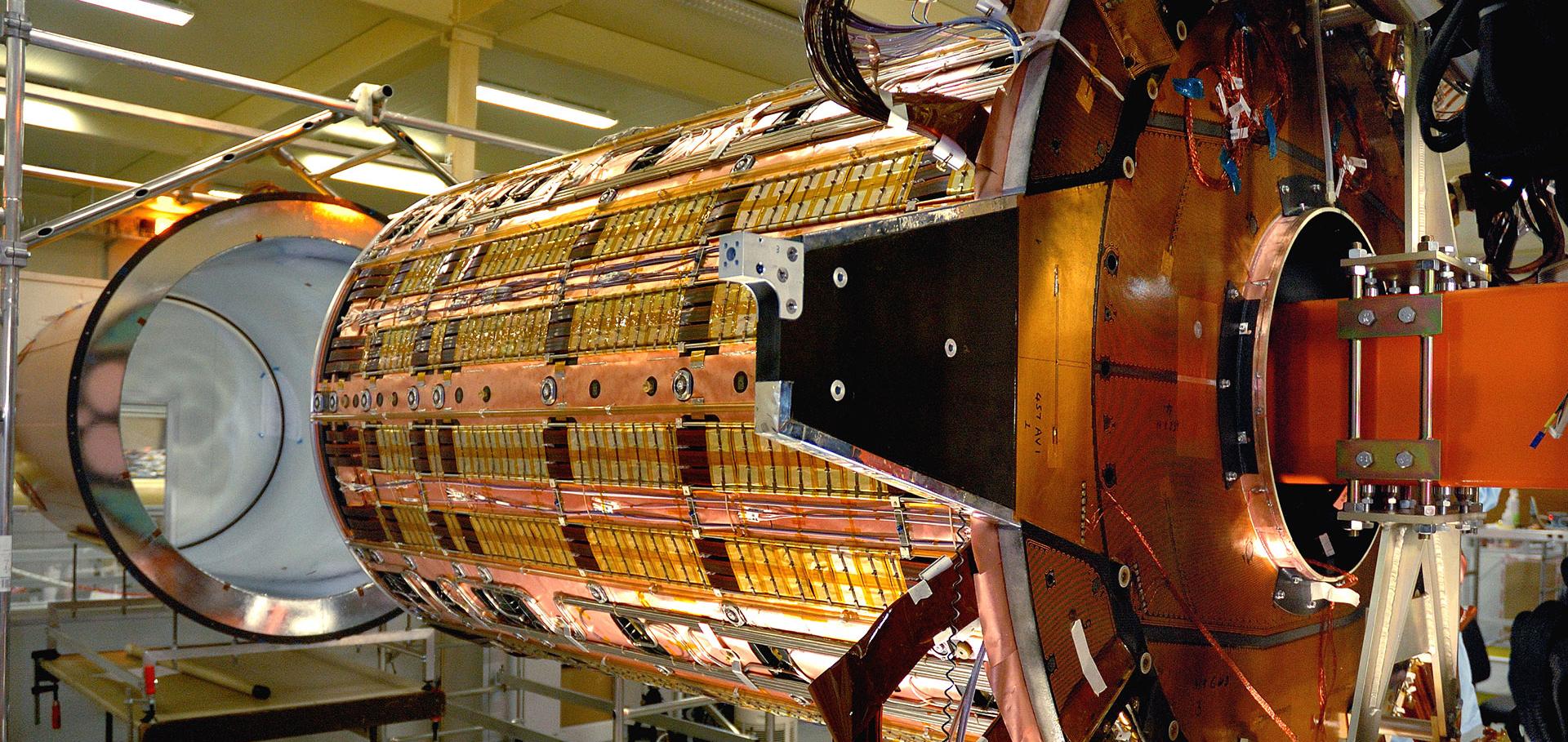
Insertion of STC into TRT at the Department of Physics, Oxford
Credit: CERN

Visiting Professor Manjit Dosanjh

Visiting Professor

Sub department

  • Particle Physics

Research groups

  • Applications of Accelerators and Detectors to Cancer Treatment
manjit.dosanjh@physics.ox.ac.uk
  • About
  • Publications

A Time-Based Front End Readout System for PET & CT

2011 IEEE Nuclear Science Symposium Conference Record Institute of Electrical and Electronics Engineers (IEEE) 4 (2006) 2494-2498

Authors:

TC Meyer, F Powolny, F Anghinolfi, E Auffray, M Dosanjh, H Hillemanns, H-F Hoffmann, P Jarron, J Kaplon, M Kronberger, P Lecoq, D Moraes, J Trummer
More details
More details from the publisher

Evidence for heat shock proteins increased levels in psoriatic patients and in PUVA-treated psoriatic patients preliminary report

International Journal of Medicine, Biology and the Environment 28:1 (2000) 71-74

Authors:

B Beltrami, PP Peraita, MK Dosanjh, G Borroni

Abstract:

Heat shock proteins (HSP) are a family of proteins whose synthesis is induced after environmental stresses such as heat, oxidizing agents, and exogenous factors, such as ethanol, smoke, drugs. Also inflammation is characterized by production of HSPs. Though their functions are not fully understood, they act as molecular chaperones facilitating the assembly of multi-protein complexes, and promoting the translocation of polypeptides across cell membranes. Since psoriasis is a frequently observed cutaneous inflammatory disorder, it has been considered a useful inflammatory model to investigate HSPs in this work. In particular HSP 70 and HSP 27 have been studied by Western blotting assay on fibroblast cultures. Biopsies were taken from psoriatic plaques before, during and after PUVA treatment; from non sun-exposed unaffected skin of four psoriatic patients before PUVA-therapy and from non sun-exposed skin of four controls. An increase of expression of HSPs in fibroblast cultures was demonstrated both in psoriatic skin and in particular after PUVA-treatment. The highest levels of HSPs coincided, after PUVA-therapy, in all the patients with the resolution of the lesions. Only slight levels of both HSP 70 and HSP 27 were found in fibroblast cultures derived from uninvolved skin before PUVA-therapy in psoriatic patients. The controls failed to present levels of HPS70, or had unremarkable levels of HSP27. Albeit preliminary, these results suggest that increased levels of HSPs, known to be pro-inflammatory molecules, may characterize the healing phase of an inflammatory disease such as psoriasis.

MODULATION OF PROTO-ONCOGENE EXPRESSION BY POLYCHLORINATED BIPHENYLS IN 3T3-L1 CELL LINE

Journal of Toxicology and Environmental Health Part A Taylor & Francis 55:2 (1998) 121-131

Authors:

L Gribaldo, MG Sacco, S Casati, I Zucchi, MK Dosanjh, P Catalani, E Marafante
More details from the publisher
More details
More details

Isolation and characterization of RAD51C, a new human member of the RAD51 family of related genes

Nucleic Acids Research Oxford University Press (OUP) 26:5 (1998) 1179-1184

Authors:

Manjit K Dosanjh, David W Collins, David Schild, Wufang Fan, Gregory G Lennon, Joanna S Albala, Zhiyuan Shen
More details from the publisher
More details
More details

In Vitro Studies on the Metabolism and Toxicity of Aflatoxin B1 in Primary Cultures of Black Catfish (Ictalurus melas) Hepatocytes

Alternatives to Laboratory Animals SAGE Publications 26:2 (1998) 225-239

Authors:

Michela Ferraris, Erminio Marafante, Manjit Dosanjh
More details from the publisher
More details
More details

Pagination

  • First page First
  • Previous page Prev
  • …
  • Page 10
  • Page 11
  • Page 12
  • Page 13
  • Current page 14
  • Page 15
  • Page 16
  • Page 17
  • Page 18
  • …
  • Next page Next
  • Last page Last

Footer Menu

  • Contact us
  • Giving to the Dept of Physics
  • Work with us
  • Media

User account menu

  • Log in

Follow us

FIND US

Clarendon Laboratory,

Parks Road,

Oxford,

OX1 3PU

CONTACT US

Tel: +44(0)1865272200

University of Oxfrod logo Department Of Physics text logo
IOP Juno Champion logo Athena Swan Silver Award logo

© University of Oxford - Department of Physics

Cookies | Privacy policy | Accessibility statement

Built by: Versantus

  • Home
  • Research
  • Study
  • Engage
  • Our people
  • News & Comment
  • Events
  • Our facilities & services
  • About us
  • Giving to Physics
  • Current students
  • Staff intranet