Home
Department Of Physics text logo
  • Research
    • Our research
    • Our research groups
    • Our research in action
    • Research funding support
    • Summer internships for undergraduates
  • Study
    • Undergraduates
    • Postgraduates
  • Engage
    • For alumni
    • For business
    • For schools
    • For the public
  • Support
Menu
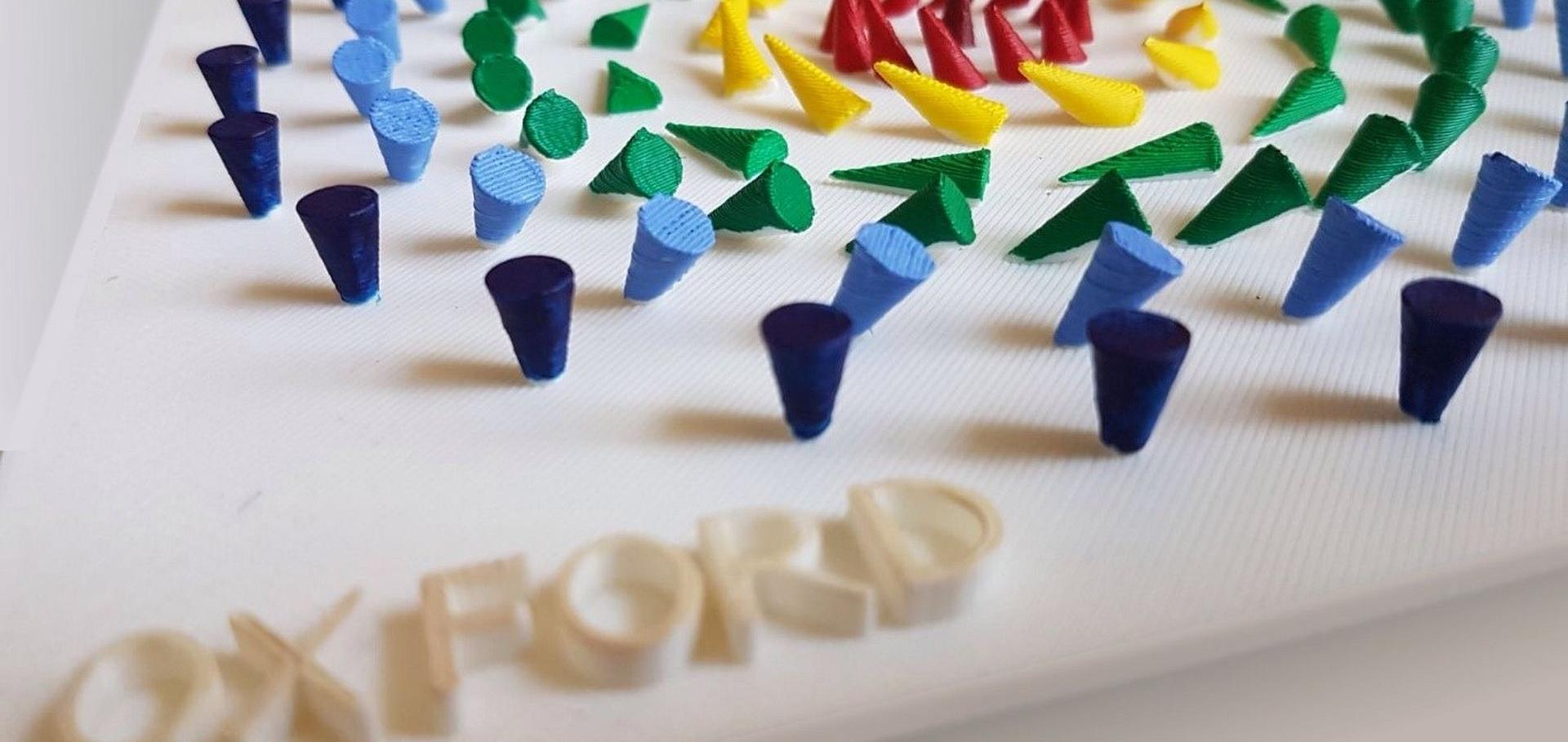
Magnetic skyrmions
Credit: TH

Professor Thorsten Hesjedal FInstP

Professor of Condensed Matter Physics

Research theme

  • Quantum materials

Sub department

  • Condensed Matter Physics

Research groups

  • Topological Magnetism Group
Thorsten.Hesjedal@physics.ox.ac.uk
  • About
  • Publications

Antidamping torques from simultaneous resonances in ferromagnet-topological insulator-ferromagnet heterostructures

Journal of Magnetism and Magnetic Materials Elsevier 473 (2018) 470-476

Authors:

AA Baker, AI Figueroa, Thorsten Hesjedal, G Van Der Laan

Abstract:

We studied the magnetodynamics of ferromagnetic films coupling across a topological insulator (TI) Bi2Se3 layer using ferromagnetic resonance (FMR). TIs have attracted much attention across the physics community as they hold the potential for dissipationless carrier transport, extremely high spin-orbit torques, and are host to novel quantum effects. To investigate the coupling between the ferromagnetic (FM) layers, vector network analyzer (VNA)-FMR measurements of the resonance linewidth were performed as a function of bias field angle. By bringing the resonances of the two FM layers into close proximity, it was possible to observe antidamping torques that lead to a narrowing of linewidth, a characteristic of spin pumping. The element- and hence layer-specific technique of x-ray detected ferromagnetic resonance (XFMR) was used to circumvent the difficulty of obtaining accurate fits to the two overlapping resonances in close proximity. Our results confirm that the interaction across the TI is a dynamic exchange mediated by spin pumping, as opposed to a self-coupling of the surface state or similar, more unconventional mechanisms.
More details from the publisher
Details from ORA
More details

Proposal for a micromagnetic standard problem for materials with Dzyaloshinskii-Moriya interaction

New Journal of Physics Institute of Physics 20 (2018) 113015

Authors:

D Cortes-Ortuno, M Beg, V Nehruji, L Breth, R Pepper, T Kluyver, G Downing, Thorsten Hesjedal, P Hatton, T Lancaster, R Hertel, O Hovorka, H Fabgohr

Abstract:

Understanding the role of the Dzyaloshinskii-Moriya interaction (DMI) for the formation of helimagnetic order, as well as the emergence of skyrmions in magnetic systems that lack inversion symmetry, has found increasing interest due to the significant potential for novel spin based technologies. Candidate materials to host skyrmions include those belonging to the B20 group such as FeGe, known for stabilising Bloch-like skyrmions, interfacial systems such as cobalt multilayers or Pd/Fe bilayers on top of Ir(111), known for stabilising N´eel-like skyrmions, and, recently, alloys with a crystallographic symmetry where anti-skyrmions are stabilised. Micromagnetic simulations have become a standard approach to aid the design and optimisation of spintronic and magnetic nanodevices and are also applied to the modelling of device applications which make use of skyrmions. Several public domain micromagnetic simulation packages such as OOMMF, MuMax3 and Fidimag already offer implementations of different DMI terms. It is therefore highly desirable to propose a so-called micromagnetic standard problem that would allow one to benchmark and test the different software packages in a similar way as is done for ferromagnetic materials without DMI. Here, we provide a sequence of well-defined and increasingly complex computational problems for magnetic materials with DMI. Our test problems include 1D, 2D and 3D domains, spin wave dynamics in the presence of DMI, and validation of the analytical and numerical solutions including uniform magnetisation, edge tilting, spin waves and skyrmion formation. This set of problems can be used by developers and users of new micromagnetic simulation codes for testing and validation and hence establishing scientific credibility.
More details from the publisher
Details from ORA

Microscopic effects of Dy-doping in the topological insulator Bi2Te3

(2018)

Authors:

LB Duffy, N-J Steinke, JA Krieger, AI Figueroa, K Kummer, T Lancaster, SR Giblin, FL Pratt, SJ Blundell, T Prokscha, A Suter, S Langridge, VN Strocov, Z Salman, G van der Laan, T Hesjedal
More details from the publisher

Magnetic X-ray spectroscopy of two-dimensional CrI3 layers

Materials Letters Elsevier 232 (2018) 5-7

Authors:

Andreas Frisk, Liam B Duffy, Shilei Zhang, Gerrit Van Der Laan, Thorsten Hesjedal

Abstract:

The recently confirmed monolayer ferromagnet CrI3 is a frisky example of a two-dimensional ferromagnetic material with great application potential in van der Waals heterostructures. Here we present a soft X-ray absorption spectroscopy study of the magnetic bulk properties of CrI3, giving insight into the magnetic coupling scenario which is relevant for understanding its thickness-dependent magnetic properties. The experimental Cr X-ray magnetic circular dichroism spectra show a good agreement with calculated spectra for a hybridized ground state. In this high-spin Cr ground state the Cr–I bonds show a strongly covalent character. This is responsible for the strong superexchange interaction and increased spin-orbit coupling, resulting in the large magnetic anisotropy of the two-dimensionally layered CrI3 crystal.
More details from the publisher
Details from ORA
More details

THz carrier dynamics and magnetotransport study of topological surface states in thin film Bi2Se3

Proceedings of SPIE - The International Society for Optical Engineering 10531 (2018)

Authors:

VS Kamboj, A Singh, T Ferrus, HE Beere, LB Duffy, T Hesjedal, CHW Barnes, DA Ritchie

Abstract:

© 2018 SPIE. The surface of a topological insulator harbors exotic topological states, protected against backscattering from disorder by time reversal symmetry. The study of these exotic quantum states not only provides an opportunity to explore fundamental phenomena in condensed matter physics, such as the spin Hall effect, but also lays the foundation for applications from quantum computing to spintronics. Conventional electrical measurements suffer from substantial bulk interference, making it difficult to clearly distinguish topological surface states from bulk states. Employing terahertz time-domain spectroscopy, we study the temperature-dependent optical behavior of a 23-quintuple-thick film of bismuth selenide (Bi2Se3) allowing for the deconvolution of the surface state response from the bulk. Our measurement of carrier dynamics give an optical mobility exceeding 2100 cm2/V•s at 4 K, indicative of a surface-dominated response, and a scattering lifetime of ∼0.18 ps and a carrier density of 6×1012cm-2at 4 K for the Bi2Se3film. The sample was further processed into a Hall bar device using two different etching techniques, a wet chemical etching and Ar+ion milling, which resulting in a reduced Hall mobility. Even so, the magneto-conductance transport reveals weak antilocalization behavior in our Bi2Se3 sample, consistent with the presence of a single topological surface state mode.
More details from the publisher
Details from ORA
More details

Pagination

  • First page First
  • Previous page Prev
  • …
  • Page 25
  • Page 26
  • Page 27
  • Page 28
  • Current page 29
  • Page 30
  • Page 31
  • Page 32
  • Page 33
  • …
  • Next page Next
  • Last page Last

Footer Menu

  • Contact us
  • Giving to the Dept of Physics
  • Work with us
  • Media

User account menu

  • Log in

Follow us

FIND US

Clarendon Laboratory,

Parks Road,

Oxford,

OX1 3PU

CONTACT US

Tel: +44(0)1865272200

University of Oxfrod logo Department Of Physics text logo
IOP Juno Champion logo Athena Swan Silver Award logo

© University of Oxford - Department of Physics

Cookies | Privacy policy | Accessibility statement

Built by: Versantus

  • Home
  • Research
  • Study
  • Engage
  • Our people
  • News & Comment
  • Events
  • Our facilities & services
  • About us
  • Giving to Physics
  • Current students
  • Staff intranet