Home
Department Of Physics text logo
  • Research
    • Our research
    • Our research groups
    • Our research in action
    • Research funding support
    • Summer internships for undergraduates
  • Study
    • Undergraduates
    • Postgraduates
  • Engage
    • For alumni
    • For business
    • For schools
    • For the public
Menu
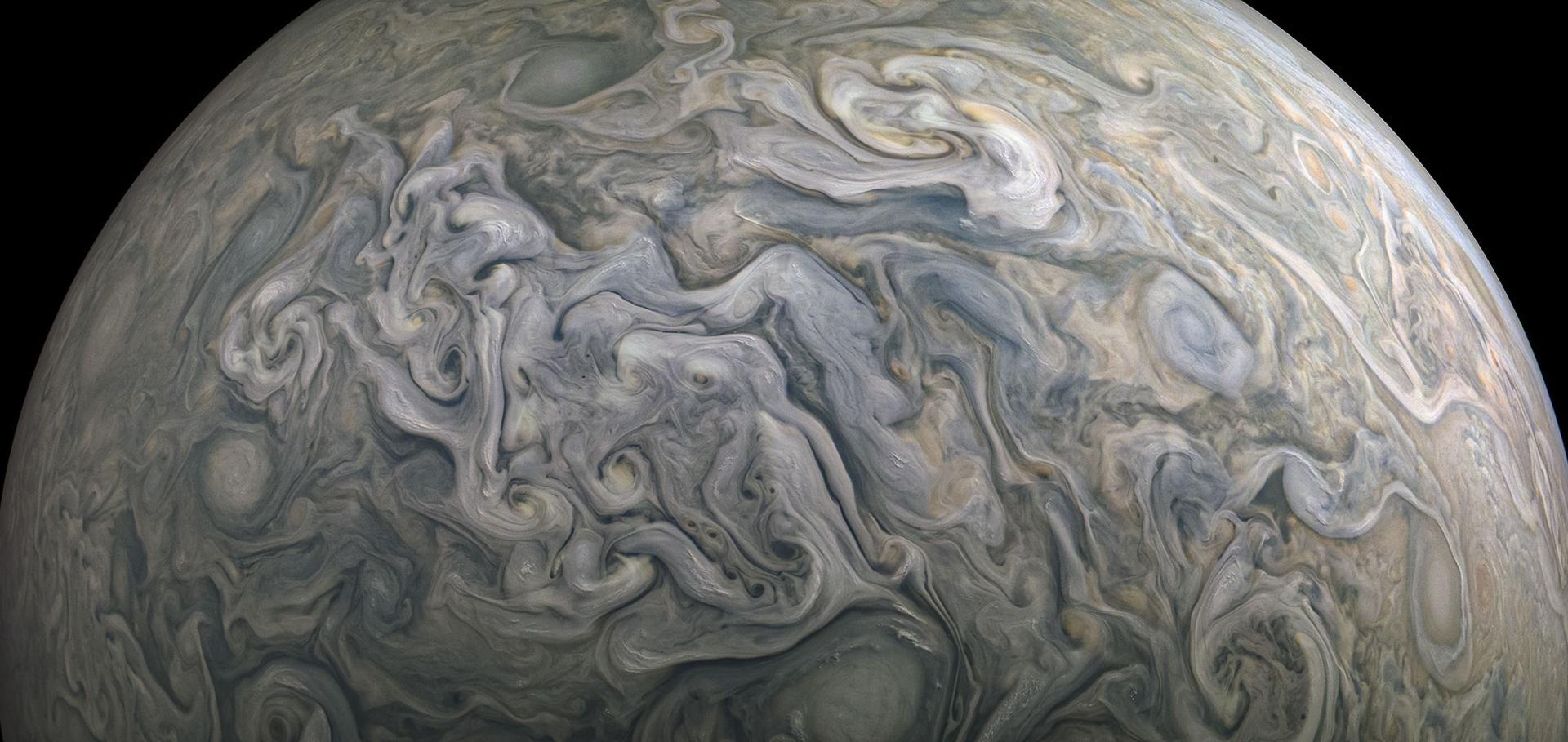
Juno Jupiter image

Prof. Patrick Irwin

Professor of Planetary Physics

Research theme

  • Exoplanets and planetary physics

Sub department

  • Atmospheric, Oceanic and Planetary Physics

Research groups

  • Exoplanet atmospheres
  • Planetary atmosphere observation analysis
  • Solar system
patrick.irwin@physics.ox.ac.uk
Telephone: 01865 (2)72083
Atmospheric Physics Clarendon Laboratory, room 306
Personal research page
NEMESIS
  • About
  • Publications

Time variability of Neptune’s horizontal and vertical cloud structure revealed by VLT/SINFONI and Gemini/NIFS from 2009 to 2013

Icarus Elsevier 271 (2016) 418-437

Authors:

Patrick Irwin, Leigh N Fletcher, Dane Tice, Stephanie J Owen, Glenn S Orton, Nicholas A Teanby, Gary R Davis

Abstract:

New observations of Neptune’s clouds in the near infrared were acquired in October 2013 with SINFONI on ESO’s Very Large Telescope (VLT) in Chile. SINFONI is an Integral Field Unit spectrometer returning a 64 × 64 pixel image with 2048 wavelengths. Image cubes in the J-band (1.09 – 1.41 μm) and H-band (1.43 – 1.87 μm) were obtained at spatial resolutions of 0.1″and 0.025″per pixel, while SINFONI’s adaptive optics provided an effective resolution of approximately 0.1″. Image cubes were obtained at the start and end of three successive nights to monitor the temporal development of discrete clouds both at short timescales (i.e. during a single night) as well as over the longer period of the three-day observing run. These observations were compared with similar H-band observations obtained in September 2009 with the NIFS Integral Field Unit spectrometer on the Gemini-North telescope in Hawaii, previously reported by Irwin et al., Icarus 216, 141-158, 2011, and previously unreported Gemini/NIFS observations at lower spatial resolution made in 2011.

We find both similarities and differences between these observations, spaced over four years. The same overall cloud structure is seen with high, bright clouds visible at mid-latitudes (30 – 40°N,S), with slightly lower clouds observed at lower latitudes, together with small discrete clouds seen circling the pole at a latitude of approximately 60°S. However, while discrete clouds were visible at this latitude at both the main cloud deck level (at 2–3 bars) and in the upper troposphere (100–500mb) in 2009, no distinct deep (2–3 bar), discrete circumpolar clouds were visible in 2013, although some deep clouds were seen at the southern edge of the main cloud belt at 30–40°S, which have not been observed before. The nature of the deep sub-polar discrete clouds observed in 2009 is intriguing. While it is possible that in 2013 these deeper clouds were masked by faster moving, overlying features, we consider that it is unlikely that this should have happened in 2013, but not in 2009 when the upper-cloud activity was generally similar. Meanwhile, the deep clouds seen at the southern edge of the main cloud belt at 30 – 40°S in 2013, should also have been detectable in 2009, but were not seen. Hence, these observations may have detected a real temporal variation in the occurrence of Neptune’s deep clouds, pointing to underlying variability in the convective activity at the pressure of the main cloud deck at 2–3 bars near Neptune’s south pole and also in the main observable cloud belt at 30 – 40°S.

More details from the publisher
Details from ORA
More details

Reanalysis of Uranus' cloud scattering properties from IRTF/SpeX observations using a self-consistent scattering cloud retrieval scheme

(2016)

Authors:

PGJ Irwin, DS Tice, LN Fletcher, JK Barstow, NA Teanby, GS Orton, GR Davis
More details from the publisher

Giant Planet Observations with the James Webb Space Telescope

Publications of the Astronomical Society of the Pacific IOP Publishing 128:959 (2016) 018005

Authors:

James Norwood, Julianne Moses, Leigh N Fletcher, Glenn Orton, Patrick GJ Irwin, Sushil Atreya, Kathy Rages, Thibault Cavalié, Agustin Sánchez-Lavega, Ricardo Hueso, Nancy Chanover
More details from the publisher
More details

Telling twins apart: Exo-Earths and Venuses with transit spectroscopy

Monthly Notices of the Royal Astronomical Society Oxford University Press 458:3 (2016) 2657-2666

Authors:

JK Barstow, Suzanne Aigrain, Patrick GJ Irwin, Sarah Kendrew, Leigh N Fletcher

Abstract:

The planned launch of the James Webb Space Telescope (JWST) in 2018 will herald a new era of exoplanet spectroscopy. JWST will be the first telescope sensitive enough to potentially characterize terrestrial planets from their transmission spectra. In this work, we explore the possibility that terrestrial planets with Venus-type and Earth-type atmospheres could be distinguished from each other using spectra obtained by JWST. If we find a terrestrial planet close to the liquid water habitable zone of an M5 star within a distance of 10 parsec, it would be possible to detect atmospheric ozone if present in large enough quantities, which would enable an oxygen-rich atmosphere to be identified. However, the cloudiness of a Venus-type atmosphere would inhibit our ability to draw firm conclusions about the atmospheric composition, making any result ambiguous. Observing small, temperate planets with JWST requires significant investment of resources, with single targets requiring of the order of 100 transits to achieve sufficient signal to noise. The possibility of detecting a crucial feature such as the ozone signature would need to be carefully weighed against the likelihood of clouds obscuring gas absorption in the spectrum.
More details from the publisher
Details from ORA
More details
Details from ArXiV

Exposed water ice on the nucleus of comet 67P/Churyumov–Gerasimenko

Nature Springer Nature 529:7586 (2016) 368-372

Authors:

G Filacchione, MC De Sanctis, F Capaccioni, A Raponi, F Tosi, M Ciarniello, P Cerroni, G Piccioni, MT Capria, E Palomba, G Bellucci, S Erard, D Bockelee-Morvan, C Leyrat, G Arnold, MA Barucci, M Fulchignoni, B Schmitt, E Quirico, R Jaumann, K Stephan, A Longobardo, V Mennella, A Migliorini, E Ammannito, J Benkhoff, JP Bibring, A Blanco, MI Blecka, R Carlson, U Carsenty, L Colangeli, M Combes, M Combi, J Crovisier, P Drossart, T Encrenaz, C Federico, U Fink, S Fonti, WH Ip, P Irwin, E Kuehrt, Y Langevin, G Magni, T McCord, L Moroz, S Mottola, V Orofino, U Schade, F Taylor, D Tiphene, GP Tozzi, P Beck, N Biver, L Bonal, J-Ph Combe, D Despan, E Flamini, M Formisano, S Fornasier, A Frigeri, D Grassi, MS Gudipati, D Kappel, F Mancarella, K Markus, F Merlin, R Orosei, G Rinaldi, M Cartacci, A Cicchetti, S Giuppi, Y Hello, F Henry, S Jacquinod, JM Reess, R Noschese, R Politi, G Peter
More details from the publisher
More details
More details

Pagination

  • First page First
  • Previous page Prev
  • …
  • Page 46
  • Page 47
  • Page 48
  • Page 49
  • Current page 50
  • Page 51
  • Page 52
  • Page 53
  • Page 54
  • …
  • Next page Next
  • Last page Last

Footer Menu

  • Contact us
  • Giving to the Dept of Physics
  • Work with us
  • Media

User account menu

  • Log in

Follow us

FIND US

Clarendon Laboratory,

Parks Road,

Oxford,

OX1 3PU

CONTACT US

Tel: +44(0)1865272200

University of Oxfrod logo Department Of Physics text logo
IOP Juno Champion logo Athena Swan Silver Award logo

© University of Oxford - Department of Physics

Cookies | Privacy policy | Accessibility statement

Built by: Versantus

  • Home
  • Research
  • Study
  • Engage
  • Our people
  • News & Comment
  • Events
  • Our facilities & services
  • About us
  • Giving to Physics
  • Current students
  • Staff intranet