Home
Department Of Physics text logo
  • Research
    • Our research
    • Our research groups
    • Our research in action
    • Research funding support
    • Summer internships for undergraduates
  • Study
    • Undergraduates
    • Postgraduates
  • Engage
    • For alumni
    • For business
    • For schools
    • For the public
Menu
CMP
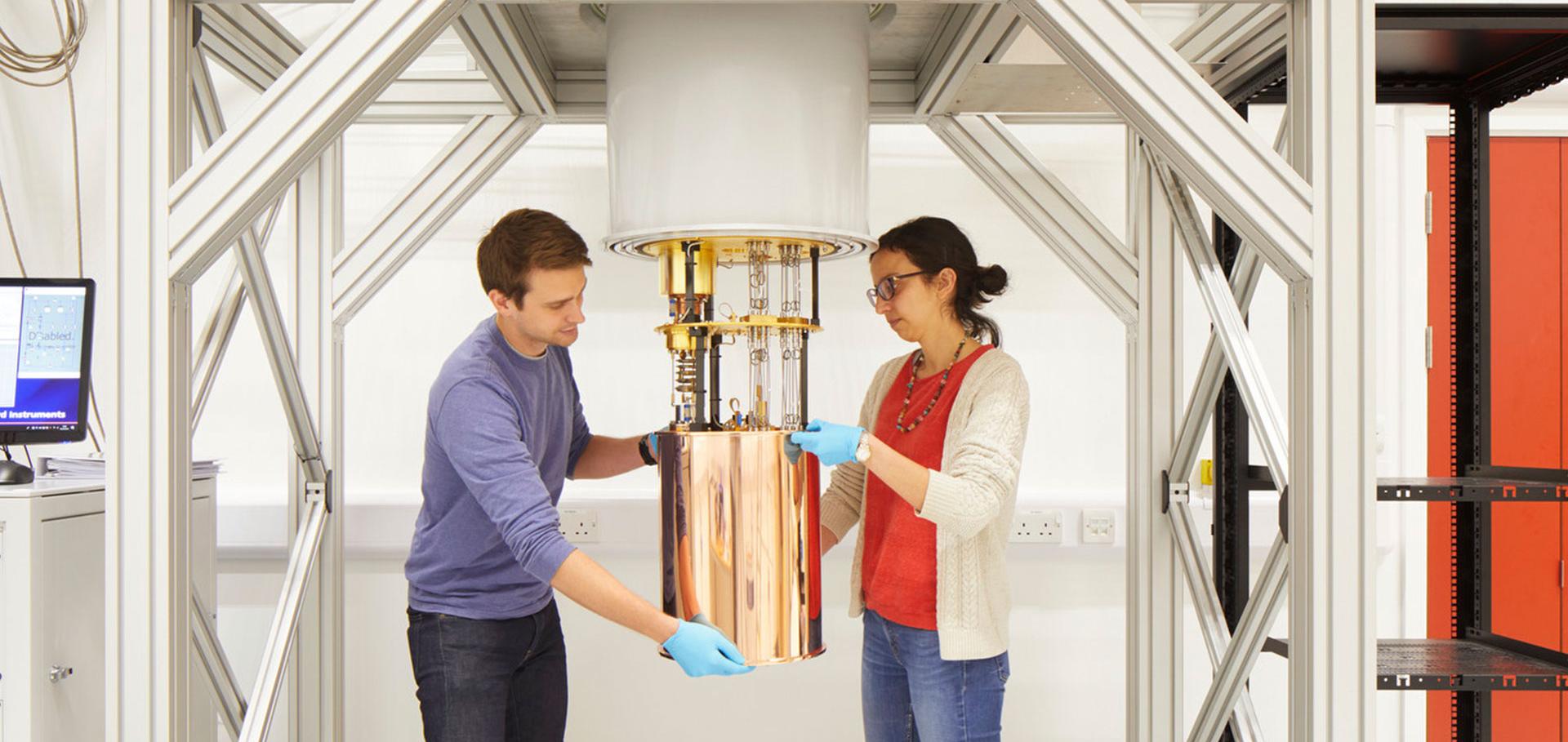
Credit: Jack Hobhouse

Professor Achillefs Kapanidis

Professor of Biological Physics

Research theme

  • Biological physics

Sub department

  • Condensed Matter Physics

Research groups

  • Gene machines
Achillefs.Kapanidis@physics.ox.ac.uk
Telephone: 01865 (2)72226
Biochemistry Building
groups.physics.ox.ac.uk/genemachines/group
  • About
  • Publications

Site-specific incorporation of fluorescent probes into protein: hexahistidine-tag-mediated fluorescent labeling with (Ni(2+):nitrilotriacetic Acid (n)-fluorochrome conjugates.

J Am Chem Soc 123:48 (2001) 12123-12125

Authors:

AN Kapanidis, YW Ebright, RH Ebright
More details from the publisher

Mean DNA bend angle and distribution of DNA bend angles in the CAP-DNA complex in solution.

J Mol Biol 312:3 (2001) 453-468

Authors:

AN Kapanidis, YW Ebright, RD Ludescher, S Chan, RH Ebright

Abstract:

In order to define the mean DNA bend angle and distribution of DNA bend angles in the catabolite activator protein (CAP)-DNA complex in solution under standard transcription initiation conditions, we have performed nanosecond time-resolved fluorescence measurements quantifying energy transfer between a probe incorporated at a specific site in CAP, and a complementary probe incorporated at each of five specific sites in DNA. The results indicate that the mean DNA bend angle is 77(+/-3) degrees - consistent with the mean DNA bend angle observed in crystallographic structures (80(+/-12) degrees ). Lifetime-distribution analysis indicates that the distribution of DNA bend angles is relatively narrow, with <10 % of DNA bend angles exceeding 100 degrees. Millisecond time-resolved luminescence measurements using lanthanide-chelate probes provide independent evidence that the upper limit of the distribution of DNA bend angles is approximately 100 degrees. The methods used here will permit mutational analysis of CAP-induced DNA bending and the role of CAP-induced DNA bending in transcriptional activation.
More details from the publisher

Translocation of sigma(70) with RNA polymerase during transcription: fluorescence resonance energy transfer assay for movement relative to DNA.

Cell 106:4 (2001) 453-463

Authors:

J Mukhopadhyay, AN Kapanidis, V Mekler, E Kortkhonjia, YW Ebright, RH Ebright

Abstract:

Using fluorescence resonance energy transfer, we show that, in the majority of transcription complexes, sigma(70) is not released from RNA polymerase upon transition from initiation to elongation, but, instead, remains associated with RNA polymerase and translocates with RNA polymerase. The results argue against the presumption that there are necessary subunit-composition differences, and corresponding necessary mechanistic differences, in initiation and elongation. The methods of this report should be generalizable to monitor movement of any molecule relative to any nucleic acid.
More details from the publisher

Structural transitions in transcription initiation: Kinetic and single molecule kinetic analyses

BIOPHYSICAL JOURNAL 80:1 (2001) 3A-3A

Authors:

J Mukhopadhyay, A Kapanidis, V Mekler, E Kortkhonjia, A Revyakin, YW Ebright, S Weiss, RH Ebright
More details

New core promoter element in RNA polymerase II-dependent transcription: sequence-specific DNA binding by transcription factor IIB.

Genes Dev 12:1 (1998) 34-44

Authors:

T Lagrange, AN Kapanidis, H Tang, D Reinberg, RH Ebright

Abstract:

A sequence element located immediately upstream of the TATA element, and having the consensus sequence 5'-G/C-G/C-G/A-C-G-C-C-3', affects the ability of transcription factor IIB to enter transcription complexes and support transcription initiation. The sequence element is recognized directly by the transcription factor IIB. Recognition involves alpha-helices 4' and 5' of IIB, which comprise a helix-turn-helix DNA-binding motif. These observations establish that transcription initiation involves a fourth core promoter element, the IIB recognition element (BRE), in addition to the TATA element, the initiator element, and the downstream promoter element, and involves a second sequence-specific general transcription factor, IIB, in addition to transcription factor IID.
More details from the publisher

Pagination

  • First page First
  • Previous page Prev
  • …
  • Page 39
  • Page 40
  • Page 41
  • Page 42
  • Current page 43
  • Page 44
  • Page 45
  • Page 46
  • Page 47
  • …
  • Next page Next
  • Last page Last

Footer Menu

  • Contact us
  • Giving to the Dept of Physics
  • Work with us
  • Media

User account menu

  • Log in

Follow us

FIND US

Clarendon Laboratory,

Parks Road,

Oxford,

OX1 3PU

CONTACT US

Tel: +44(0)1865272200

University of Oxfrod logo Department Of Physics text logo
IOP Juno Champion logo Athena Swan Silver Award logo

© University of Oxford - Department of Physics

Cookies | Privacy policy | Accessibility statement

Built by: Versantus

  • Home
  • Research
  • Study
  • Engage
  • Our people
  • News & Comment
  • Events
  • Our facilities & services
  • About us
  • Giving to Physics
  • Current students
  • Staff intranet