Home
Department Of Physics text logo
  • Research
    • Our research
    • Our research groups
    • Our research in action
    • Research funding support
    • Summer internships for undergraduates
  • Study
    • Undergraduates
    • Postgraduates
  • Engage
    • For alumni
    • For business
    • For schools
    • For the public
Menu
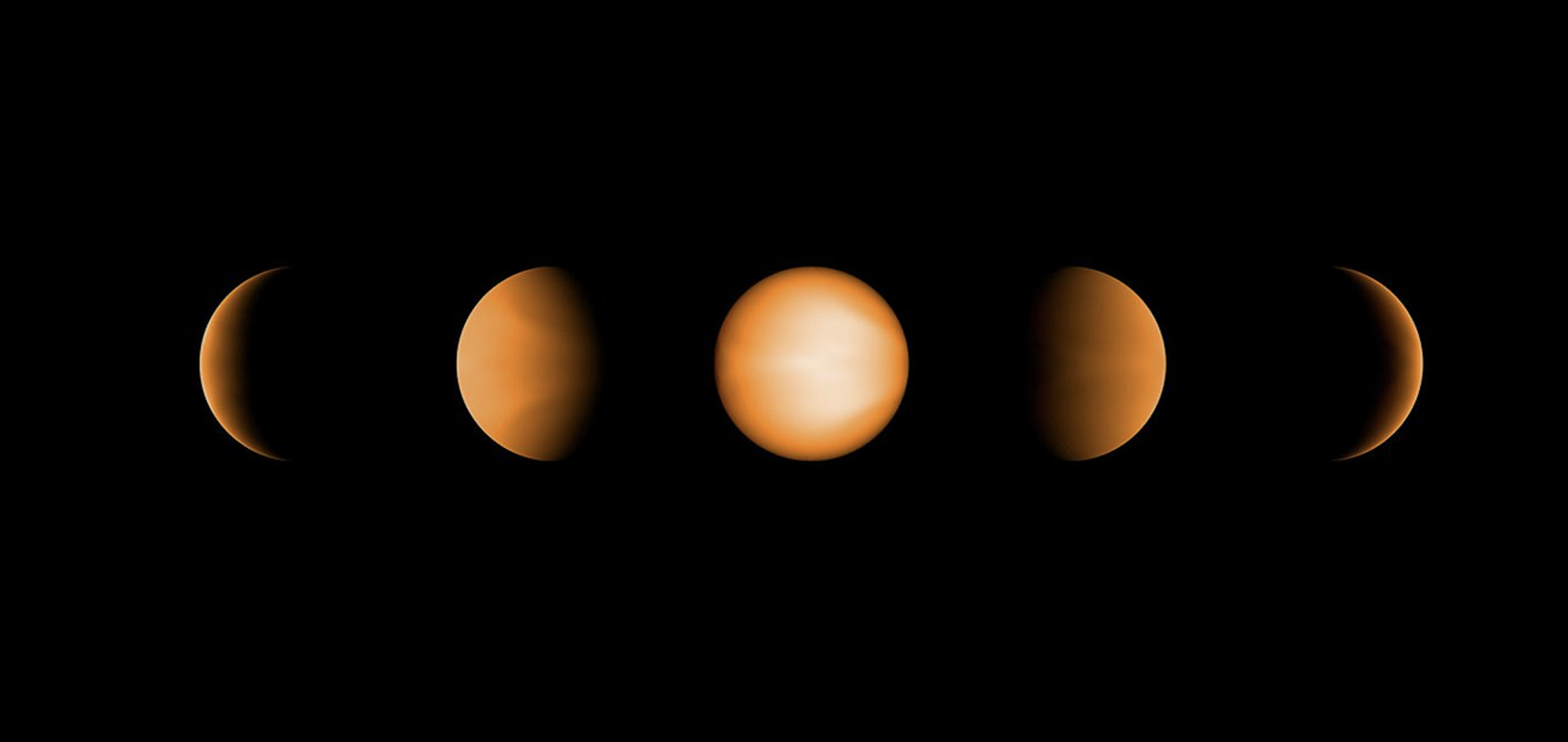
WASp-121b at different phases as would be seen by an observer, modelled with the 3D SPARC/MITgcm.

The hot Jupiter WASP-121b at different phases as would be seen by an observer, modelled with the 3D SPARC/MITgcm.

Credit: Vivien Parmentier

Vivien Parmentier

Visitor

Research theme

  • Astronomy and astrophysics
  • Exoplanets and planetary physics

Sub department

  • Atmospheric, Oceanic and Planetary Physics

Research groups

  • Exoplanet atmospheres
  • Exoplanets and Stellar Physics
vivien.parmentier@physics.ox.ac.uk
Telephone: 01865282458
Atmospheric Physics Clarendon Laboratory, room 116
Current website
  • About
  • Publications

Constraining exoplanet metallicities and aerosols with the contribution to ARIEL spectroscopy of exoplanets (CASE)

Publications of the Astronomical Society of the Pacific IOP Science 131:1003 (2019) 094401

Authors:

Robert T Zellem, Mark R Swain, Nicolas B Cowan, Geoffrey Bryden, Thaddeus D Komacek, Mark Colavita, David Ardila, Gael M Roudier, Jonathan J Fortney, Jacob Bean, Michael R Line, Caitlin A Griffith, Evgenya L Shkolnik, Laura Kreidberg, Julianne I Moses, Adam P Showman, Kevin B Stevenson, Andre Wong, John W Chapman, David R Ciardi, Andrew W Howard, Tiffany Kataria, Eliza M-R Kempton, David Latham, Suvrath Mahadevan, Jorge Melendez, Vivien Parmentier

Abstract:

Launching in 2028, ESA’s 0.64 m2 Atmospheric Remote-sensing Exoplanet Large-survey (ARIEL) survey of ∼1000 transiting exoplanets will build on the legacies of NASA’s Kepler and Transiting Exoplanet Survey Satellite (TESS), and complement the James Webb Space Telescope (JWST) by placing its high-precision exoplanet observations into a large, statistically significant planetary population context. With continuous 0.5–7.8 μm coverage from both FGS (0.5–0.6, 0.6–0.81, and 0.81–1.1 μm photometry; 1.1–1.95 μm spectroscopy) and AIRS (1.95–7.80 μm spectroscopy), ARIEL will determine atmospheric compositions and probe planetary formation histories during its 3.5 yr mission. NASA’s proposed Contribution to ARIEL Spectroscopy of Exoplanets (CASE) would be a subsystem of ARIEL’s Fine Guidance Sensor (FGS) instrument consisting of two visible-to-infrared detectors, associated readout electronics, and thermal control hardware. FGS, to be built by the Polish Academy of Sciences Space Research Centre, will provide both fine guiding and visible to near-infrared photometry and spectroscopy, providing powerful diagnostics of atmospheric aerosol contribution and planetary albedo, which play a crucial role in establishing planetary energy balance. The CASE team presents here an independent study of the capabilities of ARIEL to measure exoplanetary metallicities, which probe the conditions of planet formation, and FGS to measure scattering spectral slopes, which indicate if an exoplanet has atmospheric aerosols (clouds and hazes), and geometric albedos, which help establish planetary climate. Our simulations assume that ARIEL’s performance will be 1.3×the photon-noise limit. This value is motivated by current transiting exoplanet observations: Spitzer/IRAC and Hubble/WFC3 have empirically achieved 1.15×the photon-noise limit. One could expect similar performance from ARIEL, JWST, and other proposed future missions such as HabEx, LUVOIR, and Origins. Our design reference mission simulations show that ARIEL could measure the mass– metallicity relationship of its 1000-planet single-visit sample to >7.5σ and that FGS could distinguish between clear, cloudy, and hazy skies and constrain an exoplanet’s atmospheric aerosol composition to ≳5σ for hundreds of targets, providing statistically transformative science for exoplanet atmospheres.
More details from the publisher
Details from ORA
More details

Vertical tracer mixing in hot Jupiter atmospheres

Astrophysical Journal American Astronomical Society 881:2 (2019) 152

Authors:

Thaddeus D Komacek, Adam P Showman, Vivien Parmentier

Abstract:

Aerosols appear to be ubiquitous in close-in gas giant atmospheres, and disequilibrium chemistry likely impacts the emergent spectra of these planets. Lofted aerosols and disequilibrium chemistry are caused by vigorous vertical transport in these heavily irradiated atmospheres. Here we numerically and analytically investigate how vertical transport should change over the parameter space of spin-synchronized gas giants. In order to understand how tracer transport depends on planetary parameters, we develop an analytic theory to predict vertical velocities and mixing rates (K zz) and compare the results to our numerical experiments. We find that both our theory and numerical simulations predict that if the vertical mixing rate is described by an eddy diffusivity, then this eddy diffusivity K zz should increase with increasing equilibrium temperature, decreasing frictional drag strength, and increasing chemical loss timescales. We find that the transition in our numerical simulations between circulation dominated by a superrotating jet and that with solely day-to-night flow causes a marked change in the vertical velocity structure and tracer distribution. The mixing ratio of passive tracers is greatest for intermediate drag strengths that correspond to this transition between a superrotating jet with columnar vertical velocity structure and day-to-night flow with upwelling on the dayside and downwelling on the nightside. Finally, we present analytic solutions for K zz as a function of planetary effective temperature, chemical loss timescales, and other parameters, for use as input to 1D chemistry models of spin-synchronized gas giant atmospheres.
More details from the publisher
Details from ORA
More details

Observing exoplanets in the near-infrared from a high altitude balloon platform

Journal of Astronomical Instrumentation World Scientific Publishing 8:3 (2019) 1950011

Authors:

PC Nagler, B Edwards, B Kilpatrick, NK Lewis, P Maxted, C Barth Netterfield, V Parmentier, E Pascale, S Sarkar, GS Tucker, I Waldmann

Abstract:

Although there exists a large sample of known exoplanets, little data exists that can be used to study their global atmospheric properties. This deficiency can be addressed by performing phase-resolved spectroscopy — continuous spectroscopic observations of a planet’s entire orbit about its host star — of transiting exoplanets. Planets with characteristics suitable for atmospheric characterization have orbits of several days, thus phase curve observations are highly resource intensive, especially for shared use facilities. In this work, we show that an infrared spectrograph operating from a high altitude balloon platform can perform phase-resolved spectroscopy of hot Jupiter-type exoplanets with performance comparable to a space-based telescope. Using the EXoplanet Climate Infrared TElescope (EXCITE) experiment as an example, we quantify the impact of the most important systematic effects that we expect to encounter from a balloon platform. We show an instrument like EXCITE will have the stability and sensitivity to significantly advance our understanding of exoplanet atmospheres. Such an instrument will both complement and serve as a critical bridge between current and future space-based near-infrared spectroscopic instruments.
More details from the publisher
Details from ORA
More details

The effect of 3D transport-induced disequilibrium carbon chemistry on the atmospheric structure, phase curves, and emission spectra of hot Jupiter HD 189733b

Astrophysical Journal IOP Publishing 880:1 (2019) 14

Authors:

Maria E Steinrueck, Vivien Parmentier, Adam P Showman, Joshua D Lothringer, Roxana E Lupu

Abstract:

On hot Jupiter exoplanets, strong horizontal and vertical winds should homogenize the abundances of the important absorbers CH4 and CO much faster than chemical reactions restore chemical equilibrium. This effect, typically neglected in general circulation models (GCMs), has been suggested to explain discrepancies between observed infrared light curves and those predicted by GCMs. On the nightsides of several hot Jupiters, GCMs predict outgoing fluxes that are too large, especially in the Spitzer 4.5 μm band. We modified the SPARC/MITgcm to include disequilibrium abundances of CH4, CO, and H2O by assuming that the CH4/CO ratio is constant throughout the simulation domain. We ran simulations of hot Jupiter HD 189733b with eight CH4/CO ratios. In the more likely CO-dominated regime, we find temperature changes ≥50–100 K compared to the simulation for equilibrium chemistry across large regions. This effect is large enough to affect predicted emission spectra and should thus be included in GCMs of hot Jupiters with equilibrium temperatures between 600 and 1300 K. We find that spectra in regions with strong methane absorption, including the Spitzer 3.6 and 8 μm bands, are strongly impacted by disequilibrium abundances. We expect chemical quenching to result in much larger nightside fluxes in the 3.6 μm band, in stark contrast to observations. Meanwhile, we find almost no effect on predicted observations in the 4.5 μm band, because the changes in opacity due to CO and H2O offset each other. We thus conclude that disequilibrium carbon chemistry cannot explain the observed low nightside fluxes in the 4.5 μm band.
More details from the publisher
Details from ORA
More details

Sparkling nights and very hot days on WASP-18b: the formation of clouds and the emergence of an ionosphere

Astronomy & Astrophysics EDP Sciences 626 (2019) A133-A133

Authors:

Ch Helling, P Gourbin, P Woitke, V Parmentier

Abstract:

Context. WASP-18b is an ultra-hot Jupiter with a temperature difference of up to 2500 K between day and night. Such giant planets begin to emerge as a planetary laboratory for understanding cloud formation and gas chemistry in well-tested parameter regimes in order to better understand planetary mass loss and for linking observed element ratios to planet formation and evolution. Aims. We aim to understand where clouds form, their interaction with the gas-phase chemistry through depletion and enrichment, the ionisation of the atmospheric gas, and the possible emergence of an ionosphere on ultra-hot Jupiters. Methods. We used 1D profiles from a 3D atmosphere simulation for WASP-18b as input for kinetic cloud formation and gas-phase chemical equilibrium calculations. We solved our kinetic cloud formation model for these 1D profiles, which sample the atmosphere of WASP-18b at 16 different locations along the equator and in the mid-latitudes. We derived the gas-phase composition consistently. Results. The dayside of WASP-18b emerges as completely cloud-free as a result of the very high atmospheric temperatures. In contrast, the nightside is covered in geometrically extended and chemically heterogeneous clouds with dispersed particle size distributions. The atmospheric C/O ratio increases to >0.7 and the enrichment of the atmospheric gas with cloud particles is ρd/ρgas > 10−3. The clouds that form at the limbs appear located farther inside the atmosphere, and they are the least extended. Not all day- to nightside terminator regions form clouds. The gas phase is dominated by H2, CO, SiO, H2O, H2S, CH4, and SiS. In addition, the dayside has a substantial degree of ionisation that is due to ions such as Na+, K+, Ca+, and Fe+. Al+ and Ti+ are the most abundant of their element classes. We find that WASP-18b, as one example for ultra-hot Jupiters, develops an ionosphere on the dayside.
More details from the publisher

Pagination

  • First page First
  • Previous page Prev
  • …
  • Page 20
  • Page 21
  • Page 22
  • Page 23
  • Current page 24
  • Page 25
  • Page 26
  • Page 27
  • Page 28
  • …
  • Next page Next
  • Last page Last

Footer Menu

  • Contact us
  • Giving to the Dept of Physics
  • Work with us
  • Media

User account menu

  • Log in

Follow us

FIND US

Clarendon Laboratory,

Parks Road,

Oxford,

OX1 3PU

CONTACT US

Tel: +44(0)1865272200

University of Oxfrod logo Department Of Physics text logo
IOP Juno Champion logo Athena Swan Silver Award logo

© University of Oxford - Department of Physics

Cookies | Privacy policy | Accessibility statement

Built by: Versantus

  • Home
  • Research
  • Study
  • Engage
  • Our people
  • News & Comment
  • Events
  • Our facilities & services
  • About us
  • Giving to Physics
  • Current students
  • Staff intranet