Home
Department Of Physics text logo
  • Research
    • Our research
    • Our research groups
    • Our research in action
    • Research funding support
    • Summer internships for undergraduates
  • Study
    • Undergraduates
    • Postgraduates
  • Engage
    • For alumni
    • For business
    • For schools
    • For the public
Menu
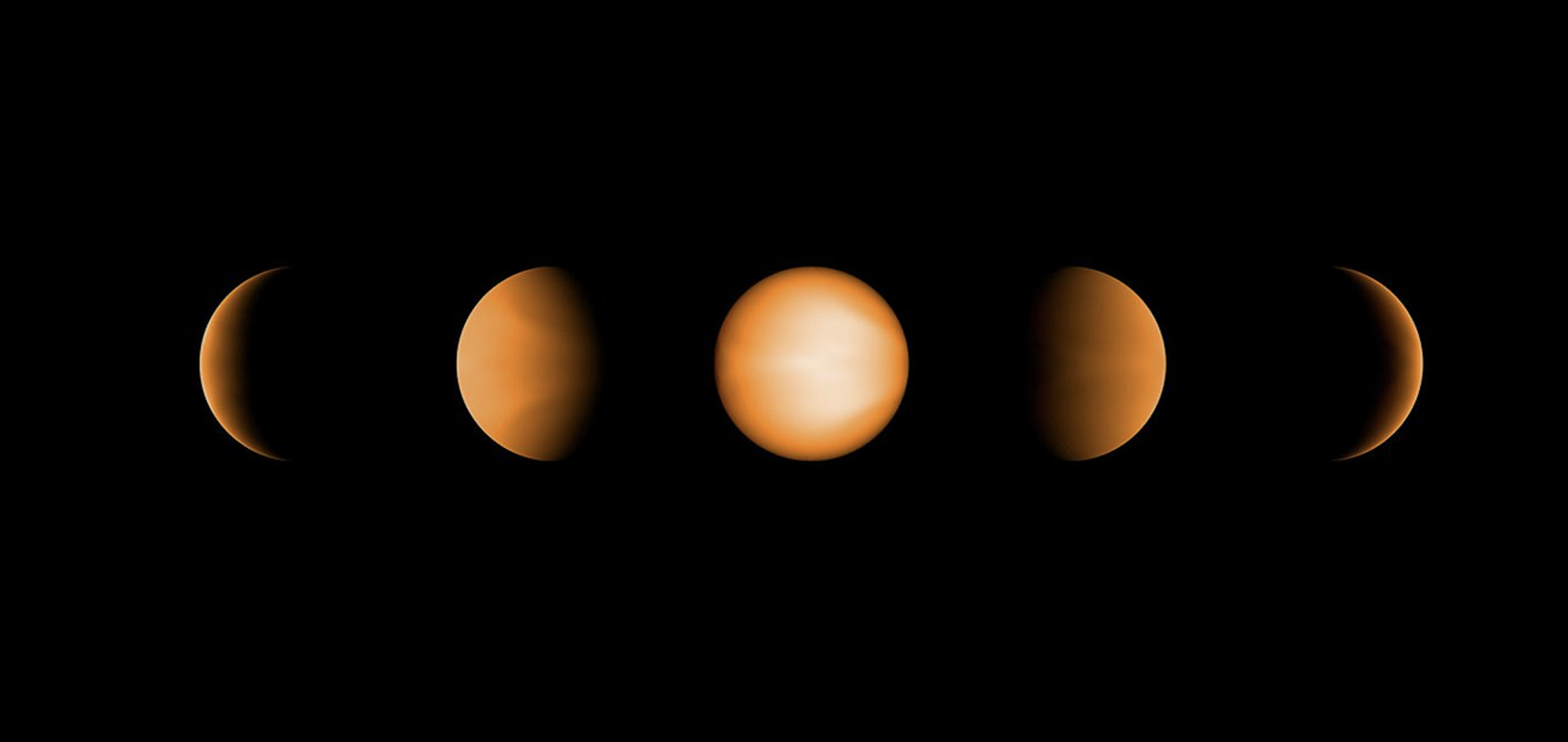
WASp-121b at different phases as would be seen by an observer, modelled with the 3D SPARC/MITgcm.

The hot Jupiter WASP-121b at different phases as would be seen by an observer, modelled with the 3D SPARC/MITgcm.

Credit: Vivien Parmentier

Vivien Parmentier

Visitor

Research theme

  • Astronomy and astrophysics
  • Exoplanets and planetary physics

Sub department

  • Atmospheric, Oceanic and Planetary Physics

Research groups

  • Exoplanet atmospheres
  • Exoplanets and Stellar Physics
vivien.parmentier@physics.ox.ac.uk
Telephone: 01865282458
Atmospheric Physics Clarendon Laboratory, room 116
Current website
  • About
  • Publications

Climate of an ultra hot Jupiter: Spectroscopic phase curve of WASP-18b with HST/WFC3

Astronomy and Astrophysics EDP Sciences 625 (2019) A136

Authors:

Jacob Arcangeli, Jean-Michel Desert, Vivien Parmentier, Kevin B Stevenson, Jacob L Bean, Michael R Line, Laura Kreidberg, Jonathan J Fortney, Adam P Showman

Abstract:

We present the analysis of a full-orbit, spectroscopic phase curve of the ultra hot Jupiter (UHJ) WASP-18b, obtained with the Wide Field Camera 3 aboard the Hubble Space Telescope. We measured the normalised day-night contrast of the planet as >0.96 in luminosity: the disc-integrated dayside emission from the planet is at 964 ± 25 ppm, corresponding to 2894 ± 30 K, and we place an upper limit on the nightside emission of <32 ppm or 1430 K at the 3σ level. We also find that the peak of the phase curve exhibits a small, but significant offset in brightness of 4.5 ± 0.5° eastward. We compare the extracted phase curve and phase-resolved spectra to 3D global circulation models and find that broadly the data can be well reproduced by some of these models. We find from this comparison several constraints on the atmospheric properties of the planet. Firstly we find that we need efficient drag to explain the very inefficient day-night recirculation observed. We demonstrate that this drag could be due to Lorentz-force drag by a magnetic field as weak as 10 gauss. Secondly, we show that a high metallicity is not required to match the large day-night temperature contrast. In fact, the effect of metallicity on the phase curve is different from cooler gas-giant counterparts because of the high-temperature chemistry in the atmosphere of WASP-18b. Additionally, we compared the current UHJ spectroscopic phase curves, WASP-18b and WASP-103b, and show that these two planets provide a consistent picture with remarkable similarities in their measured and inferred properties. However, key differences in these properties, such as their brightness offsets and radius anomalies, suggest that UHJ could be used to separate between competing theories for the inflation of gas-giant planets.
More details from the publisher
Details from ORA
More details

Exoplanet phase curves: Observations and theory

Chapter in Handbook of Exoplanets, (2018) 1419-1440

Authors:

V Parmentier, IJM Crossfield

Abstract:

Phase curves are the best technique to probe the three-dimensional structure of exoplanets' atmospheres. In this chapter we first review current exoplanets' phase curve observations and the particular challenges they face. We then describe the different physical mechanisms shaping the atmospheric phase curves of highly irradiated tidally locked exoplanets. Finally, we discuss the potential for future missions to further advance our understanding of these new worlds.
More details from the publisher

From thermal dissociation to condensation in the atmospheres of ultra hot Jupiters: WASP-121b in context

ASTRONOMY & ASTROPHYSICS 617 (2018) ARTN A110

Authors:

Vivien Parmentier, Mike R Line, Jacob L Bean, Megan Mansfield, Laura Kreidberg, Roxana Lupu, Channon Visscher, Jean-Michel Desert, Jonathan J Fortney, Magalie Deleuil, Jacob Arcangeli, Adam P Showman, Mark S Marley

Abstract:

Context. A new class of exoplanets has emerged: the ultra hot Jupiters, the hottest close-in gas giants. The majority of them have weaker-than-expected spectral features in the 1.1−1.7 µm bandpass probed by HST/WFC3 but stronger spectral features at longer wavelengths probed by Spitzer. This led previous authors to puzzling conclusions about the thermal structures and chemical abundances of these planets. Aims. We investigate how thermal dissociation, ionization, H − opacity, and clouds shape the thermal structures and spectral properties of ultra hot Jupiters. Methods. We use the SPARC/MITgcm to model the atmospheres of four ultra hot Jupiters and discuss more thoroughly the case of WASP-121b. We expand our findings to the whole population of ultra hot Jupiters through analytical quantification of the thermal dissociation and its influence on the strength of spectral features. Results. We predict that most molecules are thermally dissociated and alkalies are ionized in the dayside photospheres of ultra hot Jupiters. This includes H2O, TiO, VO, and H2 but not CO, which has a stronger molecular bond. The vertical molecular gradient created by the dissociation significantly weakens the spectral features from H2O while the 4.5 µm CO feature remains unchanged. The water band in the HST/WFC3 bandpass is further weakened by the continuous opacity of the H − ions. Molecules are expected to recombine before reaching the limb, leading to order of magnitude variations of the chemical composition and cloud coverage between the limb and the dayside. Conclusions. Molecular dissociation provides a qualitative understanding of the lack of strong spectral features of water in the 1−2 µm bandpass observed in most ultra hot Jupiters. Quantitatively, our model does not provide a satisfactory match to the WASP-121b emission spectrum. Together with WASP-33b and Kepler-33Ab, they seem the outliers among the population of ultra hot Jupiters, in need of a more thorough understanding
More details from the publisher
Details from ORA
More details
Details from ArXiV

A chemical survey of exoplanets with ARIEL

Experimental Astronomy Springer 46:1 (2018) 135-209

Authors:

Giovanna Tinetti, Pierre Drossart, Paul Eccleston, Paul Hartogh, Astrid Heske, Jérémy Leconte, Giusi Micela, Marc Ollivier, Paul Eccleston, Göran Pilbratt, Ludovic Puig, Diego Turrini, Neil Bowles

Abstract:

Thousands of exoplanets have now been discovered with a huge range of masses, sizes and orbits: from rocky Earth-like planets to large gas giants grazing the surface of their host star. However, the essential nature of these exoplanets remains largely mysterious: there is no known, discernible pattern linking the presence, size, or orbital parameters of a planet to the nature of its parent star. We have little idea whether the chemistry of a planet is linked to its formation environment, or whether the type of host star drives the physics and chemistry of the planet’s birth, and evolution. The Atmospheric Remote-sensing Infrared Exoplanet Large-survey (ARIEL) has been selected by the European Space Agency as the next mediumclass science mission, M4, to address these scientific questions. ARIEL was conceived to observe a large number (~1000) of transiting planets for statistical understanding, including gas giants, Neptunes, super-Earths and Earth-size planets around a range of host star types using transit spectroscopy in the 1.25-7.8 μm spectral range and multiple narrow-band photometry in the optical. ARIEL will focus on warm and hot planets to take advantage of their well-mixed atmospheres which should show minimal condensation and sequestration of high-Z materials compared to their colder Solar System siblings. Said warm and hot atmospheres are expected to be more representative of the planetary bulk composition. Observations of these warm/hot exoplanets, and in particular of their elemental composition (especially C, O, N, S, Si), will allow the understanding of the early stages of planetary and atmospheric formation during the nebular phase and the following few million years. ARIEL will thus provide a representative picture of the chemical nature of the exoplanets and relate this directly to the type and chemical environment of the host star. ARIEL is designed as a dedicated survey mission for combined-light spectroscopy, capable of observing a large and well-defined planet sample within its 4-year mission lifetime. Transit, eclipse and phase-curve spectroscopy methods, whereby the signal from the star and planet are differentiated using knowledge of the planetary ephemerides, allow us to measure atmospheric signals from the planet at levels of 10-100 part per million (ppm) relative to the star and, given the bright nature of targets, also allows more sophisticated techniques, such as eclipse mapping, to give a deeper insight into the nature of the atmosphere. These types of observations require a stable payload and satellite platform with broad, instantaneous wavelength coverage to detect many molecular species, probe the thermal structure, identify clouds and monitor the stellar activity. The wavelength range proposed covers all the expected major atmospheric gases from e.g. H2O, CO2, CH4 NH3, HCN, H2S through to the more exotic metallic compounds, such as TiO, VO, and condensed species. Simulations of ARIEL performance in conducting exoplanet surveys have been performed – using conservative estimates of mission performance and a full model of all significant noise sources in the measurement – using a list of potential ARIEL targets that incorporates the latest available exoplanet statistics. The conclusion at the end of the Phase A study, is that ARIEL – in line with the stated mission objectives – will be able to observe about 1000 exoplanets depending on the details of the adopted survey strategy, thus confirming the feasibility of the main science objectives.
More details from the publisher
Details from ORA
More details

Community targets of JWST's early release science program: Evaluation of WASP-63b

Astronomical Journal IOP Publishing 156:3 (2018) 103

Authors:

Brian M Kilpatrick, Patricio E Cubillos, Kevin B Stevenson, Nikole K Lewis, Hannah R Wakeford, Ryan J MacDonald, Nikku Madhusudhan, Jasmina Blecic, Giovanni Bruno, Adam Burrows, Drake Deming, Kevin Heng, Michael R Line, Caroline V Morley, Vivien Parmentier, Gregory S Tucker, Jeff A Valenti, Ingo P Waldmann, Jacob L Bean, Charles Beichman, Jonathan Fraine, JE Krick, Joshua D Lothringer, Avi M Mandell

Abstract:

We present observations of WASP-63b by the Hubble Space Telescope (HST) as part of "A Preparatory Program to Identify the Single Best Transiting Exoplanet for James Webb Space Telescope (JWST) Early Release Science (ERS)." WASP-63b is one of the community targets under consideration for the JWST ERS program. We present a spectrum derived from a single observation by HST Wide Field Camera 3 in the near-infrared. We engaged groups across the transiting exoplanet community to participate in the analysis of the data and present results from each. Extraction of the transmission spectrum by several independent analyses find an H2O absorption feature with varying degrees of significance ranging from 1σ to 3σ. The feature, in all cases, is muted in comparison to a clear atmosphere at solar composition. The reasons for the muting of this feature are ambiguous due to a degeneracy between clouds and composition. The data does not yield robust detections of any molecular species other than H2O. The group was motivated to perform an additional set of retrieval exercises to investigate an apparent bump in the spectrum at ~1.55 μm. We explore possible disequilibrium chemistry and find this feature is consistent with super-solar HCN abundance but it is questionable if the required mixing ratio of HCN is chemically and physically plausible. The ultimate goal of this study is to vet WASP-63b as a potential community target to best demonstrate the capabilities and systematics of JWST instruments for transiting exoplanet science. In the case of WASP-63b, the presence of a detectable water feature indicates that WASP-63b remains a plausible target for JWST observations.
More details from the publisher
Details from ORA
More details

Pagination

  • First page First
  • Previous page Prev
  • …
  • Page 21
  • Page 22
  • Page 23
  • Page 24
  • Current page 25
  • Page 26
  • Page 27
  • Page 28
  • Page 29
  • …
  • Next page Next
  • Last page Last

Footer Menu

  • Contact us
  • Giving to the Dept of Physics
  • Work with us
  • Media

User account menu

  • Log in

Follow us

FIND US

Clarendon Laboratory,

Parks Road,

Oxford,

OX1 3PU

CONTACT US

Tel: +44(0)1865272200

University of Oxfrod logo Department Of Physics text logo
IOP Juno Champion logo Athena Swan Silver Award logo

© University of Oxford - Department of Physics

Cookies | Privacy policy | Accessibility statement

Built by: Versantus

  • Home
  • Research
  • Study
  • Engage
  • Our people
  • News & Comment
  • Events
  • Our facilities & services
  • About us
  • Giving to Physics
  • Current students
  • Staff intranet