Home
Department Of Physics text logo
  • Research
    • Our research
    • Our research groups
    • Our research in action
    • Research funding support
    • Summer internships for undergraduates
  • Study
    • Undergraduates
    • Postgraduates
  • Engage
    • For alumni
    • For business
    • For schools
    • For the public
Menu
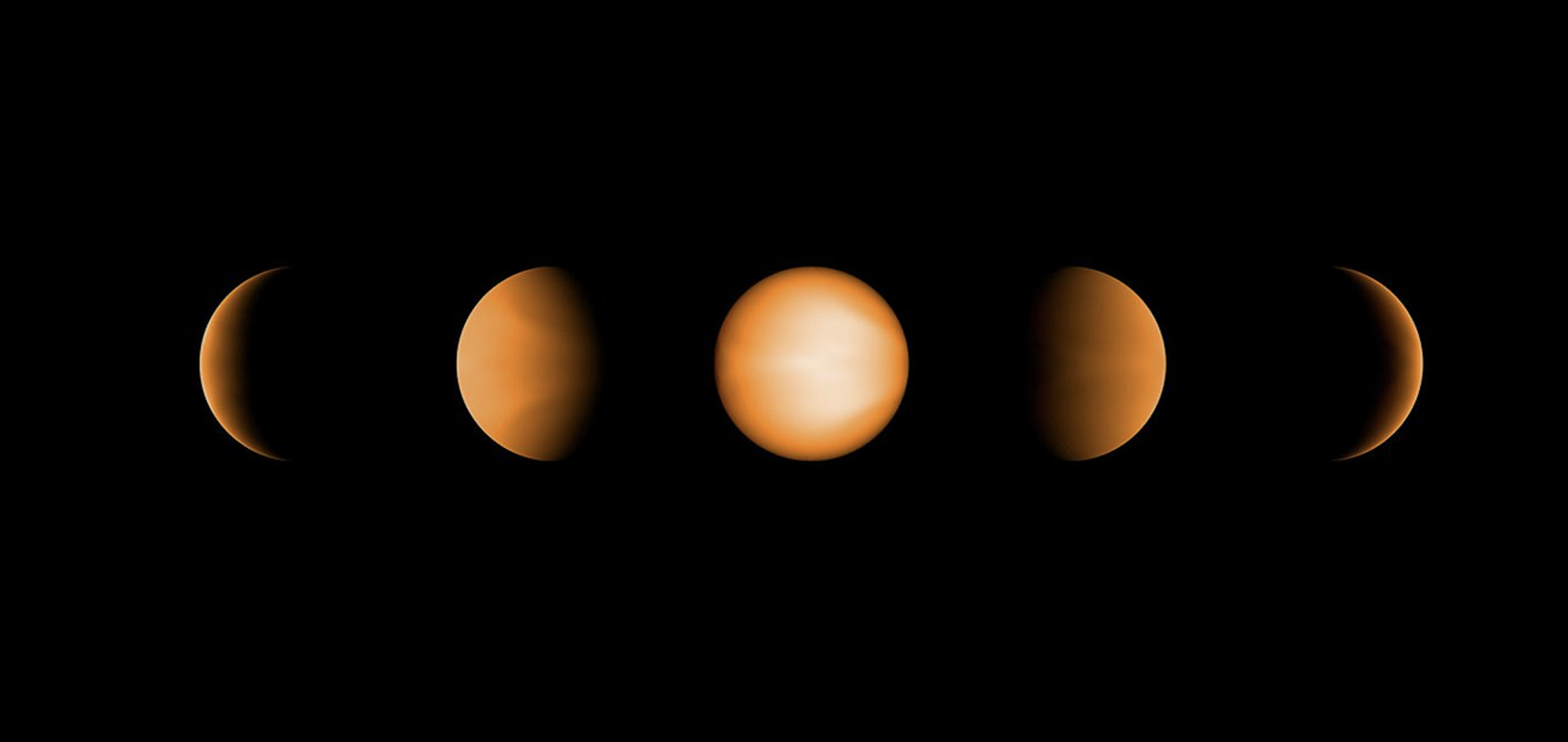
WASp-121b at different phases as would be seen by an observer, modelled with the 3D SPARC/MITgcm.

The hot Jupiter WASP-121b at different phases as would be seen by an observer, modelled with the 3D SPARC/MITgcm.

Credit: Vivien Parmentier

Vivien Parmentier

Visitor

Research theme

  • Astronomy and astrophysics
  • Exoplanets and planetary physics

Sub department

  • Atmospheric, Oceanic and Planetary Physics

Research groups

  • Exoplanet atmospheres
  • Exoplanets and Stellar Physics
vivien.parmentier@physics.ox.ac.uk
Telephone: 01865282458
Atmospheric Physics Clarendon Laboratory, room 116
Current website
  • About
  • Publications

Understanding and mitigating biases when studying inhomogeneous emission spectra with JWST

Monthly Notices of the Royal Astronomical Society Royal Astronomical Society 493:3 (2020) 4342-4354,

Authors:

Jake Taylor, Vivien Parmentier, Patrick Irwin, Suzanne Aigrain, Graham Lee, Joshua Krissansen-Totton

Abstract:

Exoplanet emission spectra are often modelled assuming that the hemisphere observed is well represented by a horizontally homogenized atmosphere. However, this approximation will likely fail for planets with a large temperature contrast in the James Webb Space Telescope (JWST) era, potentially leading to erroneous interpretations of spectra. We first develop an analytic formulation to quantify the signal-to-noise ratio and wavelength coverage necessary to disentangle temperature inhomogeneities from a hemispherically averaged spectrum. We find that for a given signal-to-noise ratio, observations at shorter wavelengths are better at detecting the presence of inhomogeneities. We then determine why the presence of an inhomogeneous thermal structure can lead to spurious molecular detections when assuming a fully homogenized planet in the retrieval process. Finally, we quantify more precisely the potential biases by modelling a suite of hot Jupiter spectra, varying the spatial contributions of a hot and a cold region, as would be observed by the different instruments of JWST/NIRSpec. We then retrieve the abundances and temperature profiles from the synthetic observations. We find that in most cases, assuming a homogeneous thermal structure when retrieving the atmospheric chemistry leads to biased results, and spurious molecular detection. Explicitly modelling the data using two profiles avoids these biases, and is statistically supported provided the wavelength coverage is wide enough, and crucially also spanning shorter wavelengths. For the high contrast used here, a single profile with a dilution factor performs as well as the two-profile case, with only one additional parameter compared to the 1D approach.
More details from the publisher
Details from ORA
More details
Details from ArXiV

Global Chemistry and Thermal Structure Models for the Hot Jupiter WASP-43b and Predictions for JWST

The Astrophysical Journal American Astronomical Society 890:2 (2020) 176

Authors:

Olivia Venot, Vivien Parmentier, Jasmina Blecic, Patricio E Cubillos, Ingo P Waldmann, Quentin Changeat, Julianne I Moses, Pascal Tremblin, Nicolas Crouzet, Peter Gao, Diana Powell, Pierre-Olivier Lagage, Ian Dobbs-Dixon, Maria E Steinrueck, Laura Kreidberg, Natalie Batalha, Jacob L Bean, Kevin B Stevenson, Sarah Casewell, Ludmila Carone
More details from the publisher
More details
More details

Evidence for H2 dissociation and recombination heat transport in the atmosphere of KELT-9b

Astrophysical Journal Letters American Astronomical Society 888:2 (2020) L15

Authors:

M Mansfield, JL Bean, KB Stevenson, TD Komacek, TJ Bell, Xianyu Tan, M Malik, TG Beatty, I Wong, NB Cowan, L Dang, J-M Désert, JJ Fortney, BS Gaudi, D Keating, EM-R Kempton, L Kreidberg, V Parmentier, KG Stassun
More details from the publisher
Details from ORA
More details

Transit signatures of inhomogeneous clouds on hot Jupiters: insights from microphysical cloud modeling

Astrophysical Journal American Astronomical Society 887:2 (2019) 170

Authors:

Diana Powell, Tom Louden, Laura Kreidberg, Xi Zhang, Peter Gao, Vivien Parmentier

Abstract:

We determine the observability in transmission of inhomogeneous cloud cover on the limbs of hot Jupiters through post-processing a general circulation model to include cloud distributions computed using a cloud microphysics model. We find that both the east and west limbs often form clouds, but that the different properties of these clouds enhance the limb-to-limb differences compared to the clear case. Using the James Webb Space Telescope, it should be possible to detect the presence of cloud inhomogeneities by comparing the shape of the transit light curve at multiple wavelengths because inhomogeneous clouds impart a characteristic, wavelength-dependent signature. This method is statistically robust even with limited wavelength coverage, uncertainty on limb-darkening coefficients, and imprecise transit times. We predict that the short-wavelength slope varies strongly with temperature. The hot limbs of the hottest planets form higher-altitude clouds composed of smaller particles, leading to a strong Rayleigh slope. The near-infrared spectral features of clouds are almost always detectable, even when no spectral slope is visible in the optical. In some of our models a spectral window between 5 and 9 μm can be used to probe through the clouds and detect chemical spectral features. Our cloud particle size distributions are not lognormal and differ from species to species. Using the area- or mass-weighted particle size significantly alters the relative strength of the cloud spectral features compared to using the predicted size distribution. Finally, the cloud content of a given planet is sensitive to a species' desorption energy and contact angle, two parameters that could be constrained experimentally in the future.
More details from the publisher
Details from ORA
More details

Understanding the atmospheric properties and chemical composition of the ultra-hot Jupiter HAT-P-7b

Astronomy and Astrophysics EDP Sciences 631 (2019) A79

Authors:

C Helling, N Iro, L Corrales, D Samra, K Ohno, MK Alam, M Steinrueck, B Lew, K Molaverdikhani, RJ MacDonald, O Herbort, P Woitke, V Parmentier

Abstract:

Context. Of the presently known ≈3900 exoplanets, sparse spectral observations are available for ≈100. Ultra-hot Jupiters have recently attracted interest from observers and theoreticians alike, as they provide observationally accessible test cases. Confronting detailed theoretical models with observations is of preeminent importance in preparation for upcoming space-based telescopes.

Aims. We aim to study cloud formation on the ultra-hot Jupiter HAT-P-7b, the resulting composition of the local gas phase, and how their global changes affect wavelength-dependent observations utilised to derive fundamental properties of the planet.

Methods. We apply a hierarchical modelling approach as a virtual laboratory to study cloud formation and gas-phase chemistry. We utilise 97 vertical 1D profiles of a 3D GCM for HAT-P-7b to evaluate our kinetic cloud formation model consistently with the local equilibrium gas-phase composition. We use maps and slice views to provide a global understanding of the cloud and gas chemistry.

Results. The day/night temperature difference on HAT-P-7b (ΔT ≈ 2500 K) causes clouds to form on the nightside (dominated by H2/He) while the dayside (dominated by H/He) retains cloud-free equatorial regions. The cloud particles vary in composition and size throughout the vertical extension of the cloud, but also globally. TiO2[s]/Al2O3[s]/CaTiO3[s]-particles of cm-sized radii occur in the higher dayside-latitudes, resulting in a dayside dominated by gas-phase opacity. The opacity on the nightside, however, is dominated by 0.01…0.1μm particles made of a material mix dominated by silicates. The gas pressure at which the atmosphere becomes optically thick is ~10−4 bar in cloudy regions, and ~0.1 bar in cloud-free regions.

Conclusions. HAT-P-7b features strong morning/evening terminator asymmetries, providing an example of patchy clouds and azimuthally-inhomogeneous chemistry. Variable terminator properties may be accessible by ingress/egress transmission photometry (e.g., CHEOPS and PLATO) or spectroscopy. The large temperature differences of ≈2500 K result in an increasing geometrical extension from the night- to the dayside. The H2O abundance at the terminator changes by <1 dex with altitude and ≲0.3 dex (a factor of 2) across the terminator for a given pressure, indicating that H2O abundances derived from transmission spectra can be representative of the well-mixed metallicity at P ≳ 10 bar. We suggest the atmospheric C/O as an important tool to trace the presence and location of clouds in exoplanet atmospheres. The atmospheric C/O can be sub- and supersolar due to cloud formation. Phase curve variability of HAT-P-7b is unlikely to be caused by dayside clouds.

More details from the publisher
Details from ORA
More details

Pagination

  • First page First
  • Previous page Prev
  • …
  • Page 19
  • Page 20
  • Page 21
  • Page 22
  • Current page 23
  • Page 24
  • Page 25
  • Page 26
  • Page 27
  • …
  • Next page Next
  • Last page Last

Footer Menu

  • Contact us
  • Giving to the Dept of Physics
  • Work with us
  • Media

User account menu

  • Log in

Follow us

FIND US

Clarendon Laboratory,

Parks Road,

Oxford,

OX1 3PU

CONTACT US

Tel: +44(0)1865272200

University of Oxfrod logo Department Of Physics text logo
IOP Juno Champion logo Athena Swan Silver Award logo

© University of Oxford - Department of Physics

Cookies | Privacy policy | Accessibility statement

Built by: Versantus

  • Home
  • Research
  • Study
  • Engage
  • Our people
  • News & Comment
  • Events
  • Our facilities & services
  • About us
  • Giving to Physics
  • Current students
  • Staff intranet