Home
Department Of Physics text logo
  • Research
    • Our research
    • Our research groups
    • Our research in action
    • Research funding support
    • Summer internships for undergraduates
  • Study
    • Undergraduates
    • Postgraduates
  • Engage
    • For alumni
    • For business
    • For schools
    • For the public
  • Support
Menu
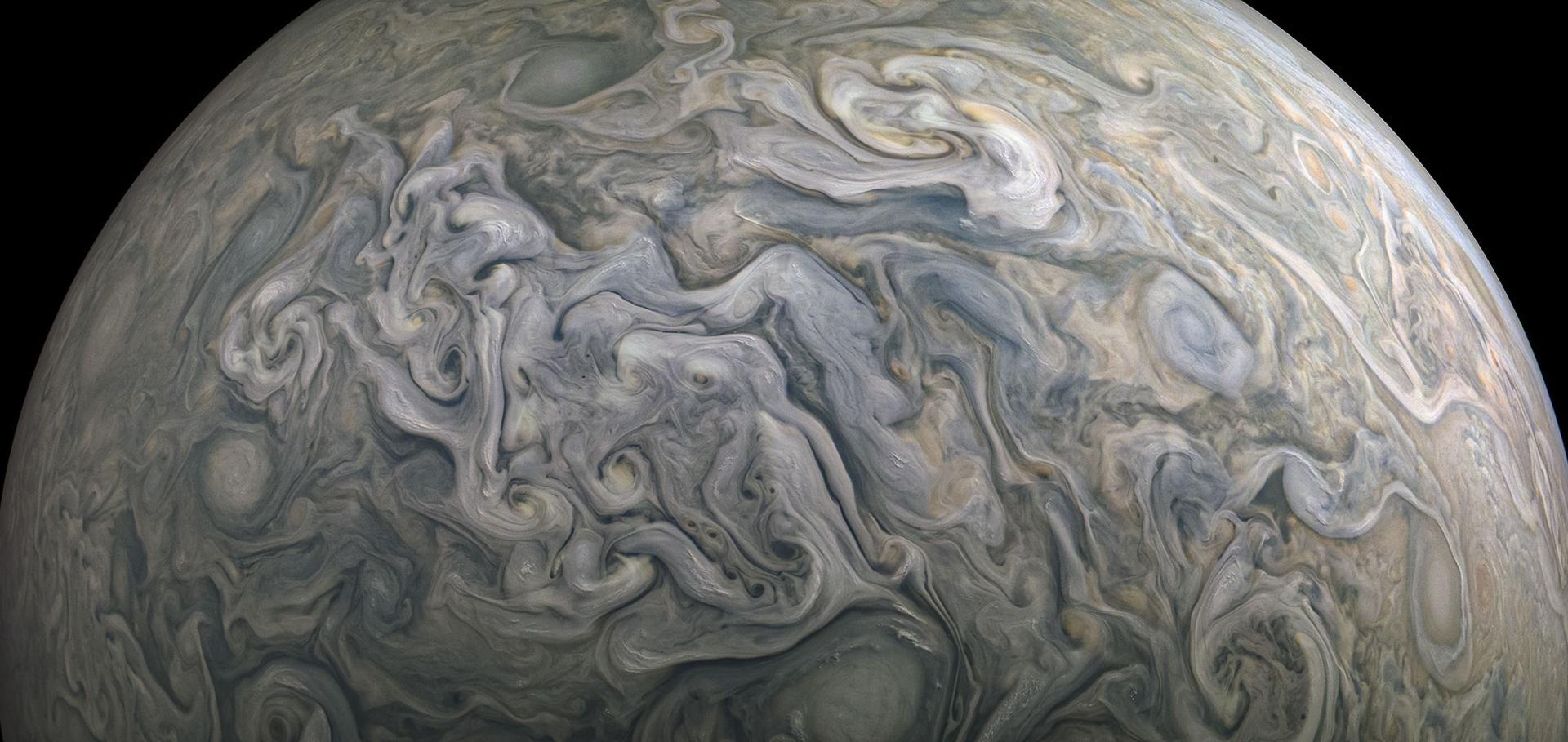
Juno Jupiter image

Raymond Pierrehumbert FRS

Professor of Planetary Physics

Research theme

  • Climate physics
  • Exoplanets and planetary physics

Sub department

  • Atmospheric, Oceanic and Planetary Physics

Research groups

  • Climate dynamics
  • Exoplanet atmospheres
  • Exoplanets and Stellar Physics
  • Planetary Climate Dynamics
  • Solar system
raymond.pierrehumbert@physics.ox.ac.uk
Telephone: 01865 (2)72892
Atmospheric Physics Clarendon Laboratory, room Room 211
Site for my textbook, Principles of Planetary Climate
Pierrehumbert Group Site
  • About
  • Publications

Redox processes of slightly-carbon-rich rocky planets

(2026)

Authors:

Claire Marie Guimond, Oliver Shorttle, Raymond Pierrehumbert

Abstract:

Whether a planet's volcanic gas is oxidising or reducing is inherited from redox conditions in the planet's mantle. It is often presumed that reactions between iron species control mantle oxygen fugacity. However, iron alone need not be the sole dictator of how oxidising the interior of a planet is. Carbon is a powerful redox element, with great potential to feed back upon the mantle redox state as it melts. Despite Earth being carbon-poor, it has been proposed that the oxygen fugacity of Earth's upper mantle is in part controlled by carbon (Holloway et al., 1992; Stagno et al., 2013); a slightly-higher volatile endowment could make carbon-powered geochemistry inescapable. Indeed, a number of known rocky exoplanets are predicted to have formed with carbon contents greater than Earth (Bergin et al., 2023). We offer a framework for how carbon is transported from solid planetary interior to atmosphere, tracking redox couplings between carbon and iron. We also incorporate a coupled 1D energy- and mass-balance model to provide first-order predictions of the rate of volcanism. We show that carbon-iron redox coupling would maintain interior oxygen fugacity in a narrow range: more reducing than Earth magma, but not reducing enough to prevent CO2 outgassing entirely.Bergin, E. A., Kempton, E. M.-R., Hirschmann, M., Bastelberger, S. T., Teal, D. J., Blake, G. A., Ciesla, F. J., & Li, J. (2023). Exoplanet Volatile Carbon Content as a Natural Pathway for Haze Formation. The Astrophysical Journal, 949, L17. Holloway, J. R., Pan, V., & Gudmundsson, G. (1992). High-pressure fluid-absent melting experiments in the presence of graphite: Oxygen fugacity, ferric/ferrous ratio and dissolved CO2. European Journal of Mineralogy, 4(1), 105–114. Stagno, V., Ojwang, D. O., McCammon, C. A., & Frost, D. J. (2013). The oxidation state of the mantle and the extraction of carbon from Earth’s interior. Nature, 493(7430).
More details from the publisher

Novel Physics of Escaping Secondary Atmospheres May Shape the Cosmic Shoreline

The Astrophysical Journal American Astronomical Society 998:2 (2026) 236

Authors:

Richard D Chatterjee, Raymond T Pierrehumbert

Abstract:

Recent James Webb Space Telescope observations of cool, rocky exoplanets reveal a probable lack of thick atmospheres, suggesting the prevalent escape of the “secondary” atmospheres formed after losing primordial hydrogen. Yet, simulations indicate that the hydrodynamic escape of secondary atmospheres, composed of nitrogen and carbon dioxide, requires intense fluxes of ionizing radiation (X-ray and extreme ultraviolet (XUV)) to overcome the effects of high molecular weight and efficient line cooling. This transonic outflow of hot, ionized metals (not hydrogen) presents a novel astrophysical regime ripe for exploration. We introduce an analytic framework to determine which planets retain or lose their atmospheres, positioning them on either side of the cosmic shoreline. We model the radial structure of escaping atmospheres as polytropic expansions—power-law relationships between density and temperature driven by local XUV heating. Our approach diagnoses line cooling with a three-level atom model and incorporates how ion–electron interactions reduce the mean molecular weight. Crucially, hydrodynamic escape onsets for a threshold XUV flux depend upon the atmosphere’s gravitational binding. The ensuing escape rates either scale linearly with XUV flux when weakly ionized (energy limited) or are controlled by a collisional–radiative thermostat when strongly ionized. Thus, airlessness is determined by whether the XUV flux surpasses the critical threshold during the star’s active periods, accounting for expendable primordial hydrogen and revival by volcanism. We explore atmospheric escape from the young Sun Mars and Earth, LHS 1140 b and c, and TRAPPIST-1 b. Our modeling characterizes the bottleneck of atmospheric loss on the occurrence of observable Earth-like habitats and offers analytic tools for future studies.
More details from the publisher
More details

A Thick Volatile Atmosphere on the Ultrahot Super-Earth TOI-561 b

The Astrophysical Journal Letters American Astronomical Society 995:2 (2025) L39

Authors:

Johanna K Teske, Nicole L Wallack, Anjali AA Piette, Lisa Dang, Tim Lichtenberg, Mykhaylo Plotnykov, Raymond Pierrehumbert, Emma Postolec, Samuel Boucher, Alex McGinty, Bo Peng, Diana Valencia, Mark Hammond

Abstract:

Ultrashort-period (USP) exoplanets—with Rp ≤ 2R⊕ and periods ≤1 day—are expected to be stripped of volatile atmospheres by intense host star irradiation, which is corroborated by their nominal bulk densities and previous eclipse observations, consistent with bare-rock surfaces. However, a few USP planets appear anomalously underdense relative to an Earth-like composition, suggesting an exotic interior structure (e.g., coreless) or a volatile-rich secondary atmosphere increasing their apparent radius. Here, we present the first dayside emission spectrum of the low-density (4.3 ± 0.4 g cm−3) USP planet TOI-561 b, which orbits an iron-poor, alpha-rich, ∼10 Gyr old thick-disk star. Our 3–5 μm JWST/NIRSpec observations demonstrate the dayside of TOI-561 b is inconsistent with a bare-rock surface at high statistical significance, suggesting instead a thick volatile envelope that is cooling the dayside to well below the ∼3000 K expected in the bare-rock or thin-atmosphere case. These results reject the popular hypothesis of complete atmospheric desiccation for highly irradiated exoplanets and support predictions that planetary-scale magma oceans can retain substantial reservoirs of volatiles, opening up the geophysical study of ultrahot super-Earths through the lenses of their atmospheres.
More details from the publisher
Details from ORA
More details

3D Modeling of Moist Convective Inhibition in Idealized Sub-Neptune Atmospheres

The Astrophysical Journal American Astronomical Society 995:1 (2025) 41

Authors:

Namrah Habib, Raymond T Pierrehumbert

Abstract:

Atmospheric convection behaves differently in hydrogen-rich atmospheres compared to higher mean molecular weight atmospheres due to compositional gradients of tracers. Previous 1D studies predict that when a condensable tracer exceeds a critical mixing ratio in H2-rich atmospheres, convection is inhibited, leading to the formation of radiative layers where the temperature decreases faster with height than in convective profiles. We use 3D convection-resolving simulations to test whether convection is inhibited in H2-rich atmospheres when the tracer mixing ratio exceeds the critical threshold, while including processes neglected in 1D, e.g., turbulent mixing and evaporation. We run two sets of simulations. First, we perform simulations initialized on saturated isothermal states and find that compositional gradients can destabilize isothermal atmospheres. Second, we perform simulations initialized on adiabatic profiles, which show distinct, stable inhibition layers form when the condensable tracer exceeds the critical threshold. Within the inhibition layer, only a small amount of energy is carried by latent heat flux, and turbulent mixing transports a small amount of tracer upward, but both are generally too weak to sustain substantial tracer or heat transport. The thermal profile gradually relaxes to a steep radiative state, but radiative relaxation timescales are long. Our results suggest stable layers driven by condensation-induced convective inhibition form in H2-rich atmospheres, including those of sub-Neptune exoplanets.
More details from the publisher
More details

Barotropic instability

Chapter in , Elsevier (2025)

Authors:

Peter Read, Timothy Dowling

Abstract:

Barotropic instability represents a class of instabilities, usually of parallel shear flows, for which gravity and buoyancy play a negligible role, at least in their energetics. It is not restricted to purely barotropic fluids (for which ρ = ρ(p), where ρ is density and p is pressure) but can also apply to flows which are stratified and exhibit vertical shear, often leading to instabilities with mixed barotropic and baroclinic characteristics. The primary attribute of barotropic instability is usually taken to be the dominance of energy exchanges in which the kinetic energy of a perturbation grows principally at the expense of the kinetic energy of the basic state. Here we present an introduction to the basic mechanisms involved and the factors that determine the necessary and/or sufficient conditions for instability. Several examples are presented and the occurrence and subsequent nonlinear evolution of the instability is illustrated with reference to both laboratory experiments and observations in the atmospheres and oceans of the Earth and other planets in the Solar System.
More details from the publisher
Details from ORA

Pagination

  • Current page 1
  • Page 2
  • Page 3
  • Page 4
  • Page 5
  • Page 6
  • Page 7
  • Page 8
  • Page 9
  • …
  • Next page Next
  • Last page Last

Footer Menu

  • Contact us
  • Giving to the Dept of Physics
  • Work with us
  • Media

User account menu

  • Log in

Follow us

FIND US

Clarendon Laboratory,

Parks Road,

Oxford,

OX1 3PU

CONTACT US

Tel: +44(0)1865272200

University of Oxfrod logo Department Of Physics text logo
IOP Juno Champion logo Athena Swan Silver Award logo

© University of Oxford - Department of Physics

Cookies | Privacy policy | Accessibility statement

Built by: Versantus

  • Home
  • Research
  • Study
  • Engage
  • Our people
  • News & Comment
  • Events
  • Our facilities & services
  • About us
  • Giving to Physics
  • Current students
  • Staff intranet