Home
Department Of Physics text logo
  • Research
    • Our research
    • Our research groups
    • Our research in action
    • Research funding support
    • Summer internships for undergraduates
  • Study
    • Undergraduates
    • Postgraduates
  • Engage
    • For alumni
    • For business
    • For schools
    • For the public
  • Support
Menu
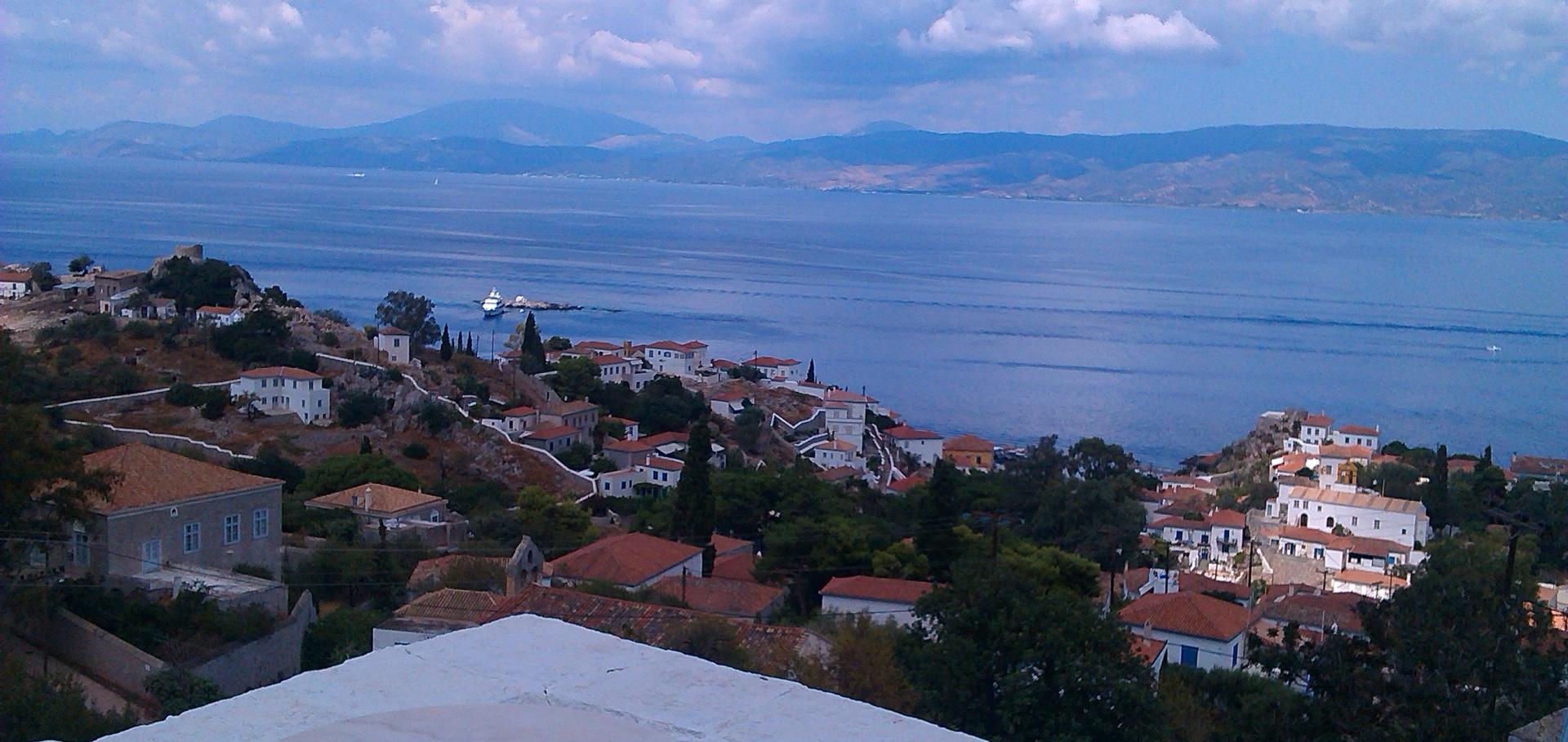
where I'd like to be ...

Prof Subir Sarkar

Professor Emeritus

Research theme

  • Particle astrophysics & cosmology
  • Fundamental particles and interactions

Sub department

  • Rudolf Peierls Centre for Theoretical Physics

Research groups

  • Particle theory
Subir.Sarkar@physics.ox.ac.uk
Telephone: 01865 (2)73962
Rudolf Peierls Centre for Theoretical Physics, room 60.12
Old homepage
Brief CV
  • About
  • Research
  • Teaching
  • Service
  • Outreach
  • Awards/News
  • IceCube@Oxford
  • Publications

IceCube

Physics World 2013 Breakthrough of the Year
IceCube at Oxford

I am a member since 2004 of the IceCube collaboration which discovered cosmic high energy neutrinos and identified some of their astrophysical sources.

IceCube @ Oxford

Search for point sources of high energy neutrinos with final data from AMANDA-II

Physical Review D - Particles, Fields, Gravitation and Cosmology 79:6 (2009)

Authors:

R Abbasi, M Ackermann, J Adams, M Ahlers, J Ahrens, K Andeen, J Auffenberg, X Bai, M Baker, B Baret, SW Barwick, R Bay, JL Bazo Alba, K Beattie, T Becka, JK Becker, KH Becker, J Berdermann, P Berghaus, D Berley, E Bernardini, D Bertrand, DZ Besson, E Blaufuss, DJ Boersma, C Bohm, J Bolmont, S Böser, O Botner, J Braun, D Breder, T Burgess, T Castermans, D Chirkin, B Christy, J Clem, DF Cowen, MV D'Agostino, M Danninger, A Davour, CT Day, O Depaepe, C De Clercq, L Demirörs, F Descamps, P Desiati, G De Vries-Uiterweerd, T Deyoung, JC Diaz-Velez, J Dreyer, JP Dumm, MR Duvoort, WR Edwards, R Ehrlich, J Eisch, RW Ellsworth, O Engdegård, S Euler, PA Evenson, O Fadiran, AR Fazely, K Filimonov, C Finley, MM Foerster, BD Fox, A Franckowiak, R Franke, TK Gaisser, J Gallagher, R Ganugapati, L Gerhardt, L Gladstone, A Goldschmidt, JA Goodman, R Gozzini, D Grant, T Griesel, A Groß, S Grullon, RM Gunasingha, M Gurtner, C Ha, A Hallgren, F Halzen, K Han, K Hanson, R Hardtke, Y Hasegawa, J Heise, K Helbing, M Hellwig, P Herquet, S Hickford, GC Hill, J Hodges, KD Hoffman, K Hoshina, D Hubert, W Huelsnitz, B Hughey

Abstract:

We present a search for point sources of high energy neutrinos using 3.8 yr of data recorded by AMANDA-II during 2000-2006. After reconstructing muon tracks and applying selection criteria designed to optimally retain neutrino-induced events originating in the northern sky, we arrive at a sample of 6595 candidate events, predominantly from atmospheric neutrinos with primary energy 100 GeV to 8 TeV. Our search of this sample reveals no indications of a neutrino point source. We place the most stringent limits to date on E-2 neutrino fluxes from points in the northern sky, with an average upper limit of E2Φνμ+ντ≤5.2×10⁻¹¹TeVcm-2s-1 on the sum of νμ and ντ fluxes, assumed equal, over the energy range from 1.9 TeV to 2.5 PeV. © 2009 The American Physical Society.
More details from the publisher
More details
Details from ArXiV

Neutrino diagnostics of ultra-high energy cosmic ray protons

ArXiv 0902.3993 (2009)

Authors:

Markus Ahlers, Luis A Anchordoqui, Subir Sarkar

Abstract:

The energy at which cosmic rays from extra-galactic sources begin to dominate over those from galactic sources is an important open question in astroparticle physics. A natural candidate is the energy at the 'ankle' in the approximately power-law energy spectrum which is indicative of a cross-over from a falling galactic component to a flatter extra-galactic component. The transition can occur without such flattening but this requires some degree of conspiracy of the spectral shapes and normalizations of the two components. Nevertheless it has been argued that extra-galactic sources of cosmic ray protons which undergo interactions on the CMB can reproduce the energy spectrum below the ankle if the cross-over energy is as low as the 'second knee' in the spectrum. This low cross-over model is constrained by direct measurements by the Pierre Auger Observatory which indicate a heavier composition at these energies. We demonstrate that upper limits on the cosmic diffuse neutrino flux provide a complementary constraint on the proton fraction in ultra-high energy extra-galactic cosmic rays and forthcoming data from IceCube will provide a definitive test of this model.
Details from ArXiV
More details from the publisher

Neutrino diagnostics of ultra-high energy cosmic ray protons

(2009)

Authors:

Markus Ahlers, Luis A Anchordoqui, Subir Sarkar
More details from the publisher

First neutrino point-source results from the 22 string IceCube detector

Astrophysical Journal 701:1 PART 2 (2009) L47-L51

Authors:

R Abbasi, Y Abdou, M Ackermann, J Adams, J Aguilar, M Ahlers, K Andeen, J Auffenberg, X Bai, M Baker, SW Barwick, R Bay, JL Bazo Alba, K Beattie, JJ Beatty, S Bechet, JK Becker, KH Becker, ML Benabderrahmane, J Berdermann, P Berghaus, D Berley, E Bernardini, D Bertrand, DZ Besson, M Bissok, E Blaufuss, DJ Boersma, C Bohm, J Bolmont, S Böser, O Botner, L Bradley, J Braun, D Breder, T Castermans, D Chirkin, B Christy, J Clem, S Cohen, DF Cowen, MV D'Agostino, M Danninger, CT Day, C De Clercq, L Demirörs, O Depaepe, F Descamps, P Desiati, G De Vries-Uiterweerd, T Deyoung, JC Diaz-Velez, J Dreyer, JP Dumm, MR Duvoort, WR Edwards, R Ehrlich, J Eisch, RW Ellsworth, O Engdegård, S Euler, PA Evenson, O Fadiran, AR Fazely, T Feusels, K Filimonov, C Finley, MM Foerster, BD Fox, A Franckowiak, R Franke, TK Gaisser, J Gallagher, R Ganugapati, L Gerhardt, L Gladstone, A Goldschmidt, JA Goodman, R Gozzini, D Grant, T Griesel, A Gro, S Grullon, RM Gunasingha, M Gurtner, C Ha, A Hallgren, F Halzen, K Han, K Hanson, Y Hasegawa, J Heise, K Helbing, P Herquet, S Hickford, GC Hill, KD Hoffman, K Hoshina, D Hubert, W Huelsnitz

Abstract:

We present new results of searches for neutrino point sources in the northern sky, using data recorded in 2007-2008 with 22 strings of the IceCube detector (approximately one-fourth of the planned total) and 275.7 days of live time. The final sample of 5114 neutrino candidate events agrees well with the expected background of atmospheric muon neutrinos and a small component of atmospheric muons. No evidence of a point source is found, with the most significant excess of events in the sky at 2.2σ after accounting for all trials. The average upper limit over the northern sky for point sources of muon-neutrinos with E -2 spectrum is E -2 φv le; 1.4 × 10⁻¹¹ TeV cm?2 ≤ s?1, in the energy range from 3TeV to 3PeV, improving the previous best average upper limit by the AMANDA-II detector by a factor of 2. © 2009. The American Astronomical Society.
More details from the publisher
More details
Details from ArXiV

Search for high-energy muon neutrinos from the "naked-eye" grb080319b with the icecube neutrino telescope

Astrophysical Journal 701:2 (2009) 1721-1731

Authors:

R Abbasi, Y Abdou, T Abu-Zayyad, J Adams, JA Aguilar, M Ahlers, K Andeen, J Auffenberg, X Bai, M Baker, SW Barwick, R Bay, JLB Alba, K Beattie, JJ Beatty, S Bechet, JK Becker, KH Becker, ML Benabderrahmane, J Berdermann, P Berghaus, D Berley, E Bernardini, D Bertrand, DZ Besson, M Bissok, E Blaufuss, DJ Boersma, C Bohm, J Bolmont, O Botner, L Bradley, J Braun, D Breder, T Castermans, D Chirkin, B Christy, J Clem, S Cohen, DF Cowen, MV D'Agostino, M Danninger, CT Day, C De Clercq, L Demirörs, O Depaepe, F Descamps, P Desiati, G De Vries-Uiterweerd, T Deyoung, JC Diaz-Velez, J Dreyer, JP Dumm, MR Duvoort, WR Edwards, R Ehrlich, J Eisch, RW Ellsworth, O Engdegrd, S Euler, PA Evenson, O Fadiran, AR Fazely, T Feusels, K Filimonov, C Finley, MM Foerster, BD Fox, A Franckowiak, R Franke, TK Gaisser, J Gallagher, R Ganugapati, L Gerhardt, L Gladstone, A Goldschmidt, JA Goodman, R Gozzini, D Grant, T Griesel, A Gro, S Grullon, RM Gunasingha, M Gurtner, C Ha, A Hallgren, F Halzen, K Han, K Hanson, Y Hasegawa, J Heise, K Helbing, P Herquet, S Hickford, GC Hill, KD Hoffman, K Hoshina, D Hubert, W Huelsnitz, JP Hül

Abstract:

We report on a search with the IceCube detector for high-energy muon neutrinos from GRB080319B, one of the brightest gamma-ray bursts (GRBs) ever observed. The fireball model predicts that a mean of 0.1 events should be detected by IceCube for a bulk Lorentz boost of the jet of 300. In both the direct on-time window of 66s and an extended window of about 300s around the GRB, no excess was found above background. The 90% CL upper limit on the number of track-like events from the GRB is 2.7, corresponding to a muon neutrino fluence limit of 9.5 × 10⁻³ erg cm-2 in the energy range between 120 TeV and 2.2 PeV, which contains 90% of the expected events. © 2009 The American Astronomical Society. All rights reserved.
More details from the publisher
More details
Details from ArXiV

Pagination

  • First page First
  • Previous page Prev
  • …
  • Page 215
  • Page 216
  • Page 217
  • Page 218
  • Current page 219
  • Page 220
  • Page 221
  • Page 222
  • Page 223
  • …
  • Next page Next
  • Last page Last

Footer Menu

  • Contact us
  • Giving to the Dept of Physics
  • Work with us
  • Media

User account menu

  • Log in

Follow us

FIND US

Clarendon Laboratory,

Parks Road,

Oxford,

OX1 3PU

CONTACT US

Tel: +44(0)1865272200

University of Oxfrod logo Department Of Physics text logo
IOP Juno Champion logo Athena Swan Silver Award logo

© University of Oxford - Department of Physics

Cookies | Privacy policy | Accessibility statement

Built by: Versantus

  • Home
  • Research
  • Study
  • Engage
  • Our people
  • News & Comment
  • Events
  • Our facilities & services
  • About us
  • Giving to Physics
  • Current students
  • Staff intranet