Home
Department Of Physics text logo
  • Research
    • Our research
    • Our research groups
    • Our research in action
    • Research funding support
    • Summer internships for undergraduates
  • Study
    • Undergraduates
    • Postgraduates
  • Engage
    • For alumni
    • For business
    • For schools
    • For the public
  • Support
Menu
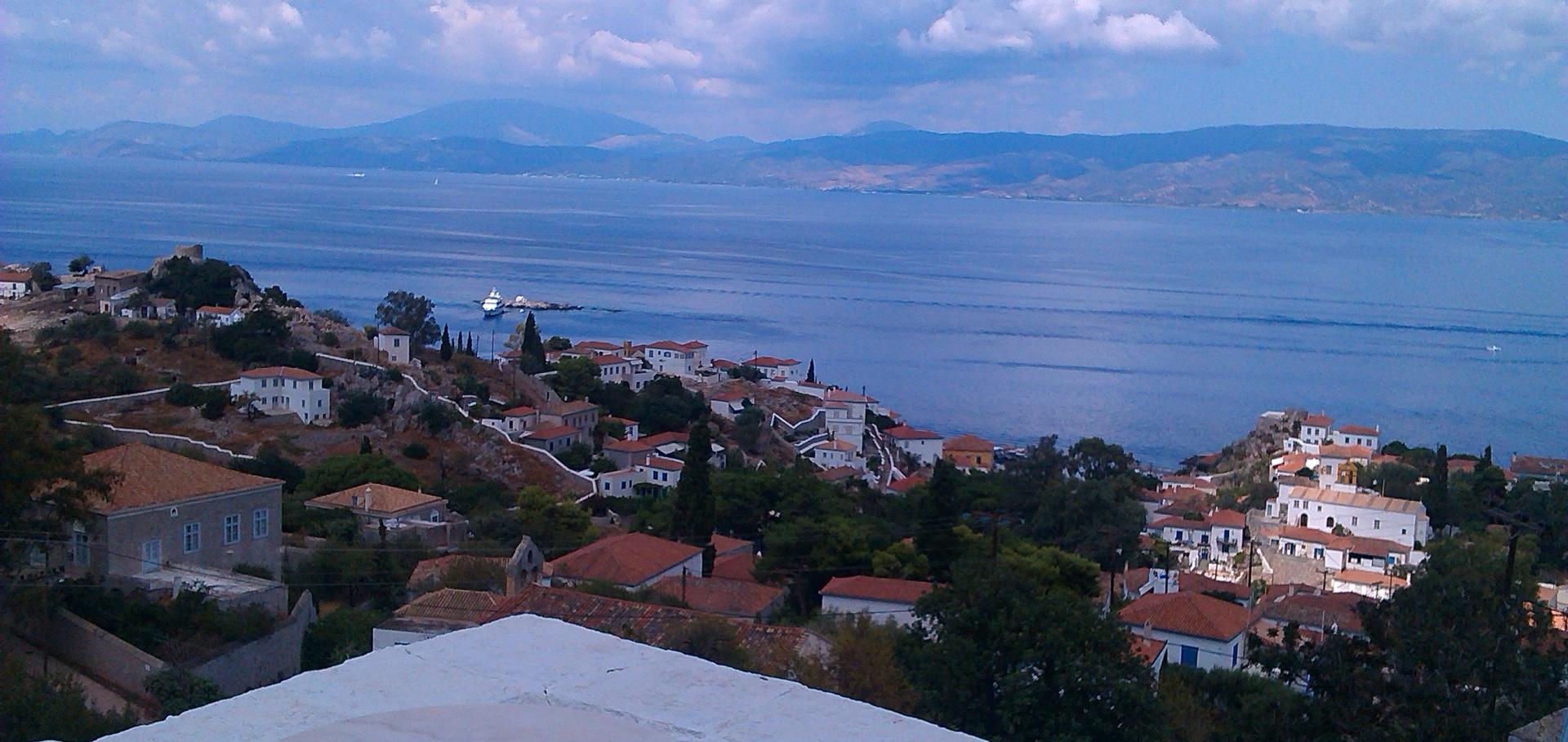
where I'd like to be ...

Prof Subir Sarkar

Professor Emeritus

Research theme

  • Particle astrophysics & cosmology
  • Fundamental particles and interactions

Sub department

  • Rudolf Peierls Centre for Theoretical Physics

Research groups

  • Particle theory
Subir.Sarkar@physics.ox.ac.uk
Telephone: 01865 (2)73962
Rudolf Peierls Centre for Theoretical Physics, room 60.12
Old homepage
Brief CV
  • About
  • Research
  • Teaching
  • Service
  • Outreach
  • Awards/News
  • IceCube@Oxford
  • Publications

IceCube

Physics World 2013 Breakthrough of the Year
IceCube at Oxford

I am a member since 2004 of the IceCube collaboration which discovered cosmic high energy neutrinos and identified some of their astrophysical sources.

IceCube @ Oxford

Stochastic transport of high-energy particles through a turbulent plasma

Journal of Plasma Physics Cambridge University Press (CUP)

Authors:

LE Chen, AFA Bott, P Tzeferacos, A Rigby, A Bell, R Bingham, C Graziani, J Katz, M Koenig, CK Li, R Petrasso, H-S Park, JS Ross, D Ryu, D Ryutov, TG White, B Reville, J Matthews, J Meinecke, F Miniati, EG Zweibel, S Sarkar, AA Schekochihin, DQ Lamb, DH Froula, G Gregori

Abstract:

The interplay between charged particles and turbulent magnetic fields is crucial to understanding how cosmic rays propagate through space. A key parameter which controls this interplay is the ratio of the particle gyroradius to the correlation length of the magnetic turbulence. For the vast majority of cosmic rays detected at the Earth, this parameter is small, and the particles are well confined by the Galactic magnetic field. But for cosmic rays more energetic than about 30 EeV, this parameter is large. These highest energy particles are not confined to the Milky Way and are presumed to be extragalactic in origin. Identifying their sources requires understanding how they are deflected by the intergalactic magnetic field, which appears to be weak, turbulent with an unknown correlation length, and possibly spatially intermittent. This is particularly relevant given the recent detection by the Pierre Auger Observatory of a significant dipole anisotropy in the arrival directions of cosmic rays of energy above 8 EeV. Here we report measurements of energetic-particle propagation through a random magnetic field in a laser-produced plasma. We characterize the diffusive transport of these particles and recover experimentally pitch-angle scattering measurements and extrapolate to find their mean free path and the associated diffusion coefficient, which show scaling-relations consistent with theoretical studies. This experiment validates these theoretical tools for analyzing the propagation of ultra-high energy cosmic rays through the intergalactic medium.
More details from the publisher
Details from ArXiV
More details

Strong suppression of heat conduction in a laboratory replica of galaxy-cluster turbulent plasmas

Authors:

J Meinecke, P Tzeferacos, Js Ross, Afa Bott, S Feister, H-S Park, Ar Bell, R Blandford, Rl Berger, R Bingham, A Casner, Le Chen, J Foster, Dh Froula, C Goyon, D Kalantar, M Koenig, B Lahmann, C-K Li, Y Lu, Caj Palmer, R Petrasso, H Poole, B Remington, B Reville, A Reyes, A Rigby, D Ryu, G Swadling, A Zylstra, F Miniati, S Sarkar, Aa Schekochihin, Dq Lamb, G Gregori

Abstract:

Galaxy clusters are filled with hot, diffuse X-ray emitting plasma, with a stochastically tangled magnetic field whose energy is close to equipartition with the energy of the turbulent motions \cite{zweibel1997, Vacca}. In the cluster cores, the temperatures remain anomalously high compared to what might be expected considering that the radiative cooling time is short relative to the Hubble time \cite{cowie1977,fabian1994}. While feedback from the central active galactic nuclei (AGN) \cite{fabian2012,birzan2012,churazov2000} is believed to provide most of the heating, there has been a long debate as to whether conduction of heat from the bulk to the core can help the core to reach the observed temperatures \cite{narayan2001,ruszkowski2002,kunz2011}, given the presence of tangled magnetic fields. Interestingly, evidence of very sharp temperature gradients in structures like cold fronts implies a high degree of suppression of thermal conduction \cite{markevitch2007}. To address the problem of thermal conduction in a magnetized and turbulent plasma, we have created a replica of such a system in a laser laboratory experiment. Our data show a reduction of local heat transport by two orders of magnitude or more, leading to strong temperature variations on small spatial scales, as is seen in cluster plasmas \cite{markevitch2003}.
Details from ArXiV

Strong suppression of heat conduction in a laboratory replica of galaxy-cluster turbulent plasmas

Authors:

J Meinecke, P Tzeferacos, Js Ross, Afa Bott, S Feister, H-S Park, Ar Bell, R Blandford, Rl Berger, R Bingham, A Casner, Le Chen, J Foster, Dh Froula, C Goyon, D Kalantar, M Koenig, B Lahmann, C-K Li, Y Lu, Caj Palmer, R Petrasso, H Poole, B Remington, B Reville, A Reyes, A Rigby, D Ryu, G Swadling, A Zylstra, F Miniati, S Sarkar, Aa Schekochihin, Dq Lamb, G Gregori

Abstract:

Galaxy clusters are filled with hot, diffuse X-ray emitting plasma, with a stochastically tangled magnetic field whose energy is close to equipartition with the energy of the turbulent motions \cite{zweibel1997, Vacca}. In the cluster cores, the temperatures remain anomalously high compared to what might be expected considering that the radiative cooling time is short relative to the Hubble time \cite{cowie1977,fabian1994}. While feedback from the central active galactic nuclei (AGN) \cite{fabian2012,birzan2012,churazov2000} is believed to provide most of the heating, there has been a long debate as to whether conduction of heat from the bulk to the core can help the core to reach the observed temperatures \cite{narayan2001,ruszkowski2002,kunz2011}, given the presence of tangled magnetic fields. Interestingly, evidence of very sharp temperature gradients in structures like cold fronts implies a high degree of suppression of thermal conduction \cite{markevitch2007}. To address the problem of thermal conduction in a magnetized and turbulent plasma, we have created a replica of such a system in a laser laboratory experiment. Our data show a reduction of local heat transport by two orders of magnitude or more, leading to strong temperature variations on small spatial scales, as is seen in cluster plasmas \cite{markevitch2003}.
More details from the publisher
More details
More details

The Reductionist Paradox

Inference: International Review of Science 5:3
More details from the publisher

Velocity independent constraints on spin-dependent DM-nucleon interactions from IceCube and PICO

European Physical Journal C: Particles and Fields Società Italiana di Fisica

Authors:

J Buscher, RS Busse, T Carver, C Chen, E Cheung, D Chirkin, S Choi, L Classen, A Coleman, GH Collin, JM Conrad, P Coppin, P Correa, DF Cowen, R Cross, P Dave, CD Clercq, JJ DeLaunay, H Dembinski, K Deoskar, SD Ridder, KDD Vries, GD Wasseige, T DeYoung, F Mamedov

Abstract:

Adopting the Standard Halo Model (SHM) of an isotropic Maxwellian velocity distribution for dark matter (DM) particles in the Galaxy, the most stringent current constraints on their spin-dependent scattering cross-section with nucleons come from the IceCube neutrino observatory and the PICO-60 C$_3$F$_8$ superheated bubble chamber experiments. The former is sensitive to high energy neutrinos from the self-annihilation of DM particles captured in the Sun, while the latter looks for nuclear recoil events from DM scattering off nucleons. Although slower DM particles are more likely to be captured by the Sun, the faster ones are more likely to be detected by PICO. Recent N-body simulations suggest significant deviations from the SHM for the smooth halo component of the DM, while observations hint at a dominant fraction of the local DM being in substructures. We use the method of Ferrer et al. (2015) to exploit the complementarity between the two approaches and derive conservative constraints on DM-nucleon scattering. Our results constrain $\sigma_{\mathrm{SD}} \lesssim 10^{-39} \mathrm{cm}^2$ ($10^{-38} \mathrm{cm}^2$) at $\gtrsim 90\%$ C.L. for a DM particle of mass 1~TeV annihilating into $\tau^+ \tau^-$ ($b\bar{b}$) with a local density of $\rho_{\mathrm{DM}} = 0.3~\mathrm{ GeV/cm}^3$. The constraints scale inversely with $\rho_{\mathrm{DM}}$ and are independent of the DM velocity distribution.
More details from the publisher
Details from ArXiV

Pagination

  • First page First
  • Previous page Prev
  • …
  • Page 255
  • Page 256
  • Page 257
  • Page 258
  • Page 259
  • Page 260
  • Page 261
  • Page 262
  • Current page 263

Footer Menu

  • Contact us
  • Giving to the Dept of Physics
  • Work with us
  • Media

User account menu

  • Log in

Follow us

FIND US

Clarendon Laboratory,

Parks Road,

Oxford,

OX1 3PU

CONTACT US

Tel: +44(0)1865272200

University of Oxfrod logo Department Of Physics text logo
IOP Juno Champion logo Athena Swan Silver Award logo

© University of Oxford - Department of Physics

Cookies | Privacy policy | Accessibility statement

Built by: Versantus

  • Home
  • Research
  • Study
  • Engage
  • Our people
  • News & Comment
  • Events
  • Our facilities & services
  • About us
  • Giving to Physics
  • Current students
  • Staff intranet