
Research summary
My research focuses on understanding how complex collective behaviour emerges in physical and biological systems, using tools from nonlinear dynamics, fluid mechanics, and active matter. A particular emphasis of my current work is on active nematics and mechanobiology.
Previously I was Postdoctoral Researcher at the University of Adelaide working on mathematical modelling of inertial particle focusing with applications to particle sorting in industrial and biomedical microfluidic devices.
I completed my PhD on Superwalking Droplets and Generalised Pilot-Wave Dynamics from Monash University. During my PhD, I performed experiments, theoretical analysis, and numerical modelling to understand an active particle-fluid system of superwalking droplets that has implications for active matter and hydrodynamic quantum analogs.
Research themes
Synthetic active matter: superwalking droplets
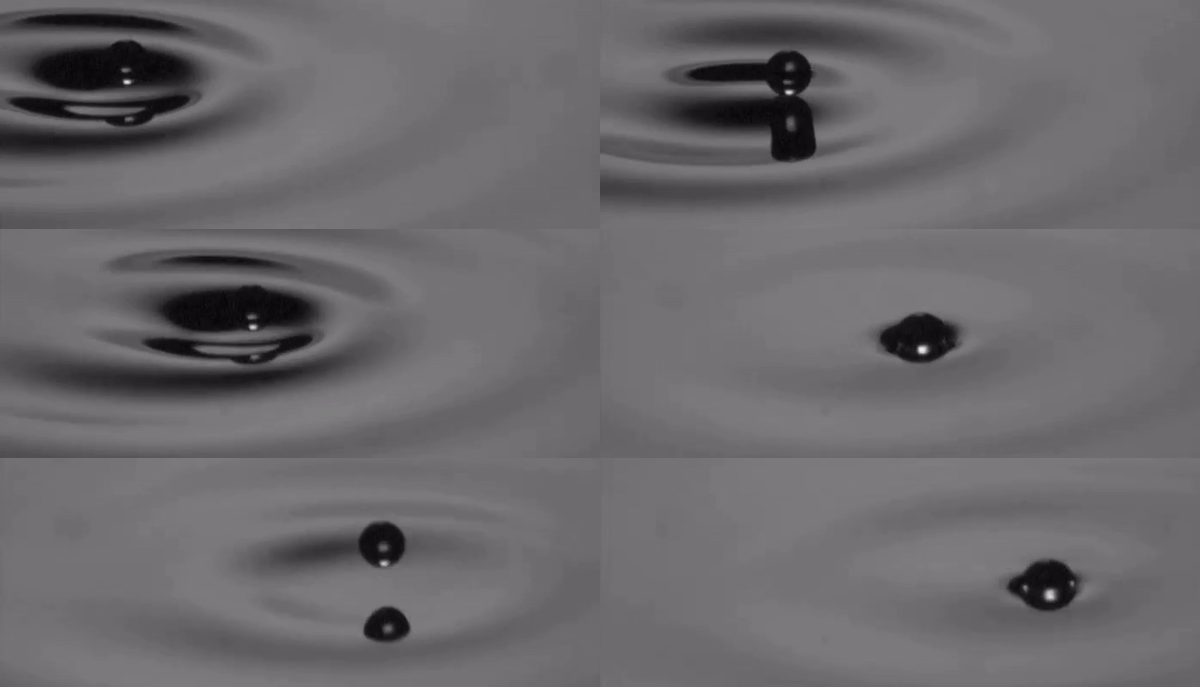
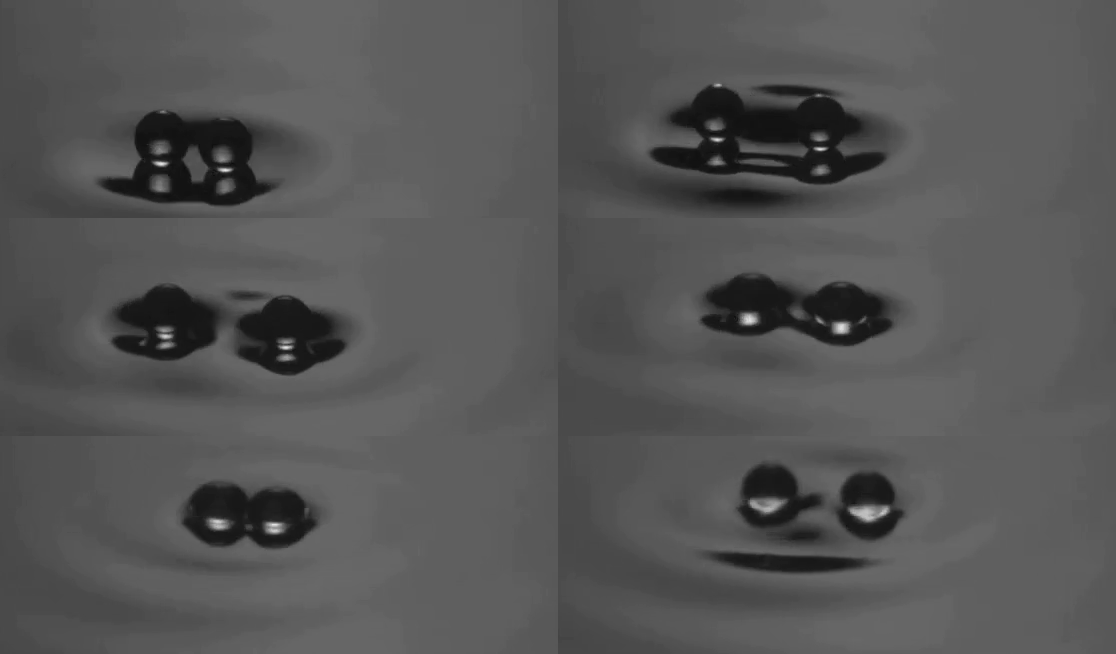
Superwalking droplets are self-propelled liquid drops that bounce and walk on a vertically vibrated fluid bath, forming a synthetic active-matter system powered by interactions with a self-generated wave field. Their memory-driven internal dynamics lead to transitions between distinct modes of motion and give rise to hydrodynamic analogs of quantum behaviour.

Biological active matter: active nematics and mechanobiology
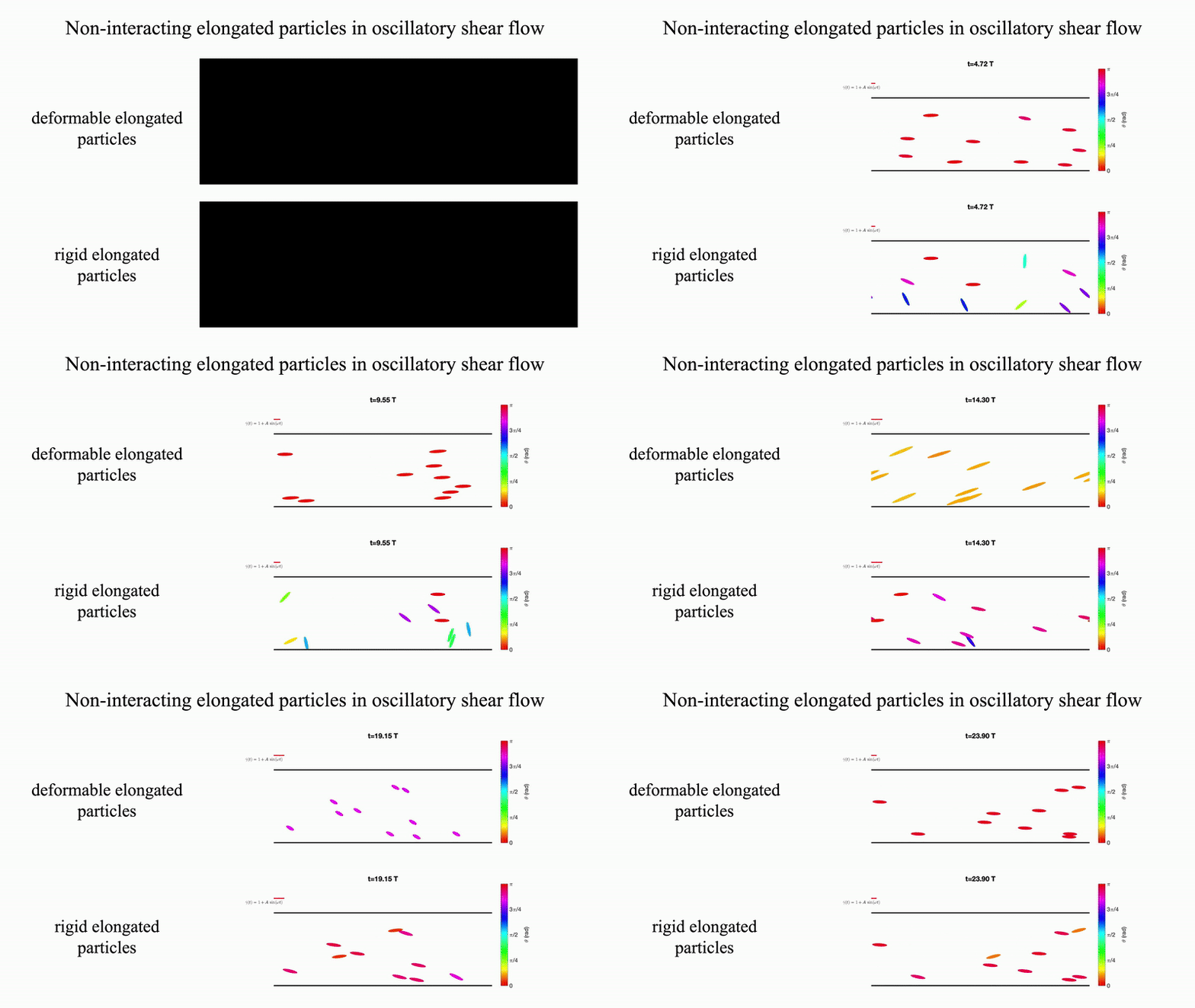
We study theoretical and computational models of biological active matter, focusing on active nematics and vertex-based descriptions of tissues. This work investigates how nonequilibrium forcing, deformability, and internal stresses generate emergent order, flow instabilities, and intermittent collective migration across tissue scales.
Hamiltonian mechanics of microswimmers
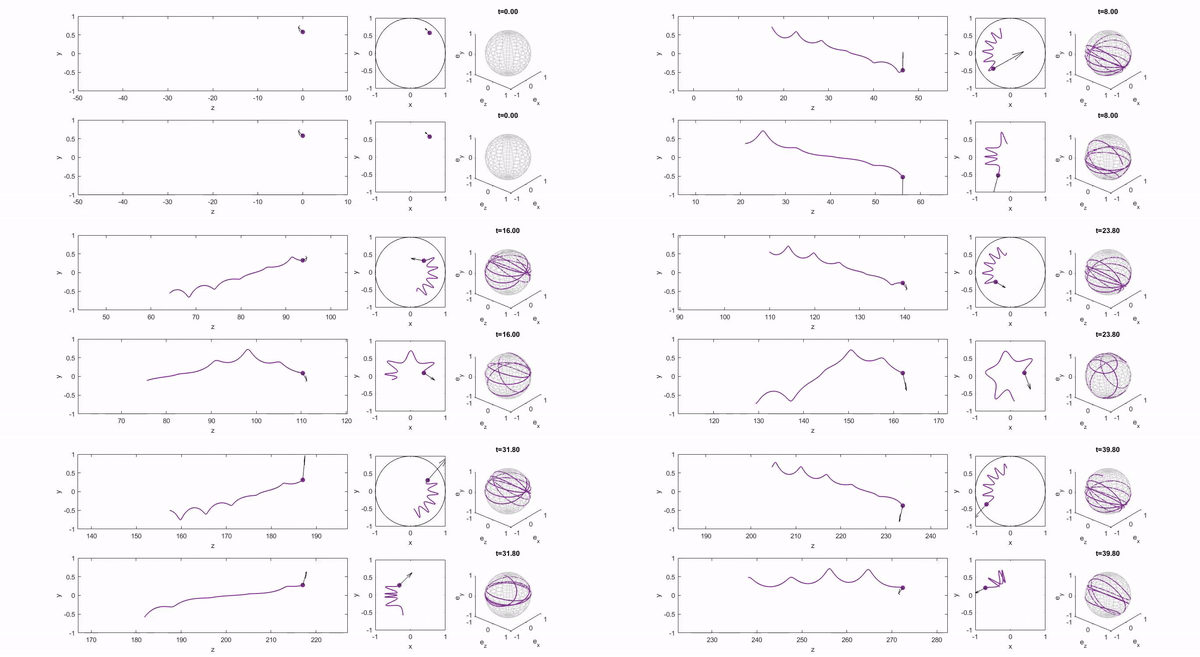
We study microswimmers and active particles in background flows using reduced dynamical systems with a Hamiltonian structure. This approach reveals conserved quantities and phase space organisation that govern swimmer trajectories, cross-stream migration, and long-time transport.
Inertial microfluidics for particle separation
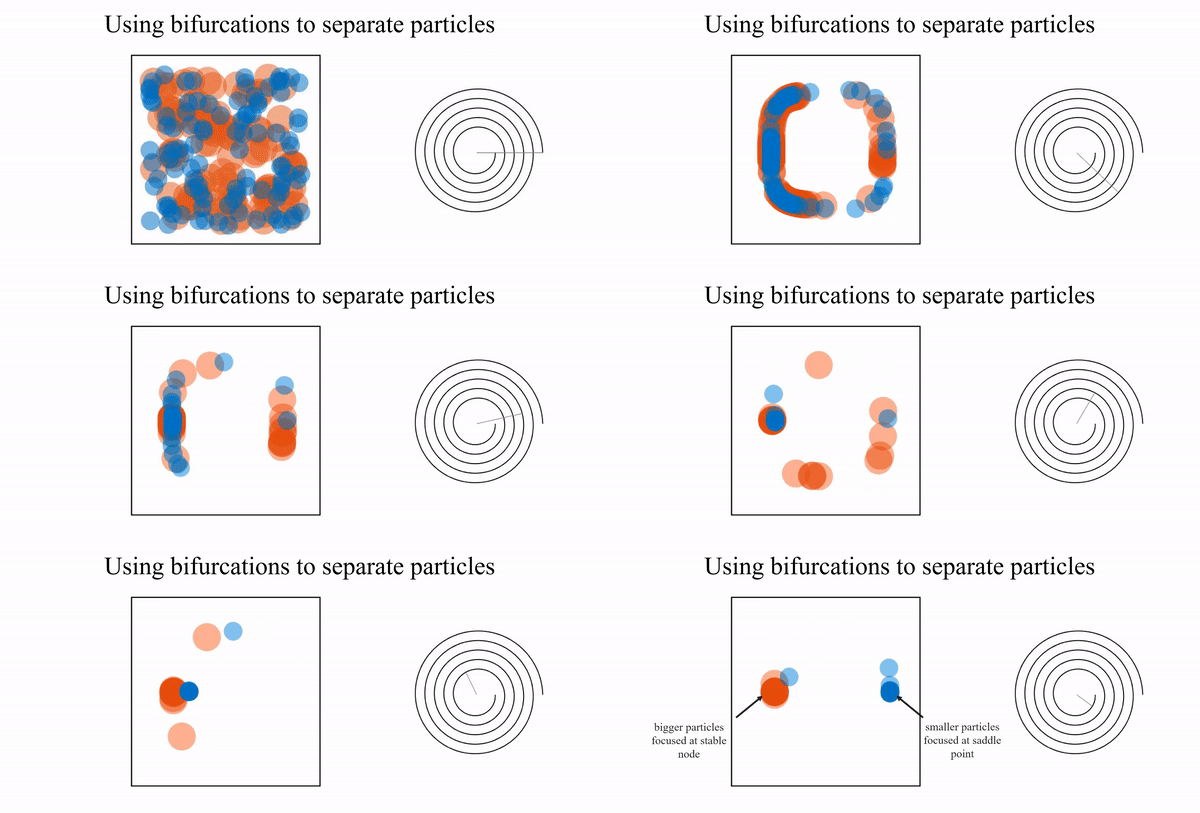
We developed a dynamical systems framework for inertial microfluidics that provides a predictive theory for particle focusing, bifurcations, and separation in curved microchannels. This approach enables rational microfluidic device design for applications such as size-based particle sorting in biomedical diagnostics.
Active matter with internal-state dynamics
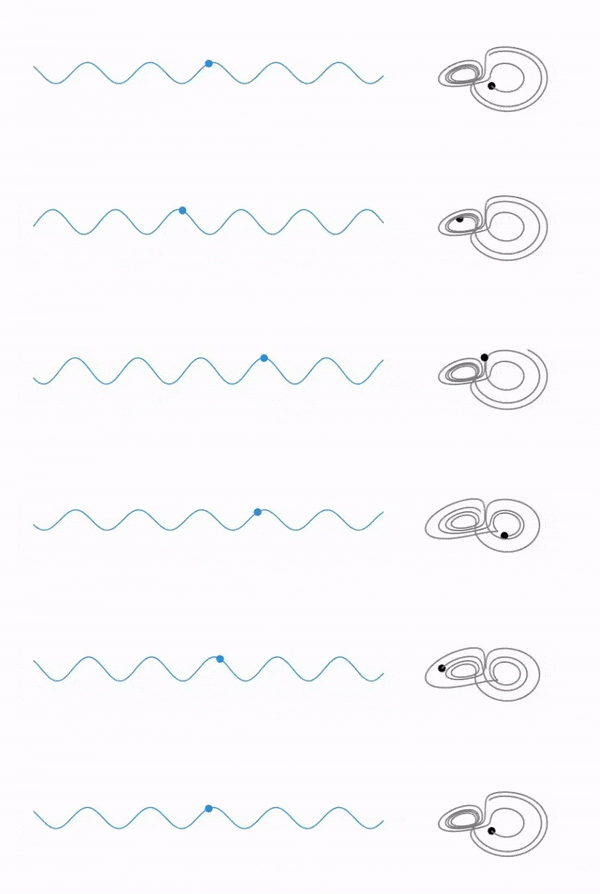
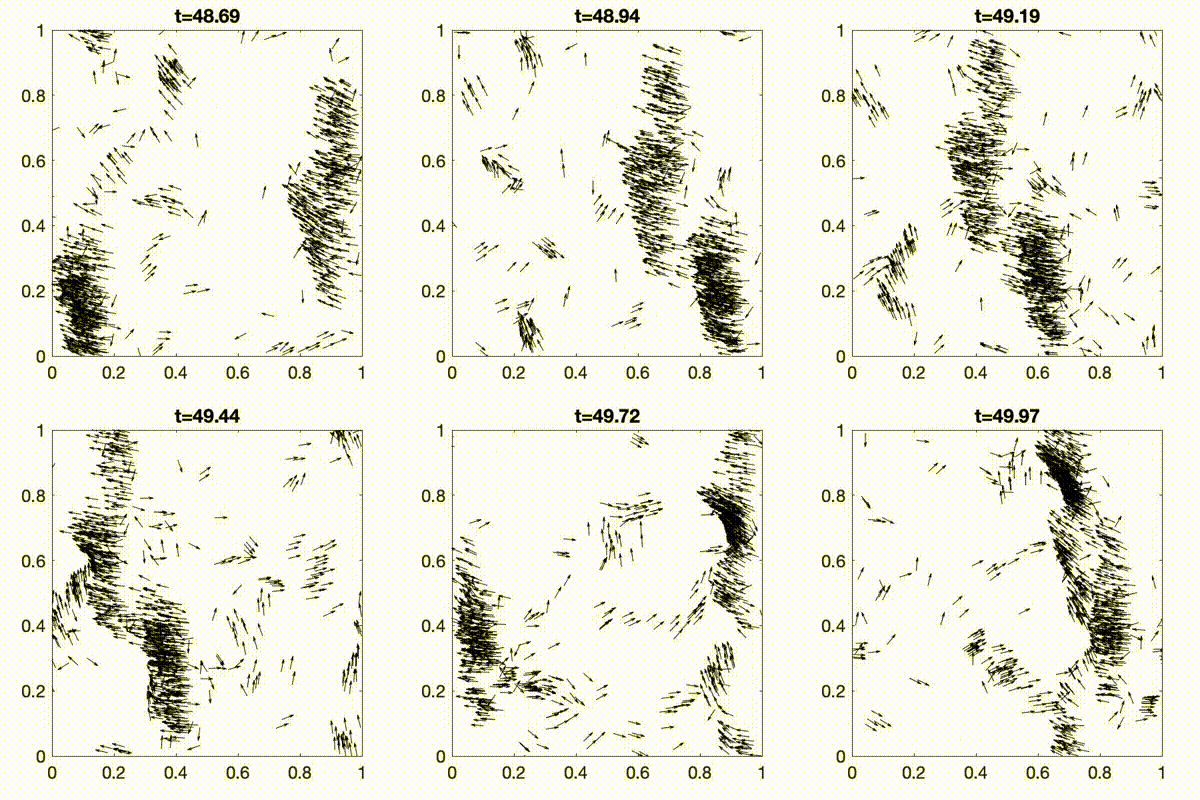
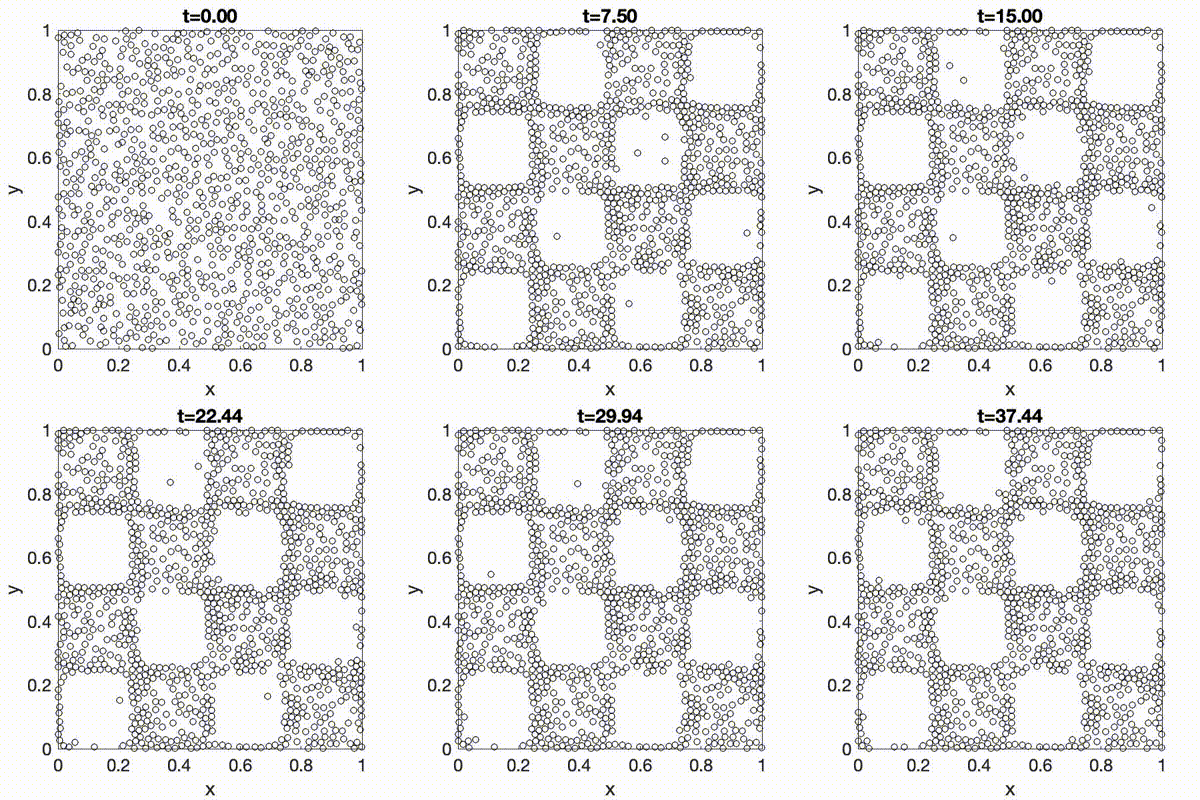
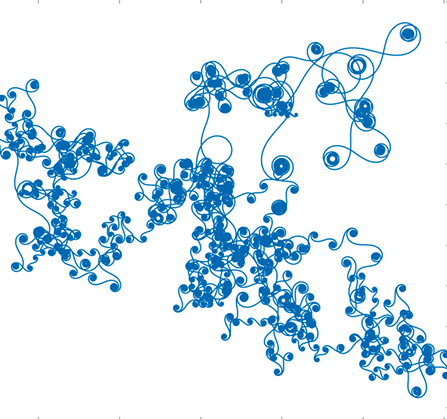
Complex collective behaviours such as animal swarms, human crowds, and robotic collectives emerge from interactions among individuals with internal dynamics. We introduce attractor-driven matter where we model this complexity by endowing particles with internal chaotic states, producing rich collective behaviour including multistability, anomalous transport, and emergent organisation across physical, biological, and engineered systems.
Dynamical origins of hydrodynamic quantum analogs
We investigate the dynamical foundations of hydrodynamic quantum analogs in walking droplets using minimal Lorenz-like models derived from integrodifferential trajectory equations. This approach shows how quantum-like statistical signatures, including Friedel-like oscillations, quantization, and tunnelling analogs, can emerge from local perturbations of the particle’s internal dynamics.