Home
Department Of Physics text logo
  • Research
    • Our research
    • Our research groups
    • Our research in action
    • Research funding support
    • Summer internships for undergraduates
  • Study
    • Undergraduates
    • Postgraduates
  • Engage
    • For young people
    • For teachers
    • For the public
    • For alumni
    • For business
  • Support
Menu
CMP
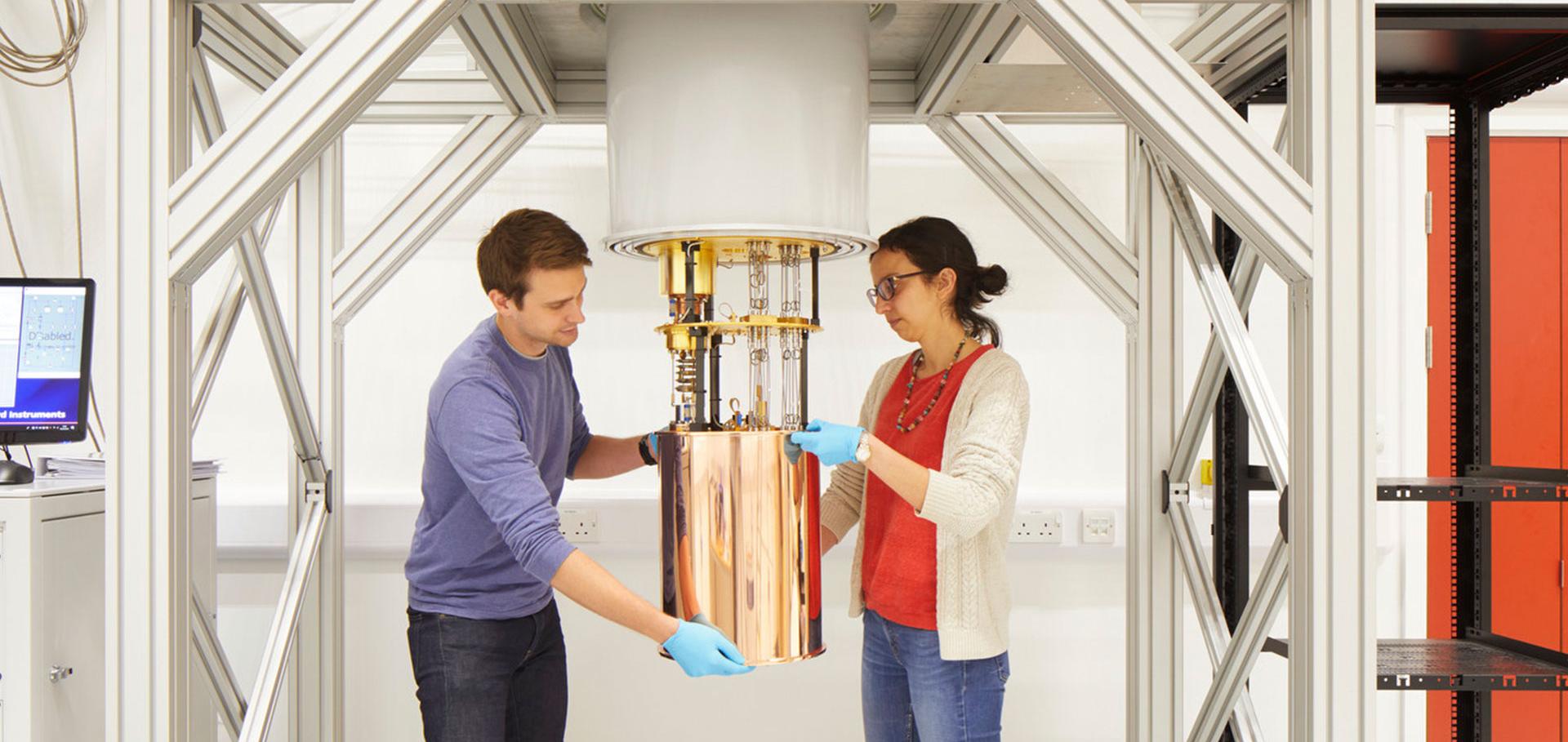
Credit: Jack Hobhouse

Roger Ward

Retired

Sub department

  • Condensed Matter Physics
Roger.Ward@physics.ox.ac.uk
Clarendon Laboratory, room 164
  • About
  • Publications

Temperature dependence of resistance in epitaxial Fe/MgO/Fe magnetic tunnel junctions

Applied Physics Letters 95:5 (2009)

Authors:

QL Ma, SG Wang, J Zhang, Y Wang, RCC Ward, C Wang, A Kohn, XG Zhang, XF Han

Abstract:

The temperature dependence of resistance in parallel (P) and antiparallel (AP) configurations (RP,AP) has been investigated in epitaxial Fe/MgO/Fe junctions with varying MgO barrier thicknesses tMgO. RAP exhibits a substantial decrease with increasing temperature for samples with tMgO ranging from 3.0 to 1.5 nm. In contrast, RP is approximately temperature independent when tMgO =3.0 nm and increases with temperature when tMgO =2.1 and 1.5 nm. Possible origins of this temperature dependence of resistance, which include taking into account a spin independent term and consideration of spin-flip scattering, are discussed. We attribute the temperature dependence of RP,AP to the misalignment of magnetic moments in the electrodes due to thermal excitations and its effect on the spin dependent tunneling. © 2009 American Institute of Physics.
More details from the publisher

Magnetic switching modes for exchange spring systems ErFe2 / YFe2 / DyFe2 / YFe2 with competing anisotropies

Journal of Magnetism and Magnetic Materials 321:16 (2009) 2499-2507

Authors:

JP Zimmermann, K Martin, G Bordignon, M Franchin, RCC Ward, GJ Bowden, PAJ de Groot, H Fangohr

Abstract:

The magnetization reversal processes of [10 nm ErFe2 / n YFe2 / 4 nm DyFe2 / n YFe2] multilayer films with a (1 1 0) growth axis and a variable YFe2 layer thickness n are investigated. The magnetically soft YFe2 compound acts as a separator between the hard rare earth (RE) ErFe2 and DyFe2 compounds, each of them bearing different temperature dependent magnetic anisotropy properties. Magnetic measurements of a system with n = 20 nm reveal the existence of three switching modes: an independent switching mode at low temperatures, an ErFe2 spin flop switching mode at medium high temperatures, and an YFe2 dominated switching mode at high temperatures. The measurements are in qualitative agreement with the findings of micromagnetic simulations which are used to illustrate the switching modes. Further simulations for a varied YFe2 layer thickness n ranging from 2 to 40 nm are carried out. Quantitative criteria are defined to classify the reversal behavior, and the resultant switching modes are laid out in a map with regard to n and the temperature T. A new coupled switching mode emerges above a threshold temperature for samples with thin YFe2 separation layers as a consequence of the exchange coupling between the magnetically hard ErFe2 and DyFe2 layers. It reflects the increasing competition of the two conflicting anisotropies to dominate the magnetic switching states of both RE compounds under decreasing n. © 2009 Elsevier B.V. All rights reserved.
More details from the publisher
More details

Room temperature magneto optic exchange springs in DyFe2 / YFe2 superlattices

Journal of Magnetism and Magnetic Materials 321:6 (2009) 586-589

Authors:

D Wang, CG Morrison, AR Buckingham, GJ Bowden, RCC Ward, PAJ de Groot

Abstract:

Exchange springs in hard-soft DyFe2 / YFe2 superlattices at room temperature, studied by the magneto optic Kerr effect, are presented and discussed. The measured hysteresis loops clearly show the formation of exchange springs. Deviations from the previously established 1 / ts2 law for the bending field on the soft layer thickness is observed. This is attributed to (i) the reduced anisotropy of the hard layer, and (ii) the presence of anisotropy in the soft layer, at room temperature. A one dimensional model of exchange coupled spins is employed to understand the observed behavior. This involves solving the Landau-Lifshitz-Gilbert equations. Good agreement is found between the experimental and simulated results. © 2008 Elsevier B.V. All rights reserved.
More details from the publisher
More details

Temperature dependence of giant tunnel magnetoresistance in epitaxial Fe/MgO/Fe magnetic tunnel junctions

Physical Review B - Condensed Matter and Materials Physics 78:18 (2008)

Authors:

SG Wang, RCC Ward, GX Du, XF Han, C Wang, A Kohn

Abstract:

The temperature dependence of giant tunnel magnetoresistance (TMR) in epitaxial Fe/MgO/Fe magnetic tunnel junctions has been investigated. The resistance in the parallel configuration between the bottom (free) Fe layer and the top Fe layer, exchange biased by an IrMn antiferromagnetic layer, is nearly independent of the temperature. In contrast, in the antiparallel configuration the resistance increases with decreasing temperature, resulting in an increase in the TMR ratio from 170% at room temperature to 318% at 10 K. The dynamic conductance (G′ =dI/dV) in the parallel configuration shows flat bias voltage dependence in the range ±0.4 V, but in the antiparallel configuration it shows typical parabolic behavior as a function of bias voltage. A model, based on the temperature dependence of magnetic disorder in the two electrodes and its effect on the spin-dependent tunneling, is proposed to describe the temperature dependence of the TMR ratio and the resistance, in good agreement with our experimental data. © 2008 The American Physical Society.
More details from the publisher

Magnetic anisotropy induced by patterning in (1 1 0) MBE-grown ternary Laves phase TbDyFe2 films

Journal of Alloys and Compounds 455:1-2 (2008) 31-34

Authors:

K Wang, KN Martin, C Morrison, RCC Ward, GJ Bowden, PAJ de Groot

Abstract:

Ternary rare-earth intermetallic Laves phase compounds Tb0.1Dy0.9Fe2, grown by MBE, were characterized by a vibrating sample magnetometer (VSM) and magneto-optical Kerr effect magnetometry (MOKE). Striped arrays with 5 μm-width along an in-plane easy-axis [-1,1,0] direction were defined by a UV direct write system in 400 nm-thick (1 1 0) epitaxial Tb0.1Dy0.9Fe2 films. An additional shape anisotropy of 2.7 × 10⁵ erg/cm3 in magnitude is induced. MOKE measurements reveal pronounced enhancement of the switching field along [-1,1,0] direction. However, the switching field along the hard-axis [0 0 1] direction is unchanged as the intrinsic anisotropy along the [0 0 1] direction is an order of magnitude larger than the induced one. The results demonstrate a possibility of engineering the magnetostriction-to-anisotropy ratio by patterning in epitaxial TbDyFe2 magnetostrictive materials. © 2007 Elsevier B.V. All rights reserved.
More details from the publisher
More details

Pagination

  • First page First
  • Previous page Prev
  • …
  • Page 2
  • Page 3
  • Page 4
  • Page 5
  • Current page 6
  • Page 7
  • Page 8
  • Page 9
  • Page 10
  • …
  • Next page Next
  • Last page Last

Footer Menu

  • Contact us
  • Giving to the Dept of Physics
  • Work with us
  • Media

User account menu

  • Log in

Follow us

FIND US

Clarendon Laboratory,

Parks Road,

Oxford,

OX1 3PU

CONTACT US

Tel: +44(0)1865272200

University of Oxfrod logo Department Of Physics text logo
IOP Juno Champion logo Athena Swan Silver Award logo

© University of Oxford - Department of Physics

Cookies | Privacy policy | Accessibility statement

Built by: Versantus

  • Home
  • Research
  • Study
  • Engage
  • Our people
  • News & Comment
  • Events
  • Our facilities & services
  • About us
  • Giving to Physics
  • Current students
  • Staff intranet