Home
Department Of Physics text logo
  • Research
    • Our research
    • Our research groups
    • Our research in action
    • Research funding support
    • Summer internships for undergraduates
  • Study
    • Undergraduates
    • Postgraduates
  • Engage
    • For young people
    • For teachers
    • For the public
    • For alumni
    • For business
  • Support
Menu
CMP
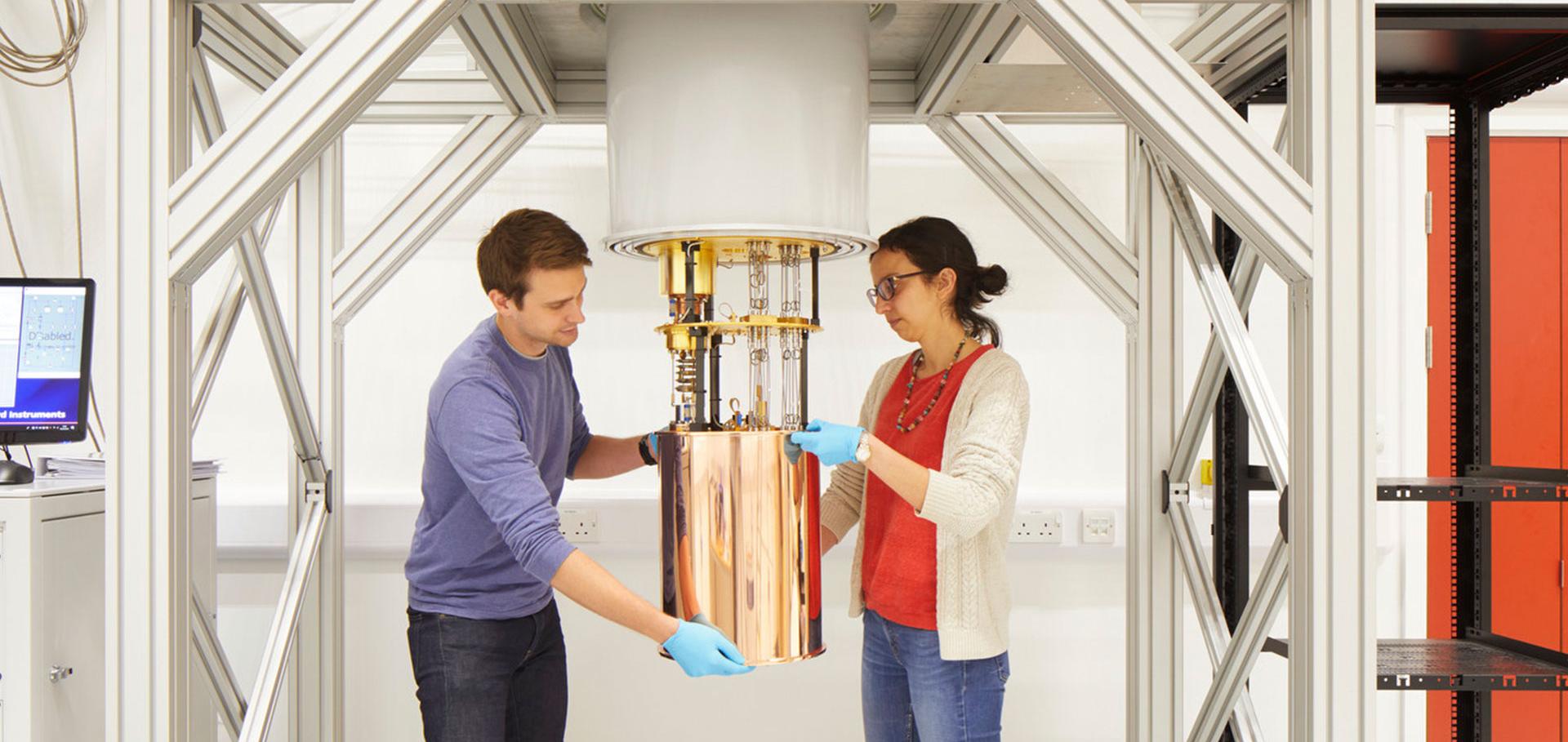
Credit: Jack Hobhouse

Roger Ward

Retired

Sub department

  • Condensed Matter Physics
Roger.Ward@physics.ox.ac.uk
Clarendon Laboratory, room 164
  • About
  • Publications

Designed synthesis of materials for high-sensitivity geomagnetic sensors

APPLIED PHYSICS LETTERS 96:5 (2010) ARTN 052515

Authors:

L Ding, J Teng, XC Wang, C Feng, Y Jiang, GH Yu, SG Wang, RCC Ward
More details from the publisher

Interplay of RKKY, Zeeman, and Dzyaloshinskii-Moriya interactions and the nonzero average spin chirality in Dy/Y multilayer structures

PHYSICAL REVIEW B 82:19 (2010) ARTN 195432

Authors:

SV Grigoriev, D Lott, Yu O Chetverikov, ATD Gruenwald, RCC Ward, A Schreyer
More details from the publisher

Magnetic excitations in Dy/Y superlattices as seen via inelastic neutron scattering

PHYSICAL REVIEW B 82:1 (2010) ARTN 014426

Authors:

ATD Gruenwald, AR Wildes, W Schmidt, EV Tartakovskaya, J Kwo, C Majkrzak, RCC Ward, A Schreyer
More details from the publisher

The influence of interfacial roughness on the coherence of structure and magnetic coupling across barriers in Fe/MgO multilayers

JOURNAL OF PHYSICS-CONDENSED MATTER 22:22 (2010) ARTN 226004

Authors:

R Fan, SJ Lee, JP Goff, RCC Ward, SG Wang, A Kohn, C Wang, AR Wildes, SP Collins
More details from the publisher
More details
More details

Exchange bias in epitaxial Fe/Ir0.2Mn0.8 bilayers grown on MgO (0 0 1)

Journal of Physics D Applied Physics 42:22 (2009)

Authors:

SG Wang, A Kohn, C Wang, AK Petford-Long, S Lee, R Fan, JP Goff, LJ Singh, ZH Barber, RCC Ward

Abstract:

Exchange bias has been studied in epitaxial Fe/Ir0.2Mn 0.8 (IrMn) bilayers grown by molecular beam epitaxy on MgO (0 0 1) substrates. The IrMn layer has a chemically disordered fcc structure with an epitaxial relationship of MgO(0 0 1)[1 1 0]//Fe(0 0 1)[1 0 0]//IrMn(0 0 1) [1 1 0]. In this system, exchange bias is induced during growth at room temperature without post-annealing, by applying a small magnetic field, HA, along the bcc Fe [1 0 0] easy axis. The temperature dependence of the exchange bias field and the coercivity along the Fe [1 0 0] easy axis, measured up to approximately half the Néel temperature, shows an exponential decay of these parameters with increasing temperature. The magnetization measured as a function of applied field along the Fe [1 0 0] easy axis results in a negatively shifted hysteresis loop, typical for exchange bias, while when the magnetic field is applied along the Fe [0 1 0] easy axis (perpendicular to H A), a symmetric double-shifted loop is observed. In both cases, the magnetization reversal occurs through two successive events involving nucleation and propagation of domains in which the magnetic moments are perpendicular to each other. We demonstrate that due to the epitaxial growth of the IrMn layer, the unidirectional anisotropy induced by exchange bias is aligned with one of the Fe easy axis directions and, in effect, is added to the four-fold cubic anisotropy of the Fe layer. © 2009 IOP Publishing Ltd.
More details from the publisher
More details

Pagination

  • First page First
  • Previous page Prev
  • Page 1
  • Page 2
  • Page 3
  • Page 4
  • Current page 5
  • Page 6
  • Page 7
  • Page 8
  • Page 9
  • …
  • Next page Next
  • Last page Last

Footer Menu

  • Contact us
  • Giving to the Dept of Physics
  • Work with us
  • Media

User account menu

  • Log in

Follow us

FIND US

Clarendon Laboratory,

Parks Road,

Oxford,

OX1 3PU

CONTACT US

Tel: +44(0)1865272200

University of Oxfrod logo Department Of Physics text logo
IOP Juno Champion logo Athena Swan Silver Award logo

© University of Oxford - Department of Physics

Cookies | Privacy policy | Accessibility statement

Built by: Versantus

  • Home
  • Research
  • Study
  • Engage
  • Our people
  • News & Comment
  • Events
  • Our facilities & services
  • About us
  • Giving to Physics
  • Current students
  • Staff intranet