Home
Department Of Physics text logo
  • Research
    • Our research
    • Our research groups
    • Our research in action
    • Research funding support
    • Summer internships for undergraduates
  • Study
    • Undergraduates
    • Postgraduates
  • Engage
    • For alumni
    • For business
    • For schools
    • For the public
  • Support
Menu
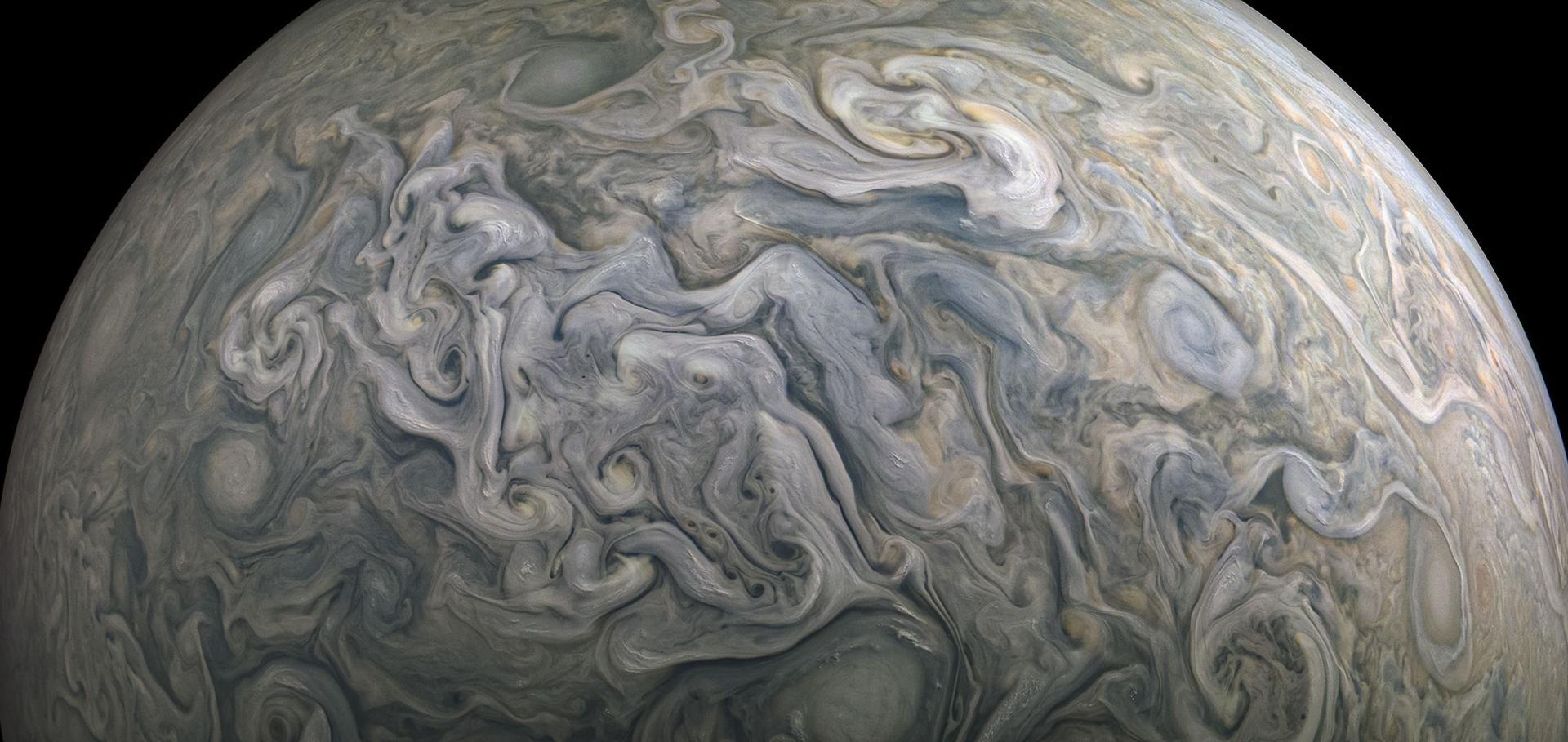
Juno Jupiter image

Roland Young

Visitor

Sub department

  • Atmospheric, Oceanic and Planetary Physics
roland.young@abdn.ac.uk
  • About
  • Publications

Breeding and predictability in the baroclinic rotating annulus using a perfect model

Nonlin. Proc. Geophys. Copernicus Publications 15:3 (2008) 469-487

Authors:

RMB Young, PL Read

Abstract:

We present results from a computational study of predictability in fully-developed baroclinically unstable laboratory flows. This behaviour is studied in the Met Office/Oxford Rotating Annulus Laboratory Simulation a model of the classic rotating annulus laboratory experiment with differentially heated cylindrical sidewalls, which is firmly established as an insightful laboratory analogue for certain kinds of atmospheric dynamical behaviour. This work is the first study of 'predictability of the first kind' in the annulus experiment. We devise an ensemble prediction scheme using the breeding method to study the predictability of the annulus in the perfect model scenario. This scenario allows one simulation to be defined as the true state, against which all forecasts are measured. We present results from forecasts over a range of quasi-periodic and chaotic annulus flow regimes. A number of statistical and meteorological techniques are used to compare the predictability of these flows: bred vector growth rate and dimension, error variance, ''spaghetti plots", probability forecasts, Brier score, and the Kolmogorov-Smirnov test. These techniques gauge both the predictability of the flow and the performance of the ensemble relative to a forecast using a climatological distribution. It is found that in the perfect model scenario, the two quasi-periodic regimes examined may be indefinitely predictable. The two chaotic regimes (structural vacillation and period doubled amplitude vacillation) show a loss of predictability on a timescale of hundreds to thousands of seconds (65-280 annulus rotation periods, or 1-3 Lyapunov times).
More details from the publisher
More details

Flow transitions resembling bifurcations of the logistic map in simulations of the baroclinic rotating annulus

Physica D Elsevier 237:18 (2008) 2251-2262

Authors:

RMB Young, PL Read

Abstract:

We present evidence for a sequence of bifurcations in simulations of the differentially heated baroclinic rotating annulus, similar to bifurcations of the logistic map. The Met. Office / Oxford Rotating Annulus Laboratory Simulation (MORALS) code is used to construct a detailed numerical regime diagram for the annulus, and the distribution of regimes in parameter space is discussed. The bifurcations are observed in a sequence of runs at high temperature forcing, identified by Poincare sections of the dominant temperature mode amplitude time series. Higher order return maps and predictions using quadratic fits to the data are used to verify this result, and Lyapunov exponents are calculated to identify and quantify the chaotic parts of the sequence. (c) 2008 Elsevier B.V. All rights reserved.
More details from the publisher
More details

Pagination

  • First page First
  • Previous page Prev
  • Page 1
  • Page 2
  • Page 3
  • Page 4
  • Current page 5

Footer Menu

  • Contact us
  • Giving to the Dept of Physics
  • Work with us
  • Media

User account menu

  • Log in

Follow us

FIND US

Clarendon Laboratory,

Parks Road,

Oxford,

OX1 3PU

CONTACT US

Tel: +44(0)1865272200

University of Oxfrod logo Department Of Physics text logo
IOP Juno Champion logo Athena Swan Silver Award logo

© University of Oxford - Department of Physics

Cookies | Privacy policy | Accessibility statement

Built by: Versantus

  • Home
  • Research
  • Study
  • Engage
  • Our people
  • News & Comment
  • Events
  • Our facilities & services
  • About us
  • Giving to Physics
  • Current students
  • Staff intranet