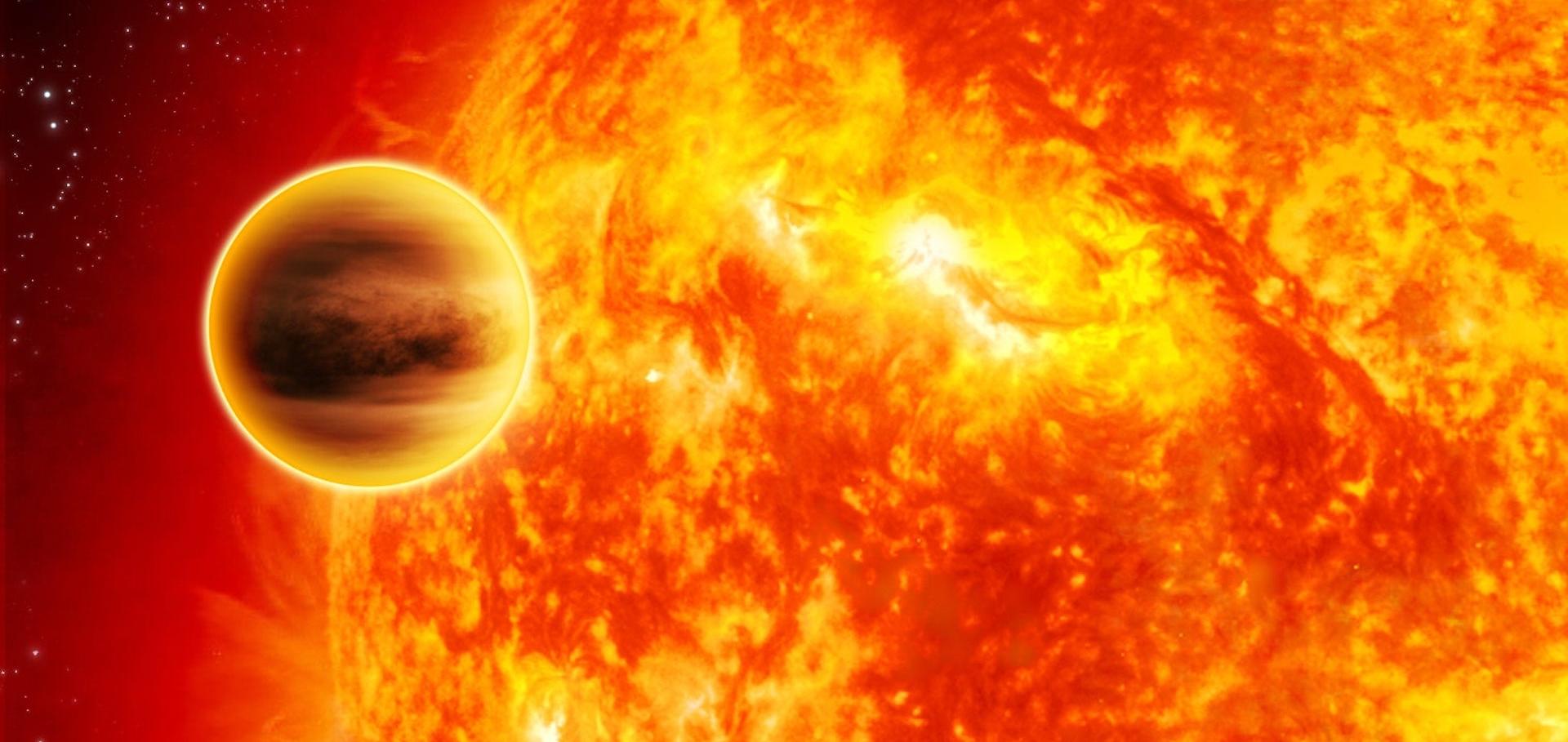
LHS 1903 provides evidence for gas-depleted formation of planets around M-dwarfs

Authors:

Thomas Wilson, Anna Simpson, Andrew Collier Cameron, Ryan Cloutier, Vardan Adibekyan, Ancy Anna John, Y Alibert, Manu Stalport, J Egger, Andrea Bonfanti, Nicolas Billot, Pascal Guterman, Pierre Maxted, Attila Simon, Sergio Sousa, Malcolm Fridlund, M Beck, Anja Bekkelien, S Salmon, Valerie Van Grootel, Luca Fossati, Alexander Mustill, Hugh Osborn, Tiziano Zingales, M Hooton, Laura Affer, Suzanne Aigrain, Roi Alonso, G Anglada-Escude, Alexandros Antoniadis-Karnavas, T Barczy, David Barrado, Susana Barros, Wolfgang Baumjohann, T Beck, W Benz, Federico Biondi, Xavier Bonfils, Luca Borsato, Alexis Brandeker, Christopher Broeg, Lars Buchhave, Maximilian Buder, Juan Cabrera, S Carrazco Gaxiola, Sébastien Charnoz, David Ciardi, Karen Collins, Kevin Collins, Rosario Cosentino, Szilard Csizmadia, P Cubillos, Shweta Dalal, Mario Damasso, James Davenport, Melvyn Davies, Magali Deleuil, L Delrez, Olivier Demangeon, Brice-Olivier Demory, Victoria DiTomasso, Diana Dragomir, Courtney Dressing, Xavier Dumusque, David Ehrenreich, Anders Erikson, Emma Esparza-Borges, Andrea Fortier, Izuru Fukuda, Akihiko Fukui, Davide Gandolfi, Adriano Ghedina, Steven Giacalone, Holden Gill, Michaël Gillon, Y Gomez Maqueo Chew, Manuel Güdel, Pere Guerra, Maximilian Günther, Nathan Hara, Avet Harutyunyan, Yuya Hayashi, Raphaëlle Haywood, Rae Holcomb, Keith Horne, S Hoyer, Chelsea Huang, Masahiro Ikoma, K Isaak, James Jackman, Jon Jenkins, Eric Jensen, Daniel Jontof-Hutter, Yugo Kawai, Laszlo Kiss, Ben Lakeland, J Laskar, David Latham, Alain Lecavelier des Etangs, Adrien Leleu, Monika Lendl, J de Leon, Florian Lienhard, Mercedes López-Morales, Christophe Lovis, Michael Lund, Rafael Luque, D Magrin, Luca Malavolta, Aldo Fiorenzano, Andrew Mayo, Michel Mayor, C Mordasini, Annelies Mortier, Felipe Murgas, Norio Narita, Valerio Nascimbeni, Belinda Nicholson, Göran Olofsson, Roland Ottensamer, Isabella Pagano, Larissa Palethorpe, Enric Palle, Hannu Parviainen, Marco Pedani, Francesco Pepe, Gisbert Peter, Matteo Pinamonti, Giampaolo Piotto, Don Pollacco, Ennio Poretti, Didier Queloz, Sam Quinn, R Ragazzoni, N Rando, David Rapetti, F Ratti, Heike Rauer, Federica Rescigno, Ignasi Ribas, William Rice, George Ricker, Paul Robertson, Thierry de Roche, L Sabin, Nuno Santos, Dimitar Sasselov, Arjun Savel, Gaetano Scandariato, Nicole Schanche, Urs Schroffenegger, Richard Schwarz, Sara Seager, Ramotholo Sefako, Damien Ségransan, Avi Shporer, André Silva, Alexis Smith, Alessandro Sozzetti, Manfred Steller, Gyula Szabo, Motohide Tamura, Nicolas Thomas, Amy Tuson, Stéphane Udry, Andrew Vanderburg, Roland Vanderspek, J Venturini, Francesco Verrecchia, Nicholas Walton, Christopher Watson, Robert Wells, Joshua Winn, Roberto Zambelli, Carl Ziegler

On the energy dissipation rate at the inner edge of circumbinary discs

MNRAS

Authors:

Caroline Terquem, JCB Papaloizou, JCB

Optical integral field spectroscopy of intermediate redshift infrared bright galaxies

Monthly Notices of the Royal Astronomical Society Oxford University Press (OUP)

Authors:

M Pereira-Santaella, D Rigopoulou, GE Magdis, N Thatte, A Alonso-Herrero, F Clarke, D Farrah, S García-Burillo, L Hogan, S Morris, M Rodrigues, J-S Huang, M Tecza

Abstract:

The extreme infrared (IR) luminosity of local luminous and ultra-luminous IR galaxies (U/LIRGs; 11 < log LIR /Lsun < 12 and log LIR /Lsun > 12, respectively) is mainly powered by star-formation processes triggered by mergers or interactions. While U/LIRGs are rare locally, at z > 1, they become more common, they dominate the star-formation rate (SFR) density, and a fraction of them are found to be normal disk galaxies. Therefore, there must be an evolution of the mechanism triggering these intense starbursts with redshift. To investigate this evolution, we present new optical SWIFT integral field spectroscopic H{\alpha}+[NII] observations of a sample of 9 intermediate-z (0.2 < z < 0.4) U/LIRG systems selected from Herschel 250{\mu}m observations. The main results are the following: (a) the ratios between the velocity dispersion and the rotation curve amplitude indicate that 10-25% (1-2 out of 8) might be compatible with being isolated disks while the remaining objects are interacting/merging systems; (b) the ratio between un-obscured and obscured SFR traced by H{\alpha} and LIR, respectively, is similar in both local and these intermediate-z U/LIRGs; and (c) the ratio between 250{\mu}m and the total IR luminosities of these intermediate-z U/LIRGs is higher than that of local U/LIRGs with the same LIR . This indicates a reduced dust temperature in these intermediate-z U/LIRGs. This, together with their already measured enhanced molecular gas content, suggests that the interstellar medium conditions are different in our sample of intermediate-z galaxies when compared to local U/LIRGs.

Planet Hunters TESS I: TOI 813, a subgiant hosting a transiting Saturn-sized planet on an 84-day orbit

Authors:

NL Eisner, O Barragán, S Aigrain, C Lintott, G Miller, N Zicher, TS Boyajian, C Briceño, EM Bryant, JL Christiansen, AD Feinstein, LM Flor-Torres, M Fridlund, D Gandolfi, J Gilbert, N Guerrero, JM Jenkins, K Jones, MH Kristiansen, A Vanderburg, N Law, AR López-Sánchez, AW Mann, EJ Safron, ME Schwamb, KG Stassun, HP Osborn, J Wang, A Zic, C Ziegler, F Barnet, SJ Bean, DM Bundy, Z Chetnik, JL Dawson, J Garstone, AG Stenner, M Huten, S Larish, LD Melanson, T Mitchell, C Moore, K Peltsch, DJ Rogers, C Schuster, DS Smith, DJ Simister, C Tanner, I Terentev, A Tsymbal

Abstract:

We report on the discovery and validation of TOI 813b (TIC 55525572 b), a transiting exoplanet identified by citizen scientists in data from NASA's Transiting Exoplanet Survey Satellite (TESS) and the first planet discovered by the Planet Hunters TESS project. The host star is a bright (V = 10.3 mag) subgiant ($R_\star=1.94\,R_\odot$, $M_\star=1.32\,M_\odot$). It was observed almost continuously by TESS during its first year of operations, during which time four individual transit events were detected. The candidate passed all the standard light curve-based vetting checks, and ground-based follow-up spectroscopy and speckle imaging enabled us to place an upper limit of $2 M_{Jup}$ (99 % confidence) on the mass of the companion, and to statistically validate its planetary nature. Detailed modelling of the transits yields a period of $83.8911_{ - 0.0031 } ^ { + 0.0027 }$ days, a planet radius of $6.71 \pm 0.38$ $R_{\oplus}$, and a semi major axis of $0.423_{ - 0.037 } ^ { + 0.031 }$ AU. The planet's orbital period combined with the evolved nature of the host star places this object in a relatively under-explored region of parameter space. We estimate that TOI-813b induces a reflex motion in its host star with a semi-amplitude of $\sim6$ ms$^{-1}$, making this system a promising target to measure the mass of a relatively long-period transiting planet.

Planet Hunters TESS III: two transiting planets around the bright G dwarf HD 152843

Authors:

Nora L Eisner, Belinda A Nicholson, Oscar Barragán, Suzanne Aigrain, Chris Lintott, Laurel Kaye, Baptiste Klein, Grant Miller, Jake Taylor, Norbert Zicher, Lars A Buchhave, Douglas A Caldwell, Jonti Horner, Joe Llama, Annelies Mortier, Vinesh M Rajpaul, Keivan Stassun, Avi Sporer, Andrew Tkachenko, Jon M Jenkins, David W Latham, George R Ricker, Sara Seager, Joshua N Winn, Safaa Alhassan, Elisabeth ML Baeten, Stewart J Bean, David M Bundy, Vitaly Efremov, Richard Ferstenou, Brian L Goodwin, Michelle Hof, Tony Hoffman, Alexander Hubert, Lily Lau, Sam Lee, David Maetschke, Klaus Peltsch, Cesar Rubio-Alfaro, Gary M Wilson

Abstract:

We report on the discovery and validation of a two-planet system around a bright (V = 8.85 mag) early G dwarf (1.43 $R_{\odot}$, 1.15 $M_{\odot}$, TOI 2319) using data from NASA's Transiting Exoplanet Survey Satellite (TESS). Three transit events from two planets were detected by citizen scientists in the month-long TESS light curve (sector 25), as part of the Planet Hunters TESS project. Modelling of the transits yields an orbital period of \Pb\ and radius of $3.41 _{ - 0.12 } ^ { + 0.14 }$ $R_{\oplus}$ for the inner planet, and a period in the range 19.26-35 days and a radius of $5.83 _{ - 0.14 } ^ { + 0.14 }$ $R_{\oplus}$ for the outer planet, which was only seen to transit once. Each signal was independently statistically validated, taking into consideration the TESS light curve as well as the ground-based spectroscopic follow-up observations. Radial velocities from HARPS-N and EXPRES yield a tentative detection of planet b, whose mass we estimate to be $11.56 _{ - 6.14 } ^ { + 6.58 }$ $M_{\oplus}$, and allow us to place an upper limit of $27.5$ $M_{\oplus}$ (99 per cent confidence) on the mass of planet c. Due to the brightness of the host star and the strong likelihood of an extended H/He atmosphere on both planets, this system offers excellent prospects for atmospheric characterisation and comparative planetology.