

Giant Outer Transiting Exoplanet Mass (GOT ’EM) Survey. III. Recovery and Confirmation of a Temperate, Mildly Eccentric, Single-transit Jupiter Orbiting TOI-2010
Astronomical Journal IOP Publishing 166:6 (2023) 239
Abstract:
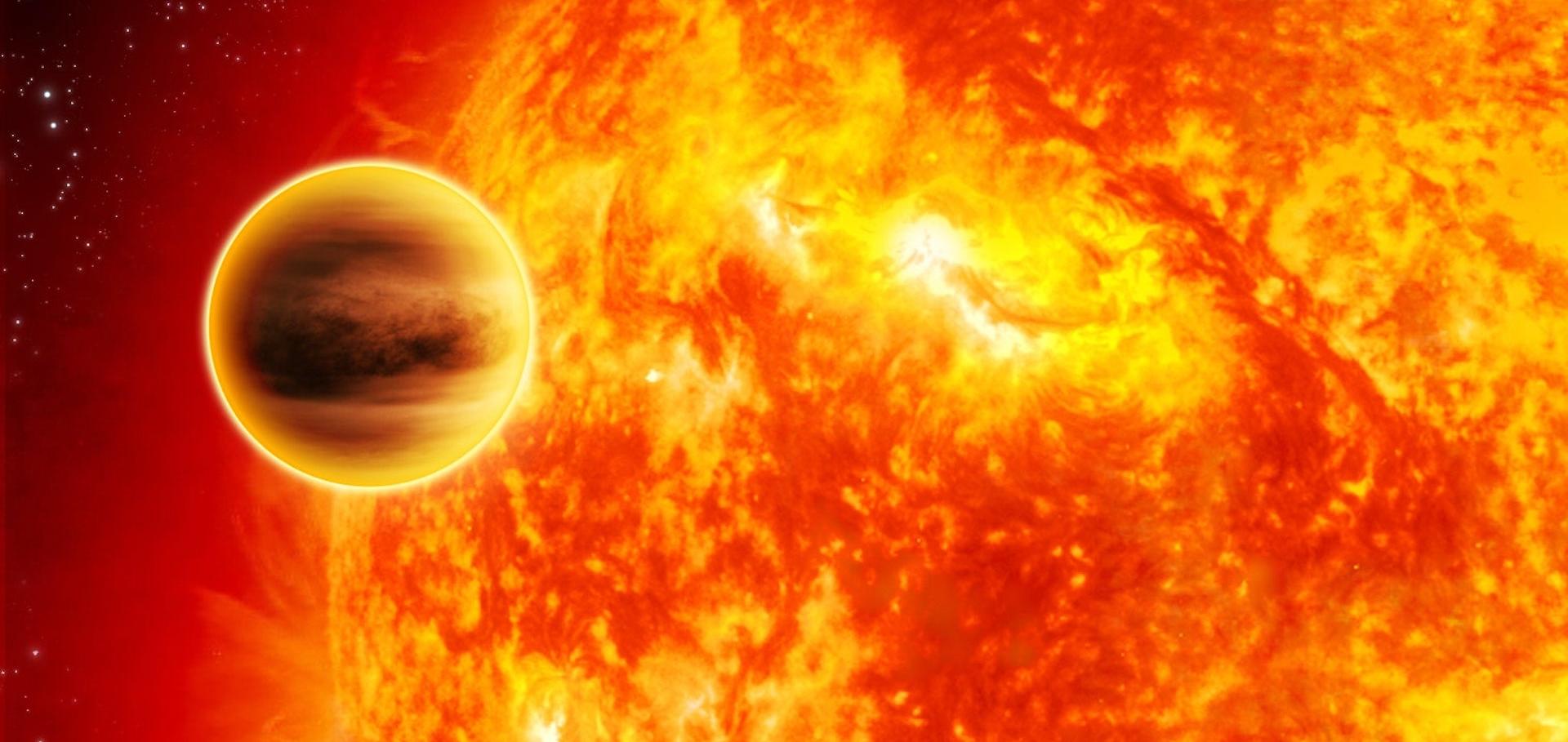
Large-scale exoplanet surveys like the Transiting Exoplanet Survey Satellite (TESS) mission are powerful tools for discovering large numbers of exoplanet candidates. Single-transit events are commonplace within the resulting candidate list due to the unavoidable limitation of the observing baseline. These single-transit planets often remain unverified due to their unknown orbital periods and consequent difficulty in scheduling follow-up observations. In some cases, radial velocity (RV) follow up can constrain the period enough to enable a future targeted transit detection. We present the confirmation of one such planet: TOI-2010 b. Nearly three years of RV coverage determined the period to a level where a broad window search could be undertaken with the Near-Earth Object Surveillance Satellite, detecting an additional transit. An additional detection in a much later TESS sector solidified our final parameter estimation. We find TOI-2010 b to be a Jovian planet (M P = 1.29 M Jup, R P = 1.05 R Jup) on a mildly eccentric orbit (e = 0.21) with a period of P = 141.83403 days. Assuming a simple model with no albedo and perfect heat redistribution, the equilibrium temperature ranges from about 360 to 450 K from apastron to periastron. Its wide orbit and bright host star (V = 9.85) make TOI-2010 b a valuable test bed for future low-insolation atmospheric analysis.ATMOSPHERIX: I- an open source high-resolution transmission spectroscopy pipeline for exoplanets atmospheres with SPIRou
Monthly Notices of the Royal Astronomical Society Oxford University Press (OUP) 527:1 (2023) 544-565
ATMOSPHERIX: II- Characterizing exoplanet atmospheres through transmission spectroscopy with SPIRou
Monthly Notices of the Royal Astronomical Society Oxford University Press (OUP) 527:1 (2023) 566-582
Stellar surface information from the Ca II H&K lines – I. Intensity profiles of the solar activity components
Monthly Notices of the Royal Astronomical Society Oxford University Press 527:2 (2023) 2940-2962
Abstract:
The detection of Earth-like planets with the radial-velocity (RV) method is currently limited by the presence of stellar activity signatures. On rotational time-scales, spots and plages (or faculae) are known to introduce different RV signals, but their corrections require better activity proxies. The best-known chromospheric activity proxies in the visible are the Ca II H&K lines, but the physical quantities measured by their profiles need to be clarified. We first investigate resolved images of the Sun in order to better understand the spectrum of plages, spots, and the network using the Meudon spectroheliogram. We show that distinct line profiles are produced by plages, spots, and by the network component and we also derived the centre-to-limb variations of the three profiles. Some care is required to disentangle their contributions due to their similarities. By combining disc-integrated spectra from the ISS high-resolution spectrograph with SDO direct images of the Sun, we managed to extract a high-resolution emission spectrum of the different components, which tend to confirm the spectra extracted from the Meudon spectroheliogram datacubes. Similar results were obtained with the HARPS-N Sun-as-a-star spectra. We concluded using a three-component model that the temporal variation of the popular Sindex contains, on average for the 24th solar cycle: 70 ± 12 per cent of plage, 26 ± 12 per cent of network, and 4 ± 4 per cent of spots. This preliminary investigation suggests that a detailed study of the Ca II H&K profiles may provide rich information about the filling factor and distribution of different types of active regions.Global Chemical Transport on Hot Jupiters: Insights from 2D VULCAN photochemical model
(2023)