

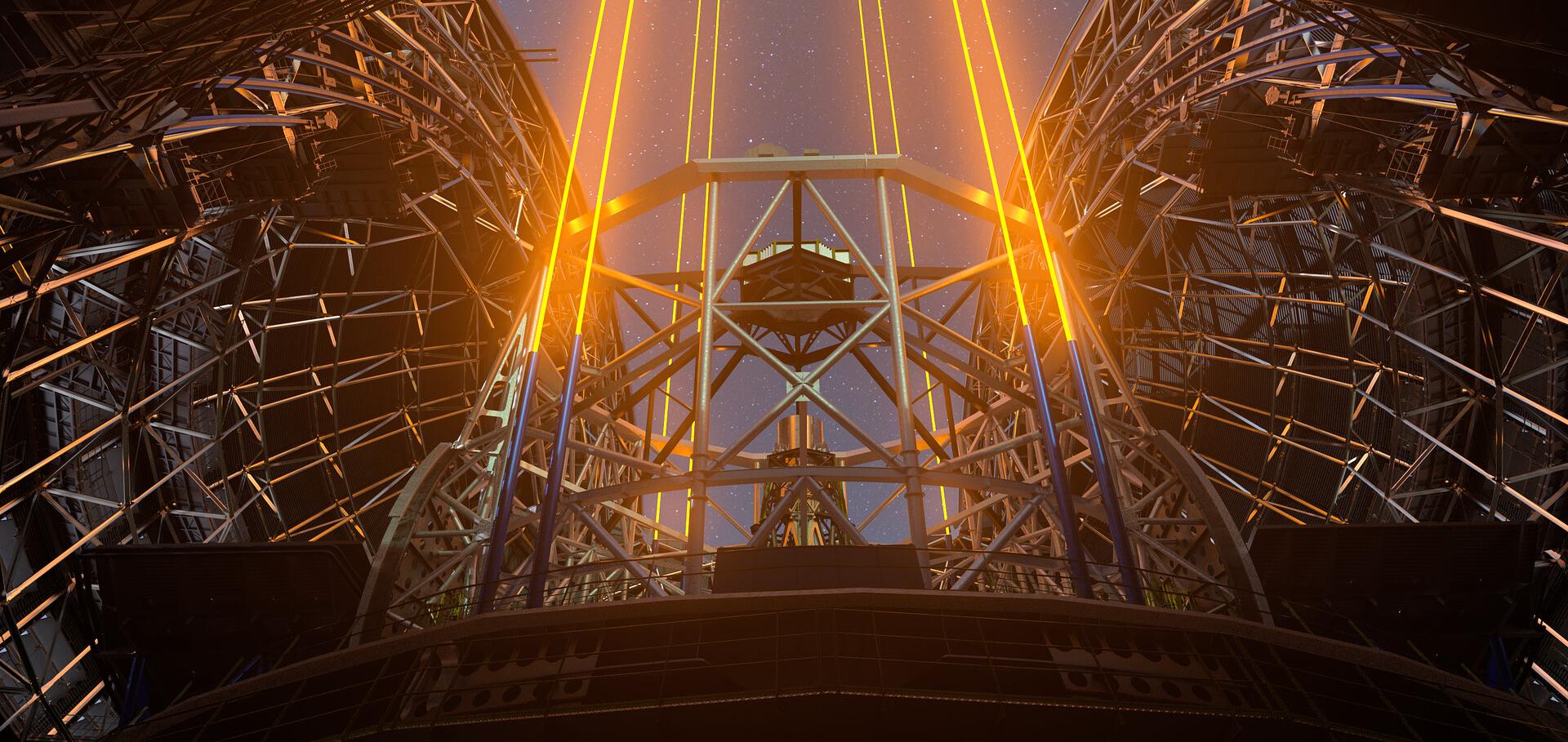
HARMONI at ELT: modelling the optical performance of a diffraction limited integral field spectrograph
Phase-resolving the Absorption Signatures of Water and Carbon Monoxide in the Atmosphere of the Ultra-hot Jupiter WASP-121b with GEMINI-S/IGRINS
Abstract:
Ultra-hot Jupiters (UHJs) are among the best targets for atmospheric characterization at high spectral resolution. Resolving their transmission spectra as a function of orbital phase offers a unique window into the 3D nature of these objects. In this work, we present three transits of the UHJ WASP-121b observed with Gemini-S/IGRINS. For the first time, we measure the phase-dependent absorption signals of CO and H2O in the atmosphere of an exoplanet, and we find that they are different. While the blueshift of CO increases during the transit, the absorption lines of H2O become less blueshifted with phase, and even show a redshift in the second half of the transit. These measurements reveal the distinct spatial distributions of both molecules across the atmospheres of UHJs. Also, we find that the H2O signal is absent in the first quarter of the transit, potentially hinting at cloud formation on the evening terminator of WASP-121b. To further interpret the absorption trails of CO and H2O, as well as the Doppler shifts of Fe previously measured with VLT/ESPRESSO, we compare the data to simulated transits of WASP-121b. To this end, we post-process the outputs of the global circulation models with a 3D Monte-Carlo radiative transfer code. Our analysis shows that the atmosphere of WASP-121b is subject to atmospheric drag, as previously suggested by small hotspot offsets inferred from phase-curve observations. Our study highlights the importance of phase-resolved spectroscopy in unravelling the complex atmospheric structure of UHJs and sets the stage for further investigations into their chemistry and dynamics.Euclid: The Early Release Observations Lens Search Experiment
Observational constraints on dark matter in galaxies over the last 10 billion years
Abstract:
Dynamical tracers provide key measurements of galaxies' total masses, complementing other methods of determining stellar and gas masses and also providing some of the only possible constraints on their dark matter content. Until recently, the deep spectrally-resolved observations necessary for these measurements were only accessible out to relatively low redshifts. Thanks to new observatories and instruments, particularly near infrared multi-object spectrographs as well as sub-mm interferometers, galaxy dynamical masses can now be measured out to the peak epoch of cosmic star formation and even earlier epochs. Here I give an overview of dynamical mass constraints of galaxy-scale dark matter fractions from the present day out to z ∼ 3. I also discuss comparisons between measurements from different dynamical tracers, and the modeling challenges and degeneracies that complicate our interpretations of observations.MOSAIC on the ELT: front-end and instrument AITV planification
Abstract:
MOSAIC is the Muti-Object Spectrograph for the 39m ESO Extremely Large Telescope. The instrument development has recently been reorganized in different channels to be implemented progressively. The Laboratoire d’Astrophysique de Marseille (LAM) is in charge of the instrument “Assembly, Integration, Test and Verification (AIT/V)” phases. AITV for AO instruments, in laboratory as at the telescope, always represent numerous technical challenges. We already started the preparation and planning for the instrument level AIT activities, from identification of needs, challenges, risks, to defining the optimal AIT strategy.
In this paper, we present the state of this study, discuss a new approach with distributed AIT activities and controlled remotely over different sites. We describe AIT/V scenarios with phased implementation, starting with the Front-End and Visible channels AIT phases. We also show our capacity, experience (several MOS instruments, ELT HARMONI) and expertise to lead the instrument MOSAIC AIT/V activities both in Europe and at the telescope in Chile.