Heat conduction through the support pillars in vacuum glazing
Solar Energy Elsevier Sci Ltd, Exeter, United Kingdom 63 (1998) 6
Abstract:
Vacuum glazing consists of two glass sheets with a narrow internal evacuated space. The separation of the sheets under the influence of atmospheric pressure is maintained by an array of small support pillars. The thermal resistances associated with the heat flow through individual pillars, and through the pillar array, are calculated using a simple analytic method, and by more complex finite element models. The results of both approaches are in very good agreement, and are validated by comparison with experimental data. It is shown that, for many purposes, the amount of heat which flows through the pillars can be determined without incurring significant errors by assuming that the heat flow is uniformly distributed over the area of the glass. Finite element modelling, and a superposition method, are used to determine the temperature distribution on the external surfaces of the glass sheets due to pillar conduction. Again the results obtained with both approaches are in very good agreement. An approximate method is described for calculating the magnitude of these temperature non- uniformities for all practical glazing parameters. Vacuum glazing consists of two glass sheets with a narrow internal evacuated space. The separation of the sheets under the influence of atmospheric pressure is maintained by an array of small support pillars. The thermal resistances associated with the heat flow through individual pillars, and through the pillar array, are calculated using a simple analytic method, and by more complex finite element models. The results of both approaches are in very good agreement, and are validated by comparison with experimental data. It is shown that, for many purposes, the amount of heat which flows through the pillars can be determined without incurring significant errors by assuming that the heat flow is uniformly distributed over the area of the glass. Finite element modelling, and a superposition method, are used to determine the temperature distribution on the external surfaces of the glass sheets due to pillar conduction. Again the results obtained with both approaches are in very good agreement. An approximate method is described for calculating the magnitude of these temperature non- uniformities for all practical glazing parameters.Near-IR Spectroscopy of the Atmosphere of Jupiter
Highlights of Astronomy Cambridge University Press (CUP) 11:2 (1998) 1050-1053
Near-IR Spectroscopy of the Atmosphere of Jupiter
Chapter in Highlights of Astronomy, Springer Nature (1998) 1050-1053
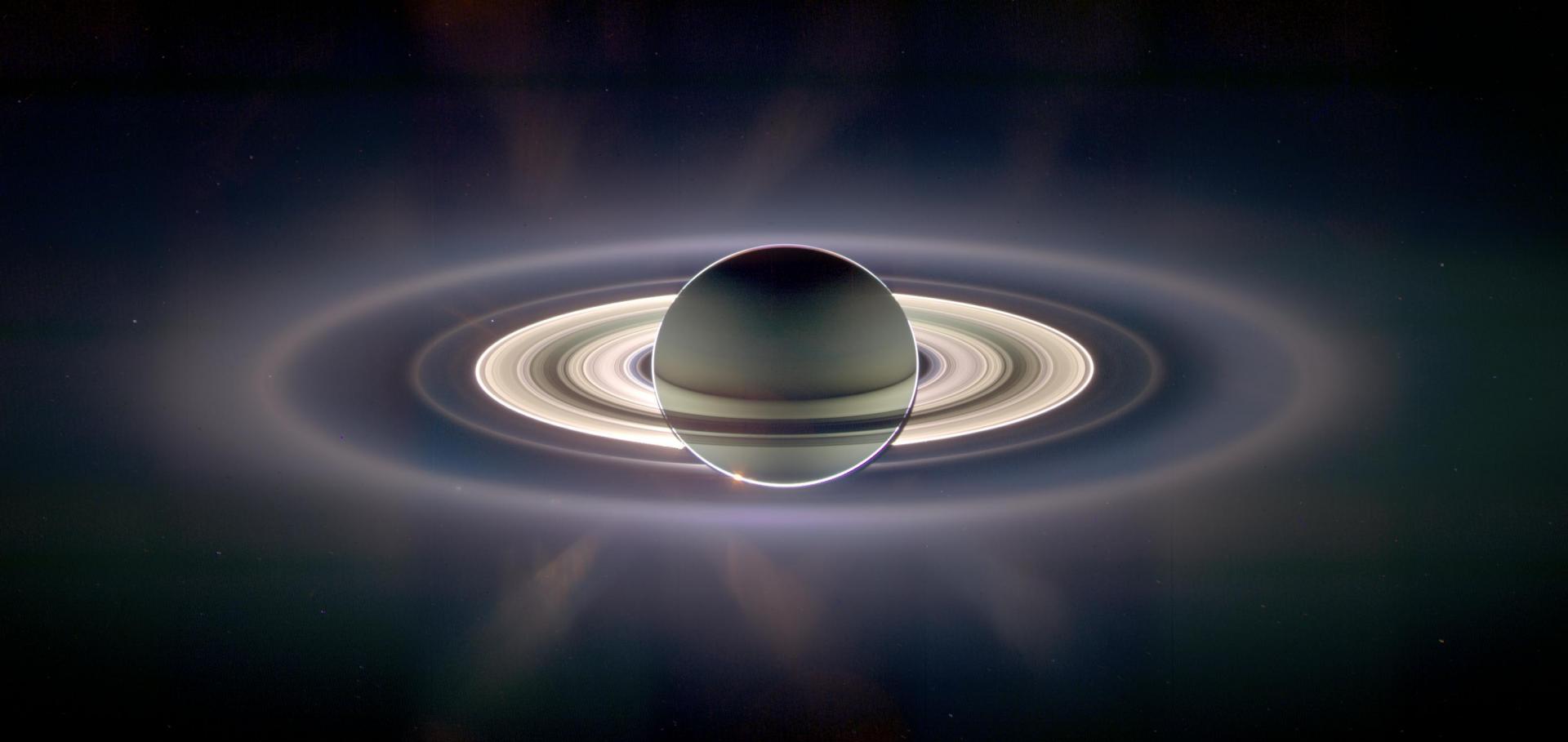
ISO LWS far-infrared observations of jupiter and saturn
European Space Agency, (Special Publication) ESA SP (1997) 325-328
Abstract:
Portions of the far-infrared spectra of Jupiter and Saturn measured in grating mode with the ISO Long Wavelength Spectrometer (LWS) are presented. The observed Jovian spectrum between 55 and 90 μm is compared to an atmospheric radiative transfer model using expected values for the constituent vertical concentration profiles. Rotational transitions of ammonia are responsible for the absorption features observed against the hydrogen continuum emission. There is good agreement between the model and data for an ammonia mole fraction of 2×10⁻⁴ constrained by saturation up to a 75 mbar cut-off, above which it is assumed all the ammonia is destroyed by ultraviolet radiation. Three sections of the saturnian spectrum are compared to synthetic spectra and absorption features due to methane are identified. The mole fraction of methane is constrained between 0.7-1.5 10-3.SU(3) monopoles and their fields
Physical Review D American Physical Society (APS) 56:8 (1997) 5200-5208