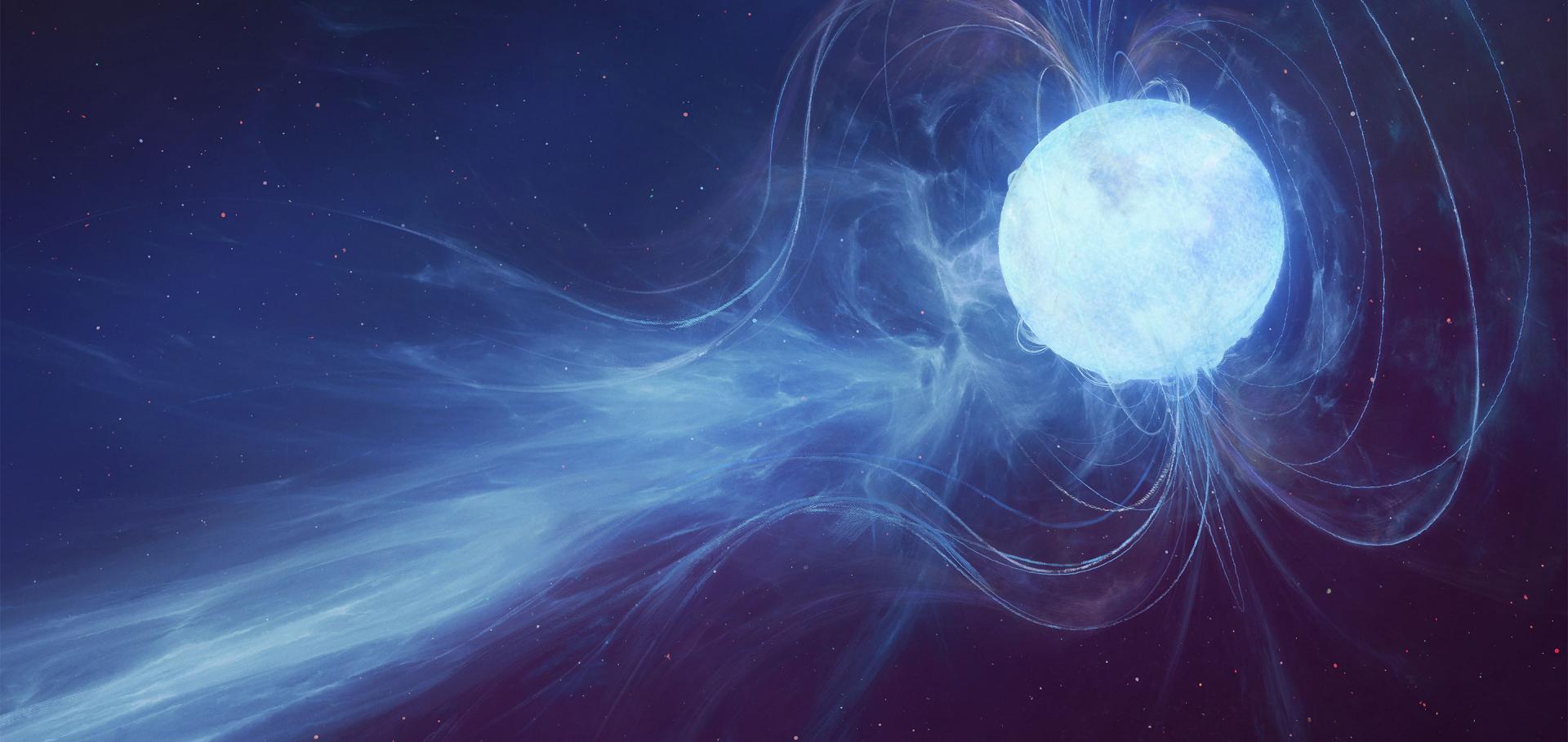
Differential Frequency-dependent Delay from the Pulsar Magnetosphere

(2013)

Authors:

TE Hassall, BW Stappers, P Weltevrede, JWT Hessels, A Alexov, T Coenen, A Karastergiou, M Kramer, EF Keane, VI Kondratiev, J van Leeuwen, A Noutsos, M Pilia, M Serylak, C Sobey, K Zagkouris, R Fender, ME Bell, J Broderick, J Eisloffel, H Falcke, J-M Griessmeier, M Kuniyoshi, JCA Miller-Jones, MW Wise, O Wucknitz, P Zarka, A Asgekar, F Batejat, MJ Bentum, G Bernardi, P Best, A Bonafede, F Breitling, M Bruggen, HR Butcher, B Ciardi, F de Gasperin, J-P de Reijer, S Duscha, RA Fallows, C Ferrari, W Frieswijk, MA Garrett, AW Gunst, G Heald, M Hoeft, E Juette, P Maat, JP McKean, MJ Norden, M Pandey-Pommier, R Pizzo, AG Polatidis, W Reich, H Rottgering, J Sluman, Y Tang, C Tasse, R Vermeulen, RJ van Weeren, SJ Wijnholds, S Yatawatta

Automated rapid follow-up of swift Gamma-ray burst alerts at 15 GHz with the AMI large array

Monthly Notices of the Royal Astronomical Society 428:4 (2013) 3114-3120

Authors:

TD Staley, DJ Titterington, RP Fender, JD Swinbank, AJ van der Horst, A Rowlinson, AMM Scaife, KJB Grainge, GG Pooley

Abstract:

We present 15-GHz follow-up radio observations of 11 Swift gamma-ray burst (GRB) sources, obtained with theArcminute Microkelvin Imager LargeArray (AMI-LA). The initial follow-up observation for each sourcewas made in a fully automated fashion; as a result four observations were initiated within 5 min of the GRB alert time stamp. These observations provide the first millijansky-level constraints on prolonged radio emission from GRBs within the first hour post-burst. While no radio emission within the first six hours after the GRB is detected in this preliminary analysis, radio afterglow is detected from one of the GRBs (GRB 120326A) on a time-scale of days. The observations were made as part of an ongoing programme to use AMI-LA as a systematic follow-up tool for transients at radio frequencies. In addition to the preliminary results, we explain how we have created an easily extensible automated follow-up system, describing new software tools developed for astronomical transient alert distribution, automatic requesting of target-of-opportunity observations and robotic control of the observatory. © 2012 The Authors Published by Oxford University Press on behalf of the Royal Astronomical Society.

HIGH-FREQUENCY GRAVITATIONAL WAVES FROM SUPERMASSIVE BLACK HOLES: PROSPECTS FOR LIGO–VIRGO DETECTIONS

The Astrophysical Journal American Astronomical Society 763:2 (2013) 122

Supernova 2012ec: Identification of the progenitor and early monitoring with PESSTO

(2013)

Authors:

JR Maund, M Fraser, SJ Smartt, MT Botticella, C Barbarino, M Childress, A Gal-Yam, C Inserra, G Pignata, D Reichart, B Schmidt, J Sollerman, F Taddia, L Tomasella, S Valenti, O Yaron

THE HOST GALAXY OF THE SUPER-LUMINOUS SN 2010gx AND LIMITS ON EXPLOSIVE 56Ni PRODUCTION

The Astrophysical Journal Letters American Astronomical Society 763:2 (2013) l28

Authors:

Ting-Wan Chen, Stephen J Smartt, Fabio Bresolin, Andrea Pastorello, Rolf-Peter Kudritzki, Rubina Kotak, Matt McCrum, Morgan Fraser, Stefano Valenti