Nonradial neutrino emission upon black hole formation in core collapse supernovae

Physical Review D American Physical Society 104:10 (2021) 104030

Authors:

Jia-Shian Wang, Jeff Tseng, Samuel Gullin, Evan P O’Connor

Abstract:

Black hole formation in a core-collapse supernova is expected to lead to a distinctive, abrupt drop in neutrino luminosity due to the engulfment of the main neutrino-producing regions as well as the strong gravitational redshift of those remaining neutrinos which do escape. Previous analyses of the shape of the cutoff have focused on specific trajectories or simplified models of bulk neutrino transport. In this article, we integrate over simple null geodesics to investigate potential effects on the cutoff profile of including all neutrino emission angles from a collapsing surface in the Schwarzschild metric, and from a contracting equatorial mass ring in the Kerr metric. We find that the nonradial geodesics contribute to a softening of the cutoff in both cases. In addition, extreme rotation introduces significant changes to the shape of the tail which may be observable in future neutrino detectors, or combinations of detectors.

CoLoRe: fast cosmological realisations over large volumes with multiple tracers

(2021)

Authors:

César Ramírez-Pérez, Javier Sanchez, David Alonso, Andreu Font-Ribera

Deep Extragalactic VIsible Legacy Survey (DEVILS): evolution of the σSFR–M⋆ relation and implications for self-regulated star formation

Monthly Notices of the Royal Astronomical Society Oxford University Press 509:3 (2021) 4392-4410

Authors:

Ljm Davies, Je Thorne, S Bellstedt, M Bravo, Asg Robotham, Sp Driver, Rhw Cook, L Cortese, J D'Silva, Mw Grootes, Bw Holwerda, Am Hopkins, Mj Jarvis, C Lidman, S Phillipps, M Siudek

Abstract:

We present the evolution of the star formation dispersion–stellar mass relation (σSFRM) in the DEVILS D10 region using new measurements derived using the PROSPECT spectral energy distribution fitting code. We find that σSFRM shows the characteristic ‘U-shape’ at intermediate stellar masses from 0.1 < z < 0.7 for a number of metrics, including using the deconvolved intrinsic dispersion. A physical interpretation of this relation is the combination of stochastic star formation and stellar feedback causing large scatter at low stellar masses and AGN feedback causing asymmetric scatter at high stellar masses. As such, the shape of this distribution and its evolution encodes detailed information about the astrophysical processes affecting star formation, feedback and the lifecycle of galaxies. We find that the stellar mass that the minimum σSFR occurs evolves linearly with redshift, moving to higher stellar masses with increasing lookback time and traces the turnover in the star-forming sequence. This minimum σSFR point is also found to occur at a fixed specific star formation rate (sSFR) at all epochs (sSFR ∼ 10−9.6 Gyr−1). The physical interpretation of this is that there exists a maximum sSFR at which galaxies can internally self-regulate on the tight sequence of star formation. At higher sSFRs, stochastic stellar processes begin to cause galaxies to be pushed both above and below the star-forming sequence leading to increased SFR dispersion. As the Universe evolves, a higher fraction of galaxies will drop below this sSFR threshold, causing the dispersion of the low stellar mass end of the star-forming sequence to decrease with time.

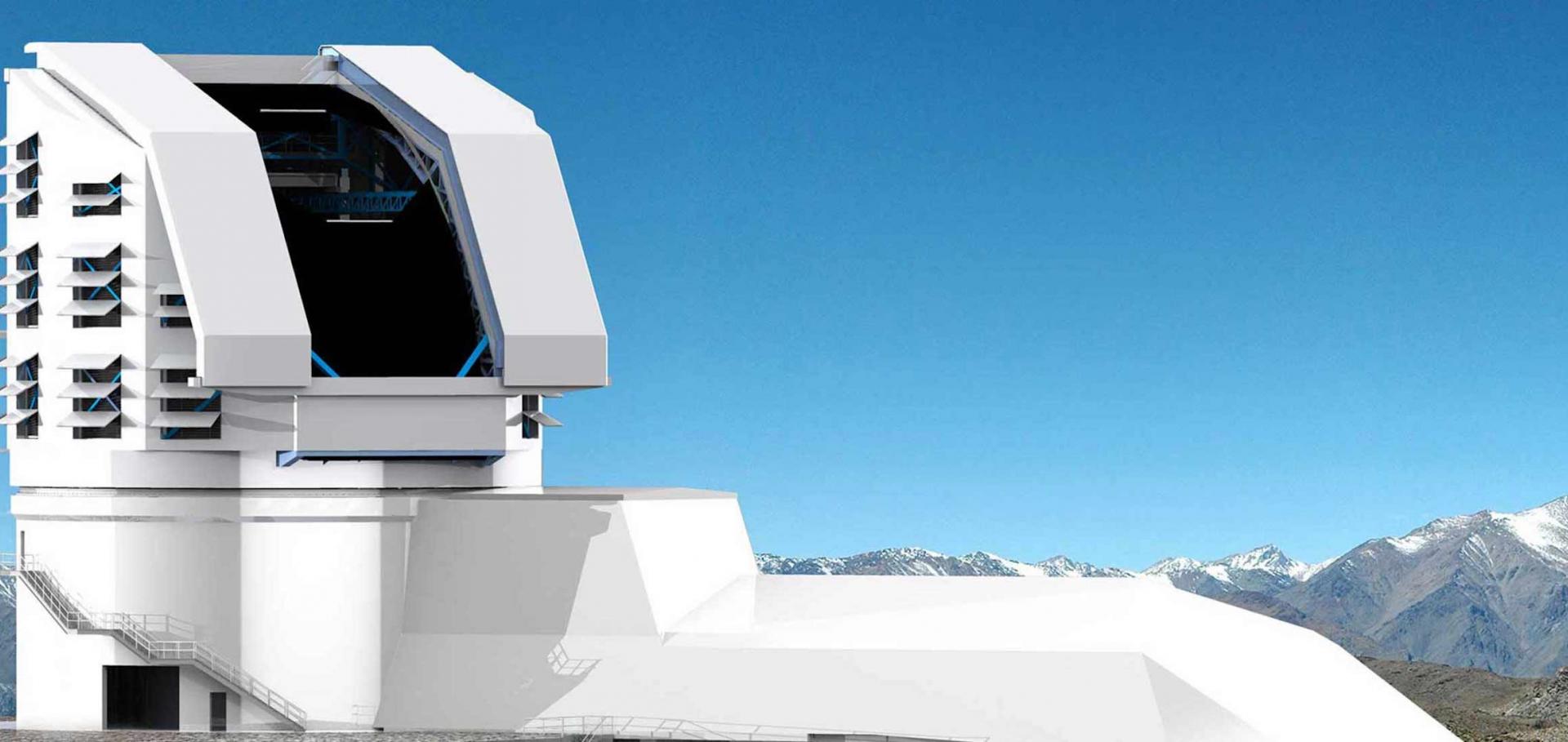
Target of Opportunity Observations of Gravitational Wave Events with Vera C. Rubin Observatory

(2021)

Authors:

Igor Andreoni, Raffaella Margutti, Om Sharan Salafia, B Parazin, V Ashley Villar, Michael W Coughlin, Peter Yoachim, Kris Mortensen, Daniel Brethauer, SJ Smartt, Mansi M Kasliwal, Kate D Alexander, Shreya Anand, E Berger, Maria Grazia Bernardini, Federica B Bianco, Peter K Blanchard, Joshua S Bloom, Enzo Brocato, Mattia Bulla, Regis Cartier, S Bradley Cenko, Ryan Chornock, Christopher M Copperwheat, Alessandra Corsi, Filippo D'Ammando, Paolo D'Avanzo, Laurence Elise Helene Datrier, Ryan J Foley, Giancarlo Ghirlanda, Ariel Goobar, Jonathan Grindlay, Aprajita Hajela, Daniel E Holz, Viraj Karambelkar, EC Kool, Gavin P Lamb, Tanmoy Laskar, Andrew Levan, Kate Maguire, Morgan May, Andrea Melandri, Dan Milisavljevic, AA Miller, Matt Nicholl, Samaya M Nissanke, Antonella Palmese, Silvia Piranomonte, Armin Rest, Ana Sagues-Carracedo, Karelle Siellez, Leo P Singer, Mathew Smith, D Steeghs, Nial Tanvir

A deep radio view of the evolution of the cosmic star formation rate density from a stellar-mass-selected sample in VLA-COSMOS

Monthly Notices of the Royal Astronomical Society Oxford University Press 509:3 (2021) 4291-4307

Authors:

Eliab D Malefahlo, Matt J Jarvis, Mario G Santos, Sarah V White, Nathan J Adams, Rebecca AA Bowler

Abstract:

We present the 1.4 GHz radio luminosity functions (RLFs) of galaxies in the Cosmic Evolution Survey (COSMOS) field, measured above and below the 5σ detection threshold, using a Bayesian model-fitting technique. The radio flux densities from Very Large Array (VLA)-COSMOS 3-GHz data are extracted at the position of stellar-mass-selected galaxies. We fit a local RLF model, which is a combination of active galactic nuclei and star-forming galaxies (SFGs), in 10 redshift bins with a pure luminosity evolution model. Our RLF exceeds previous determinations at low radio luminosities at z < 1.6 with the same radio data, due to our ability to directly constrain the knee and faint-end slope of the RLF. Beyond z ∼2, we find that the SFG part of the RLF exhibits a negative evolution (L∗ moves to lower luminosities) due to the decrease in low stellar-mass galaxies in our sample at high redshifts. From the RLF for SFGs, we determine the evolution in the cosmic star formation rate density (SFRD), which we find to be consistent with the established behaviour up to z ∼1 using far-infrared data, but exceeds that from the previous radio-based work for the reasons highlighted above. Beyond z ∼1.5 the cosmic SFRD declines. We note that the relation between radio luminosity and star formation rate is crucial in measuring the cosmic SFRD from radio data at z > 1.5. We investigate the effects of stellar mass on the total RLF by splitting our sample into low (108.5 ≤ M/M ≤ 1010) and high ($Mgt 10^{10}, mathrm{M}_{odot }$) stellar-mass subsets. We find that the SFRD is dominated by sources in the high stellar masses bin, at all redshifts.