

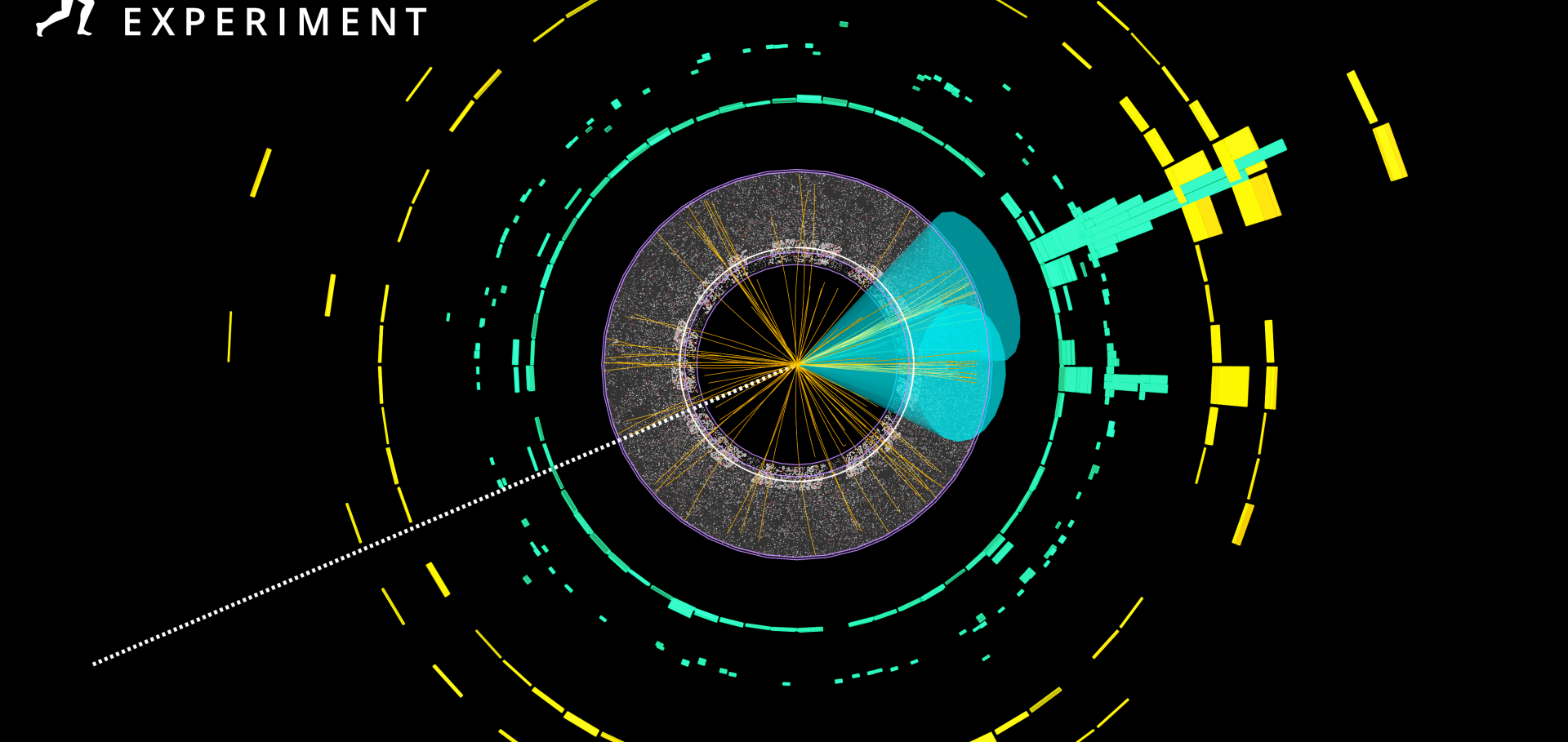
Search for decays of the Higgs boson into pair-produced pseudoscalar particles decaying into $τ^+τ^-τ^+τ^-$ using $pp$ collisions at $\sqrt{s}=13$ TeV with the ATLAS detector
ArXiv 2603.08323 (2026)
Search for long-lived charginos and $τ$-sleptons using final states with a disappearing track in $pp$ collisions at $\sqrt{s} = 13$ TeV with the ATLAS detector
ArXiv 2603.08315 (2026)
A novel approach for fault detection and failure analysis of CMOS copper metal stacks
IEEE Transactions on Nuclear Science IEEE 73:4 (2026) 1501-1506
Abstract:
For the Inner Tracking System 3 (ITS3) upgrade, the ALICE experiment at CERN requires monolithic active pixel sensors of dimensions up to 97 mm×266 mm, occupying a large fraction of a 300 mm wafer. To manufacture such a wafer-scale device, larger than the single design reticle size, stitching is employed. The MOnolithic Stitched Sensor (MOSS) is a prototype silicon pixel sensor of 14 mm×259 mm size with the primary goal of understanding the stitching technique and yield. Given the large size, high yield is paramount for the ITS3 sensors, and an in-depth yield characterization was performed on these MOSS sensors. In a collaborative effort, the foundry adapted the metal stack to the requirements of the project, but recurrent fault signatures were discovered with various frequencies across all 20 wafers tested, and correlated through dedicated measurements and analyses. Following these findings, the foundry implemented a mitigation strategy to avoid the issue in the future. This article does not describe process details but concentrates on the measurements and analysis method.Detective Quantum Efficiency of the Timepix4 Hybrid Pixel Detector and its Application to Parallel-Beam Diffraction
ArXiv 2603.06857 (2026)
A linear collider vision for the future of particle physics
The European Physical Journal Special Topics (2026) 1-156