

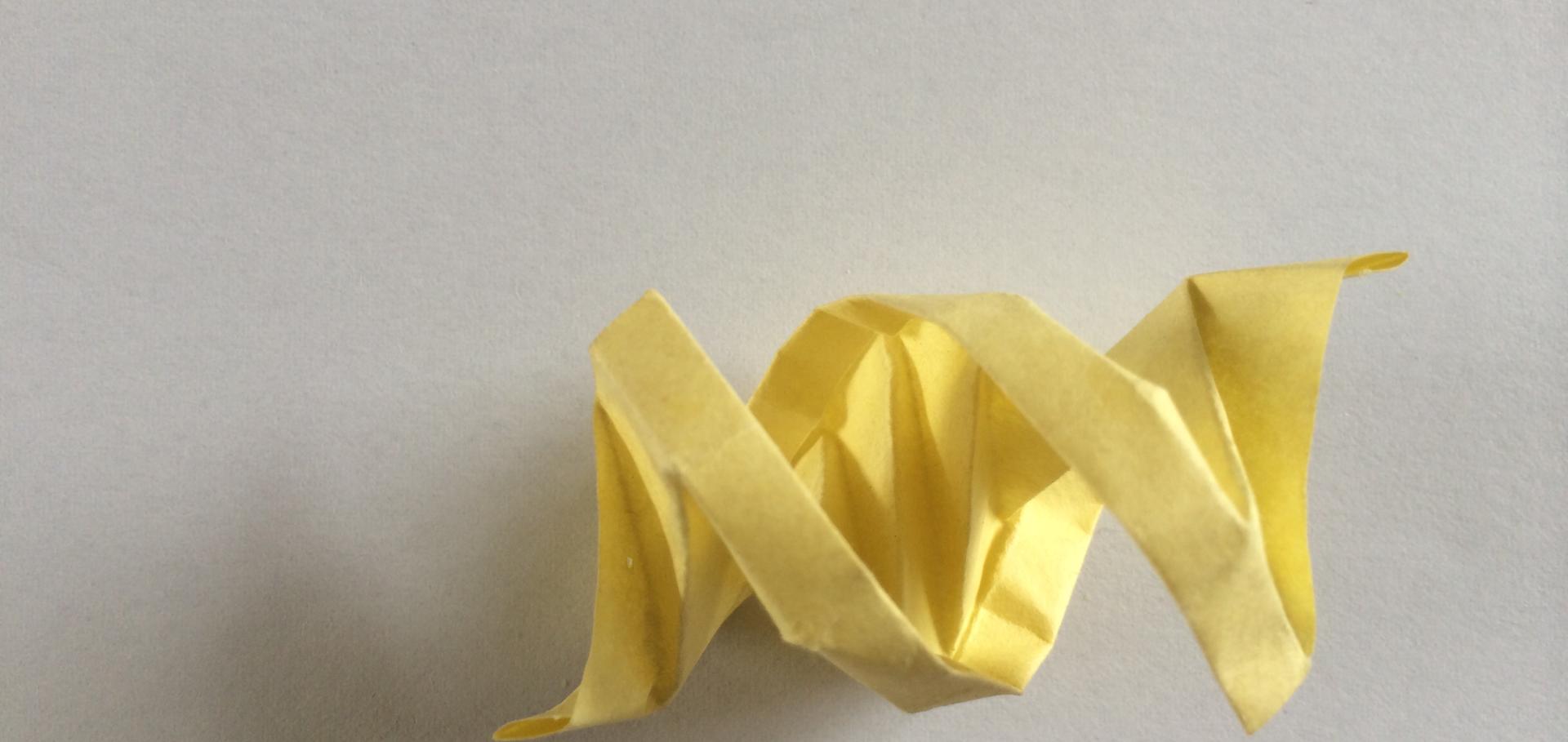

Self-assembly of chiral DNA nanotubes.
J Am Chem Soc 126:50 (2004) 16342-16343
Abstract:
A system of DNA "tiles" that is designed to assemble to form two-dimensional arrays is observed to form narrow ribbons several micrometers in length. The uniform width of the ribbons and lack of frayed edges lead us to propose that they are arrays that have curled and closed on themselves to form tubes. This proposal is confirmed by the observation of tubes with helical order.DNA transport in bacteria.
Nat Rev Mol Cell Biol 2:7 (2001) 538-545
Abstract:
DNA transport is important in various biological contexts--particularly chromosome segregation and intercellular gene transfer. Recently, progress has been made in understanding the function of a family of bacterial proteins involved in DNA transfer, and we focus here on one of the best-understood members, SpoIIIE. Studies of SpoIIIE-like proteins show that they might couple DNA transport to processes such as cell division, conjugation (mating) and the resolution of chromosome dimers.Role of Bacillus subtilis SpoIIIE in DNA transport across the mother cell-prespore division septum.
Science 290:5493 (2000) 995-997
Abstract:
The SpoIIIE protein of Bacillus subtilis is required for chromosome segregation during spore formation. The COOH-terminal cytoplasmic part of SpoIIIE was shown to be a DNA-dependent adenosine triphosphatase (ATPase) capable of tracking along DNA in the presence of ATP, and the NH(2)-terminal part of the protein was found to mediate its localization to the division septum. Thus, during sporulation, SpoIIIE appears to act as a DNA pump that actively moves one of the replicated pair of chromosomes into the prespore. The presence of SpoIIIE homologs in a broad range of bacteria suggests that this mechanism for active transport of DNA may be widespread.Topology of Xer recombination on catenanes produced by lambda integrase.
J Mol Biol 289:4 (1999) 873-883
Abstract:
Xer site-specific recombination at the psi site from plasmid pSC101 displays topological selectivity, such that recombination normally occurs only between directly repeated sites on the same circular DNA molecule. This intramolecular selectivity is important for the biological role of psi, and is imposed by accessory proteins PepA and ArcA acting at accessory DNA sequences adjacent to the core recombination site. Here we show that the selectivity for intramolecular recombination at psi can be bypassed in multiply interlinked catenanes. Xer site-specific recombination occurred relatively efficiently between antiparallel psi sites located on separate rings of right-handed torus catenanes containing six or more nodes. This recombination introduced one additional node into the catenanes. Antiparallel sites on four-noded right-handed catenanes, the normal product of Xer recombination at psi, were not recombined efficiently. Furthermore, parallel psi sites on right-handed torus catenanes were not substrates for Xer recombination. These findings support a model in which psi sites are plectonemically interwrapped, trapping a precise number of supercoils that are converted to four catenation nodes by Xer strand exchange.Topological selectivity in Xer site-specific recombination.
Cell 88:6 (1997) 855-864