Home
Department Of Physics text logo
  • Research
    • Our research
    • Our research groups
    • Our research in action
    • Research funding support
    • Summer internships for undergraduates
  • Study
    • Undergraduates
    • Postgraduates
  • Engage
    • For alumni
    • For business
    • For schools
    • For the public
  • Support
Menu
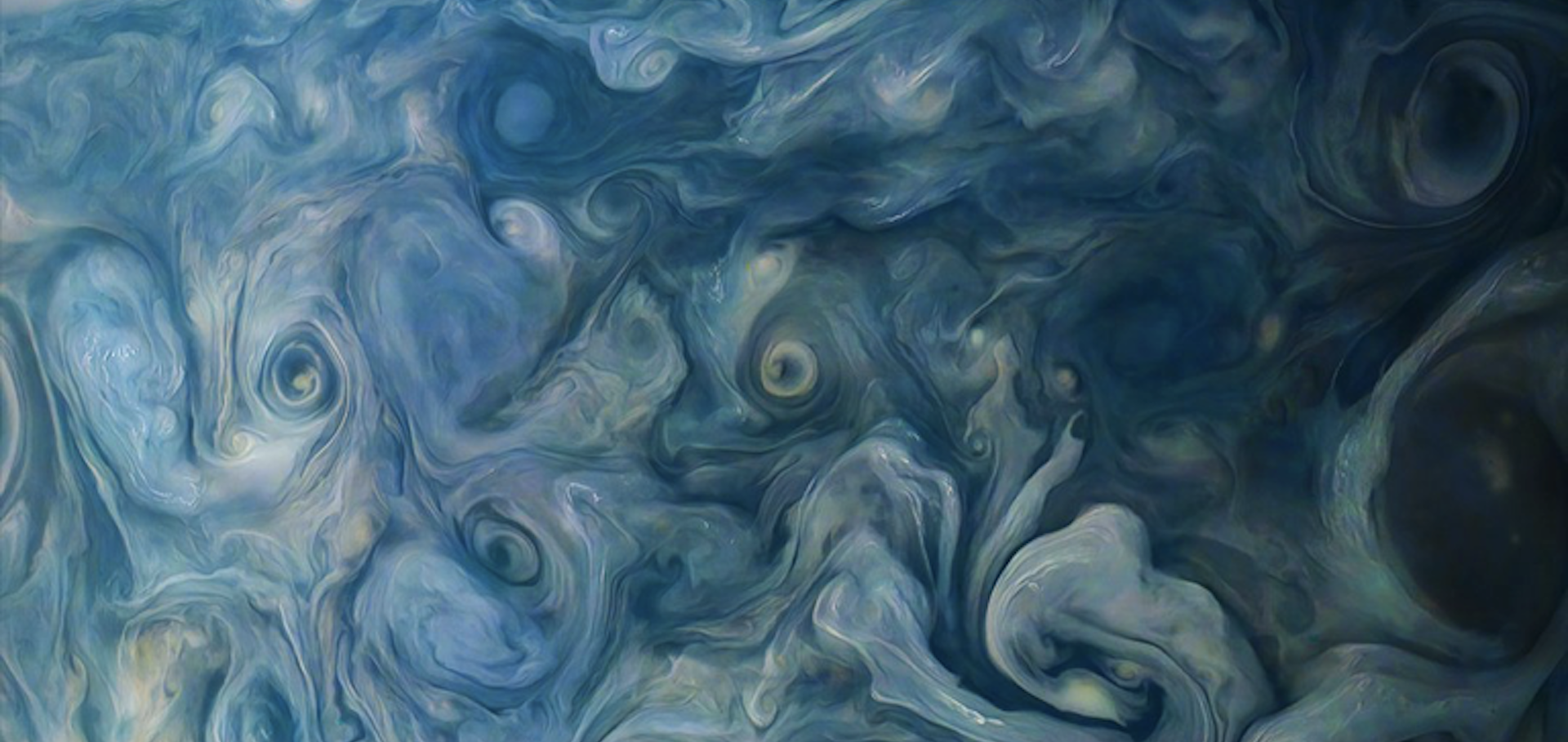
Jupiter's atmosphere

The incredible and intricate details of Jupiter's atmosphere, showing storms and clouds, that we one day hope to image on other worlds beyond our Solar System. Image: Seán Doran Flickr https://www.flickr.com/photos/seandoran

Credit: NASA / SwRI / MSSS / Gerald Eichstädt / Seán Doran

Prof Jayne Birkby

Professor of Astrophysics

Research theme

  • Astronomy and astrophysics
  • Instrumentation
  • Exoplanets and planetary physics

Sub department

  • Astrophysics

Research groups

  • Astronomical instrumentation
  • Exoplanet atmospheres
  • Exoplanets and Stellar Physics
  • Planet formation and dynamics
  • Planetary surfaces
  • Extremely Large Telescope
jayne.birkby@physics.ox.ac.uk
Denys Wilkinson Building, room 761
Personal research page
  • About
  • Books
  • Publications

Identifying new opportunities for exoplanet characterisation at high spectral resolution

(2013)

Authors:

Remco J de Kok, Jayne Birkby, Matteo Brogi, Henriette Schwarz, Simon Albrecht, Ernst JW de Mooij, Ignas AG Snellen
More details from the publisher

Characterising Exoplanet Atmospheres with High-resolution Spectroscopy

The Messenger 154 (2013) 57-61

Authors:

J Birkby, R de Kok, M Brogi, H Schwarz, S Albrecht, E de Mooij, I Snellen

Searching for transits in the Wide Field Camera Transit Survey with difference-imaging light curves

Astronomy & Astrophysics EDP Sciences 560 (2013) a92

Authors:

J Zendejas Dominguez, J Koppenhoefer, RP Saglia, JL Birkby, ST Hodgkin, G Kovács, DJ Pinfield, B Sipőcz, D Barrado, R Bender, C del Burgo, M Cappetta, EL Martín, SV Nefs, A Riffeser, P Steele
More details from the publisher

Searching for transits in the WTS with difference imaging light curves

(2013)

Authors:

Jesus Zendejas, Johannes Koppenhoefer, Roberto P Saglia, Jayne L Birkby, Simon T Hodgkin, Gabor Kovacs, David J Pinfield, Brigitta Sipocz, David Barrado, Ralf Bender, Carlos del Burgo, Michele Cappetta, Eduardo L Martin, Sebastiaan V Nefs, Arno Riffeser, Paul Steele
More details from the publisher

Detection of water absorption in the day side atmosphere of HD 189733 b using ground-based high-resolution spectroscopy at 3.2 μm★

Monthly Notices of the Royal Astronomical Society: Letters Oxford University Press (OUP) 436:1 (2013) L35-L39

Authors:

Jayne Birkby, Rj de Kok, M Brogi, Ejw de Mooij, H Schwarz, S Albrecht, Iag Snellen

Abstract:

We report a 4.8σ detection of water absorption features in the day side spectrum of the hot Jupiter HD 189733 b. We used high-resolution (R ∼ 100 000) spectra taken at 3.2 μm with CRIRES on the VLT to trace the radial-velocity shift of the water features in the planet's day side atmosphere during 5 h of its 2.2 d orbit as it approached secondary eclipse. Despite considerable telluric contamination in this wavelength regime, we detect the signal within our uncertainties at the expected combination of systemic velocity (⁠Vsys=−3+5−6 km s−1) and planet orbital velocity (⁠Kp=154+14−10 km s−1), and determine a H2O line contrast ratio of (1.3 ± 0.2) × 10−3 with respect to the stellar continuum. We find no evidence of significant absorption or emission from other carbon-bearing molecules, such as methane, although we do note a marginal increase in the significance of our detection to 5.1σ with the inclusion of carbon dioxide in our template spectrum. This result demonstrates that ground-based, high-resolution spectroscopy is suited to finding not just simple molecules like CO, but also to more complex molecules like H2O even in highly telluric contaminated regions of the Earth's transmission spectrum. It is a powerful tool that can be used for conducting an immediate census of the carbon- and oxygen-bearing molecules in the atmospheres of giant planets, and will potentially allow the formation and migration history of these planets to be constrained by the measurement of their atmospheric C/O ratios.
More details from the publisher
Details from ORA
Details from ArXiV

Pagination

  • First page First
  • Previous page Prev
  • …
  • Page 19
  • Page 20
  • Page 21
  • Page 22
  • Current page 23
  • Page 24
  • Page 25
  • Page 26
  • Page 27
  • …
  • Next page Next
  • Last page Last

Footer Menu

  • Contact us
  • Giving to the Dept of Physics
  • Work with us
  • Media

User account menu

  • Log in

Follow us

FIND US

Clarendon Laboratory,

Parks Road,

Oxford,

OX1 3PU

CONTACT US

Tel: +44(0)1865272200

University of Oxfrod logo Department Of Physics text logo
IOP Juno Champion logo Athena Swan Silver Award logo

© University of Oxford - Department of Physics

Cookies | Privacy policy | Accessibility statement

Built by: Versantus

  • Home
  • Research
  • Study
  • Engage
  • Our people
  • News & Comment
  • Events
  • Our facilities & services
  • About us
  • Giving to Physics
  • Current students
  • Staff intranet