Home
Department Of Physics text logo
  • Research
    • Our research
    • Our research groups
    • Our research in action
    • Research funding support
    • Summer internships for undergraduates
  • Study
    • Undergraduates
    • Postgraduates
  • Engage
    • For alumni
    • For business
    • For schools
    • For the public
Menu
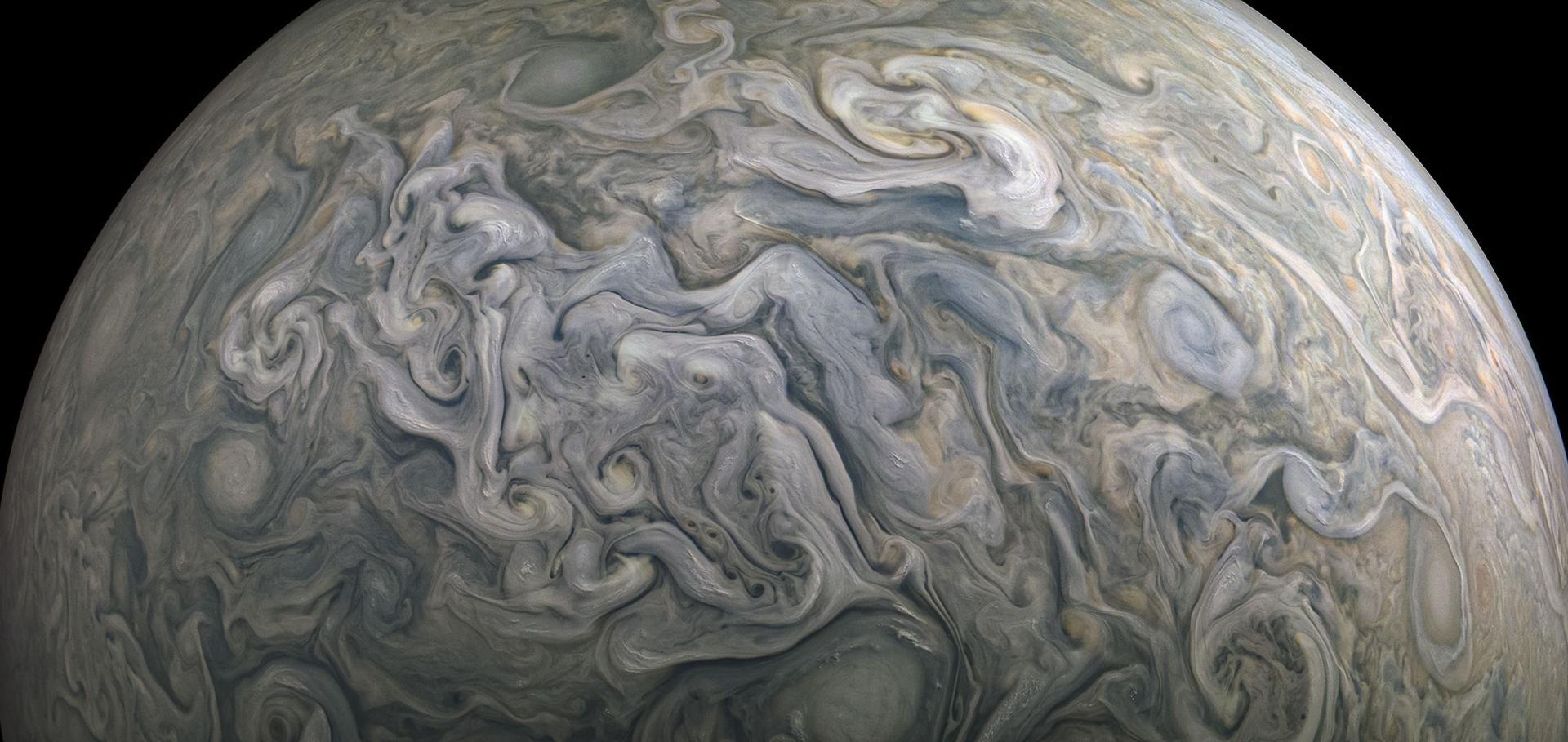
Juno Jupiter image

Neil Bowles

Professor of Planetary Science

Sub department

  • Atmospheric, Oceanic and Planetary Physics

Research groups

  • Planetary atmosphere observation analysis
  • Planetary surfaces
  • Solar system
  • Space instrumentation
Neil.Bowles@physics.ox.ac.uk
Telephone: 01865 (2)72097
Atmospheric Physics Clarendon Laboratory, room 307
  • About
  • Publications

The ARIEL space mission

Proceedings of SPIE Society of Photo-optical Instrumentation Engineers 10698 (2018)

Authors:

E Pascale, N Bezawada, J Barstow, J-P Beaulieu, Neil Bowles, V Coudé Du Foresto, A Coustenis, L Decin, P Drossart, P Eccleston, T Encrenaz, F Forget, M Griffin, M Güdel, P Hartogh, A Heske, P-O Lagage, J Leconte, P Malaguti, G Micela, K Middleton, M Min, A Moneti, JC Morales, M Ollivier, E Pace, G Pilbratt, L Puig, M Rataj, T Ray, I Ribas, M Rocchetto, S Sarkar, F Selsis, W Taylor, J Tennyson, G Tinetti, D Turrini, B Vandenbussche, O Venot, IP Waldmann, P Wolkenberg, GS Wright, M-R Zapatero Osorio, T Zingales, A Papageorgiou, L Mugnai

Abstract:

The Atmospheric Remote-Sensing Infrared Exoplanet Large-survey, ARIEL, has been selected to be the next M4 space mission in the ESA Cosmic Vision programme. From launch in 2028, and during the following 4 years of operation, ARIEL will perform precise spectroscopy of the atmospheres of about 1000 known transiting exoplanets using its metre-class telescope, a three-band photometer and three spectrometers that will cover the 0.5 μm to 7.8 μm region of the electromagnetic spectrum. The payload is designed to perform primary and secondary transit spectroscopy, and to measure spectrally resolved phase curves with a stability of < 100 ppm (goal 10 ppm). Observing from an L2 orbit, ARIEL will provide the first statistically significant spectroscopic survey of hot and warm planets. These are an ideal laboratory in which to study the chemistry, the formation and the evolution processes of exoplanets, to constrain the thermodynamics, composition and structure of their atmospheres, and to investigate the properties of the clouds.
More details from the publisher
Details from ORA
More details

The proposed Caroline ESA M3 mission to a Main Belt Comet

Advances in Space Research Elsevier 62:8 (2018) 1921-1946

Authors:

GH Jones, J Agarwal, Neil Bowles, M Burchell, AJ Coates, A Fitzsimmons, A Graps, HH Hsieh, CM Lisse, SC Lowry, A Masters, C Snodgrass, C Tubiana

Abstract:

We describe Caroline, a mission proposal submitted to the European Space Agency in 2010 in response to the Cosmic Visions M3 call for medium-sized missions. Caroline would have travelled to a Main Belt Comet (MBC), characterizing the object during a flyby, and capturing dust from its tenuous coma for return to Earth. MBCs are suspected to be transition objects straddling the traditional boundary between volatile–poor rocky asteroids and volatile–rich comets. The weak cometary activity exhibited by these objects indicates the presence of water ice, and may represent the primary type of object that delivered water to the early Earth. The Caroline mission would have employed aerogel as a medium for the capture of dust grains, as successfully used by the NASA Stardust mission to Comet 81P/Wild 2. We describe the proposed mission design, primary elements of the spacecraft, and provide an overview of the science instruments and their measurement goals. Caroline was ultimately not selected by the European Space Agency during the M3 call; we briefly reflect on the pros and cons of the mission as proposed, and how current and future mission MBC mission proposals such as Castalia could best be approached.
More details from the publisher
Details from ORA
More details

The Oxford space environment goniometer: A new experimental setup for making directional emissivity measurements under a simulated space environment

Review of Scientific Instruments American Institute of Physics 88:12 (2017) 124502

Authors:

Tristram J Warren, Neil E Bowles, Kerri Donaldson Hanna, IR Thomas

Abstract:

Measurements of the light scattering behaviour of the regoliths of airless bodies via remote sensing techniques in the Solar System, across wavelengths from the visible to the far infrared, are essential in understanding their surface properties. A key parameter is knowledge of the angular behaviour of scattered light, usually represented mathematically by a phase function. The phase function is believed to be dependent on many factors including the following: surface composition, surface roughness across all length scales, and the wavelength of radiation. Although there have been many phase function measurements of regolith analog materials across visible wavelengths, there have been no equivalent measurements made in the thermal infrared (TIR). This may have been due to a lack of TIR instruments as part of planetary remote sensing payloads. However, since the launch of Diviner to the Moon in 2009, OSIRIS-Rex to the asteroid Bennu in 2016, and the planned launch of BepiColombo to Mercury in 2018, there is now a large quantity of TIR remote sensing data that need to be interpreted. It is therefore important to extend laboratory phase function measurements to the TIR. This paper describes the design, build, calibration, and initial measurements from a new laboratory instrument that is able to make phase function measurements of analog planetary regoliths across wavelengths from the visible to the TIR.
More details from the publisher
Details from ORA
More details
More details

Analysis of gaseous ammonia (NH3) absorption in the visible spectrum of Jupiter

Icarus Elsevier 302 (2017) 426-436

Authors:

Patrick Irwin, Neil Bowles, Ashwin S Braude, Ryan Garland, Simon Calcutt

Abstract:

Observations of the visible/near-infrared reflectance spectrum of Jupiter have been made with the Very Large Telescope (VLT) Multi Unit Spectroscopic Explorer (MUSE) instrument in the spectral range 0.48 – 0.93 μm in support of the NASA/Juno mission. These spectra contain spectral signatures of gaseous ammonia (NH3), whose abundance above the cloud tops can be determined if we have reliable information on its absorption spectrum. While there are a number of sources of NH3 absorption data in this spectral range, they cover small sub-ranges, which do not necessarily overlap and have been determined from a variety of sources. There is thus considerable uncertainty regarding the consistency of these different sources when modelling the reflectance of the entire visible/near-IR range. In this paper we analyse the VLT/MUSE observations of Jupiter to determine which sources of ammonia absorption data are most reliable. We find that the band model coefficients of Bowles et al. (2008) provide, in general, the best combination of reliability and wavelength coverage over the MUSE range. These band data appear consistent with ExoMOL ammonia line data of Yurchenko et al. (2011), at wavelengths where they overlap, but these latter data do not cover the ammonia absorption bands at 0.79 and 0.765 μm, which are prominent in our MUSE observations. However, we find the band data of Bowles et al. (2008) are not reliable at wavelengths less than 0.758 μm. At shorter wavelengths we find the laboratory observations of Lutz and Owen (1980) provide a good indication of the position and shape of the ammonia absorptions near 0.552 μm and 0.648 μm, but their absorption strengths appear inconsistent with the band data of Bowles et al. (2008) at longer wavelengths. Finally, we find that the line data of the 0.648 μm absorption band of Giver et al. (1975) are not suitable for modelling these data as they account for only 17% of the band absorption and cannot be extended reliably to the cold temperatures and H2/He-broadening conditions found in Jupiter’s atmosphere. This work is of significance not only for solar system planetary physics, but also for future proposed observations of Jupiter-like planets orbiting other stars, such as with NASA’s planned Wide-Field Infrared Survey Telescope (WFIRST).
More details from the publisher
Details from ORA
More details
Details from ArXiV

CASTAway: An asteroid main belt tour and survey.

Advances in Space Research Elsevier 62:8 (2017) 1998-2025

Authors:

Neil E Bowles, C Snodgrass, JP Sanchez, Jessica A Arnold, P Eccleston, T Andert, A Probst, G Naletto, AC Vandaele, de de Leon, A Nathues, IR Thomas, N Thomas, L Jorda, V da Deppo, H Haack, SF Green, B Carry, Kerri L Donaldson Hanna, J Leif Jorgensen, A Kereszturi, FE DeMeo, JK Davies, Fraser Clarke, K Kinch, A Guilbert-Lepoutre, J Agarwal, AS Rivkin, P Pravec, S Fornasier, M Gravnik, RH Jones, N Murdoch, KH Joy, Matthias Tecza, Jennifer M Barnes, J Licandro, BT Greenhagen, Simon B Calcutt, Charlotte M Marriner, Tristram J Warren, I Tosh

Abstract:

CASTAway is a mission concept to explore our Solar System’s main asteroid belt. Asteroids and comets provide a window into the formation and evolution of our Solar System and the composition of these objects can be inferred from space-based remote sensing using spectroscopic techniques. Variations in composition across the asteroid populations provide a tracer for the dynamical evolution of the Solar System. The mission combines a long-range (point source) telescopic survey of over 10,000 objects, targeted close encounters with 10 – 20 asteroids and serendipitous searches to constrain the distribution of smaller (e.g. 10 m) size objects into a single concept. With a carefully targeted trajectory that loops through the asteroid belt, CASTAway would provide a comprehensive survey of the main belt at multiple scales. The scientific payload comprises a 50 cm diameter telescope that includes an integrated low-resolution (R = 30 – 100) spectrometer and visible context imager, a thermal (e.g. 6 – 16 μm) imager for use during the flybys, and modified star tracker cameras to detect small (~10 m) asteroids. The CASTAway spacecraft and payload have high levels of technology readiness and are designed to fit within the programmatic and cost caps for a European Space Agency medium class mission, whilst delivering a significant increase in knowledge of our Solar System.
More details from the publisher
Details from ORA
More details

Pagination

  • First page First
  • Previous page Prev
  • …
  • Page 8
  • Page 9
  • Page 10
  • Page 11
  • Current page 12
  • Page 13
  • Page 14
  • Page 15
  • Page 16
  • …
  • Next page Next
  • Last page Last

Footer Menu

  • Contact us
  • Giving to the Dept of Physics
  • Work with us
  • Media

User account menu

  • Log in

Follow us

FIND US

Clarendon Laboratory,

Parks Road,

Oxford,

OX1 3PU

CONTACT US

Tel: +44(0)1865272200

University of Oxfrod logo Department Of Physics text logo
IOP Juno Champion logo Athena Swan Silver Award logo

© University of Oxford - Department of Physics

Cookies | Privacy policy | Accessibility statement

Built by: Versantus

  • Home
  • Research
  • Study
  • Engage
  • Our people
  • News & Comment
  • Events
  • Our facilities & services
  • About us
  • Giving to Physics
  • Current students
  • Staff intranet