Home
Department Of Physics text logo
  • Research
    • Our research
    • Our research groups
    • Our research in action
    • Research funding support
    • Summer internships for undergraduates
  • Study
    • Undergraduates
    • Postgraduates
  • Engage
    • For alumni
    • For business
    • For schools
    • For the public
  • Support
Menu
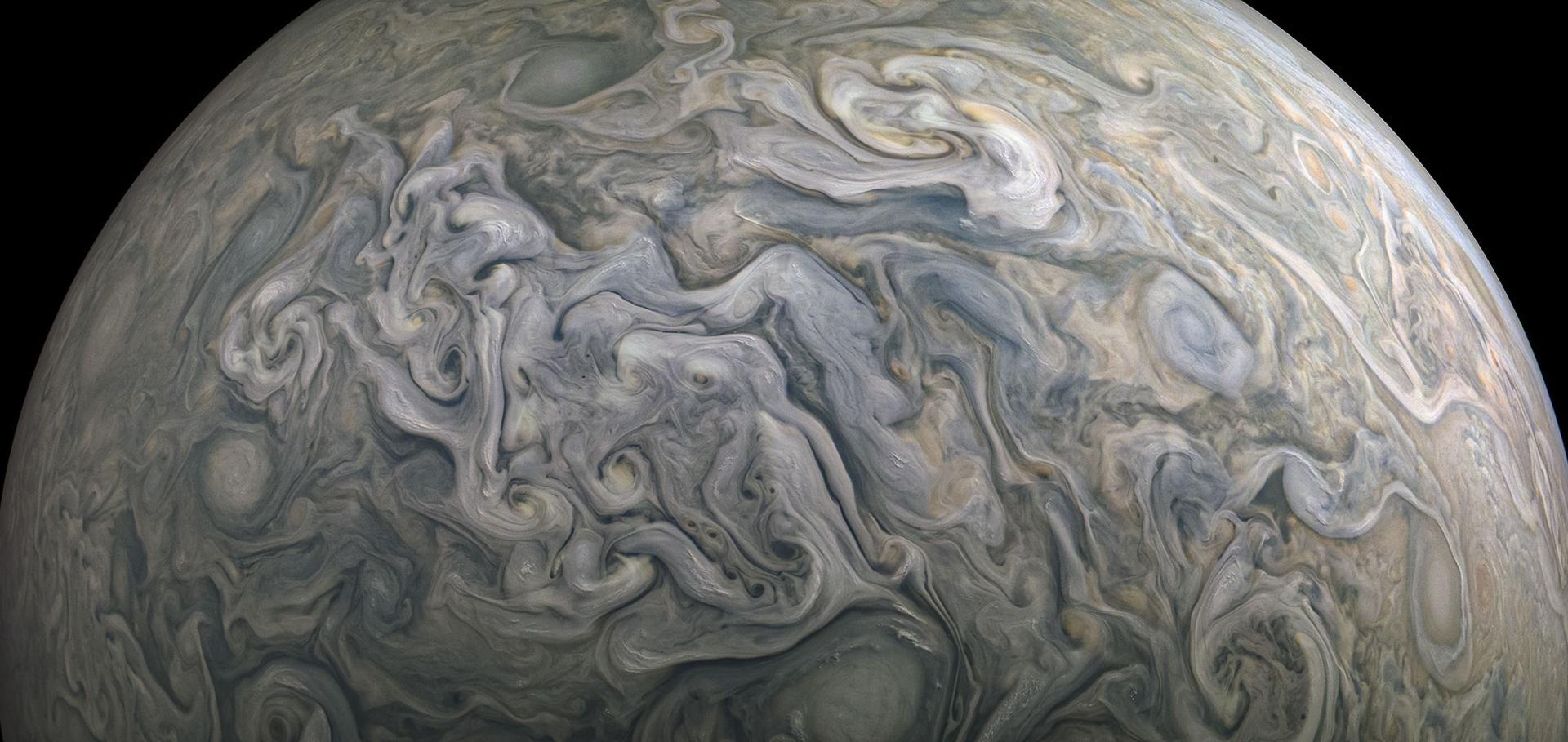
Juno Jupiter image

Neil Bowles

Professor of Planetary Science

Sub department

  • Atmospheric, Oceanic and Planetary Physics

Research groups

  • Planetary atmosphere observation analysis
  • Planetary surfaces
  • Solar system
  • Space instrumentation
Neil.Bowles@physics.ox.ac.uk
Telephone: 01865 (2)72097
Atmospheric Physics Clarendon Laboratory, room 307
  • About
  • Publications

Comparing thermal infrared spectral unmixing algorithms: applications to Bennu and other airless bodies

Meteoritics and Planetary Science Wiley 54:S2 (2019)

Authors:

EC Brown, Kerri Donaldson Hanna, Neil E Bowles, VE Hamilton, BE Clark, AD Rogers, DS Lauretta, OSIRIS-REx Team
More details from the publisher
Details from ORA
More details

Evidence for ultra-cold traps and surface water ice in the lunar south polar crater Amundsen

Icarus Elsevier 332 (2019) 1-13

Authors:

E Sefton-Nash, J-P Williams, BT Greenhagen, TJ Warren, JL Bandfield, K-M Aye, F Leader, MA Siegler, PO Hayne, Neil Bowles, DA Paige

Abstract:

The northern floor and wall of Amundsen crater, near the lunar south pole, is a permanently shaded region (PSR). Previous study of this area using data from the Lunar Orbiter Laser Altimeter (LOLA), Diviner and LAMP instruments aboard Lunar Reconnaissance Orbiter (LRO) shows a spatial correlation between brighter 1064 nm albedo, annual maximum surface temperatures low enough to enable persistence of surface water ice (<110 K), and anomalous ultraviolet radiation. We present results using data from Diviner that quantify the differential emissivities observed in the far-IR (near the Planck peak for PSR-relevant temperatures) between the PSR and a nearby non-PSR target in Amundsen Crater.

We find features in far-IR emissivity (50–400 μm) could be attributed to either, or a combination, of two effects (i) differential regolith emissive behavior between permanently-shadowed temperature regimes and those of normally illuminated polar terrain, perhaps related to presence of water frost (as indicated in other studies), or (ii) high degrees of anisothermality within observation fields of view caused by doubly-shaded areas within the PSR target that are colder than observed brightness temperatures.

The implications in both cases are compelling: The far-IR emissivity curve of lunar cold traps may provide a metric for the abundance of “micro” cold traps that are ultra-cool, i.e. shadowed also from secondary and higher order radiation (absorption and re-radiation or scattering by surrounding terrain), or for emissive properties consistent with the presence of surface water ice.
More details from the publisher
Details from ORA
More details

Publisher Correction: Craters, boulders and regolith of (101955) Bennu indicative of an old and dynamic surface

Nature Geoscience Springer Nature 12:5 (2019) 399-399

Authors:

KJ Walsh, ER Jawin, R-L Ballouz, OS Barnouin, EB Bierhaus, HC Connolly, JL Molaro, TJ McCoy, M Delbo’, CM Hartzell, M Pajola, SR Schwartz, D Trang, E Asphaug, KJ Becker, CB Beddingfield, CA Bennett, WF Bottke, KN Burke, BC Clark, MG Daly, DN DellaGiustina, JP Dworkin, CM Elder, DR Golish, AR Hildebrand, R Malhotra, J Marshall, P Michel, MC Nolan, ME Perry, B Rizk, A Ryan, SA Sandford, DJ Scheeres, HCM Susorney, F Thuillet, DS Lauretta
More details from the publisher

Craters, boulders and regolith of (101955) Bennu indicative of an old and dynamic surface

Nature Geoscience Springer Nature 12:4 (2019) 242-246

Authors:

KJ Walsh, ER Jawin, R-L Ballouz, OS Barnouin, EB Bierhaus, CHC Jr, JL Molaro, TJ McCoy, M Delbo', CM Hartzell, M Pajola, D Trang, E Asphaug, KJ Becker, CB Beddingfield, CA Bennett, WF Bottke, KN Burke, BC Clark, DN Dellagiustina, JP Dworkin, CM Elder

Abstract:

Small, kilometre-sized near-Earth asteroids are expected to have young and frequently refreshed surfaces for two reasons: collisional disruptions are frequent in the main asteroid belt where they originate, and thermal or tidal processes act on them once they become near-Earth asteroids. Here we present early measurements of numerous large candidate impact craters on near-Earth asteroid (101955) Bennu by the OSIRIS-REx (Origins, Spectral Interpretation, Resource Identification, and Security-Regolith Explorer) mission, which indicate a surface that is between 100 million and 1 billion years old, predating Bennu’s expected duration as a near-Earth asteroid. We also observe many fractured boulders, the morphology of which suggests an influence of impact or thermal processes over a considerable amount of time since the boulders were exposed at the surface. However, the surface also shows signs of more recent mass movement: clusters of boulders at topographic lows, a deficiency of small craters and infill of large craters. The oldest features likely record events from Bennu’s time in the main asteroid belt.
More details from the publisher
Details from ORA
More details

Evidence for widespread hydrated minerals on asteroid (101955) Bennu

Nature Astronomy Springer Nature 3:4 (2019) 332-340

Authors:

VE Hamilton, AA Simon, PR Christensen, DC Reuter, BE Clark, MA Barucci, Neil Bowles, WV Boynton, Brucato, EA Cloutis, CHC Jr, KLD Hannah, JP Emery, HL Enos, S Fornasier, CW Haberle, RD Hanna, ES Howell, HH Kaplan, LP Keller, C Lantz, J-Y Li, LF Lim, TJ McCoy, F Merlins, MC Nolan, A Praet, B Rozitis, Sandford, DL Schrader, CA Thomas, X-D Zou, DS Lauretta, DE Highsmith, J Small, D Vokrouhlicky, E Brown, T Warren, C Brunet, RA Chicoine, S Desjardins, D Gaudreau, T Haltigin, S Millington-Veloza, A Rubi, J Aponte, N Gorius, A Lunsford, B Allen, J Grindlay

Abstract:

Early spectral data from the Origins, Spectral Interpretation, Resource Identification, and Security-Regolith Explorer (OSIRIS-REx) mission reveal evidence for abundant hydrated minerals on the surface of near-Earth asteroid (101955) Bennu in the form of a near-infrared absorption near 2.7 µm and thermal infrared spectral features that are most similar to those of aqueously altered CM-type carbonaceous chondrites. We observe these spectral features across the surface of Bennu, and there is no evidence of substantial rotational variability at the spatial scales of tens to hundreds of metres observed to date. In the visible and near-infrared (0.4 to 2.4 µm) Bennu’s spectrum appears featureless and with a blue (negative) slope, confirming previous ground-based observations. Bennu may represent a class of objects that could have brought volatiles and organic chemistry to Earth.
More details from the publisher
Details from ORA
More details
More details

Pagination

  • First page First
  • Previous page Prev
  • …
  • Page 5
  • Page 6
  • Page 7
  • Page 8
  • Current page 9
  • Page 10
  • Page 11
  • Page 12
  • Page 13
  • …
  • Next page Next
  • Last page Last

Footer Menu

  • Contact us
  • Giving to the Dept of Physics
  • Work with us
  • Media

User account menu

  • Log in

Follow us

FIND US

Clarendon Laboratory,

Parks Road,

Oxford,

OX1 3PU

CONTACT US

Tel: +44(0)1865272200

University of Oxfrod logo Department Of Physics text logo
IOP Juno Champion logo Athena Swan Silver Award logo

© University of Oxford - Department of Physics

Cookies | Privacy policy | Accessibility statement

Built by: Versantus

  • Home
  • Research
  • Study
  • Engage
  • Our people
  • News & Comment
  • Events
  • Our facilities & services
  • About us
  • Giving to Physics
  • Current students
  • Staff intranet