Home
Department Of Physics text logo
  • Research
    • Our research
    • Our research groups
    • Our research in action
    • Research funding support
    • Summer internships for undergraduates
  • Study
    • Undergraduates
    • Postgraduates
  • Engage
    • For alumni
    • For business
    • For schools
    • For the public
Menu
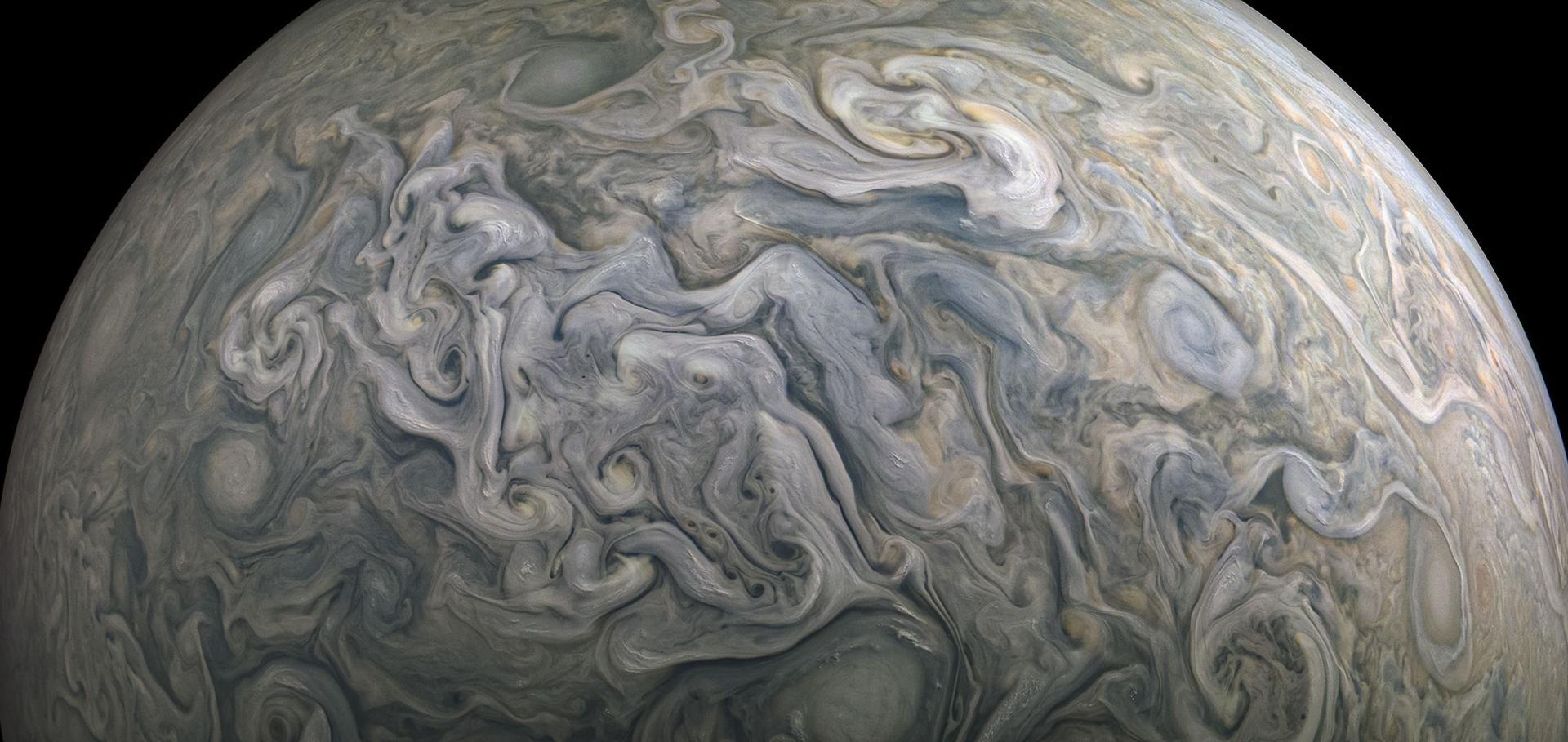
Juno Jupiter image

Neil Bowles

Professor of Planetary Science

Sub department

  • Atmospheric, Oceanic and Planetary Physics

Research groups

  • Planetary atmosphere observation analysis
  • Planetary surfaces
  • Solar system
  • Space instrumentation
Neil.Bowles@physics.ox.ac.uk
Telephone: 01865 (2)72097
Atmospheric Physics Clarendon Laboratory, room 307
  • About
  • Publications

X-ray diffraction data of aqueously and thermally altered carbonaceous chondrites

University of Oxford (2021)

Authors:

Helena Bates, Neil Bowles, Kerri Donaldson Hanna, Sara Russell, Ashley King

Abstract:

Position sensitive detector X-ray diffraction (PSD-XRD) data created as part of a study into the effects of aqueous and thermal alteration on the spectral signature in the NIR and MIR wavelength ranges. Data were collected on an Enraf-Nonius PDS120 X-ray diffractometer with an INEL curved 120o PSD. Each meteorite had two diffraction patterns collected on two 50mg aliquots (HB1 and HB2) of a larger 1.8g mass powdered sample.
More details from the publisher
Details from ORA

Author Correction: Shape of (101955) Bennu indicative of a rubble pile with internal stiffness

Nature Geoscience Springer Nature 13:11 (2020) 764-764

Authors:

OS Barnouin, MG Daly, EE Palmer, RW Gaskell, JR Weirich, CL Johnson, MM Al Asad, JH Roberts, ME Perry, HCM Susorney, RT Daly, EB Bierhaus, JA Seabrook, RC Espiritu, AH Nair, L Nguyen, GA Neumann, CM Ernst, WV Boynton, MC Nolan, CD Adam, MC Moreau, B Rizk, CY Drouet D’Aubigny, ER Jawin, KJ Walsh, P Michel, SR Schwartz, R-L Ballouz, EM Mazarico, DJ Scheeres, JW McMahon, WF Bottke, S Sugita, N Hirata, N Hirata, S-I Watanabe, KN Burke, DN DellaGiustina, CA Bennett, DS Lauretta
More details from the publisher

Studying the composition and mineralogy of the hermean surface with the Mercury Radiometer and Thermal Infrared Spectrometer (MERTIS) for the BepiColombo mission: an update

Space Science Reviews Springer 216:6 (2020) 110

Authors:

H Hiesinger, J Helbert, G Alemanno, Ke Bauch, M D’Amore, A Maturilli, A Morlok, Mp Reitze, C Stangarone, An Stojic, I Varatharajan, I Weber, G Arnold, M Banaszkiewicz, K Bauch, J Benkhoff, A Bischoff, M Blecka, N Bowles, S Calcutt, L Colangeli, S Erard, S Fonti, Bt Greenhagen, O Groussain, H Hirsch, J Jahn, R Killen, J Knollenberg, E Kührt, E Lorenz, I Mann, U Mall, A Maturilli, A Morlok, L Moroz, G Peter, M Rataj, M Robinson, W Skrbek, T Spohn, A Sprague, D Stöffler, A Stojic, F Taylor, I Varatharajan, H Venus, J Warrell, I Walter, I Weber

Abstract:

Launched onboard the BepiColombo Mercury Planetary Orbiter (MPO) in October 2018, the Mercury Radiometer and Thermal Infrared Spectrometer (MERTIS) is on its way to planet Mercury. MERTIS consists of a push-broom IR-spectrometer (TIS) and a radiometer (TIR), which operate in the wavelength regions of 7-14 μm and 7-40 μm, respectively. This wavelength region is characterized by several diagnostic spectral signatures: the Christiansen feature (CF), Reststrahlen bands (RB), and the Transparency feature (TF), which will allow us to identify and map rock-forming silicates, sulfides as well as other minerals. Thus, the instrument is particularly well-suited to study the mineralogy and composition of the hermean surface at a spatial resolution of about 500 m globally and better than 500 m for approximately 5-10% of the surface. The instrument is fully functional onboard the BepiColombo spacecraft and exceeds all requirements (e.g., mass, power, performance). To prepare for the science phase at Mercury, the team developed an innovative operations plan to maximize the scientific output while at the same time saving spacecraft resources (e.g., data downlink). The upcoming fly-bys will be excellent opportunities to further test and adapt our software and operational procedures. In summary, the team is undertaking action at multiple levels, including performing a comprehensive suite of spectroscopic measurements in our laboratories on relevant analog materials, performing extensive spectral modeling, examining space weathering effects, and modeling the thermal behavior of the hermean surface.
More details from the publisher
Details from ORA
More details

Initial results from the InSight mission on Mars

Nature Geoscience Springer Nature 13:3 (2020) 183-189

Authors:

W Bruce Banerdt, Suzanne E Smrekar, Don Banfield, Domenico Giardini, Matthew Golombek, Catherine L Johnson, Philippe Lognonné, Aymeric Spiga, Tilman Spohn, Clément Perrin, Simon C Stähler, Daniele Antonangeli, Sami Asmar, Caroline Beghein, Neil Bowles, Ebru Bozdag, Peter Chi, Ulrich Christensen, John Clinton, Gareth S Collins, Ingrid Daubar, Véronique Dehant, Mélanie Drilleau, Matthew Fillingim, William Folkner, Raphaël F Garcia, Jim Garvin, John Grant, Matthias Grott, Jerzy Grygorczuk, Troy Hudson, Jessica CE Irving, Günter Kargl, Taichi Kawamura, Sharon Kedar, Scott King, Brigitte Knapmeyer-Endrun, Martin Knapmeyer, Mark Lemmon, Ralph Lorenz, Justin N Maki, Ludovic Margerin, Scott M McLennan, Chloe Michaut, David Mimoun, Anna Mittelholz, Antoine Mocquet, Paul Morgan, Nils T Mueller, Naomi Murdoch

Abstract:

NASA’s InSight (Interior exploration using Seismic Investigations, Geodesy and Heat Transport) mission landed in Elysium Planitia on Mars on 26 November 2018. It aims to determine the interior structure, composition and thermal state of Mars, as well as constrain present-day seismicity and impact cratering rates. Such information is key to understanding the differentiation and subsequent thermal evolution of Mars, and thus the forces that shape the planet’s surface geology and volatile processes. Here we report an overview of the first ten months of geophysical observations by InSight. As of 30 September 2019, 174 seismic events have been recorded by the lander’s seismometer, including over 20 events of moment magnitude Mw = 3–4. The detections thus far are consistent with tectonic origins, with no impact-induced seismicity yet observed, and indicate a seismically active planet. An assessment of these detections suggests that the frequency of global seismic events below approximately Mw = 3 is similar to that of terrestrial intraplate seismic activity, but there are fewer larger quakes; no quakes exceeding Mw = 4 have been observed. The lander’s other instruments—two cameras, atmospheric pressure, temperature and wind sensors, a magnetometer and a radiometer—have yielded much more than the intended supporting data for seismometer noise characterization: magnetic field measurements indicate a local magnetic field that is ten-times stronger than orbital estimates and meteorological measurements reveal a more dynamic atmosphere than expected, hosting baroclinic and gravity waves and convective vortices. With the mission due to last for an entire Martian year or longer, these results will be built on by further measurements by the InSight lander.
More details from the publisher
Details from ORA
More details

PASCALE Spectral Data for OSIRIS-REx

University of Oxford (2020)

Authors:

Neil Bowles, Kerri Donaldson Hanna

Abstract:

Data created as part of spectral library and blind test programme in support of NASA's OSIRIS-REx mission to asteroid Bennu
More details from the publisher
Details from ORA

Pagination

  • First page First
  • Previous page Prev
  • …
  • Page 3
  • Page 4
  • Page 5
  • Page 6
  • Current page 7
  • Page 8
  • Page 9
  • Page 10
  • Page 11
  • …
  • Next page Next
  • Last page Last

Footer Menu

  • Contact us
  • Giving to the Dept of Physics
  • Work with us
  • Media

User account menu

  • Log in

Follow us

FIND US

Clarendon Laboratory,

Parks Road,

Oxford,

OX1 3PU

CONTACT US

Tel: +44(0)1865272200

University of Oxfrod logo Department Of Physics text logo
IOP Juno Champion logo Athena Swan Silver Award logo

© University of Oxford - Department of Physics

Cookies | Privacy policy | Accessibility statement

Built by: Versantus

  • Home
  • Research
  • Study
  • Engage
  • Our people
  • News & Comment
  • Events
  • Our facilities & services
  • About us
  • Giving to Physics
  • Current students
  • Staff intranet