Home
Department Of Physics text logo
  • Research
    • Our research
    • Our research groups
    • Our research in action
    • Research funding support
    • Summer internships for undergraduates
  • Study
    • Undergraduates
    • Postgraduates
  • Engage
    • For alumni
    • For business
    • For schools
    • For the public
Menu
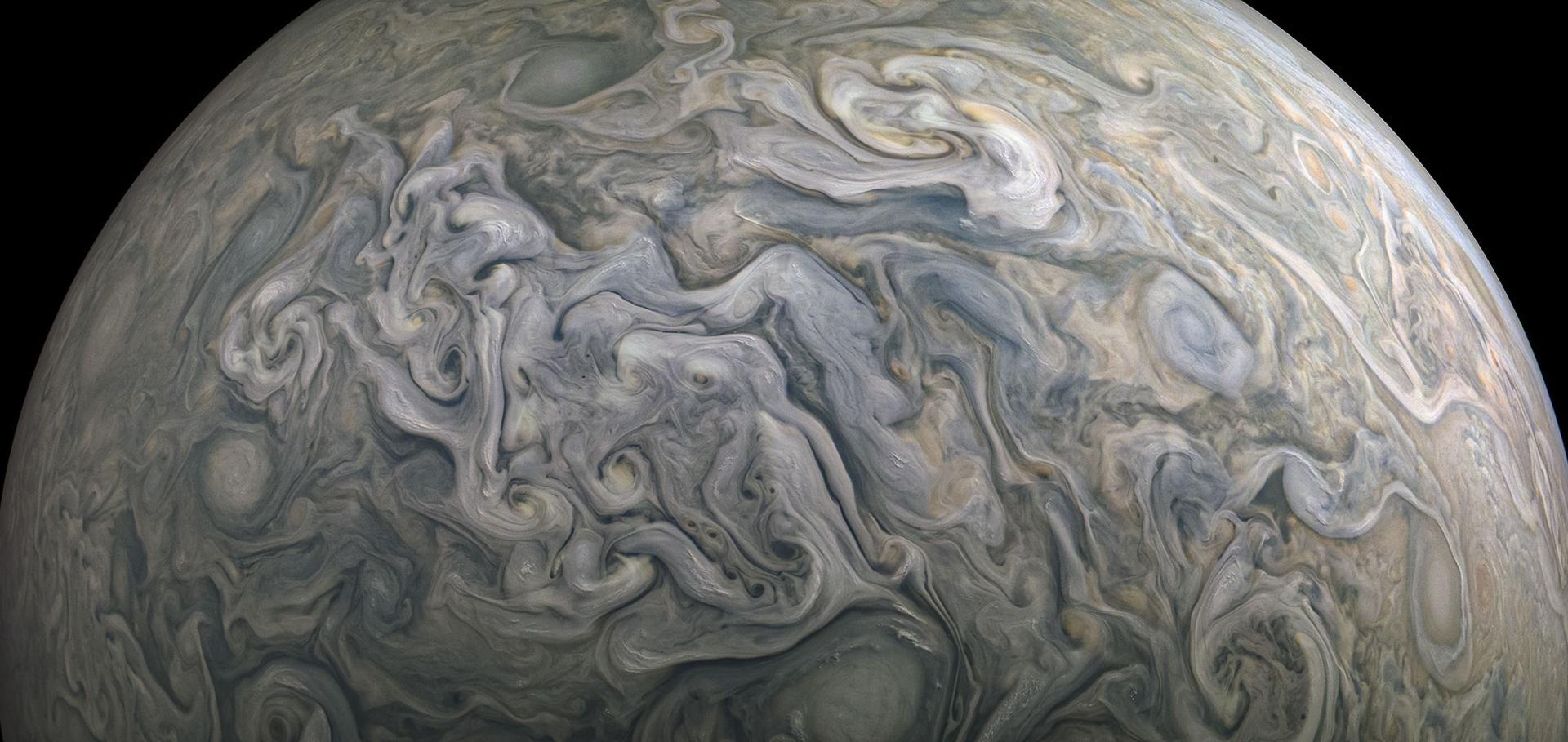
Juno Jupiter image

Prof. Patrick Irwin

Professor of Planetary Physics

Research theme

  • Exoplanets and planetary physics

Sub department

  • Atmospheric, Oceanic and Planetary Physics

Research groups

  • Exoplanet atmospheres
  • Planetary atmosphere observation analysis
  • Solar system
patrick.irwin@physics.ox.ac.uk
Telephone: 01865 (2)72083
Atmospheric Physics Clarendon Laboratory, room 306
Personal research page
NEMESIS
  • About
  • Publications

Intense polar temperature inversion in the middle atmosphere on Mars

Nature Geoscience 1:11 (2008) 745-749

Authors:

DJ McCleese, JT Schofield, FW Taylor, WA Abdou, O Aharonson, D Banfield, SB Calcutt, NG Heavens, PGJ Irwin, DM Kass, A Kleinböhl, WG Lawson, CB Leovy, SR Lewis, DA Paige, PL Read, MI Richardson, N Teanby, RW Zurek

Abstract:

Current understanding of weather, climate and global atmospheric circulation on Mars is incomplete, in particular at altitudes above about 30 km. General circulation models for Mars are similar to those developed for weather and climate forecasting on Earth and require more martian observations to allow testing and model improvements. However, the available measurements of martian atmospheric temperatures, winds, water vapour and airborne dust are generally restricted to the region close to the surface and lack the vertical resolution and global coverage that is necessary to shed light on the dynamics of Mars middle atmosphere at altitudes between 30 and 80 km (ref.7). Here we report high-resolution observations from the Mars Climate Sounder instrument on the Mars Reconnaissance Orbiter. These observations show an intense warming of the middle atmosphere over the south polar region in winter that is at least 10-20 K warmer than predicted by current model simulations. To explain this finding, we suggest that the atmospheric downwelling circulation over the pole, which is part of the equator-to-pole Hadley circulation, may be as much as 50 more vigorous than expected, with consequences for the cycles of water, dust and CO"2 that regulate the present-day climate on Mars. © 2008 Macmillan Publishers Limited.
More details from the publisher
More details

Band parameters for self-broadened ammonia gas in the range 0.74 to 5.24 μm to support measurements of the atmosphere of the planet Jupiter

Icarus Elsevier 196:2 (2008) 612-624

Authors:

Neil Bowles, Simon Calcutt, Pat Irwin, Jon Temple
More details from the publisher
More details

The 12C/13C isotopic ratio in Titan hydrocarbons from Cassini/CIRS infrared spectra

Icarus 195:2 (2008) 778-791

Authors:

CA Nixon, RK Achterberg, S Vinatier, B Bézard, A Coustenis, PGJ Irwin, NA Teanby, R de Kok, PN Romani, DE Jennings, GL Bjoraker, FM Flasar

Abstract:

We have analyzed infrared spectra of Titan recorded by the Cassini Composite Infrared Spectrometer (CIRS) to measure the isotopic ratio 12C/13C in each of three chemical species in Titan's stratosphere: CH4, C2H2 and C2H6. This is the first measurement of 12C/13C in any C2 molecule on Titan, and the first measurement of 12CH4/13CH4 (non-deuterated) on Titan by remote sensing. Our spectra cover five widely-spaced latitudes, 65° S to 71° N and we have searched for both latitude variability of 12C/13C within a given species, and also for differences between the 12C/13C in the three gases. For CH4 alone, we find 12C / 13C = 76.6 ± 2.7 (1-σ), essentially in agreement with the 12CH4/13CH4 measured by the Huygens Gas Chromatograph/Mass Spectrometer instrument (GCMS) [Niemann, H.B., and 17 colleagues, 2005. Nature 438, 779-784]: 82.3 ± 1.0, and also with measured values in H13CN and 13CH3D by CIRS at lower precision [Bézard, B., Nixon, C., Kleiner, I., Jennings, D., 2007. Icarus 191, 397-400; Vinatier, S., Bézard, B., Nixon, C., 2007. Icarus 191, 712-721]. For the C2 species, we find 12C / 13C = 84.8 ± 3.2 in C2H2 and 89.8 ± 7.3 in C2H6, a possible trend of increasingly value with molecular mass, although these values are both compatible with the Huygens GCMS value to within error bars. There are no convincing trends in latitude. Combining all fifteen measurements, we obtain a value of 12C / 13C = 80.8 ± 2.0, also compatible with GCMS. Therefore, the evidence is mounting that 12C/13C is some 8% lower on Titan than on the Earth (88.9, inorganic standard), and lower than typical for the outer planets (88 ± 7 [Sada, P.V., McCabe, G.H., Bjoraker, G.L., Jennings, D.E., Reuter, D.C., 1996. Astrophys. J. 472, 903-907]). There is no current model for this enrichment, and we discuss several mechanisms that may be at work. © 2008 Elsevier Inc. All rights reserved.
More details from the publisher

The NEMESIS planetary atmosphere radiative transfer and retrieval tool

Journal of Quantitative Spectroscopy and Radiative Transfer 109:6 (2008) 1136-1150

Authors:

PGJ Irwin, NA Teanby, R de Kok, LN Fletcher, CJA Howett, CCC Tsang, CF Wilson, SB Calcutt, CA Nixon, PD Parrish

Abstract:

With the exception of in situ atmospheric probes, the most useful way to study the atmospheres of other planets is to observe their electromagnetic spectra through remote observations, either from ground-based telescopes or from spacecraft. Atmospheric properties most consistent with these observed spectra are then derived with retrieval models. All retrieval models attempt to extract the maximum amount of atmospheric information from finite sets of data, but while the problem to be solved is fundamentally the same for any planetary atmosphere, until now all such models have been assembled ad hoc to address data from individual missions. In this paper, we describe a new general-purpose retrieval model, Non-linear Optimal Estimator for MultivariatE Spectral analySIS (NEMESIS), which was originally developed to interpret observations of Saturn and Titan from the composite infrared spectrometer on board the NASA Cassini spacecraft. NEMESIS has been constructed to be generally applicable to any planetary atmosphere and can be applied from the visible/near-infrared right out to microwave wavelengths, modelling both reflected sunlight and thermal emission in either scattering or non-scattering conditions. NEMESIS has now been successfully applied to the analysis of data from many planetary missions and also ground-based observations. © 2007 Elsevier Ltd. All rights reserved.
More details from the publisher
More details

Global and temporal variations in hydrocarbons and nitriles in Titan's stratosphere for northern winter observed by Cassini/CIRS

Icarus 193:2 (2008) 595-611

Authors:

NA Teanby, PGJ Irwin, R de Kok, CA Nixon, A Coustenis, E Royer, SB Calcutt, NE Bowles, L Fletcher, C Howett, FW Taylor

Abstract:

Mid-infrared spectra measured by Cassini's Composite InfraRed Spectrometer (CIRS) between July 2004 and January 2007 (Ls = 293 ° - 328 °) have been used to determine stratospheric temperature and abundances of C2H2, C3H4, C4H2, HCN, and HC3N. Over 65,000 nadir spectra with spectral resolutions of 0.5 and 2.5 cm-1 were used to probe spatial and temporal composition variations in Titan's stratosphere. Cassini's 180° orbital transfer in mid-2006 allowed low emission angle observations of the north polar region for the first time in the mission and allowed us to probe the full latitude range. We present the first measurements of composition variations within the polar vortex, which display increasing abundances right up to 90° N. The lack of a homogeneous abundance-latitude variation within the vortex indicates limited horizontal mixing and suggests that subsidence is greatest at the vortex core. Contrary to numerical model predictions and tropospheric cloud observations, we do not see any evidence for a secondary circulation cell near the south pole, which suggests a single Hadley-type circulation in the stratosphere at this epoch. This difference can be reconciled if the secondary cell is restricted to altitudes below 100 km, where there is no sensitivity in our data. Temporal variations in composition were observed in the south, with volatile species becoming less abundant as the season progressed. The observed variations are compared to numerical model predictions and observations from Voyager. © 2007 Elsevier Inc. All rights reserved.
More details from the publisher
More details

Pagination

  • First page First
  • Previous page Prev
  • …
  • Page 78
  • Page 79
  • Page 80
  • Page 81
  • Current page 82
  • Page 83
  • Page 84
  • Page 85
  • Page 86
  • …
  • Next page Next
  • Last page Last

Footer Menu

  • Contact us
  • Giving to the Dept of Physics
  • Work with us
  • Media

User account menu

  • Log in

Follow us

FIND US

Clarendon Laboratory,

Parks Road,

Oxford,

OX1 3PU

CONTACT US

Tel: +44(0)1865272200

University of Oxfrod logo Department Of Physics text logo
IOP Juno Champion logo Athena Swan Silver Award logo

© University of Oxford - Department of Physics

Cookies | Privacy policy | Accessibility statement

Built by: Versantus

  • Home
  • Research
  • Study
  • Engage
  • Our people
  • News & Comment
  • Events
  • Our facilities & services
  • About us
  • Giving to Physics
  • Current students
  • Staff intranet