Home
Department Of Physics text logo
  • Research
    • Our research
    • Our research groups
    • Our research in action
    • Research funding support
    • Summer internships for undergraduates
  • Study
    • Undergraduates
    • Postgraduates
  • Engage
    • For alumni
    • For business
    • For schools
    • For the public
  • Support
Menu
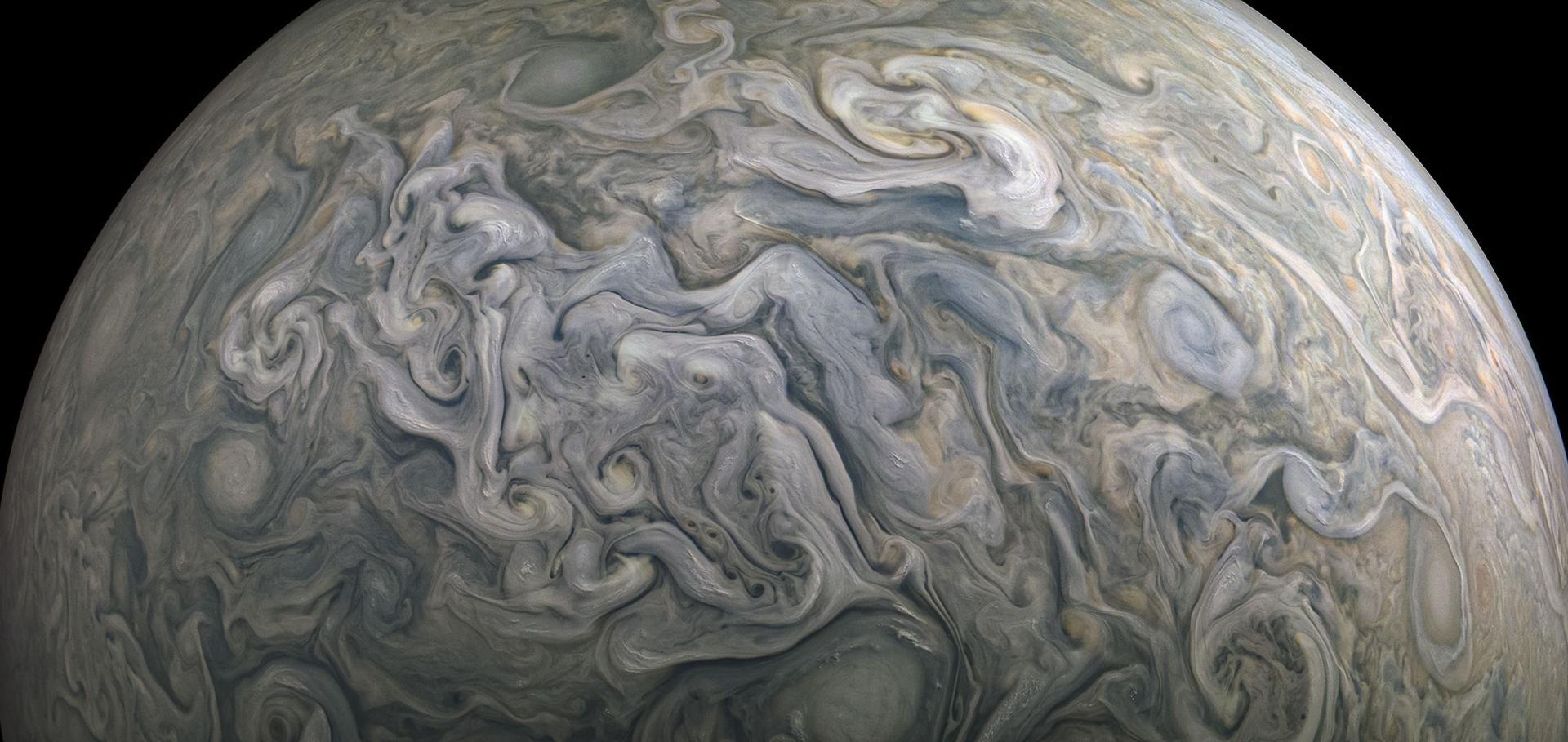
Juno Jupiter image

Prof. Patrick Irwin

Professor of Planetary Physics

Research theme

  • Exoplanets and planetary physics

Sub department

  • Atmospheric, Oceanic and Planetary Physics

Research groups

  • Exoplanet atmospheres
  • Planetary atmosphere observation analysis
  • Solar system
patrick.irwin@physics.ox.ac.uk
Telephone: 01865 (2)72083
Atmospheric Physics Clarendon Laboratory, room 306
Personal research page
NEMESIS
Github data sharing website
  • About
  • Publications

Titan's stratospheric C2N2, C3H4, and C4H2 abundances from Cassini/CIRS far-infrared spectra

Icarus 202:2 (2009) 620-631

Authors:

NA Teanby, PGJ Irwin, R de Kok, A Jolly, B Bézard, CA Nixon, SB Calcutt

Abstract:

Far-IR (25-50 μm, 200-400 cm-1) nadir and limb spectra measured during Cassini's four year prime mission by the Composite InfraRed Spectrometer (CIRS) instrument have been used to determine the abundances of cyanogen (C2N2), methylacetylene (C3H4), and diacetylene (C4H2) in Titan's stratosphere as a function of latitude. All three gases are enriched at northern latitudes, consistent with north polar subsidence. C4H2 abundances agree with those derived previously from mid-IR data, but C3H4 abundances are about 2 times lower, suggesting a vertical gradient or incorrect band intensities in the C3H4 spectroscopic data. For the first time C2N2 was detected at southern and equatorial latitudes with an average volume mixing ratio of 5.5 ± 1.4 × 10- 11 derived from limb data (> 3 - σ significance). This limb result is also corroborated by nadir data, which give a C2N2 volume mixing ratio of 6 ± 3 × 10- 11 (2-σ significance) or alternatively a 3-σ upper limit of 17 × 10- 11. Comparing these figures with photochemical models suggests that galactic cosmic rays may be an important source of N2 dissociation in Titan's stratosphere. Like other nitriles (HCN, HC3N), C2N2 displays greater north polar relative enrichment than hydrocarbons with similar photochemical lifetimes, suggesting an additional loss mechanism for all three of Titan's main nitrile species. Previous studies have suggested that HCN requires an additional sink process such as incorporation into hazes. This study suggests that such a sink may also be required for Titan's other nitrile species. © 2009 Elsevier Inc. All rights reserved.
More details from the publisher
More details

Analysis of thermal emission from the nightside of Venus at 1.51 and 1.55 μm

Icarus 201:2 (2009) 814-817

Authors:

CF Wilson, CCC Tsang, PGJ Irwin, FW Taylor, B Bézard, S Erard, RW Carlson, P Drossart, G Piccioni, RC Holmes

Abstract:

We present radiative transfer modelling of thermal emission from the nightside of Venus in two 'spectral window' regions at 1.51 and 1.55 μm. The first discovery of these windows, reported by Erard et al. [Erard, S., Drossart, P., Piccioni, G., 2009. J. Geophys. Res. Planets 114, doi:10.1029/2008JE003116. E00B27], was achieved using a principal component analysis of data from the VIRTIS instrument on Venus Express. These windows are spectrally narrow, with a full-width at half-maximum of ∼20 nm, and less bright than the well-known 1.7 and 2.3 μm spectral windows by two orders of magnitude. In this note we present the first radiative transfer analysis of these windows. We conclude that the radiation in these windows originates at an altitude of 20-35 km. As is the case for the other infrared window regions, the brightness of the windows is affected primarily by the optical depth of the overlying clouds; in addition, the 1.51 μm radiance shows a very weak sensitivity to water vapour abundance. © 2009 Elsevier Inc.
More details from the publisher
Details from ORA
More details

Variability of CO concentrations in the Venus troposphere from Venus Express/VIRTIS using a Band Ratio Technique

Icarus 201:2 (2009) 432-443

Authors:

CCC Tsang, FW Taylor, CF Wilson, SJ Liddell, PGJ Irwin, G Piccioni, P Drossart, SB Calcutt

Abstract:

A fast method is presented for deriving the tropospheric CO concentrations in the Venus atmosphere from near-infrared spectra using the night side 2.3 μm window. This is validated using the spectral fitting techniques of Tsang et al. [Tsang, C.C.C., Irwin, P.G.J., Taylor, F.W., Wilson, C.F., Drossart, P., Piccioni, G., de Kok, R., Lee, C., Calcutt, S.B., and the Venus Express/VIRTIS Team, 2008a. Tropospheric carbon monoxide concentrations and variability on Venus with Venus Express/VIRTIS-M observations. J. Geophys. Res. 113, doi: 10.1029/2008JE003089. E00B08] to show that monitoring CO in the deep atmosphere can be done quickly using large numbers of observations, with minimal effect from cloud and temperature variations. The new method is applied to produce some 1450 zonal mean CO profiles using data from the first eighteen months of operation from the Visible and Infrared Thermal Imaging Spectrometer infrared mapping subsystem (VIRTIS-M-IR) on Venus Express. These results show many significant long- and short-term variations from the mean equator-to-pole increasing trend previously found from earlier Earth- and space-based observations, including a possible North-South dichotomy, with interesting implications for the dynamics and chemistry of the lower atmosphere of Venus. © 2009 Elsevier Inc. All rights reserved.
More details from the publisher
More details

Infrared limb sounding of Titan with the Cassini Composite InfraRed Spectrometer: effects of the mid-IR detector spatial responses.

Appl Opt 48:10 (2009) 1912-1925

Authors:

Conor A Nixon, Nicholas A Teanby, Simon B Calcutt, Shahid Aslam, Donald E Jennings, Virgil G Kunde, F Michael Flasar, Patrick G Irwin, Fredric W Taylor, David A Glenar, Michael D Smith

Abstract:

The composite infrared spectrometer (CIRS) instrument on board the Cassini Saturn orbiter employs two 1x10 HgCdTe detector arrays for mid-infrared remote sensing of Titan's and Saturn's atmospheres. In this paper we show that the real detector spatial response functions, as measured in ground testing before launch, differ significantly from idealized "boxcar" responses. We further show that neglecting this true spatial response function when modeling CIRS spectra can have a significant effect on interpretation of the data, especially in limb-sounding mode, which is frequently used for Titan science. This result has implications not just for CIRS data analysis but for other similar instrumental applications.
More details from the publisher
More details

Retrievals of atmospheric variables on the gas giants from ground-based mid-infrared imaging

Icarus 200:1 (2009) 154-175

Authors:

LN Fletcher, GS Orton, P Yanamandra-Fisher, BM Fisher, PD Parrish, PGJ Irwin

Abstract:

Thermal-infrared imaging of Jupiter and Saturn using the NASA/IRTF and Subaru observatories are quantitatively analyzed to assess the capabilities for reproducing and extending the zonal mean atmospheric results of the Cassini/CIRS experiment. We describe the development of a robust, systematic and reproducible approach to the acquisition and reduction of planetary images in the mid-infrared (7-25 μm), and perform an adaptation and validation of the optimal estimation, correlated-k retrieval algorithm described by Irwin et al. [Irwin, P., Teanby, N., de Kok, R., Fletcher, L., Howett, C., Tsang, C., Wilson, C., Calcutt, S., Nixon, C., Parrish, P., 2008. J. Quant. Spectrosc. Radiat. Trans. 109 (6), 1136-1150] for channel-integrated radiances. Synthetic spectral analyses and a comparison to Cassini results are used to verify our abilities to retrieve temperatures, haze opacities and gaseous abundances from filtered imaging. We find that ground-based imaging with a sufficiently high spatial resolution is able to reproduce the three-dimensional temperature and para-H2 fields measured by spacecraft visiting Jupiter and Saturn, allowing us to investigate vertical wind shear, pressure and, with measured cloud-top winds, Ertel potential vorticity on potential temperature surfaces. Furthermore, by scaling vertical profiles of NH3, PH3, haze opacity and hydrocarbons as free parameters during thermal retrievals, we can produce meridional results comparable with CIRS spectroscopic investigations. This paper demonstrates that mid-IR imaging instruments operating at ground-based observatories have access to several dynamical and chemical diagnostics of the atmospheric state of the gas giants, offering the prospect for quantitative studies over much longer baselines and often covering much wider areas than is possible from spaceborne platforms. © 2008 Elsevier Inc.
More details from the publisher
More details

Pagination

  • First page First
  • Previous page Prev
  • …
  • Page 74
  • Page 75
  • Page 76
  • Page 77
  • Current page 78
  • Page 79
  • Page 80
  • Page 81
  • Page 82
  • …
  • Next page Next
  • Last page Last

Footer Menu

  • Contact us
  • Giving to the Dept of Physics
  • Work with us
  • Media

User account menu

  • Log in

Follow us

FIND US

Clarendon Laboratory,

Parks Road,

Oxford,

OX1 3PU

CONTACT US

Tel: +44(0)1865272200

University of Oxfrod logo Department Of Physics text logo
IOP Juno Champion logo Athena Swan Silver Award logo

© University of Oxford - Department of Physics

Cookies | Privacy policy | Accessibility statement

Built by: Versantus

  • Home
  • Research
  • Study
  • Engage
  • Our people
  • News & Comment
  • Events
  • Our facilities & services
  • About us
  • Giving to Physics
  • Current students
  • Staff intranet