Home
Department Of Physics text logo
  • Research
    • Our research
    • Our research groups
    • Our research in action
    • Research funding support
    • Summer internships for undergraduates
  • Study
    • Undergraduates
    • Postgraduates
  • Engage
    • For alumni
    • For business
    • For schools
    • For the public
  • Support
Menu
CMP
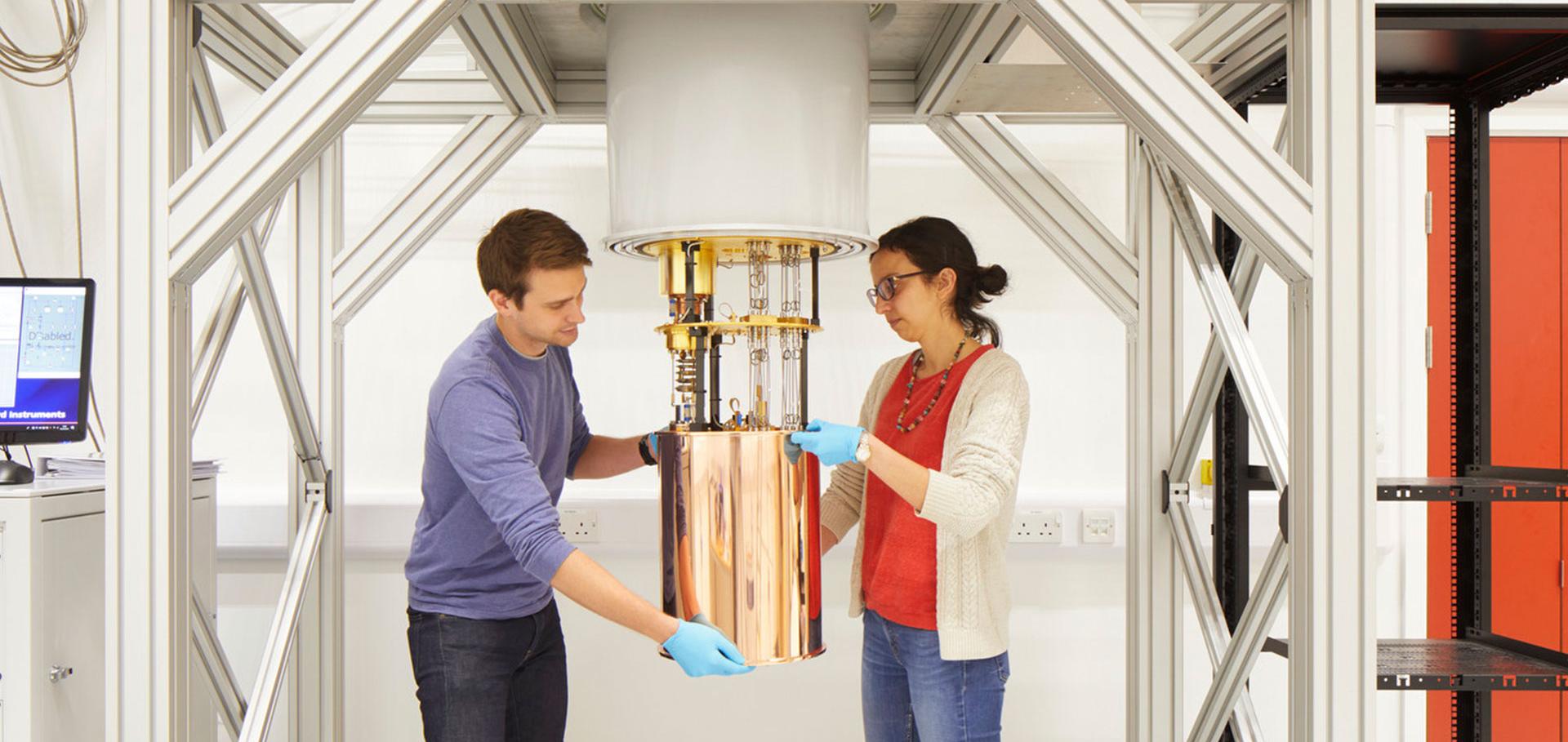
Credit: Jack Hobhouse

Dr Junke Wang

Marie Curie Postdoc Fellow

Research theme

  • Photovoltaics and nanoscience

Sub department

  • Condensed Matter Physics

Research groups

  • Snaith group
junke.wang@physics.ox.ac.uk
Robert Hooke Building
  • About
  • Publications

High-performance all-polymer solar cells based on fluorinated naphthalene diimide acceptor polymers with fine-tuned crystallinity and enhanced dielectric constants

Nano Energy Elsevier 45 (2018) 368-379

Authors:

Xiaofeng Xu, Zhaojun Li, Junke Wang, Baojun Lin, Wei Ma, Yangjun Xia, Mats R Andersson, René AJ Janssen, Ergang Wang
More details from the publisher

Highly Efficient Perovskite Solar Cells Using Non‐Toxic Industry Compatible Solvent System

Solar RRL Wiley 1:11 (2017)

Authors:

Junke Wang, Francesco Di Giacomo, Jim Brüls, Harrie Gorter, Ilias Katsouras, Pim Groen, René AJ Janssen, Ronn Andriessen, Yulia Galagan
More details from the publisher
More details

Abnormal resistivity-temperature characteristic in fluorite type Bi/K-substituted ceria ceramics

Journal of Materials Science: Materials in Electronics Springer Nature 27:6 (2016) 6419-6424

Authors:

Junke Wang, Hong Zhang, Zhiyuan Ma, Yu Zhang, Zhicheng Li
More details from the publisher

Changes in mechanical and structural properties of Bi-2212 added MgB2 superconductors

Journal of Materials Science: Materials in Electronics Springer 27:6 (2016) 6060-6070

Authors:

E Taylan Koparan, B Savaskan, O Ozturk, S Kaya, C Aksoy, Junke Wang, Susannah C Speller, Christopher RM Grovenor, A Gencer, E Yanmaz

Abstract:

In the present study, we investigate the effects of Bi2Sr2Ca1Cu2O8+κ (Bi-2212) addition on structural and mechanical properties of bulk MgB2 obtained by hot-press method by means of X-ray diffraction, the Scanning Electron Microscopy and Vickers microhardness measurements. The amount of Bi-2212 was varied between 0 and 10 wt% (0, 2, 4, 6, 8 and 10 wt%) of the total MgB2. All samples were prepared by using elemental magnesium (Mg) powder, amorphous nano boron (B) powder and Bi-2212 powder which are produced by hot-press method. As a result of the hot-press process, the compact pellet samples were manufactured. The microhardness results were analyzed by Meyer’s law, Proportional Sample Resistance Model, Elastic–Plastic Deformation Model, Hays Kendall Approach, and Indentation Induced Cracking (IIC) Model. IIC model was identified as the most appropriate model for samples exhibiting the reverse indentation size effect behavior.
More details from the publisher
Details from ORA
More details

Crystal-facet-directed all vacuum-deposited perovskite solar cells

Nature Materials Springer Nature

Authors:

Xinyi Shen, Wing Tung Hui, Shuaifeng Hu, Fengning Yang, Junke Wang, Jin Yao, Atse Louwen, Bryan Siu Ting Tam, Lirong Rong, David McMeekin, Kilian Lohmann, Qimu Yuan, Matthew Naylor, Manuel Kober-Czerny, Seongrok Seo, Philippe Holzhey, Karl-Augustin Zaininger, Mark Christoforo, Perrine Carroy, Vincent Barth, Fion Sze Yan Yeung, Nakita Noel, Michael Johnston, Yen-Hung Lin, Henry Snaith

Abstract:

Vacuum-based deposition is a scalable, solvent-free industrial method ideal for uniform coatings on complex substrates. However, all vacuum-deposited perovskite solar cells fabricated by thermal evaporation trail solution-processed counterparts in efficiency and stability due to film quality challenges, necessitating advancement and improved understanding. Here, we report a co-evaporation route for 1.67-eV wide-bandgap perovskites by introducing a PbCl2 co-source to optimize film quality. We promote perovskite formation with pronounced (100) “face-up” orientation and deliver a certified all vacuum-deposited solar cell with 18.35% efficiency (19.3% in the lab) for 0.25-cm2 devices (18.5% for 1-cm2 cells). These cells retain 80% of peak efficiency after 1,080 hours under the ISOS-L-2 protocol. Leveraging operando hyperspectral imaging, we provide spatiotemporal spectral insight into halide segregation and trap-mediated recombination, correlating microscopic luminescence features with macroscopic device performance while distinguishing radiative from non-ideal recombination channels. We further demonstrate 27.2%-efficient 1-cm2 evaporated perovskite-on-silicon tandems and outdoor stability of all vacuum-deposited tandems in Italy, retaining ~80% initial performance after 8 months.
Details from ORA

Pagination

  • First page First
  • Previous page Prev
  • Page 1
  • Page 2
  • Page 3
  • Page 4
  • Page 5
  • Page 6
  • Page 7
  • Current page 8
  • Page 9
  • Next page Next
  • Last page Last

Footer Menu

  • Contact us
  • Giving to the Dept of Physics
  • Work with us
  • Media

User account menu

  • Log in

Follow us

FIND US

Clarendon Laboratory,

Parks Road,

Oxford,

OX1 3PU

CONTACT US

Tel: +44(0)1865272200

University of Oxfrod logo Department Of Physics text logo
IOP Juno Champion logo Athena Swan Silver Award logo

© University of Oxford - Department of Physics

Cookies | Privacy policy | Accessibility statement

Built by: Versantus

  • Home
  • Research
  • Study
  • Engage
  • Our people
  • News & Comment
  • Events
  • Our facilities & services
  • About us
  • Giving to Physics
  • Current students
  • Staff intranet