Home
Department Of Physics text logo
  • Research
    • Our research
    • Our research groups
    • Our research in action
    • Research funding support
    • Summer internships for undergraduates
  • Study
    • Undergraduates
    • Postgraduates
  • Engage
    • For alumni
    • For business
    • For schools
    • For the public
  • Support
Menu
CMP
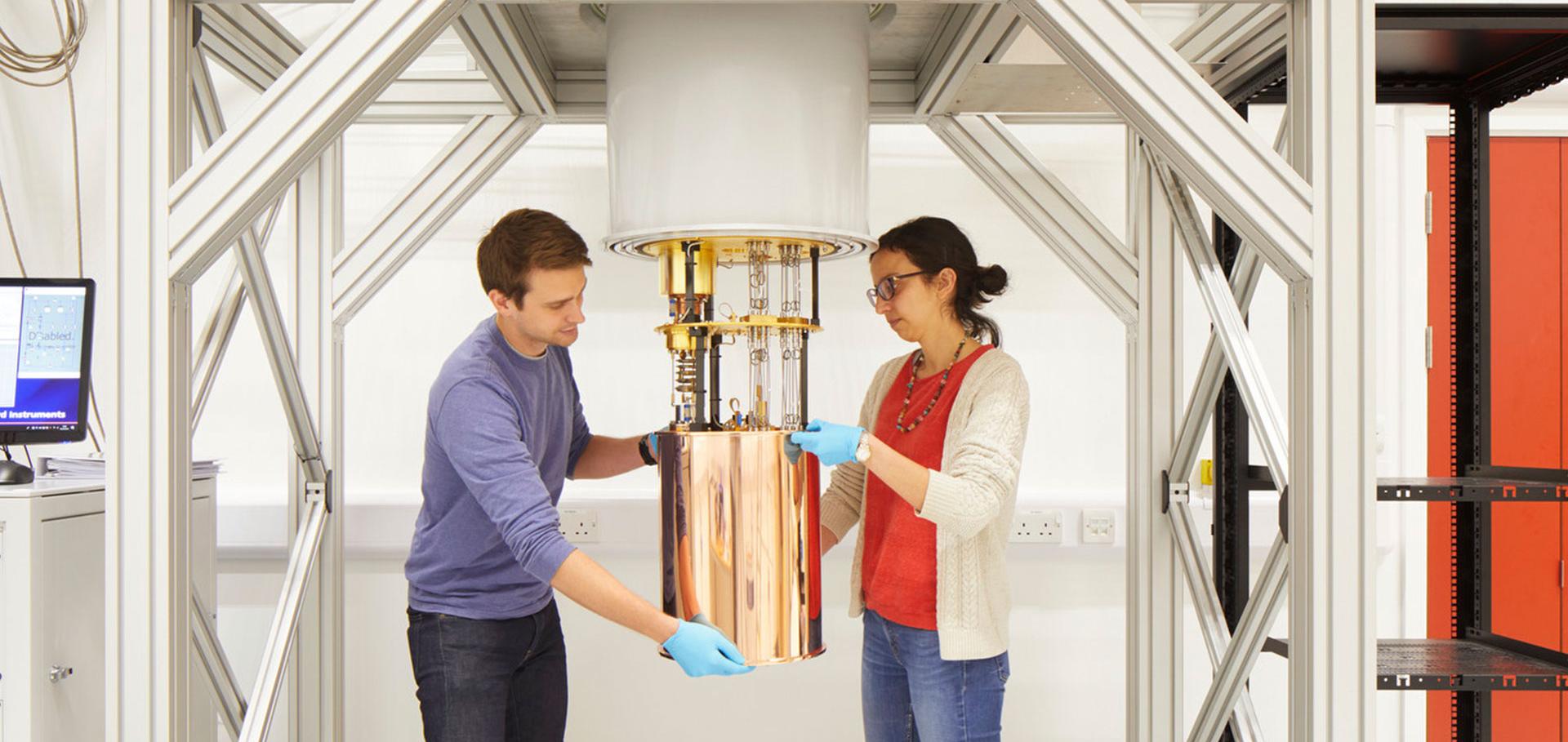
Credit: Jack Hobhouse

Dr Junke Wang

Marie Curie Postdoc Fellow

Research theme

  • Photovoltaics and nanoscience

Sub department

  • Condensed Matter Physics

Research groups

  • Snaith group
junke.wang@physics.ox.ac.uk
Robert Hooke Building
  • About
  • Publications

Homogenised Optoelectronic Properties in Perovskites: Achieving High-Efficiency Solar Cells with Common Chloride Additives

Journal of the American Chemical Society American Chemical Society

Authors:

Junke Wang, Shuaifeng Hu, Xinyu Gu, Minh Anh Truong, Yi Yang, Cheng Liu, Gunnar Kusch, Zhongcheng Yuan, Manuel Kober-Czerny, Zuhong Zhang, Zhenhuang Su, Kyohei Nakano, Akash Dasgupta, Xianfu Zhang, Xinyi Shen, Nobutaka Shioya, Noriko Kurose, Daichi Shirakura, Zaiwei Wang, Wei Zhou, Meng Li, Takeshi Hasegawa, Xingyu Gao, Keisuke Tajima, Rachel Oliver, Yixin Zhao, Zhijun Ning, Atsushi Wakamiya, Henry Snaith, Hao Chen

Abstract:

Improving the bulk quality of perovskite films is critical for achieving higher-performance photovoltaic devices. Chloride-containing additives, including lead chloride (PbCl₂) and methylammonium chloride (MACl)—standard additives widely adopted in perovskite photovoltaics—are effective for controlling crystallisation kinetics and grain morphology. However, the distinct impacts of different forms of chloride additives on nanoscale phase uniformity and luminescence homogeneity remains underexplored. Here, we provide new insights into how the choice and combination of chloride additives influence phase transitions and spatially uniform carrier dynamics within perovskite films. We demonstrate that strategically combining MACl and PbCl2 improves crystallinity and optoelectronic uniformity across dimensions spanning micrometres to millimetres. Leveraging these findings, we fabricated inverted (p-i-n) perovskite solar cells achieving certified quasi-steady-state efficiencies of 26.4% and 24.5% at device areas of 0.05 and 1 cm², respectively. Furthermore, these devices exhibit robust operational stability, retaining 88% of their initial performance after 1200 hours of continuous maximum power point tracking at elevated temperatures (65 °C) under simulated AM1.5G illumination. Our results elucidate the mechanistic differences between chloride additive forms, providing a viable strategy for advancing large-area, high-efficiency, and thermally stable perovskite photovoltaics.
More details from the publisher
More details

Pagination

  • First page First
  • Previous page Prev
  • Page 1
  • Page 2
  • Page 3
  • Page 4
  • Page 5
  • Page 6
  • Page 7
  • Page 8
  • Current page 9

Footer Menu

  • Contact us
  • Giving to the Dept of Physics
  • Work with us
  • Media

User account menu

  • Log in

Follow us

FIND US

Clarendon Laboratory,

Parks Road,

Oxford,

OX1 3PU

CONTACT US

Tel: +44(0)1865272200

University of Oxfrod logo Department Of Physics text logo
IOP Juno Champion logo Athena Swan Silver Award logo

© University of Oxford - Department of Physics

Cookies | Privacy policy | Accessibility statement

Built by: Versantus

  • Home
  • Research
  • Study
  • Engage
  • Our people
  • News & Comment
  • Events
  • Our facilities & services
  • About us
  • Giving to Physics
  • Current students
  • Staff intranet