Home
Department Of Physics text logo
  • Research
    • Our research
    • Our research groups
    • Our research in action
    • Research funding support
    • Summer internships for undergraduates
  • Study
    • Undergraduates
    • Postgraduates
  • Engage
    • For alumni
    • For business
    • For schools
    • For the public
Menu
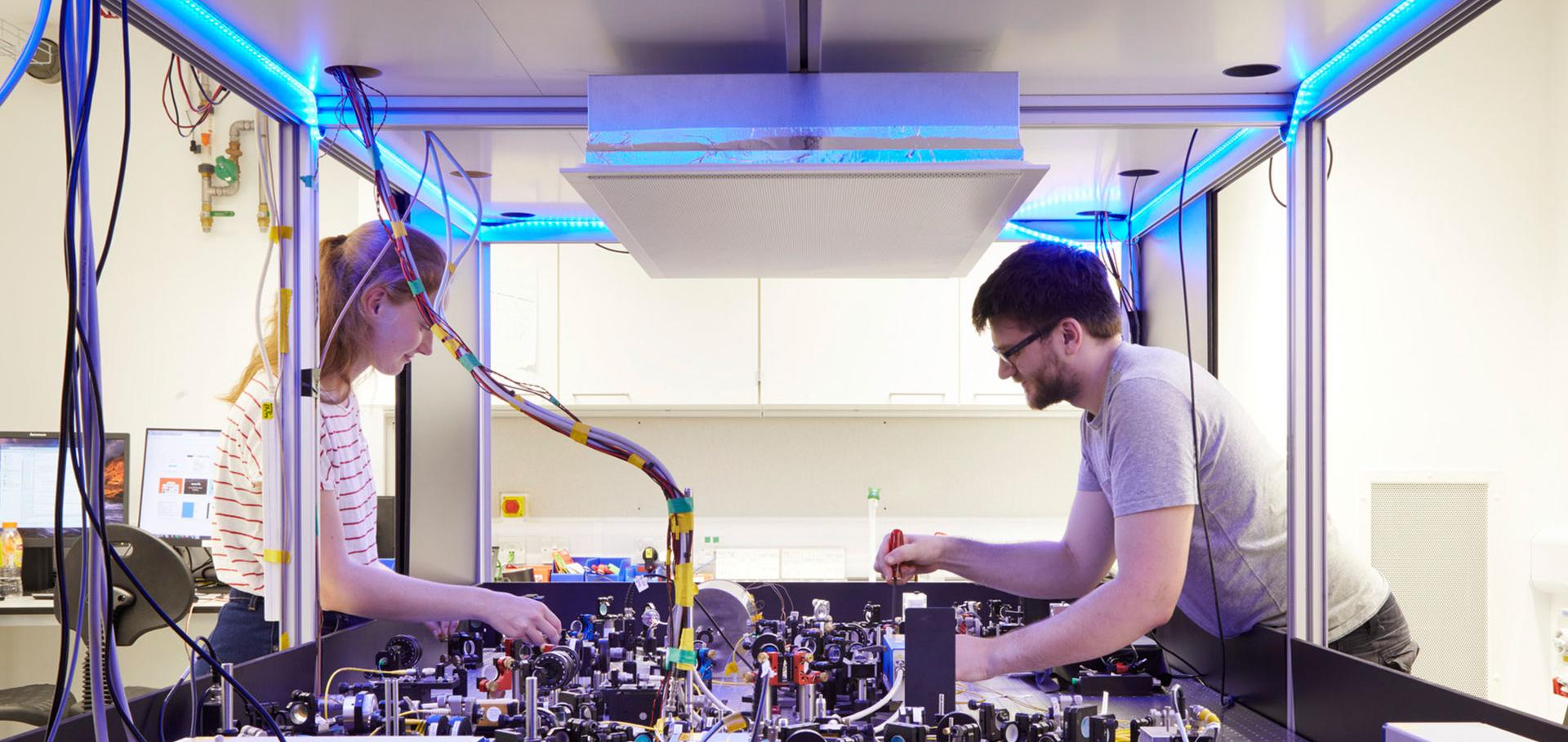
Atomic and Laser Physics
Credit: Jack Hobhouse

Prof Christopher Ramsey

Professor of Archaeological Science

Research theme

  • Accelerator physics
  • Climate physics
  • Instrumentation

Sub department

  • Atomic and Laser Physics
christopher.ramsey@physics.ox.ac.uk
Telephone: 01865285215
School of Archaeology
  • About
  • Publications

Dating Celtic Art: a Major Radiocarbon Dating Programme of Iron Age and Early Roman Metalwork in Britain

Archaeological Journal Taylor & Francis 166:1 (2009) 79-123

Authors:

D Garrow, C Gosden, JD Hill, C Bronk Ramsey
More details from the publisher
More details
More details

Recent Research at Duggleby Howe, North Yorkshire

Archaeological Journal Taylor & Francis 166:1 (2009) 39-78

Authors:

Alex Gibson, Alex Bayliss, H Heard, I Mainland, AR Ogden, C Bronk Ramsey, G Cook, J van der Plicht, P Marshall
More details from the publisher
More details

IntCal09 and Marine09 Radiocarbon Age Calibration Curves, 0–50,000 Years cal BP

Radiocarbon Cambridge University Press (CUP) 51:4 (2009) 1111-1150

Authors:

PJ Reimer, MGL Baillie, E Bard, A Bayliss, JW Beck, PG Blackwell, C Bronk Ramsey, CE Buck, GS Burr, RL Edwards, M Friedrich, PM Grootes, TP Guilderson, I Hajdas, TJ Heaton, AG Hogg, KA Hughen, KF Kaiser, B Kromer, FG McCormac, SW Manning, RW Reimer, DA Richards, JR Southon, S Talamo, CSM Turney, J van der Plicht, CE Weyhenmeyer

Abstract:

The IntCal04 and Marine04 radiocarbon calibration curves have been updated from 12 cal kBP (cal kBP is here defined as thousands of calibrated years before AD 1950), and extended to 50 cal kBP, utilizing newly available data sets that meet the IntCal Working Group criteria for pristine corals and other carbonates and for quantification of uncertainty in both the 14C and calendar timescales as established in 2002. No change was made to the curves from 0–12 cal kBP. The curves were constructed using a Markov chain Monte Carlo (MCMC) implementation of the random walk model used for IntCal04 and Marine04. The new curves were ratified at the 20th International Radiocarbon Conference in June 2009 and are available in the Supplemental Material at www.radiocarbon.org.
More details from the publisher
More details

Optically stimulated luminescence dating of single and multiple grains of quartz from perennially frozen loess in western Yukon Territory, Canada: Comparison with radiocarbon chronologies for the late Pleistocene Dawson tephra

Quaternary Geochronology 3:4 (2008) 346-364

Authors:

M Demuro, RG Roberts, DG Froese, LJ Arnold, F Brock, CB Ramsey

Abstract:

Optically stimulated luminescence (OSL) dating of perennially frozen loess was tested on quartz grains extracted from deposits associated with the late Pleistocene Dawson tephra in western Yukon Territory, Canada. OSL samples were obtained from ice-rich loess bracketing the Dawson tephra, while radiocarbon (14C) samples were collected from the bulk sediments directly underlying the tephra and from a ground-squirrel burrow 2.7 m below the tephra. Here we report the OSL characteristics and ages of the extracted quartz grains, as well as additional radiocarbon ages for samples described in Froese [2002. Age and significance of the late Pleistocene Dawson tephra in eastern Beringia. Quaternary Science Reviews 21, 2137-2142; 2006. Seasonality of the late Pleistocene Dawson tephra and exceptional preservation of a buried riparian surface in central Yukon Territory, Canada. Quaternary Science Reviews 25, 1542-1551]. We refine the time of Dawson tephra deposition to between 25,420±70 and 25,290±80 14C a BP. Bayesian analysis of constraining radiocarbon ages places the deposition of the Dawson tephra at between 30,433 and 30,032 cal a BP. Linear modulation (LM) OSL analysis of multi-grain aliquots of quartz showed that the initial part of the decay curve is dominated by a rapidly bleached ('fast') component; these samples, however, had relatively dim continuous wave (CW) OSL signals at the multi-grain aliquot (each composed of ∼80 grains) and single-grain scales of analysis. The single-aliquot regenerative-dose protocol was applied to multi-grain aliquots and single grains to obtain equivalent dose (De) values for samples collected from below and above the Dawson tephra. The De values were examined graphically and numerically, the latter using the central age, minimum age, and finite mixture models. For multi-grain aliquots, the central age model gave weighted mean De values between 30 and 50 Gy, which greatly underestimated the expected De of ∼74-81 Gy for both samples studied. Possible reasons for these underestimations are discussed, and a solution proposed based on single-grain analysis. Measurements of single grains produced De values in agreement with the expected De, and yielded OSL ages of 28±5 and 30±4 ka for the samples taken from above and below the Dawson tephra, respectively. Examination of individual grains with differing luminescence behaviors showed that a significant number of the measured quartz grains exhibited anomalous luminescence properties that would have compromised the results obtained from multi-grain aliquots. We therefore recommend analysis of individual grains to overcome the age-shortfall from multi-grain analysis of these and similar samples of quartz. © 2007 Elsevier Ltd. All rights reserved.
More details from the publisher
More details

The Middle to Upper Paleolithic transition: dating, stratigraphy, and isochronous markers

Journal of Human Evolution Elsevier BV 55:5 (2008) 764-771

Authors:

SPE Blockley, C Bronk Ramsey, TFG Higham
More details from the publisher
More details
More details

Pagination

  • First page First
  • Previous page Prev
  • …
  • Page 55
  • Page 56
  • Page 57
  • Page 58
  • Current page 59
  • Page 60
  • Page 61
  • Page 62
  • Page 63
  • …
  • Next page Next
  • Last page Last

Footer Menu

  • Contact us
  • Giving to the Dept of Physics
  • Work with us
  • Media

User account menu

  • Log in

Follow us

FIND US

Clarendon Laboratory,

Parks Road,

Oxford,

OX1 3PU

CONTACT US

Tel: +44(0)1865272200

University of Oxfrod logo Department Of Physics text logo
IOP Juno Champion logo Athena Swan Silver Award logo

© University of Oxford - Department of Physics

Cookies | Privacy policy | Accessibility statement

Built by: Versantus

  • Home
  • Research
  • Study
  • Engage
  • Our people
  • News & Comment
  • Events
  • Our facilities & services
  • About us
  • Giving to Physics
  • Current students
  • Staff intranet