A space mission to map the entire observable universe using the CMB as a backlight: Voyage 2050 science white paper

Experimental Astronomy (2021)

Authors:

K Basu, M Remazeilles, JB Melin, D Alonso, JG Bartlett, N Battaglia, J Chluba, E Churazov, J Delabrouille, J Erler, S Ferraro, C Hernández-Monteagudo, JC Hill, SC Hotinli, I Khabibullin, M Madhavacheril, T Mroczkowski, D Nagai, S Raghunathan, JAR Martin, J Sayers, D Scott, N Sugiyama, R Sunyaev, Í Zubeldia

Abstract:

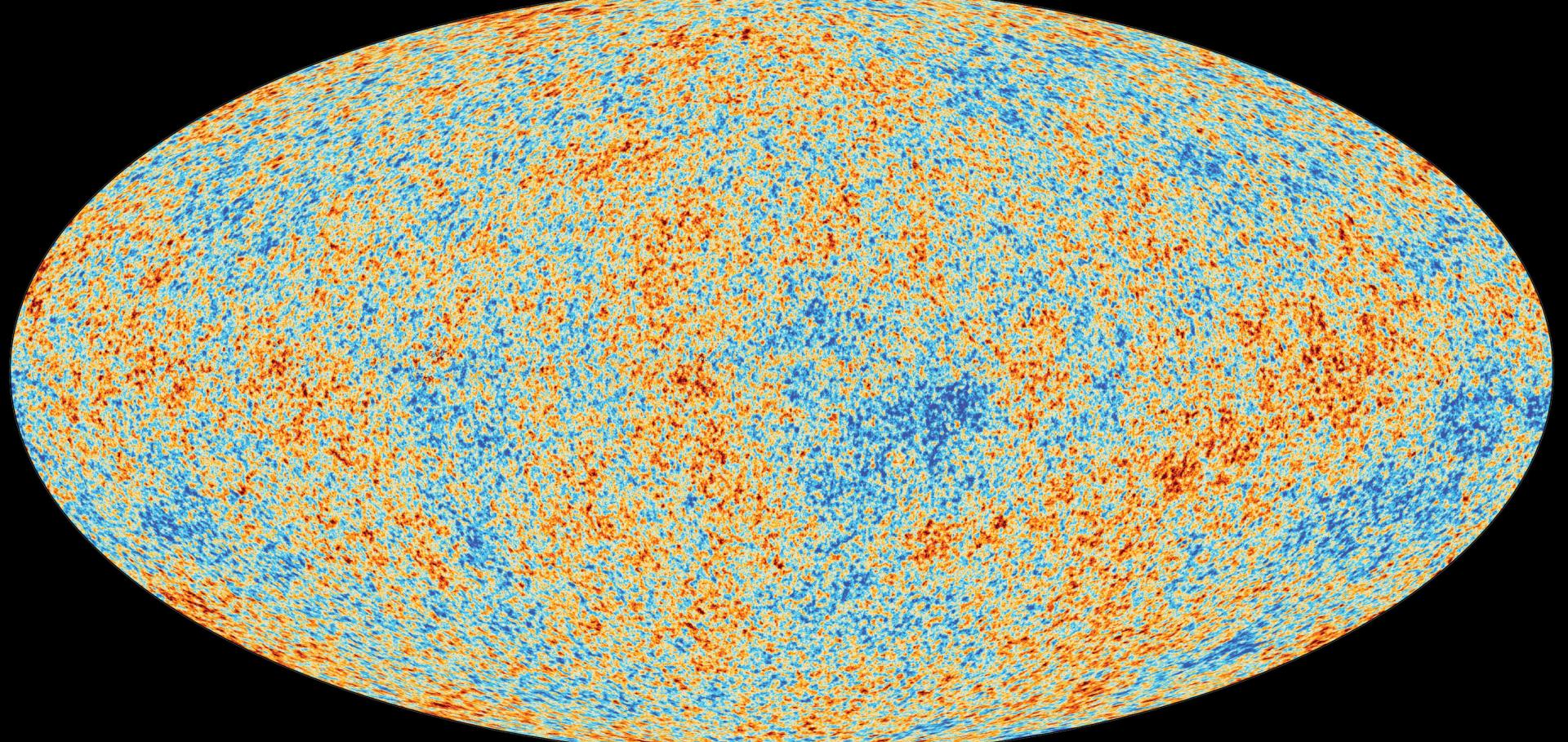
This Science White Paper, prepared in response to the ESA Voyage 2050 call for long-term mission planning, aims to describe the various science possibilities that can be realized with an L-class space observatory that is dedicated to the study of the interactions of cosmic microwave background (CMB) photons with the cosmic web. Our aim is specifically to use the CMB as a backlight – and survey the gas, total mass, and stellar content of the entire observable Universe by means of analyzing the spatial and spectral distortions imprinted on it. These distortions result from two major processes that impact on CMB photons: scattering by free electrons and atoms (Sunyaev-Zeldovich effect in diverse forms, Rayleigh scattering, resonant scattering) and deflection by gravitational potential (lensing effect). Even though the list of topics collected in this White Paper is not exhaustive, it helps to illustrate the exceptional diversity of major scientific questions that can be addressed by a space mission that will reach an angular resolution of 1.5 arcmin (goal 1 arcmin), have an average sensitivity better than 1 μK-arcmin, and span the microwave frequency range from roughly 50 GHz to 1 THz. The current paper also highlights the synergy of our Backlight mission concept with several upcoming and proposed ground-based CMB experiments.

VINTERGATAN III: how to reset the metallicity of the Milky Way

Monthly Notices of the Royal Astronomical Society Oxford University Press (OUP) 503:4 (2021) 5868-5876

Authors:

Florent Renaud, Oscar Agertz, Eric P Andersson, Justin I Read, Nils Ryde, Thomas Bensby, Martin P Rey, Diane K Feuillet

Abstract:

ABSTRACT Using the cosmological zoom simulation VINTERGATAN, we present a new scenario for the onset of star formation at the metal-poor end of the low-[α/Fe] sequence in a Milky Way-like galaxy. In this scenario, the galaxy is fuelled by two distinct gas flows. One is enriched by outflows from massive galaxies, but not the other. While the former feeds the inner galactic region, the latter fuels an outer gas disc, inclined with respect to the main galactic plane, and with a significantly poorer chemical content. The first passage of the last major merger galaxy triggers tidal compression in the outer disc, which increases the gas density and eventually leads to star formation, at a metallicity 0.75 dex lower than the inner galaxy. This forms the first stars of the low-[α/Fe] sequence. These in situ stars have halo-like kinematics, similar to what is observed in the Milky Way, due to the inclination of the outer disc that eventually aligns with the inner one via gravitational torques. We show that this tilting disc scenario is likely to be common in Milky Way-like galaxies. This process implies that the low-[α/Fe] sequence is populated in situ, simultaneously from two formation channels, in the inner and the outer galaxy, with distinct metallicities. This contrasts with purely sequential scenarios for the assembly of the Milky Way disc and could be tested observationally.

VINTERGATAN – I. The origins of chemically, kinematically, and structurally distinct discs in a simulated Milky Way-mass galaxy

Monthly Notices of the Royal Astronomical Society Oxford University Press (OUP) 503:4 (2021) 5826-5845

Authors:

Oscar Agertz, Florent Renaud, Sofia Feltzing, Justin I Read, Nils Ryde, Eric P Andersson, Martin P Rey, Thomas Bensby, Diane K Feuillet

Abstract:

ABSTRACT Spectroscopic surveys of the Milky Way’s stars have revealed spatial, chemical, and kinematical structures that encode its history. In this work, we study their origins using a cosmological zoom simulation, VINTERGATAN, of a Milky Way-mass disc galaxy. We find that in connection to the last major merger at z ∼ 1.5, cosmological accretion leads to the rapid formation of an outer, metal-poor, low-[α/Fe] gas disc around the inner, metal-rich galaxy containing the old high-[α/Fe] stars. This event leads to a bimodality in [α/Fe] over a range of [Fe/H]. A detailed analysis of how the galaxy evolves since z ∼ 1 is presented. We demonstrate the way in which inside-out growth shapes the radial surface density and metallicity profile and how radial migration preferentially relocates stars from the inner disc to the outer disc. Secular disc heating is found to give rise to increasing velocity dispersions and scale heights with stellar age, which together with disc flaring explains several trends observed in the Milky Way, including shallower radial [Fe/H] profiles above the mid-plane. We show how the galaxy formation scenario imprints non-trivial mappings between structural associations (i.e. thick and thin discs), velocity dispersions, α-enhancements, and ages of stars; e.g. the most metal-poor stars in the low-[α/Fe] sequence are found to have a scale height comparable to old high-[α/Fe] stars. Finally, we illustrate how at low spatial resolution, comparable to the thickness of the galaxy, the proposed pathway to distinct sequences in [α/Fe]–[Fe/H] cannot be captured.

VINTERGATAN – II. The history of the Milky Way told by its mergers

Monthly Notices of the Royal Astronomical Society Oxford University Press (OUP) 503:4 (2021) 5846-5867

Authors:

Florent Renaud, Oscar Agertz, Justin I Read, Nils Ryde, Eric P Andersson, Thomas Bensby, Martin P Rey, Diane K Feuillet

Abstract:

ABSTRACT Using the VINTERGATAN cosmological zoom simulation, we explore the contributions of the in situ and accreted material, and the effect of galaxy interactions and mergers in the assembly of a Milky Way-like galaxy. We find that the initial growth phase of galaxy evolution, dominated by repeated major mergers, provides the necessary physical conditions for the assembly of a thick, kinematically hot disc populated by high-[α/Fe] stars, formed both in situ and in accreted satellite galaxies. We find that the diversity of evolutionary tracks followed by the simulated galaxy and its progenitors leads to very little overlap of the in situ and accreted populations for any given chemical composition. At a given age, the spread in [α/Fe] abundance ratio results from the diversity of physical conditions in VINTERGATAN and its satellites, with an enhancement in [α/Fe] found in stars formed during starburst episodes. Later, the cessation of the merger activity promotes the in situ formation of stars in the low-[α/Fe] regime, in a radially extended, thin and overall kinematically colder disc, thus establishing chemically bimodal thin and thick discs, in line with observations. We draw links between notable features in the [Fe/H]-[α/Fe] plane with their physical causes, and propose a comprehensive formation scenario explaining self-consistently, in the cosmological context, the main observed properties of the Milky Way.

Unraveling the origin of magnetic fields in galaxies

Monthly Notices of the Royal Astronomical Society Oxford University Press 504:2 (2021) 2517–2534

Authors:

Sergio Martin-Alvarez, Harley Katz, Debora Sijacki, Julien Devriendt, Adrianne Slyz

Abstract:

Despite their ubiquity, there are many open questions regarding galactic and cosmic magnetic fields. Specifically, current observational constraints cannot rule out whether magnetic fields observed in galaxies were generated in the early Universe or are of astrophysical nature. Motivated by this, we use our magnetic tracer algorithm to investigate whether the signatures of primordial magnetic fields persist in galaxies throughout cosmic time. We simulate a Milky Way-like galaxy down to z ∼ 2–1 in four scenarios: magnetized solely by primordial magnetic fields, magnetized exclusively by supernova (SN)-injected magnetic fields, and two combined primordial + SN magnetization cases. We find that once primordial magnetic fields with a comoving strength B0 > 10−12 G are considered, they remain the primary source of galaxy magnetization. Our magnetic tracers show that, even combined with galactic sources of magnetization, when primordial magnetic fields are strong, they source the large-scale fields in the warm metal-poor phase of the simulated galaxy. In this case, the circumgalactic medium and intergalactic medium can be used to probe B0 without risk of pollution by magnetic fields originated in the galaxy. Furthermore, whether magnetic fields are primordial or astrophysically sourced can be inferred by studying local gas metallicity. As a result, we predict that future state-of-the-art observational facilities of magnetic fields in galaxies will have the potential to unravel astrophysical and primordial magnetic components of our Universe.